If your sales team is still sending LinkedIn connection requests and follow-ups by hand, you're burning hours that should be spent closing deals. LinkedIn outreach automation has become the backbone of modern B2B prospecting, and for good reason. According to its own data, sales professionals who use social selling tools are 51% more likely to hit quota. For SDRs, founders, and GTM teams working with limited bandwidth, automation turns LinkedIn from a time sink into a repeatable pipeline engine.
Whether you're evaluating your first or looking to tighten up an existing workflow, this guide covers everything you need to know—from how automation works to the mistakes that tank your reply rates.
What Is LinkedIn Outreach Automation?
LinkedIn outreach automation is the use of software tools to streamline repetitive sales tasks on LinkedIn, including sending connection requests, personalizing messages, scheduling follow-ups, and syncing prospect data with your CRM. It helps B2B sales teams scale their prospecting efforts without sacrificing personalization or compliance.
What Is LinkedIn Outreach Automation?
LinkedIn outreach automation refers to using specialized software to handle the repetitive, manual parts of LinkedIn prospecting. Instead of copying and pasting the same connection request 80 times a day, a LinkedIn automation tool sends targeted requests, personalized messages, and timed follow-ups on your behalf.
The best tools go further. They pull prospect data from LinkedIn profiles, enrich it with company information, and push everything into your CRM so nothing falls through the cracks. The goal isn't to replace the human element—it's to free reps from busywork so they can focus on conversations that actually move deals forward.
Why B2B Sales Teams Are Automating LinkedIn Outreach
Time savings that compound. A typical SDR spends 5–6 hours per week on manual LinkedIn tasks: searching, connecting, messaging, and following up. Automation compresses that to minutes. Over a quarter, that's hundreds of hours returned to actual selling.
Personalization at scale. Good LinkedIn sales automation doesn't mean blasting generic templates. Modern tools let you insert dynamic variables—job title, company name, mutual connections, recent activity—so every message feels written for that specific prospect. That personal touch at volume is what separates effective outreach from spam.
Better pipeline generation. When follow-ups happen on schedule and no prospect slips through the cracks, your pipeline grows. Teams using automation consistently report 2–3x more qualified conversations per rep compared to manual outreach.
Consistent follow-ups. Research from this study shows that 80% of sales require at least five follow-ups, yet most reps stop after one or two. Automation makes persistence effortless—sequences run in the background until you get a reply or exhaust the cadence.
How LinkedIn Outreach Automation Works
Here's what happens under the hood when you run an automated LinkedIn campaign.
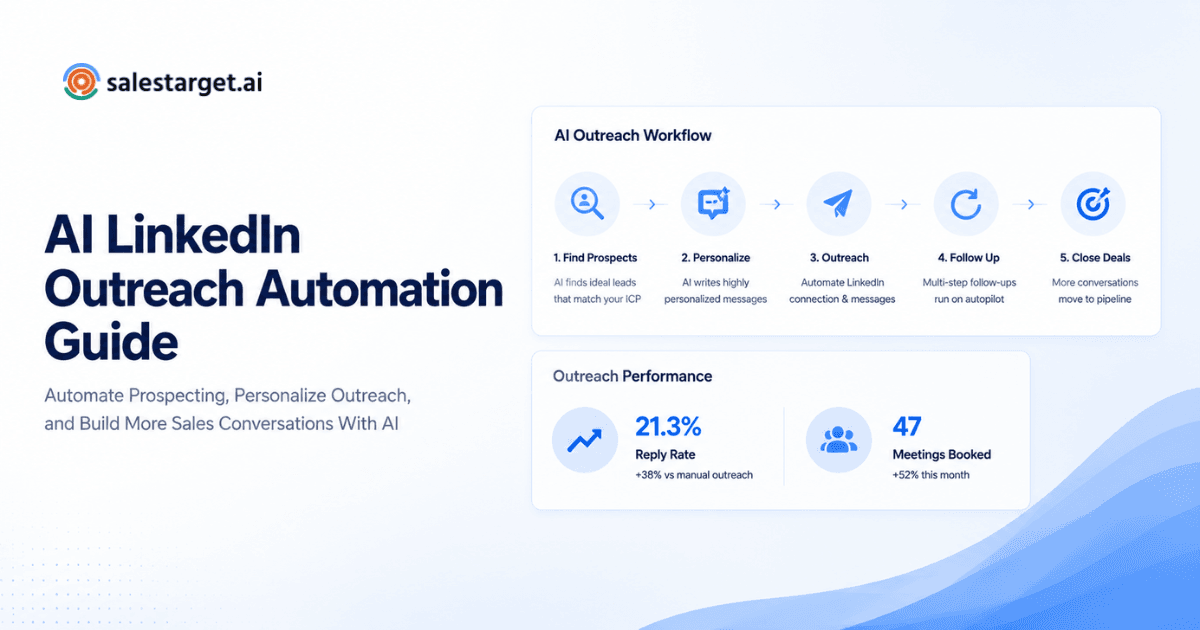
Prospect Discovery
You start by defining your ideal customer profile: industry, company size, seniority, geography. The tool searches LinkedIn (or integrates with Sales Navigator) and builds a prospect list that matches your criteria. No more scrolling through search results and manually copying profiles into a spreadsheet.
Personalization
Before any message goes out, the tool maps prospect-specific data into your templates. This includes first name, company, role, shared connections, and sometimes even recent LinkedIn activity. The result is a message that reads like you wrote it by hand, sent at the scale of hundreds per day.
Automated Follow-Ups
You set the cadence: message on day one, follow up on day three, final touchpoint on day seven. If a prospect responds at any point, the sequence pauses automatically. This is where multi-channel outreach adds real power—combining LinkedIn with email and other channels to increase touchpoints without overwhelming anyone.
CRM Synchronization
Every connection, message, and reply gets logged in your CRM. That means your sales manager sees pipeline activity in real time, and reps never lose context on where a prospect stands.
Benefits of LinkedIn Sales Automation
- More meetings booked. Automated sequences consistently touch prospects at the right intervals, dramatically increasing acceptance and reply rates.
- Improved rep productivity. Reps spend time on calls and demos instead of copy-pasting messages. One SDR we worked with went from 15 to 45 qualified conversations per month after switching to automation.
- Faster lead qualification. When prospect data flows into your CRM automatically, reps can prioritize hot leads instead of chasing cold ones.
- Outreach consistency. Every prospect gets the same high-quality experience, regardless of which rep is assigned. That consistency builds brand credibility over time.
Common Mistakes to Avoid
Automation is powerful, but it can backfire. Watch out for these pitfalls.
- Over-automation. Sending 100 connection requests per day flags your account. Stay within LinkedIn's activity limits and ramp up gradually.
- Generic messaging. If your message reads like it could go to anyone, it won't resonate with anyone. Personalization isn't optional.
- Poor targeting. A perfect message sent to the wrong audience wastes effort. Invest time upfront defining your ICP.
- Ignoring response data. If your acceptance rate is below 20%, something's off. Track metrics and iterate.
- Compliance risks. Using tools that violate LinkedIn's terms of service can get your account restricted. Choose platforms that operate within safe usage thresholds.
For a deeper dive into what works and what doesn't, explore these case studies backed by real campaign data.
LinkedIn Outreach Automation Best Practices
- Lead with personalization. Reference something specific: a recent post, a shared connection, a company milestone. Generic openers kill response rates.
- Use multi-touch sequences. Combine LinkedIn messages with email, phone, and even video. Prospects who see you across multiple channels are more likely to engage.
- Leverage AI-assisted messaging. AI can help draft and refine messages based on prospect data, saving time while keeping copy sharp.
- Test everything. A/B test your connection request copy, follow-up timing, and CTA language. Small changes can swing reply rates by 10–15%.
- Monitor reply rates religiously. Healthy LinkedIn campaigns see 15–30% reply rates. If you're below that range, revisit your targeting and messaging.
Choosing the Right LinkedIn Automation Tool
Not all LinkedIn automation tools are created equal. Before you commit, evaluate these criteria.
- Personalization capabilities. Can the tool pull dynamic variables and support custom fields? Surface-level merge tags aren't enough.
- CRM integrations. Seamless sync with HubSpot, Salesforce, or Pipedrive keeps your data clean and your reps informed.
- Multi-channel support. The best platforms combine LinkedIn, email, and phone into one workflow so you can engage prospects across channels.
- Analytics and reporting. You need visibility into acceptance rates, reply rates, and conversion metrics at every stage.
- Compliance and safety. The tool should respect LinkedIn's usage guidelines and offer activity throttling to protect your account.
The Future of LinkedIn Automation for B2B Sales Teams
LinkedIn outreach automation is evolving fast. Here's where the space is headed.
AI-powered outreach will move beyond simple templates. Expect tools that analyze a prospect's entire digital footprint and craft hyper-relevant messages in seconds.
Intent data integration will let you prioritize prospects who are actively researching solutions like yours, so your outreach lands when buying signals are strongest.
True multi-channel engagement will become the norm. LinkedIn, email, phone, and chat will merge into unified workflows where every touchpoint builds on the last.
End-to-end sales workflow automation will connect prospecting to pipeline management to deal closing—eliminating the handoff gaps that slow revenue today. For a broader perspective, read this article.
LinkedIn outreach automation isn't a shortcut—it's a strategic advantage. When implemented thoughtfully, it lets B2B sales teams reach more of the right prospects, personalize at scale, and generate pipeline with less manual effort. The teams that get this right will outpace competitors who are still grinding through LinkedIn by hand.
The key is choosing the right tool, setting up smart sequences, and never losing the human touch that makes LinkedIn outreach effective in the first place.
Start your free trial of SalesTarget.ai and automate your LinkedIn outreach today.