Sales teams have always been under pressure to do more with less. More calls, more emails, more follow-ups - all while keeping every deal moving forward. But the reality is that most reps spend a disproportionate amount of their day on tasks that have nothing to do with actually selling.
That is where AI sales assistant software comes in. These tools use artificial intelligence to handle the repetitive, time-consuming parts of the sales process so reps can focus on what they do best: building relationships and closing deals.
This guide breaks down what AI sales assistant software actually is, how it works under the hood, the problems it solves, and what you should look for when evaluating a solution for your team.
What Is AI Sales Assistant Software?
AI sales assistant software refers to a category of tools that use machine learning, natural language processing, and data analysis to automate and enhance various stages of the sales cycle. Think of it as a digital coworker that can draft emails, research prospects, prioritize leads, schedule follow-ups, and surface the right information at the right time - without being asked.
Unlike basic sales automation software that follows rigid, rule-based workflows, AI sales assistants learn and adapt. They analyze patterns in your data, understand context, and make intelligent suggestions that improve over time.
The scope of what these tools can do varies widely. Some focus narrowly on a single function, such as email drafting or lead scoring. Others operate as comprehensive AI copilots that work across the entire sales workflow, from prospecting through to deal closure.
How AI Sales Assistant Software Works ?
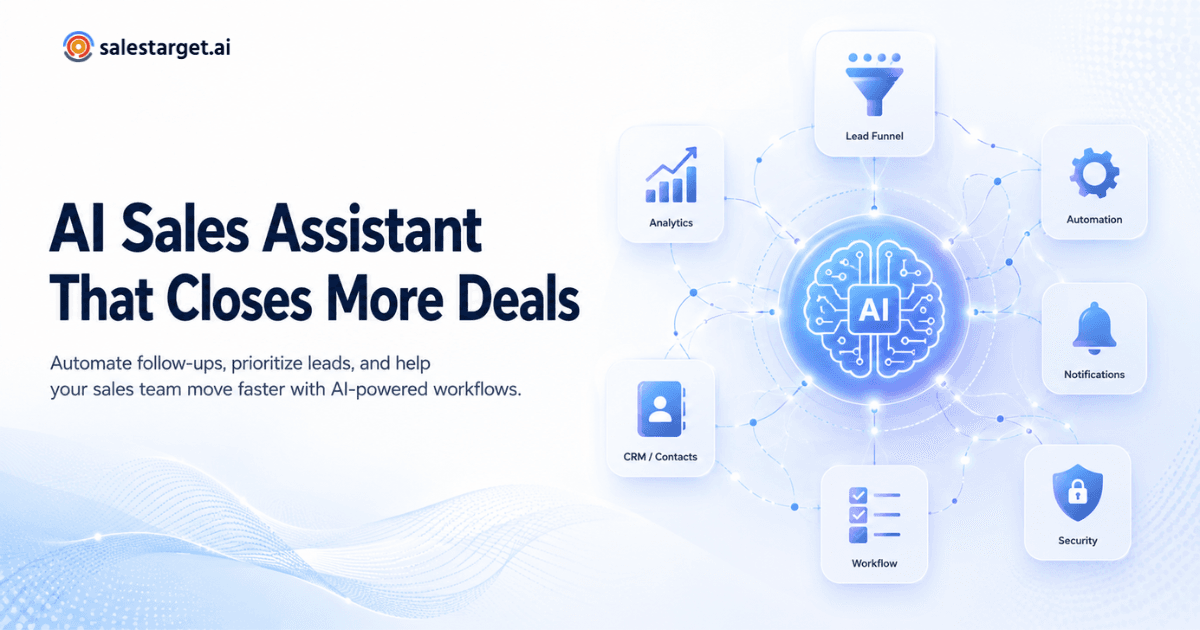
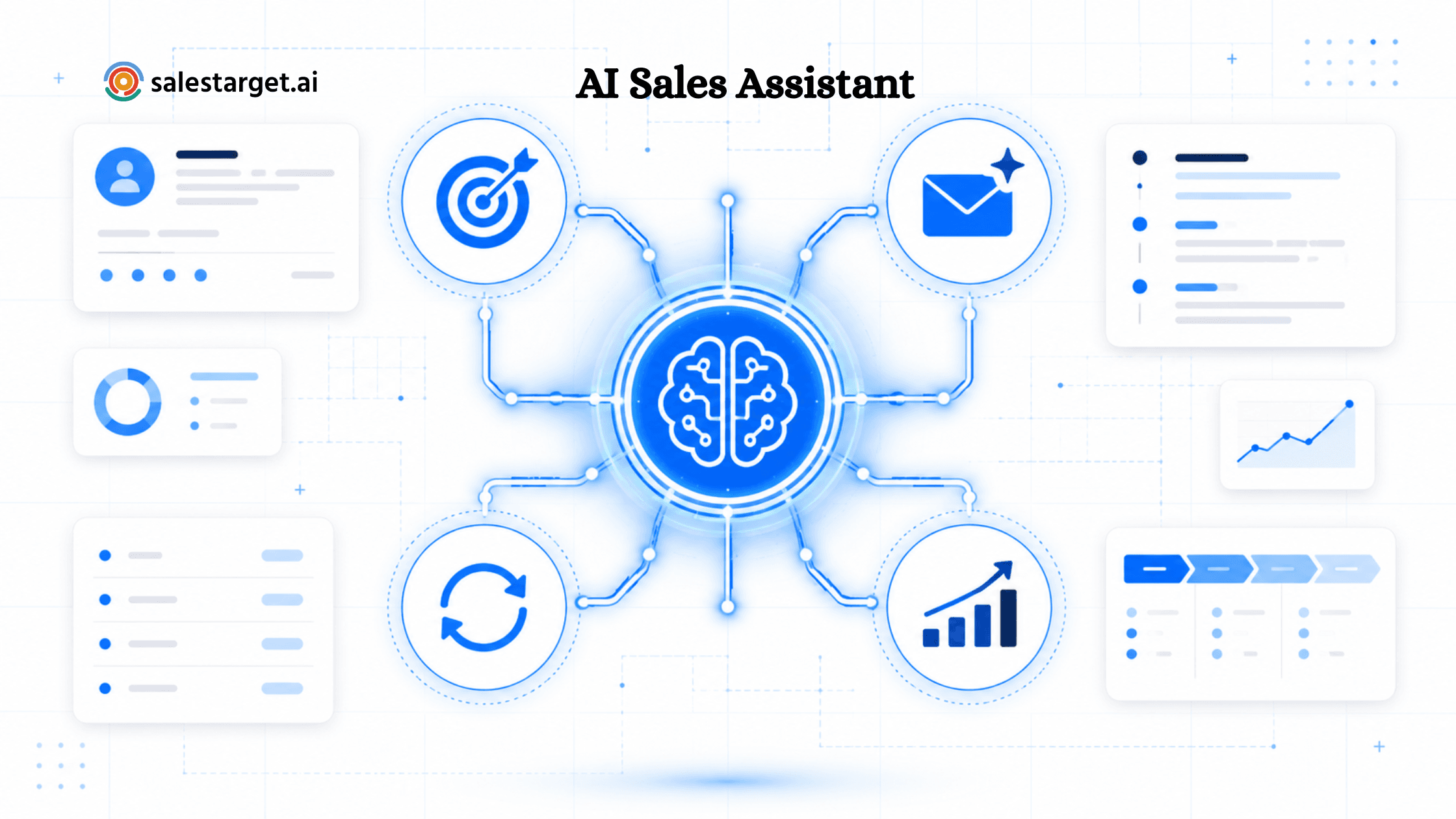
At a high level, AI sales assistant software integrates with your existing sales stack - your CRM, email, calendar, and communication tools—and uses that data to provide intelligent assistance. Here is a closer look at the core mechanisms.
Data Ingestion and Context Building
The AI connects to your CRM, email inbox, calendar, and other data sources. It ingests historical interactions, deal information, contact records, and communication patterns to build a contextual understanding of each prospect and deal.
Natural Language Processing
NLP enables the assistant to understand and generate human language. This powers features like email drafting, conversation summarization, and real-time coaching during calls. The AI can parse the meaning behind prospect responses and suggest appropriate next steps.
Machine Learning and Pattern Recognition
Over time, the software identifies patterns that correlate with successful outcomes. Which email subject lines get replies? Which prospects are most likely to convert? What is the ideal follow-up cadence for a given deal stage? The AI uses these patterns to prioritize actions and make recommendations.
Workflow Automation
Based on its analysis, the AI can execute tasks autonomously or semi-autonomously. This might include sending a follow-up email at the optimal time, updating CRM records, flagging at-risk deals, or routing a lead to the right rep.
Why Sales Teams Are Turning to AI Sales Assistants
The shift toward AI-assisted selling is not about replacing salespeople. It is about removing the operational friction that prevents them from selling. Here are the most common pain points that drive adoption.
Too Much Time on Administrative Tasks
Research consistently shows that sales reps spend a significant portion of their workweek on non-selling activities: logging data, writing emails, scheduling meetings, and searching for information. AI sales assistant software automates these tasks, giving reps hours back each week.
Inconsistent Follow-Up
Deals slip through the cracks when follow-ups are missed or delayed. An AI assistant tracks every open conversation and ensures nothing falls off the radar. It can prompt reps at the right moment or even send follow-up messages autonomously based on predefined rules.
Lead Prioritization Challenges
Not all leads deserve equal attention. AI sales tools analyze behavioral signals, engagement data, and firmographic information to score and rank leads, so reps know exactly where to focus their energy.
Scaling Personalized Outreach
Personalization at scale is one of the hardest problems in sales. AI assistants can draft contextually relevant emails and messages by pulling from CRM data, recent interactions, and prospect research—making it possible to personalize outreach across hundreds of prospects without spending hours on each one.
For teams exploring how AI can handle outreach before scaling headcount, this guide on using AI sales copilots to sell before hiring your first SDR offers a practical perspective.
Key Features to Look For in AI Sales Assistant Software
Not every AI sales tool is built the same. When evaluating options, these are the capabilities that tend to separate useful tools from underwhelming ones.
Intelligent Email Drafting and Personalization
The tool should be able to generate email drafts that sound natural and are tailored to each recipient based on available context. Look for assistants that go beyond simple templates and actually reference deal history, prospect details, and recent interactions.
CRM Integration and Data Sync
Seamless integration with your CRM is non-negotiable. The AI should be able to read from and write to your CRM automatically, keeping records updated without manual input from reps.
Lead Scoring and Prioritization
AI-driven lead scoring uses multiple data signals to assess which prospects are most likely to convert. This helps reps allocate their time strategically rather than working through a list sequentially.
Automated Follow-Up and Sequencing
Look for tools that can manage multi-step follow-up sequences with intelligent timing. The best AI assistants adjust send times and messaging based on recipient behavior.
Conversation Intelligence
Some AI sales assistants can analyze sales calls and meetings in real time, providing coaching prompts, capturing key talking points, and generating summaries. This is valuable for both individual reps and sales leadership.
Pipeline Visibility and Deal Insights
The software should surface insights about pipeline health, flag deals that are stalling, and recommend actions to move opportunities forward. This transforms the CRM from a static record into a dynamic decision-making tool.
Sales Prospecting Assistance
Advanced AI sales tools help with prospecting by identifying target accounts, enriching contact data, and surfacing relevant buying signals from public sources and intent data.
Common Use Cases for AI Sales Assistant Software
AI sales assistants are versatile enough to add value across a range of selling scenarios. Here are some of the most impactful use cases.
Outbound Prospecting
AI helps sales development reps (SDRs) research accounts, craft personalized cold outreach, and manage follow-up cadences. Instead of spending thirty minutes researching each prospect, an AI assistant can compile relevant context in seconds.
Inbound Lead Response
Speed matters when a lead fills out a form or requests a demo. AI assistants can respond instantly with a personalized message, qualify the lead based on available data, and route it to the appropriate rep.
Account Executive Deal Management
For AEs juggling multiple opportunities, an AI copilot keeps track of every deal's status, reminds them of pending action items, drafts follow-up communications, and identifies risks before they become problems. If you manage complex deals, this article on AI-powered sales assistants for account executives digs deeper into that workflow.
Sales Coaching and Enablement
Managers can use conversation intelligence features to review calls, identify coaching moments, and track how reps are handling objections. This creates a scalable coaching process that does not depend entirely on a manager listening to every call.
Pipeline Review and Forecasting
AI can analyze historical win rates, deal velocity, and engagement patterns to provide more accurate forecasting. It takes much of the guesswork out of pipeline reviews by grounding predictions in data.
Benefits of AI Sales Assistant Software for Sales Teams
The tangible benefits of adopting AI sales assistant software extend across the entire sales organization.
- Increased selling time: Automating data entry, email drafting, and scheduling gives reps back hours each week that they can reinvest in actual selling conversations.
- Better pipeline management: AI-driven deal insights and risk alerts help teams maintain a healthier pipeline with fewer surprises at the end of the quarter.
- Higher response rates: Personalized, contextually relevant outreach generated by AI tends to perform better than generic templates.
- Reduced ramp time: New reps get up to speed faster when an AI assistant provides guidance, suggests next steps, and surfaces the right information at the right time.
- Improved forecasting accuracy: Data-driven pipeline analysis produces more reliable forecasts than gut-feel estimates.
- Consistent sales engagement: AI ensures that every prospect receives timely follow-up, regardless of how busy the rep is. No lead goes cold because someone forgot to reply.
- Scalable personalization: Teams can maintain a high-quality, personalized buying experience even as their prospect volume grows.
AI Sales Assistant Software vs. Traditional Sales Tools
It is worth distinguishing AI sales assistant software from the traditional sales tools that most teams already use.
Traditional CRMs are databases. They store information, but they do not tell you what to do with it. A CRM tracks that a follow-up is due, but it will not draft the email or tell you which deal to prioritize.
Sales engagement platforms automate sequences and cadences, but they typically follow rigid, predefined rules. Every prospect in a sequence gets the same treatment regardless of their behavior or context.
AI sales assistant software sits on top of these tools and adds an intelligence layer. It reads the data in your CRM, understands what is happening in each deal, and takes or recommends actions based on that understanding. It is not a replacement for your existing stack—it is what makes that stack significantly more useful.
The distinction matters because AI sales assistants work best when integrated into an existing workflow, not deployed as standalone solutions. They amplify the tools you already use.
How AI Sales Assistant Software Fits Into Your Sales Workflow ?
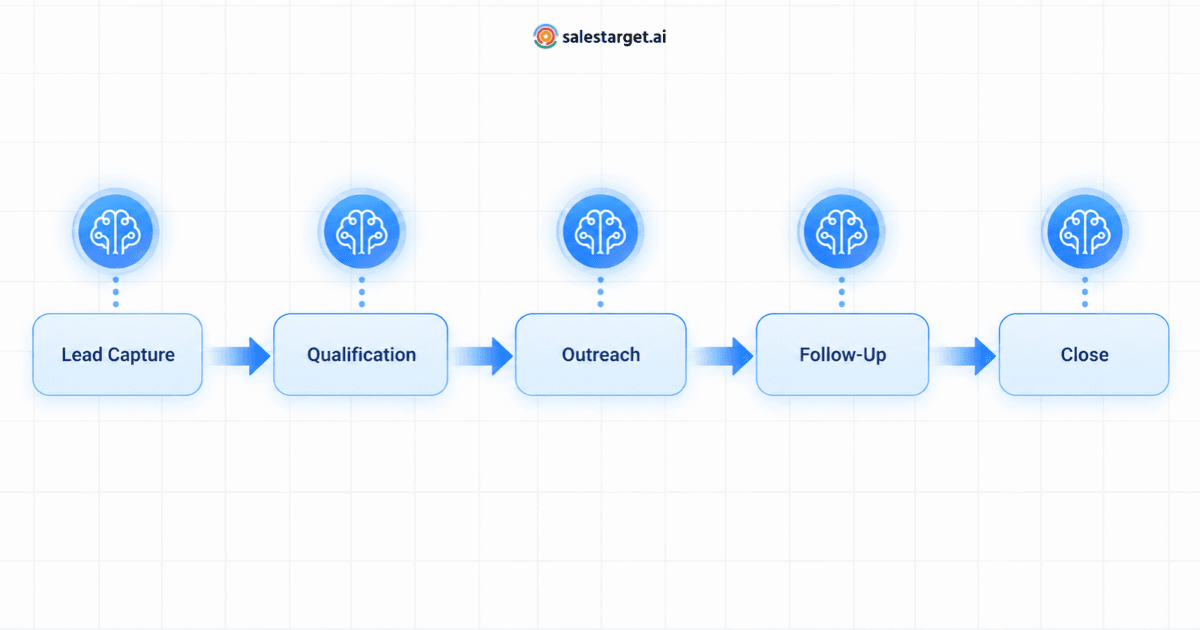
One of the most common questions teams have is where AI fits into their existing process. The short answer: everywhere a rep currently does something repetitive or manually gathers information.
Top of Funnel
AI handles prospect research, lead enrichment, initial outreach drafting, and lead scoring. SDRs spend less time on prep work and more time on high-value conversations.
Mid-Funnel
During active deal management, the AI assists with follow-up scheduling, meeting prep, email drafting, and deal health monitoring. It acts as a real-time aide that keeps every opportunity on track.
Bottom of Funnel
As deals near close, the AI helps identify potential blockers, suggests negotiation approaches based on historical data, and ensures all stakeholders are engaged. It can also draft proposals and recap key discussion points.
Post-Sale
Some AI sales tools extend into customer success by flagging expansion opportunities, tracking renewal timelines, and monitoring account health signals.
How to Choose the Right AI Sales Assistant Software ?
With the growing number of AI sales tools on the market, selecting the right one requires a structured evaluation. Here are the most important factors to consider.
Integration Depth
The tool must integrate deeply with your CRM and communication tools. Surface-level integrations that only sync basic data will not deliver the contextual intelligence that makes AI assistants valuable.
Ease of Adoption
If the tool requires weeks of configuration or significant behavior change from reps, adoption will suffer. Look for software that fits naturally into how your team already works.
AI Quality and Relevance
Test the actual output. Does the AI draft emails that your reps would actually send? Are its lead scores accurate? Does it surface insights that are genuinely useful? The quality of the AI matters more than the length of the feature list.
Data Privacy and Security
Your sales data is sensitive. Ensure the vendor has robust security practices, SOC 2 compliance (or equivalent), and clear data handling policies.
Scalability
Choose a tool that can grow with your team. What works for a five-person sales team should still function well when you scale to fifty.
Vendor Roadmap and Support
AI is evolving rapidly. Evaluate whether the vendor is actively developing the product and investing in new capabilities. Responsive support and thorough onboarding resources are also essential.
SalesTarget AI Copilot: An AI Sales Assistant Built for Modern Sales Teams
SalesTarget AI Copilot is one example of AI sales assistant software designed to integrate directly into the daily workflow of sales teams. It functions as an AI-powered copilot that works alongside reps to streamline prospecting, outreach, follow-up, and deal management.
What makes SalesTarget AI Copilot relevant in this context is its focus on practical, workflow-embedded assistance. Rather than requiring reps to learn a new tool or change their process, it operates within the environments they already use.
What SalesTarget AI Copilot Does ?
- Drafts personalized sales emails and messages based on prospect context and deal history
- Automates follow-up sequences with intelligent timing and content adjustment
- Provides real-time deal insights and pipeline health monitoring
- Assists with prospect research and lead prioritization
- Integrates with existing CRM and sales engagement tools
The goal is not to replace any part of your sales stack, but to add an intelligence layer that makes every interaction smarter and every workflow faster.
For teams that want an AI sales assistant that embeds directly into their selling motion, SalesTarget AI Copilot is worth evaluating. Visit the product page to learn more about its capabilities and how it fits into your team's workflow.