Your SDR spent Monday copying names out of Sales Navigator and Tuesday pasting the same note into sixty connection requests. By Wednesday nobody remembered who never got a follow-up. Friday's report shows activity, not meetings.
How do you automate LinkedIn outreach? Build a targeted prospect list, split it into segments, and load a personalized connection request and a short follow-up sequence into an automation tool with safe daily limits. Add email as a second channel, then sync every reply to your CRM. Automation handles the repetitive clicks. Your team handles the conversations. Salestarget.ai runs each of those steps in one workspace, so nothing depends on a spreadsheet handoff.
The stakes are real. Salesforce's State of Sales research found reps spend only 28% of their week actually selling. The rest goes to admin, data entry, and tool switching. LinkedIn prospecting is a large share of that admin.
The Growing Challenges of Scaling LinkedIn Prospecting for B2B Sales Teams
LinkedIn prospecting breaks at volume in four places: finding people, keeping messages consistent, following up, and proving results. Each break costs pipeline.
Manual prospect identification and fragmented lead data
Manual searching produces lists that live in tabs, exports, and personal notes. Titles go stale, emails are missing, and two reps message the same account. A single source of enriched lead data fixes this at the root.
Inconsistent outreach across multiple prospect segments
A CFO at a 50-person SaaS company and a VP of Ops at a logistics firm need different openers. Under deadline pressure, reps send one generic template to everyone, and reply rates reflect it.
Repetitive follow-ups and missed sales opportunities
Most replies arrive after the second or third touch, and that is exactly where manual tracking fails. Reps forget, get busy, or lose the thread. A prospect who said "message me next month" gets no message.
Limited visibility into campaign performance and pipeline contribution
Managers see messages sent and connections accepted. They rarely see which campaign produced a meeting or a deal. Without that link, nobody knows what to repeat or stop.
The Role of LinkedIn Outreach Automation in Modern B2B Sales
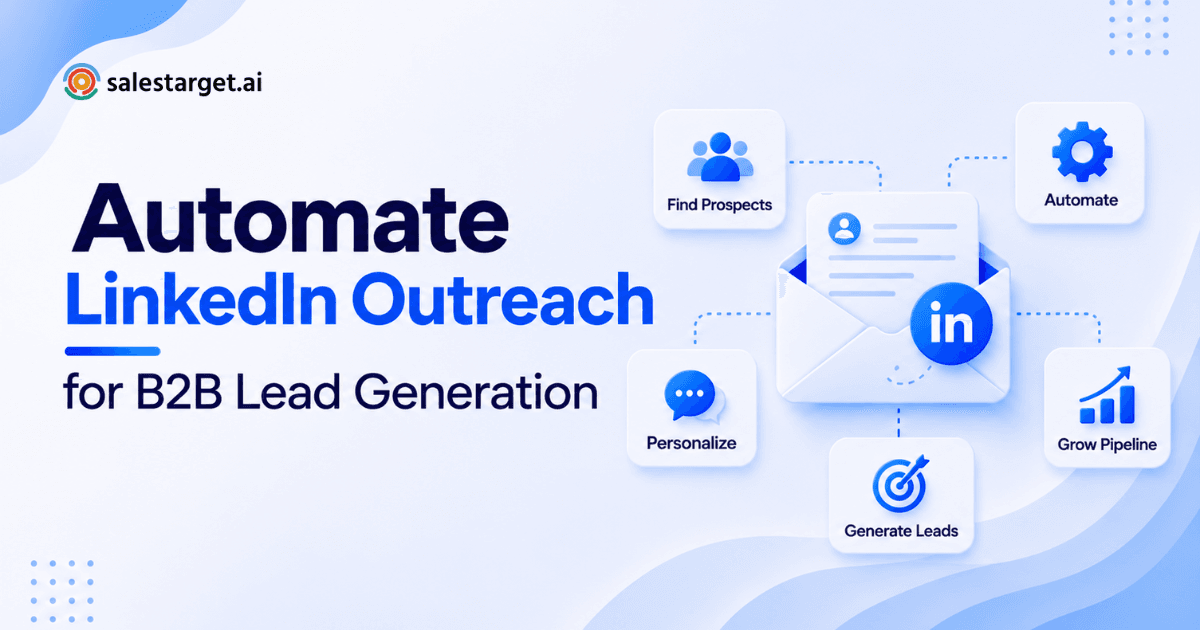
LinkedIn outreach automation takes over repeatable actions: searching, sending, waiting, following up, and logging. People stay in charge of strategy, targeting rules, and live conversations. The aim is more relevant conversations per rep, not more messages. Teams that want a deeper look at response-focused tactics can read this guide on automate LinkedIn outreach for better response.
Automated prospect discovery and audience segmentation
Automation starts before the first message. Search filters pull people who match your ideal customer profile by role, seniority, company size, industry, and location, then group them into segments the same day.
Personalized connection requests and messaging workflows
Personalization means the note reflects the person's role, company, or recent activity. AI can draft that variation per profile, so each request reads as written for one person while a rep reviews the patterns.
Multi-step follow-up sequences and engagement tracking
A sequence sends a connection request, waits, sends a message, waits again, then follows up. Conditional steps branch on what the prospect does: accepted, replied, or stayed silent. Every action is tracked automatically.
Lead qualification and sales pipeline management
When a prospect replies with interest, automation should create a lead record and a follow-up task. Qualification stays human, but routing and logging should not.
The Complete LinkedIn Outreach Automation Workflow for B2B Lead Generation
The workflow has seven stages, each feeding the next. A weak stage early on drags down everything after it, so build in order.
Ideal customer profile development and account targeting
Write down who buys, who signs, and who uses. Add firmographics plus a trigger, such as a funding round or a hiring spike. Targeting rules written first save weeks of cleanup later.
Prospect list building and contact data enrichment
Build the list from your ICP filters, then enrich it with verified professional email and phone so a prospect can be reached on more than one channel. Lead Explorer searches 840M+ professional profiles and enriches contacts in the same click.
Audience segmentation by industry, role, and buying intent
Split the list three ways: industry, role, and intent. Intent signals show which accounts are researching your category now. Salestarget.ai surfaces 4,000+ buyer signals, including Bombora Intent Topics, funding rounds, and leadership changes on a 30 to 90 day lookback. Message the in-market segment first.
Personalized outreach campaign creation
Write one campaign per segment, not one per company. Each gets its own opener, value line, and call to action. Keep connection notes short, and put the real pitch in the second message.
Automated connection requests and follow-up scheduling
Set daily limits, working-hour windows, and human-like delays. Salestarget.ai schedules by the prospect's timezone, so requests land during their workday instead of at 3 a.m.
LinkedIn and email sequence coordination
Run LinkedIn and email as one flow. If the prospect replies on either channel, the other should stop. Insight most guides skip: a prospect who gets a LinkedIn nudge and a cold email in the same hour reads it as spam. Stagger the channels by a day or two, and make the second touch reference the first.
Lead qualification and CRM pipeline entry
Every reply should become a lead record with its full message history attached. When campaign leads land in a CRM automatically, nothing waits for a Friday import. Reps that want to see this stage in action can start free with the Salestarget.ai CRM.
Core Components of a Scalable LinkedIn Outreach Strategy
A scalable strategy rests on five components. Skip one and the system leaks.
Targeted B2B prospect databases
You need a database that supports advanced filters and keeps contact data current. A static export from last quarter loses accuracy fast, so enrichment at the moment of search matters.
Personalized messaging and campaign sequences
Reusable sequences with variable fields keep quality high across reps. Store winning openers, and retire any that drop below your reply benchmark.
Automated follow-ups and response management
Follow-ups should stop the moment someone replies. Responses should be sorted by intent so a hot reply never sits behind ten polite declines.
Multichannel sales engagement
LinkedIn alone caps how many people you can reach safely each day. Adding email and phone widens coverage without raising LinkedIn volume.
CRM synchronization and lead tracking
If outreach data and deal data live apart, attribution is guesswork. Sync both, and the question "which campaign made this deal" has an answer.
Performance Metrics That Shape Successful LinkedIn Outreach Campaigns
Track five metrics in sequence, since each one diagnoses a different stage. Expandi's benchmark of 13.2 million connection requests puts the platform averages at 28.5% connection acceptance, 3.0% reply to a connection note, and 10.4% reply to a message after acceptance.
Connection acceptance rate
Acceptance measures targeting and profile quality. A low rate points to the wrong audience or a weak profile, not weak copy.
Message reply and positive response rates
Split replies into positive, neutral, and negative. A 10% reply rate with mostly "not interested" is worse than 6% with real interest.
Qualified lead conversion rate
This is the share of replies that become qualified leads. It exposes whether the audience, not just the message, fits your offer.
Meetings booked and sales opportunities generated
Meetings are the first metric a sales leader trusts. Count booked meetings and opportunities created per 100 prospects contacted so campaigns of different sizes compare fairly.
Campaign-to-pipeline conversion rate
Pipeline value per campaign is the ceiling metric. Here automate LinkedIn outreach for better sales pays off, since it ties outreach activity to deals.
LinkedIn Outreach Automation Software Selection Criteria for B2B Teams
Choose software by testing it against five criteria. Feature lists look identical on a pricing page, so ask each vendor to show the workflow.
Prospect data accuracy and enrichment capabilities
Ask where the data comes from and when each contact was last verified. Enrichment at search time beats a database scraped months ago.
LinkedIn personalization and sequence automation
Look for conditional branching, profile-based personalization, and built-in safety: rate limits, warm-up logic, and auto-pause if LinkedIn flags unusual activity.
LinkedIn and email outreach integration
A tool that only does LinkedIn forces you to bolt on email, which splits replies and history. Native coordination keeps context in one thread.
CRM connectivity and automated activity logging
Check whether activity logs itself. Manual logging is the first thing busy reps skip, and the CRM then shows only what someone remembered to type.
Campaign reporting and performance analytics
Reports should reach deals, not stop at opens and acceptances. If a vendor cannot show pipeline by campaign, you will rebuild that report in a spreadsheet.
Why Choose Salestarget.ai
Salestarget.ai is an all-in-one AI sales intelligence and outbound platform. It keeps data, outreach, verification, CRM, and AI help in one workspace, so you stop stitching point tools together.
Lead Explorer for B2B prospect discovery and enrichment
Lead Explorer searches 840M+ verified professional profiles and 146M+ business entities in plain English or with stacked filters. One click unlocks verified email, phone, and mobile.
LinkedIn and Email Outreach for coordinated sales campaigns
LinkedIn Outreach automates connection requests, DMs, follow-ups, and engagement actions with AI personalization and conditional sequences. Email Outreach runs in the same flow, with unlimited inboxes, automatic AI warm-up, and a unified inbox that sorts replies by intent.
Email Validator for contact verification and bounce reduction
Email Validator runs MX and SMTP checks, flags disposable addresses, and scores risk before you send. Cleaner lists protect sender reputation, which matters when email is your second channel.
Built-in CRM for lead management and pipeline tracking
Campaign leads land in the CRM automatically. Emails and calls are logged to the lead timeline, follow-up tasks are created when a lead replies, and a shared pipeline shows deals and meetings live.
AI Copilot for everyday sales prospecting support
AI Copilot is a conversational teammate inside the platform. Ask it to find leads, draft a personalized sequence, or pull CRM deals and tasks in plain language.
Common Automation Gaps That Prevent LinkedIn Campaigns From Generating Qualified Leads
Most failed campaigns share one of four gaps. All four are fixable without more volume.
Poor prospect segmentation and irrelevant targeting
Broad lists produce generic messages. Tighten the segment before touching the copy.
Over-automation without meaningful personalization
Sending 200 identical requests a day is a fast way to burn an account. Insight most guides skip: the Expandi data shows connection-note replies fell from 3.5% to 2.2% in twelve months while acceptance held near 29%. Prospects now accept requests they never plan to answer, so acceptance alone is a vanity number. Judge campaigns on accepted-to-reply.
Disconnected outreach and CRM workflows
When replies sit in a LinkedIn inbox, deals stall quietly. Route every reply into the CRM the same day.
Measuring engagement without tracking pipeline outcomes
Likes and acceptances feel productive. Meetings and pipeline value tell you whether they were.
Building a Repeatable LinkedIn Outreach System for Long-Term Sales Pipeline Growth
A repeatable system works the same for a new SDR as for a veteran. Document it, review it monthly, and change one variable at a time.
Standardize prospecting and campaign workflows
Write the ICP, segment rules, sequence steps, and daily limits into one playbook. New hires launch a campaign in a day.
Align SDR, sales, and RevOps activities
SDRs own outreach, AEs own live conversations, and RevOps owns data rules and reporting. Agree on when a reply becomes a lead, and who gets it.
Optimize campaigns using engagement and conversion data
Benchmark against your own industry row, not the platform average. Expandi's data shows software companies average 27.5% acceptance and 8.8% message reply, so the same number can mean different things by sector.
Connect qualified prospects with the sales pipeline
Pass the full conversation history to the AE with the lead. Prospects should never repeat what they already told you.
Conclusion: From LinkedIn Prospecting to a Scalable B2B Sales Pipeline
The problem started with reps burning hours on copy-paste prospecting, forgotten follow-ups, and reports that count activity instead of meetings. Automation fixes the repetitive parts, but only when data, outreach, verification, and CRM work as one system.
That is the case for Salestarget.ai: find the lead, enrich it, verify it, run LinkedIn and email in one flow, and close inside a built-in CRM, all on one bill. Your reps stop managing tools and start managing conversations.
Ready to automate LinkedIn outreach without the tool sprawl? Start free with Salestarget.ai.