Your best lead went quiet three weeks ago and nobody noticed. The last note sits in one rep's inbox, the deal stage sits in a spreadsheet nobody updated, and the follow-up sits in someone's memory.
Sales tracking software for small business is a tool that records every lead, deal, call, email, and follow-up in one place. It shows where each deal stands, which ones are stuck, and what to do next. That visibility helps small teams close more of the deals they already have.
The problem is bigger than missed follow-ups. Salesforce's State of Sales research found that reps spend 70% of their time on non-selling tasks, such as admin work and meeting prep. Gartner research, as cited by Sifthub, shows only 7% of sales organizations reach forecast accuracy of 90% or higher. Most teams are running on partial information.
This guide covers how tracking software works, what to look for, and where SalesTarget.ai fits. For a deeper look at lead monitoring, read how sales tracking software helps monitor leads.
Sales Tracking Challenges Small Businesses Face
Small teams do not lack effort. They lack a shared record of what that effort produced.
Missed Follow-Ups and Untracked Sales Activities
Follow-ups get missed when no system owns the next step. A rep promises a callback, the note goes on a sticky pad, and two weeks later the prospect signs with a competitor. Untracked activity is invisible activity. Managers cannot coach it and founders cannot count it.
Limited Visibility Into Leads and Deals
Limited visibility means you cannot say how many deals are open, what stage they are in, or what they are worth without asking each rep. In a five-person team, one slipped deal can change the month. The Gartner figure above shows even large organizations struggle here, and small teams feel the miss faster.
Disconnected Sales Data and Manual Tracking
Disconnected data splits one lead across a data tool, an email tool, a LinkedIn tool, and a sheet. Reps copy and paste between them, and every copy goes stale. That copy-paste work is part of the non-selling time Salesforce measured, and it never shows up on a pipeline report.
How Sales Tracking Software for Small Business Works
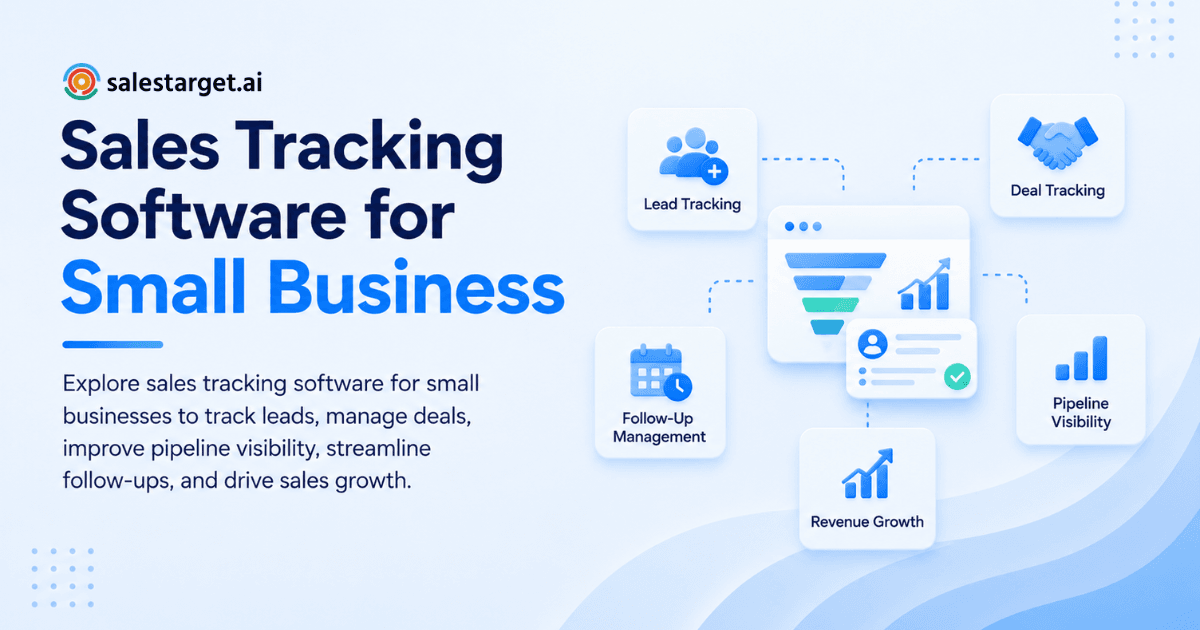
It captures every lead and touchpoint, places deals on a visual pipeline, turns replies and meetings into tasks, and rolls it all into reports. Here is each piece.
Centralizing Leads and Contact Information
Each lead gets one record holding contact details, company data, source, and full history. In SalesTarget.ai, campaign leads land in the CRM automatically with no CSV imports. Enrichment from Lead Explorer fills in verified email, phone, and mobile before the lead arrives.
Tracking Deals Across the Sales Pipeline
Each deal sits in a stage with an owner, a value, and a next step. Reps move it forward as the conversation moves. Everyone sees the same live pipeline, so a Monday review takes ten minutes instead of an hour of "where are we on Acme?"
Managing Follow-Ups and Sales Activities
Good software turns events into tasks. In SalesTarget.ai, a follow-up task is created automatically when a lead replies or a meeting ends. Every email and call is logged on the lead timeline, so nobody relies on memory.
Monitoring Sales Performance and Pipeline Data
Dashboards turn logged activity into numbers: open deals, meetings booked, pending tasks, and email stats. Read them weekly. The goal is to catch a stalled stage early, not to admire charts.
Benefits of Sales Tracking Software for Small Business
The main benefits are a clear pipeline, organized records, fewer missed follow-ups, more selling time, and forecasts you can trust.
Improve Sales Pipeline Visibility
One shared pipeline shows every open deal, its stage, owner, and value. Here is a practical tip most guides skip: track days in stage, not only the stage name. If your typical deal clears "proposal sent" in ten days, a deal sitting there at day twenty-five needs a call today. A stage label never tells you that. Age does.
Keep Leads and Deals Organized
Organization comes down to two rules: one owner per lead and one next step per deal. Software enforces both. Records without an owner or a next step are the first ones to rot.
Improve Follow-Up Management
Follow-up is where small teams win or lose. Automatic tasks after replies and meetings remove the "I forgot" gap. SalesTarget.ai reports a 91% follow-up completion rate for teams using its CRM (a SalesTarget.ai figure).
Increase Sales Team Productivity
Reps get time back when logging happens on its own. The built-in AI dialer in SalesTarget.ai takes call notes and saves them to the lead timeline, so nobody writes them up by hand. SalesTarget.ai reports about 6 hours saved per rep per week. If your reps lose hours to admin, start free with SalesTarget.ai's CRM and measure the difference in two weeks.
Support Better Sales Forecasting
A forecast is only as good as the stage data behind it. Stale stages produce the low accuracy Gartner describes. When every deal has an owner, a stage, an age, and a logged last touch, a weighted pipeline number becomes a planning tool instead of a guess.
Key Features of Sales Tracking Software for Small Business
Look for lead tracking, pipeline tracking, activity logging, task management, reporting, and integrations. Each one closes a specific gap.
Lead and Contact Tracking
Every lead needs a single record with verified contact data and a full timeline. Check that leads arrive automatically from campaigns instead of manual imports.
Sales Pipeline and Deal Tracking
You need customizable stages, deal values, owners, and a drag-and-drop board. A live shared pipeline matters more than fancy views.
Sales Activity Tracking
Emails, calls, meetings, and notes should log themselves. Manual logging fails the first busy week.
Follow-Up and Task Management
Tasks should be created from events, not typed in. Look for reminders tied to replies, meetings, and stalled deals.
Sales Reporting and Analytics
Reports should show open deals, meetings, pending tasks, and conversion by stage. Skip tools that bury these behind custom report builders.
CRM Integration and Automation
Your tracker should connect to the tools you already use. SalesTarget.ai's CRM connects with Google Calendar, Google Meet, Calendly, Slack, Zapier, HubSpot, Salesforce, and Zoho (Zoom and Pipedrive are coming soon).
How to Choose the Best Sales Tracking Software for Small Business
Pick the tool that fits your sales process, tracks leads, deals, and activity natively, automates the busywork, connects to your stack, and scales with your team.
Match Features With Your Sales Process
Write down your real stages first, from first reply to closed deal. Then test whether the software can mirror them without workarounds. If you run outbound, you need tracking built around campaigns, not just inbound forms.
Check Lead, Deal, and Activity Tracking
Run a live test. Add a lead, send an email, log a call, and move a deal. If any of those needs a second tool or a manual copy, the tracking will have gaps.
Review Automation and Reporting Capabilities
Ask what happens automatically when a lead replies, a meeting ends, or a deal sits idle. Then check the reports. Can a founder read the pipeline in two minutes without help from a RevOps person?
Compare Integrations and Ease of Use
Setup should take days, not months. SalesTarget.ai's CRM sets up in under a day. Check native links to your calendar, email, and chat tools, since reps skip any system that adds clicks.
Evaluate Pricing and Scalability
Review what each plan includes, how seats are counted, and whether adding a channel means adding another vendor. Small teams get stuck when a tracker handles ten leads well and fails at a thousand. Ask for the limits on leads, users, and inboxes before you commit. A good fit is one platform that covers data, outreach, and the CRM on a single bill.
Sales Tracking Software vs. Traditional Sales Spreadsheets
Spreadsheets work for a handful of deals. Software wins once a second person, a second channel, or a real forecast enters the picture.
Manual Sales Tracking Limitations
A spreadsheet cannot log an email, create a task, or tell you when a deal last moved. Here is the edge case teams miss: a "last contacted" column is whatever someone typed last, and two editors overwrite each other without warning. The sheet looks current while the data is not.
Benefits of Centralized Sales Data
Centralized data gives every rep and manager one version of the truth. Activity logs itself, history stays attached to the lead, and reports update without anyone rebuilding them. Read more on this in our guide to the best sales tracking software.
When to Move From Spreadsheets to Sales Software
Move when a second person starts editing the sheet, when you run more than one outreach channel, or when you miss a follow-up you would have caught with a reminder. Do not wait for the sheet to break during a busy quarter.
Why Choose SalesTarget.ai
SalesTarget.ai is an all-in-one outbound platform that combines lead data, email and LinkedIn outreach, email validation, a built-in CRM, and an AI Copilot in one workspace. You find the lead, enrich it, reach out, and track the deal without moving data between tools.
Lead Data and Enrichment With Lead Explorer
Lead Explorer gives access to 840M+ professional profiles, 146M+ business entities, and 4,000+ intent signals across 50+ data sources (SalesTarget.ai figures). One-click enrichment unlocks verified email, phone, and mobile, and enriched leads go straight to a sequence or the CRM with no CSV step.
Email and LinkedIn Outreach in One Workflow
Email Outreach builds multi-step sequences, warms inboxes automatically, and checks SPF, DKIM, and DMARC. LinkedIn Outreach automates connection requests and DMs with built-in safety limits. Both run in one coordinated flow, so every reply is tracked against the same lead.
Email Verification and Deliverability Checks
The Email Validator runs MX and SMTP checks, flags disposable addresses, and scores risk before you send. Clean contact data keeps your pipeline honest, since a deal attached to a dead email is not a real deal.
Built-In CRM for Deal and Sales Tracking
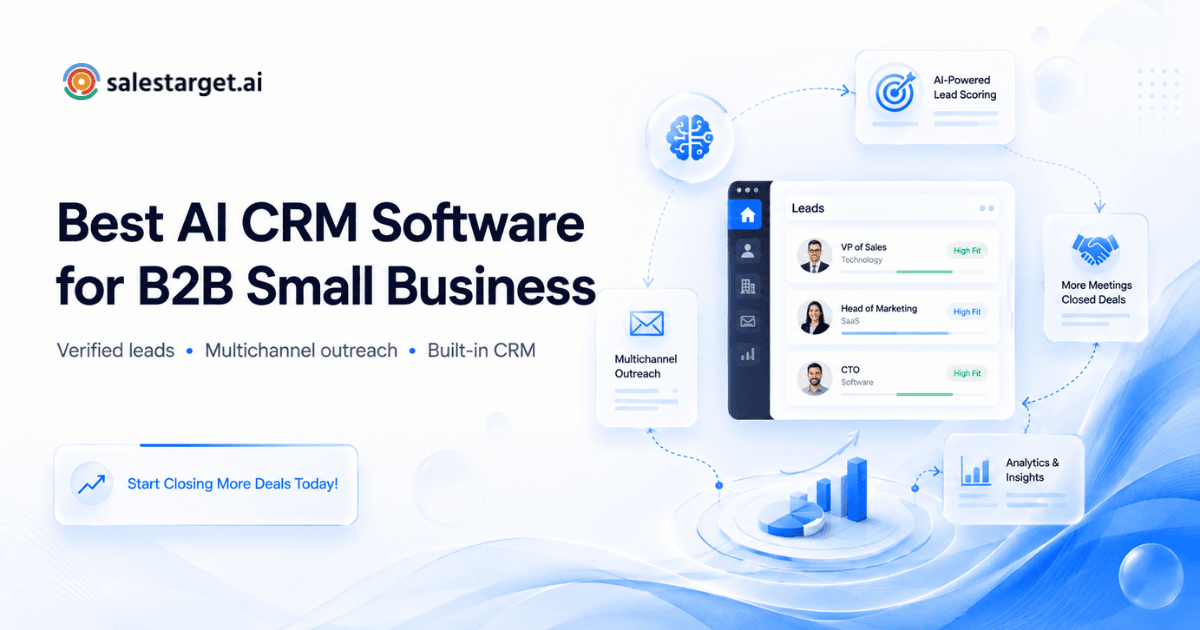
The CRM is built for outbound teams, not enterprise bloat. It has five modules: Lead Management, Deal Pipeline, Tasks & Follow-Ups, Activity Tracking, and Reports & Analytics. SalesTarget.ai reports 3.2X faster deal cycles and 2.4X more meetings from the same leads. Compare that with the 70% non-selling time Salesforce reports, and the case for automatic logging is clear.
AI Copilot for Sales Productivity
The AI Copilot is a conversational teammate, free inside the platform. Ask it in plain language which deals are at risk, what tasks are pending, or which campaigns drive revenue. It flags at-risk deals and recommends the next move, so reps spend time on relationships instead of reports.
Common Sales Tracking Mistakes to Avoid
The biggest mistakes are tracking effort instead of outcomes, keeping stale data, skipping follow-ups, and never tying activity to revenue.
Tracking Activities Without Measuring Pipeline Progress
Fifty calls logged means nothing if no deal moved. Pair every activity count with stage movement. If activity rises and the pipeline stays flat, the targeting or the message is off.
Allowing Outdated Lead Data to Remain in the CRM
Dead contacts inflate pipeline and drag down forecasts. Verify at enrichment, re-verify before big sends, and archive leads with no activity for a set period. This is where SalesTarget.ai's validation at the point of enrichment helps.
Failing to Track Follow-Ups Consistently
One missed follow-up is a miss. A habit of them is a leak. Make tasks automatic, and review overdue tasks in every weekly pipeline meeting. If your team needs a starting point, try the CRM free.
Measuring Sales Activity Without Connecting It to Revenue
Activity metrics only matter when they link to closed deals. Tag each deal with its source campaign and channel, then see which sequences produce revenue, not just replies.
How Sales Tracking Supports Revenue Growth
Tracking supports revenue by exposing stalled deals, lifting conversion, focusing reps on high-value deals, and giving you data for planning.
Identifying Stalled Deals and Pipeline Gaps
Sort deals by days since last activity. Anything idle beyond your normal cycle needs an action. Then look at stage counts: a thin "meeting booked" column today means a thin "proposal" column next month.
Improving Lead-to-Deal Conversion
Conversion improves when you see where leads drop out. Compare reply-to-meeting and meeting-to-deal rates by campaign. Fix the weakest step first, not the one you like working on.
Prioritizing High-Value Opportunities
Rank open deals by value and stage age, then spend your best hours there. Intent signals from Lead Explorer help here, since a lead showing buying behavior deserves a faster response than a cold name.
Using Sales Data for Better Revenue Planning
Weighted pipeline, average cycle length, and stage conversion give you a planning base for hiring, spend, and targets. Review the numbers monthly and compare forecast to actual. That one habit separates teams who plan from teams who hope.
Conclusion: Improve Pipeline Visibility With Sales Tracking Software
The opening problem was a lead that went quiet while nobody was looking. Sales tracking software fixes that by keeping every lead, deal, call, and follow-up in one record with an owner and a next step. Small teams do not need more tools. They need fewer, connected ones.
SalesTarget.ai gives you lead data, enrichment, email and LinkedIn outreach, verification, a built-in CRM, and a free AI Copilot in one workspace. You find the lead, reach them, and track the deal to close without a single copy-paste. If better pipeline visibility is your next move, start free at SalesTarget.ai and see your whole pipeline in one place.