How Does an AI Sales Assistant Improve Outbound Sales? A Complete Guide for Modern SDR Teams
Outbound sales has gotten harder. Buyers ignore generic emails, gatekeepers screen calls more aggressively, and SDRs spend most of their day on tasks that don't actually move deals forward. So when sales leaders ask, how does an AI sales assistant improve outbound sales?, they're really asking a bigger question: how do we get our team back to selling?
The short answer is that an AI sales assistant takes over the slow, repetitive parts of outbound work, like researching prospects, writing first drafts, scoring leads, and chasing follow-ups, so reps can spend their time on conversations that matter. The longer answer is what the rest of this guide is about.
If you run an SDR team, manage a startup's pipeline, or sit in RevOps trying to make outbound work again, this article walks through what these tools actually do, where they help most, and what to watch for.
What Is an AI Sales Assistant?
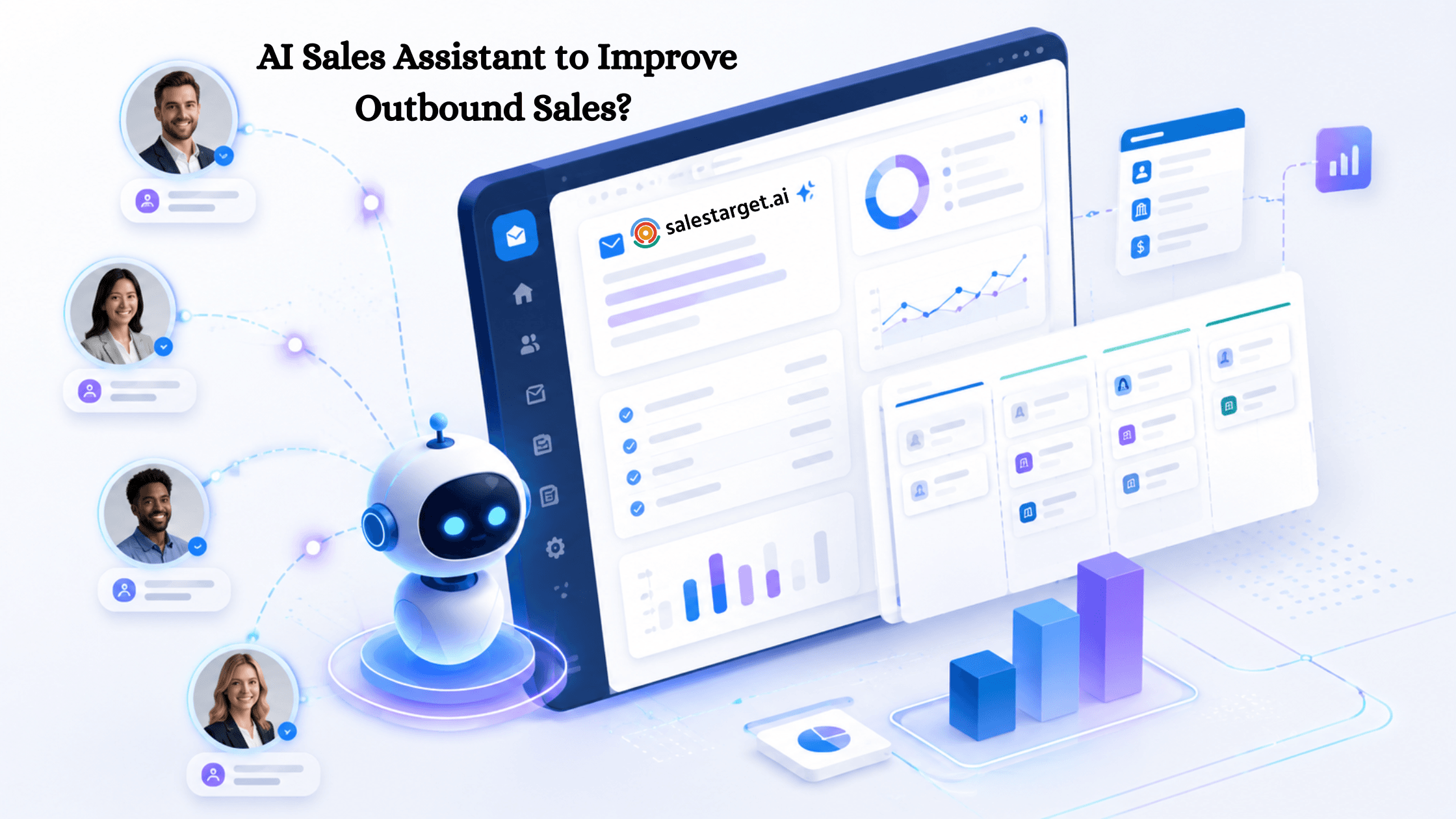
An AI sales assistant is software that uses machine learning and large language models to handle outbound sales tasks that normally eat up a rep's day. Think prospect research, email drafting, lead scoring, CRM updates, and follow-up scheduling, all happening in the background while the rep focuses on selling.
It's not a chatbot. It's a working layer that sits on top of your sales stack and acts more like a junior teammate who never sleeps, never forgets a follow-up, and reads every signal in your CRM.
How It's Different From Traditional Sales Tools
Older sales engagement platforms automate steps. They send the email when you tell them to, log the call when you log it. An AI sales assistant goes a step further by deciding what to send, who to prioritize, and when the timing is right based on intent data and past performance.
That shift, from execution to judgment, is what makes the category interesting.
How Does an AI Sales Assistant Improve Outbound Sales?
Here's where most teams see the biggest gains. AI sales assistant software improves outbound sales in six clear ways, and they compound on each other.
1. Smarter Prospecting and Lead Discovery
Finding the right person at the right company used to take hours of LinkedIn scrolling and tool-switching. AI prospecting tools now pull from intent data, firmographics, technographics, and recent triggers (funding rounds, hiring spikes, leadership changes) to surface accounts that actually look ready to buy.
Instead of working a static list, your reps get a live, ranked queue.
2. Personalization at Scale
Generic outreach is the fastest way to get marked as spam. But truly personal emails take 15–20 minutes each, which doesn't scale past a few prospects a day.
AI outreach personalization solves this by pulling real signals (a recent product launch, a podcast appearance, a job change) and drafting messages that reference them naturally. Reps still review and tweak, but the heavy research lift disappears.
3. Intelligent Lead Scoring and Qualification
Not every lead deserves the same effort. AI-powered CRM systems score leads in real time based on:
- Engagement signals (email opens, link clicks, site visits)
- Fit data (company size, industry, role)
- Behavioral patterns from past closed-won deals
- Intent signals from third-party data providers
This intelligent lead scoring tells SDRs where to spend their next hour, not their next quarter.
4. AI-Driven Follow-Ups
Most deals die in the follow-up. Industry research has long suggested that the majority of sales require multiple touches, yet reps often stop after the first or second try. An AI sales assistant keeps the sequence alive, adjusts the timing based on prospect behavior, and writes follow-up copy that doesn't feel copy-pasted.
5. CRM Automation That Actually Works
Reps hate updating the CRM. Managers hate incomplete pipelines. AI fixes both by logging calls, transcribing meetings, updating deal stages, and capturing notes automatically.
That means cleaner data, better forecasts, and fewer Friday-afternoon CRM cleanup sessions.
6. Real-Time Coaching and Next-Step Suggestions
Modern sales AI assistant tools watch every interaction and suggest the next move. Should you send a case study? Loop in a manager? Wait three days? The assistant flags it before the rep even has to ask.
If you want a deeper look at how this works in practice, this breakdown of the sales AI assistant that finds leads, writes outreach, and tells you what to do next walks through a full workflow.
Key Benefits of AI-Powered Outbound Sales
Pulling the threads together, here's what teams typically see when AI sales assistant software gets adopted properly:
- More qualified meetings booked per rep, because reps focus only on high-fit accounts.
- Higher reply rates, often two to three times what cold templates produce, thanks to better personalization.
- Shorter ramp time for new SDRs, since the AI provides messaging guardrails and next-step suggestions.
- Cleaner pipeline data, with automatic CRM updates after every touchpoint.
- More selling hours per week, with research and admin work cut down significantly.
- Better forecasting, since deal stages reflect actual activity instead of optimistic guesses.
None of these are magic. They're the predictable result of removing low-value tasks from a rep's calendar.
Real Use Cases for SDR and Sales Teams
Use Case 1: Early-Stage Startups
A two-person sales team can't run enterprise-level outbound manually. AI lets them act like a team of ten, by automating prospecting, drafting, and follow-ups while founders stay focused on closing.
Use Case 2: Scaling SaaS Companies
When you're hiring SDRs fast, consistency suffers. An AI sales assistant gives every new rep the same playbook, the same data signals, and the same coaching layer, which keeps message quality steady as headcount grows.
Use Case 3: Enterprise Sales Teams
Big teams drown in account data. AI surfaces the accounts that actually warrant a rep's time, runs multi-threaded outreach across buying committees, and keeps Salesforce or HubSpot updated without rep intervention.
Use Case 4: Account-Based Marketing
ABM lives or dies on personalization. AI prospecting tools help craft account-specific narratives at scale, which is exactly what ABM playbooks need to work outside the top 20 accounts.
For a closer look at how this plays out across a typical B2B workflow, see this guide on the AI copilot for B2B sales your team actually needs.
Manual Outbound vs AI-Assisted Outbound
Side-by-side, the difference is hard to ignore:
| Workflow Step | Manual Outbound | AI-Assisted Outbound |
|---|---|---|
| Prospect research | 15–30 min per lead | Under 1 minute |
| Email drafting | Templated or hand-written | Personalized first drafts ready instantly |
| Lead scoring | Spreadsheet-based, static | Real-time, signal-driven |
| Follow-ups | Inconsistent, often forgotten | Automated, behavior-triggered |
| CRM updates | End-of-day data entry | Logged automatically |
| Reply rates | 1–3% on cold campaigns | 5–10%+ with personalization |
| Rep hours spent selling | ~25% of the week | 50%+ of the week |
Manual outbound still works, but it doesn't scale, and it burns out reps. AI-assisted outbound keeps the rep at the center while removing the parts of the job nobody actually wanted to do.
Why Modern Outbound Teams Need AI Sales Assistant Software
Buyer behavior has shifted permanently. Inbox volume keeps climbing, attention spans keep shrinking, and prospects expect the rep on the other end to know who they are before the first hello. That bar can't be met with templates and luck.
Teams that adopt AI early get a compounding edge: better data, sharper messaging, and more selling time per rep. Teams that wait usually find themselves trying to catch up after a competitor outbooks them two quarters in a row.
So, how does an AI sales assistant improve outbound sales? By giving reps their time back, sharpening every touch with real personalization, and turning a noisy pipeline into a prioritized queue. The teams winning at outbound right now aren't the ones sending the most emails. They're the ones sending the right emails to the right people at the right time, with AI handling everything in between.
If you're ready to see what that looks like for your team, try SalesTarget AI Copilot and put your outbound on autopilot, without losing the human touch that closes deals.