Every B2B sales team knows the same quiet frustration: pipeline looks fine on Monday and looks thin by Thursday. Reps burn hours chasing outdated contacts, sifting through generic lists, and rewriting the same cold email three different ways. The problem is rarely effort. It is the raw material the team is starting from.
Modern buyers move faster, research quietly, and expect outreach that shows the seller actually understands their business. That kind of prospecting is hard to sustain manually. This is where B2B lead generation software earns its place in the tech stack. Instead of stitching together LinkedIn tabs, scraped lists, and a CRM full of stale records, a good platform gives sales teams a live, filterable view of the companies and people who fit their ideal customer profile, plus signals that suggest when to reach out.
In this guide you will learn what B2B lead generation software actually does, how it works under the hood, the features that separate a serious platform from a glorified contact list, how to evaluate options, and where SalesTarget AI fits in. If you are rebuilding your outbound motion or evaluating your first lead generation platform, this article is written for you.
What Is B2B Lead Generation Software?
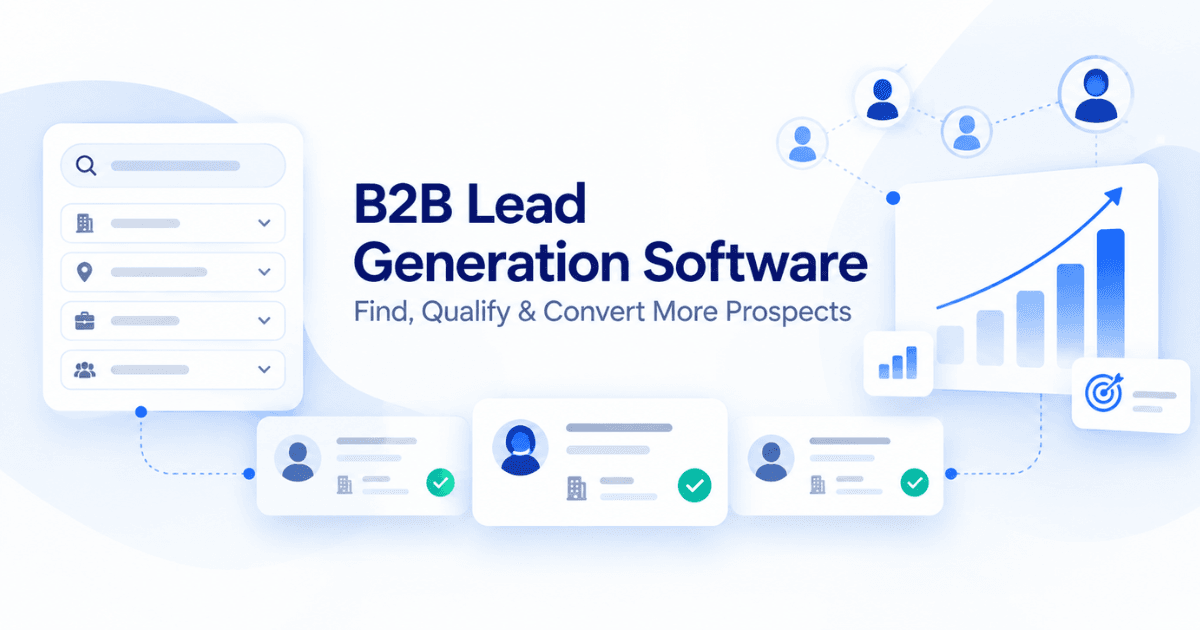
B2B lead generation software is a category of sales tools that helps businesses discover, enrich, and prioritize potential customers from other businesses. It brings together a large contact and company database, filters that let a team define who a good prospect looks like, and workflows that push those prospects into outreach and CRM systems.
The core idea is simple. Instead of your reps guessing who to target, the platform surfaces accounts and decision-makers that match your criteria, verified and ready to be worked. Some teams call this a B2B lead generation platform; others call it sales intelligence software or a B2B lead finder. The labels vary, but the job is the same: reduce the time between "we need pipeline" and "we are talking to a qualified buyer."
How B2B Lead Generation Software Works
Under the surface, most B2B lead generation tools combine four moving parts:
- Data collection. The platform aggregates company and contact data from public web sources, business filings, professional networks, technographic signals, and licensed data partners.
- Verification and enrichment. Raw data is cleaned, de-duplicated, and checked for accuracy — emails validated, job titles standardized, firmographics like industry, revenue, and headcount attached.
- Search and segmentation. You describe the buyer you want (industry, role, region, technology used, hiring activity, funding, and so on), and the software returns matching accounts and people.
- Activation. Verified leads flow into your CRM, sales engagement tool, or outbound sequences with the fields your reps need to personalize outreach.
A well-built lead generation platform does all of this continuously, so lists do not go stale between the moment a rep exports them and the moment they hit send.
For a closer look at how these workflows change the day-to-day for a rep, this related guide on lead generation software for sales teams walks through the practical impact on SDR and BDR productivity.
Key Features to Look for in B2B Lead Generation Software
Not every platform in this category is built for the same job. When comparing options, weigh these capabilities against how your team actually sells:
1. Depth and freshness of the B2B contact database
A large database is only useful if it is accurate. Ask how often records are refreshed, how emails are verified, and what percentage of contacts include direct dials or mobile numbers. A shallow list padded with role emails will not help a rep book meetings.
2. Precise search and ICP filters
The best sales prospecting software lets you slice the database on more than industry and title. Look for filters covering headcount, revenue, funding stage, technology stack, hiring signals, location, and buying intent. The tighter the filters, the fewer wasted touches.
3. Intent and buying signals
Intent data tells you which accounts are actively researching problems you solve. Combined with firmographic fit, it is one of the highest-signal inputs for prioritizing outbound and inbound follow-up.
4. Built-in enrichment
Rather than shipping incomplete records to reps, a strong platform enriches every lead with the fields your motion needs — verified email, phone, LinkedIn, company size, tech stack — so sequences can be personalized without extra tools.
5. Integrations with your stack
Leads that live inside the software but never reach the CRM or sales engagement platform are effectively invisible. Native integrations with Salesforce, HubSpot, Outreach, Salesloft, and similar tools matter more than any single feature.
6. Compliance and data governance
Global outbound means dealing with GDPR, CCPA, and similar regimes. A serious vendor is transparent about sourcing, opt-out handling, and how they support your compliance obligations.
7. Usability for the people who live in it
SDRs will open the tool dozens of times a day. If the search takes six clicks and exports take a minute, adoption suffers. Trial the interface with the people who will use it, not just the buyer.
How B2B Lead Generation Software Helps Sales Teams
The right platform changes what a sales day looks like. A few concrete shifts you should expect:
- More time selling, less time hunting. Reps stop scraping profiles and start working from lists that already match the ideal customer profile.
- Higher connect rates. Verified contact data means fewer bounces and more conversations that actually reach a person.
- Better personalization. Enrichment fields - recent funding, hiring for a specific role, a new technology adoption — give reps something real to say in the first line.
- Predictable pipeline coverage. When sourcing is repeatable, forecasting improves. Leaders can build coverage plans instead of hoping the team scrapes enough contacts this month.
- Faster ramp for new hires. A new SDR with a good B2B lead generation platform is productive in weeks, not months, because the sourcing playbook is standardized.
B2B Lead Generation Software vs. Traditional Lead Generation Methods
Traditional methods — bought lists, manual LinkedIn sourcing, trade show badge scans, and one-off scraping — still show up in plenty of playbooks. They can produce results, but each has real limits:
- Bought lists go stale within weeks, often include unverified contacts, and can create compliance risk.
- Manual sourcing does not scale. A rep who can find fifty good contacts a day is not a rep who has time to run sequences and take meetings.
- Event lists are narrow and lag behind the buying cycle.
A modern B2B lead generation platform combines the reach of a database with the specificity of manual research, refreshed continuously and delivered inside the tools reps already use. It is less about replacing human judgment and more about giving that judgment better inputs.
How to Choose the Right B2B Lead Generation Software
A short, honest evaluation goes further than a fifty-column feature matrix. Work through these steps:
- Define your ICP in writing. If your team cannot agree on the ideal customer, no software will fix targeting.
- Pull a real search. During trials, run the exact filters you would use in production. Export a sample and check the emails, titles, and phone numbers by hand.
- Test data freshness. Look at a handful of records for people you already know changed jobs recently. Was the platform updated?
- Confirm integrations. Run a small sync into your CRM and sales engagement tool. Field mapping problems tend to surface only in real workflows.
- Measure ramp time. Ask two reps to source a full week of pipeline with the tool. How long did each list take? What did the reply rate look like?
- Weigh total cost. Compare seat pricing, credit models, and the cost of the extra tools you can retire once the platform is in place.
Common Use Cases for B2B Lead Generation Software
Sales teams put B2B lead generation tools to work across the funnel. A few of the most common patterns:
- Outbound prospecting. Building targeted lists of accounts and contacts for cold email, calling, and multichannel sequences.
- Account-based selling. Mapping full buying committees inside strategic accounts — champions, economic buyers, technical evaluators, blockers.
- Inbound lead enrichment. Filling in the missing fields on form submissions so reps know who they are calling before they dial.
- Territory planning. Sizing markets and building rep-level territories from real firmographic data instead of best guesses.
- Event follow-up. Turning a webinar attendee list into a full contact record with role, company, and buying context.
- Recruiting-style research for partnerships and channel programs.
How SalesTarget.ai Helps With B2B Lead Generation ?
SalesTarget.ai is built for teams that want a serious source of B2B pipeline without stitching four tools together. Its Lead Explorer gives sales teams a single place to define who they want to reach, find those people, and move them into outreach.
A few of the capabilities that matter most in day-to-day prospecting:
- 840M+ B2B profiles across roles, seniorities, and functions.
- 146M+ businesses covered globally, with firmographic depth for filtering.
- 4,000+ intent signals to surface accounts actively researching relevant topics.
- 50+ data sources blended to reduce blind spots in any single provider.
- 99% verified data so reps spend time on conversations, not bounces.
- ICP Builder to codify your ideal customer profile and reuse it across searches.
- Smart Prospect Search that combines firmographic, technographic, and intent filters in one query.
- Built-in enrichment that fills contact and company fields the moment a lead is added.
If your team is evaluating a new sales lead generation software or replacing an aging one, it is worth seeing how Lead Explorer performs against your real ICP. Explore SalesTarget AI Lead Explorer and run a search against the kind of accounts your team is targeting this quarter.