Most B2B teams treat LinkedIn content like a one-time event. They publish a post, watch engagement for two days, and move on to the next thing. LinkedIn newsletters break that cycle. A newsletter creates a subscription layer on top of your content- each edition lands directly in subscribers' inboxes and notification feeds, building a recurring audience that compounds over time.
For sales teams, SDRs, and founders looking to build predictable pipeline, this is one of the most underused channels on the platform. When paired with a LinkedIn lead generation tool , newsletter content becomes more than thought leadership. It becomes the top of a structured inbound sales motion. Here is how to build that system from the ground up.
Why LinkedIn Newsletters Work for B2B Lead Generation
LinkedIn newsletters offer something standard posts cannot: a subscriber base that explicitly opts in to hear from you. According to LinkedIn's official newsletter FAQ, subscribers receive push notifications, in-app alerts, and email notifications every time a new edition is published. That triple-notification delivery bypasses LinkedIn's feed algorithm entirely - your content reaches people who chose to hear from you, not just those the algorithm selects.
This creates a compounding effect. Consistent publishing builds authority. Authority drives subscriber growth. A growing subscriber base gives you a predictable audience for buyer education and social selling. And when LinkedIn prospects engage repeatedly with your content, they are showing intent—often before they ever submit a demo request or respond to an outbound message. For revenue teams, that engagement signal is the foundation of content-led prospecting and a genuine inbound sales pipeline.
Build a Newsletter Around Buyer Problems, Not Product Features
The most common mistake with B2B newsletters is leading with what you sell instead of what your audience struggles with. A newsletter about your latest product release has a ceiling. A newsletter that addresses recurring buyer pain points, buying triggers, and common sales objections does not.
Start by mapping your ICP's biggest challenges and the questions they ask before they are ready to evaluate a solution. Talk to your sales team. What objections come up most often? What misconceptions slow deals down? What industry trends are reshaping their priorities? Those are your newsletter topics.
For example, if you sell to heads of sales at mid-market SaaS companies, your newsletter might cover themes like improving outbound reply rates, building SDR playbooks for a new market segment, or reducing pipeline leakage during long deal cycles. Each edition should feel like it was written specifically for the person reading it—not broadcast to everyone on LinkedIn.
Turn One Newsletter Into a Multi-Touch LinkedIn Campaign
A strong newsletter edition should not be published and forgotten. The best content-led prospecting teams repurpose each piece into multiple LinkedIn touchpoints: the full newsletter for subscribers, a standalone post summarizing the key insight, a short-form text post pulling one compelling data point, a carousel or document post expanding on one section, and a direct message referencing the content for warm outreach.
This approach to LinkedIn campaign management turns one piece of original thinking into five or six touches across different content formats. You stay visible without producing entirely new content every day. Your prospects encounter the same core idea from multiple angles, which reinforces your perspective and builds familiarity before any sales conversation begins.
The key is adapting the format, not copying the text. Each touchpoint should deliver value independently while pointing back to the depth of the original newsletter edition. That is how a single piece of content supports an entire LinkedIn content strategy for the week.
Connect Newsletter Engagement to LinkedIn Outreach
Publishing is only half the system. The other half is turning engagement into conversations. When someone comments on, shares, or consistently reads your newsletter, they have given you a natural reason to reach out—one that feels relevant rather than cold.
Not every interaction is worth acting on. A casual like from someone outside your ICP is noise. A detailed comment from a director-level buyer at a target account is a signal. Training your team to distinguish between the two is essential for efficient LinkedIn prospecting.
Once you have identified high-value engagement, craft a message that references the content naturally. This is where having strong automated LinkedIn outreach openers matters—your first message should acknowledge what the prospect engaged with and extend the conversation, not pitch your product on arrival.
Use Automation Without Turning Your Newsletter Into Spam
LinkedIn automation gets a bad reputation because too many teams use it to blast identical messages at scale. That approach undermines the trust a newsletter is designed to build.
The distinction is important. LinkedIn outreach automation should handle workflow tasks—tracking who engaged, organizing prospect lists, scheduling follow-ups, managing campaign sequences. It should not replace the relevance of your messaging. Automated LinkedIn outreach works when each touchpoint feels specific to the recipient. LinkedIn sales automation fails when prospects receive messages that clearly were not written for them.
The most effective approach combines automation's efficiency with human judgment. Use tools to manage repetitive operational steps - connection requests, follow-up cadences, sequence management. Keep the messaging specific to each prospect's engagement and context. When you structure LinkedIn outreach workflows that generate replies on autopilot this way, you scale outreach without sacrificing the relevance that drives replies.
Create a Newsletter-to-Pipeline Workflow
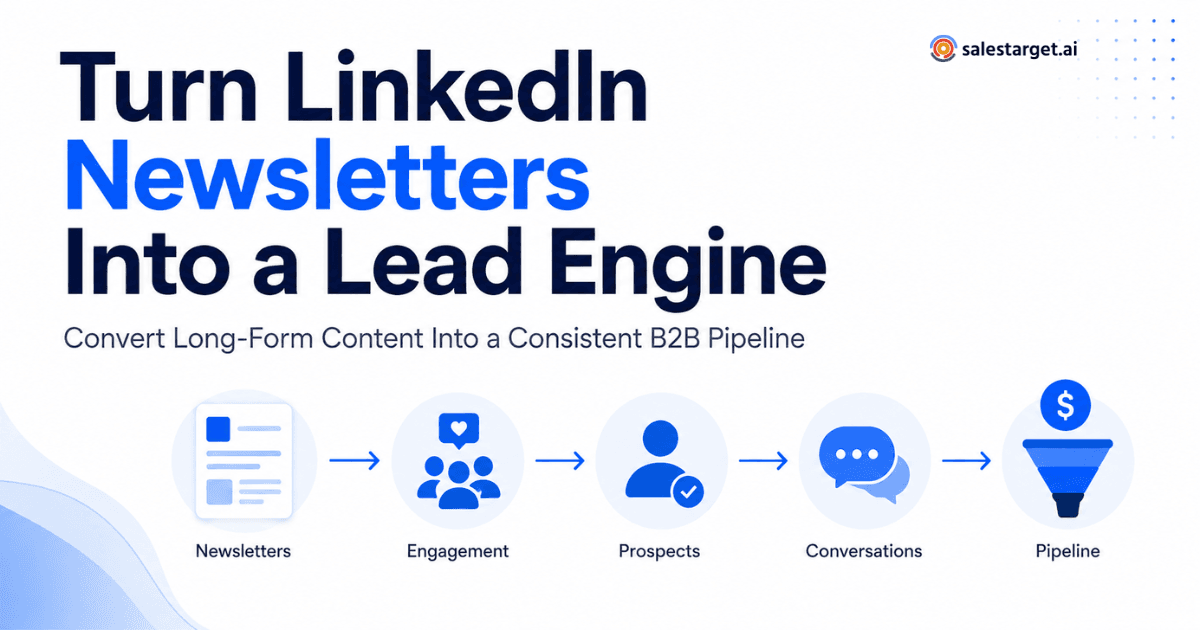
Here is a practical workflow for turning newsletter content into measurable pipeline:
- Identify a high-value buyer problem your ICP is actively dealing with.
- Publish a newsletter edition that addresses the problem with genuine depth and practical insight.
- Repurpose the content into at least three additional LinkedIn formats within the same week.
- Track meaningful engagement—comments, shares, and profile visits from accounts that match your target criteria.
- Segment engaged prospects by fit and intent. Are they in your ICP? Have they engaged more than once?
- Start contextual LinkedIn outreach within 48 hours of engagement, while the content is still top of mind.
- Continue the conversation by sharing related content or asking a specific, thoughtful follow-up question.
- Move qualified prospects toward a discovery call or meeting when the timing and interest level align.
- Measure pipeline contribution by tracking which newsletter editions sourced or influenced real opportunities.
Each step builds on the previous one. Skip the segmentation step, and you are back to generic outreach. Skip measurement, and you cannot tell which topics actually drive revenue.
Measure Newsletter Performance Like a Revenue Channel
Subscriber count and open rates tell you whether people are reading. They do not tell you whether your content is generating revenue.
Industry reporting from ContentIn, citing Linklulu's 2026 analysis, indicates that LinkedIn newsletter open rates averaged 35–45% in 2025—significantly higher than the roughly 21% benchmark for traditional email marketing. LinkedIn also provides newsletter-specific analytics including subscriber demographics, email sends, and open rates, giving authors more granular performance data. Those engagement numbers are encouraging, but opens alone remain a vanity metric.
Layer in metrics that connect to pipeline: profile visits from target accounts after publishing, qualified conversations started from newsletter engagement, positive reply rates on outreach tied to newsletter content, meetings booked, and opportunities influenced. If your newsletter generates subscribers but no conversations, the content may be too broad. If it drives conversations but no meetings, refine the follow-up process.
Where a LinkedIn Lead Generation Tool Fits
A LinkedIn lead generation tool brings structure to the process described above. Instead of manually tracking who engaged with your newsletter and managing follow-ups across disconnected spreadsheets, a purpose-built tool helps you organize prospect discovery, manage outreach sequences, and execute campaigns with consistency.
SalesTarget AI's LinkedIn Automation product supports this workflow by helping B2B sales teams and SDRs connect content engagement to outreach without losing context or timing. The goal is not to automate judgment—it is to give revenue teams the infrastructure to act on engagement signals before they go cold.
Build a Repeatable Newsletter-to-Outreach Engine
The teams that generate consistent inbound pipeline from LinkedIn are not necessarily the ones publishing the most. They have built a system: publish valuable content, repurpose it across formats, track engagement from the right accounts, prioritize outreach based on fit and intent, follow up with context, and measure what matters.
Consistency beats volume. Relevance beats reach. Timely, segmented outreach beats bulk messaging every time. A LinkedIn newsletter is the starting point—not the destination. When every edition feeds a structured outreach workflow, your content stops being a brand awareness exercise and starts functioning as a genuine revenue channel.
Turn LinkedIn Attention Into Pipeline
Your newsletter should not stop working after someone reads it. Use SalesTarget.ai to build a consistent LinkedIn outreach workflow around the prospects and conversations that matter.