Cold Email Marketing Beyond Manual Outreach
Cold email marketing has always been a numbers game — but not anymore. Today, volume without precision gets you ignored, and manual sequencing simply cannot keep pace with how buyers expect to be reached. The shift is no longer on the horizon. It's already reshaping how outbound teams operate, from early-stage SaaS startups to enterprise SDR teams running thousands of touches per week.
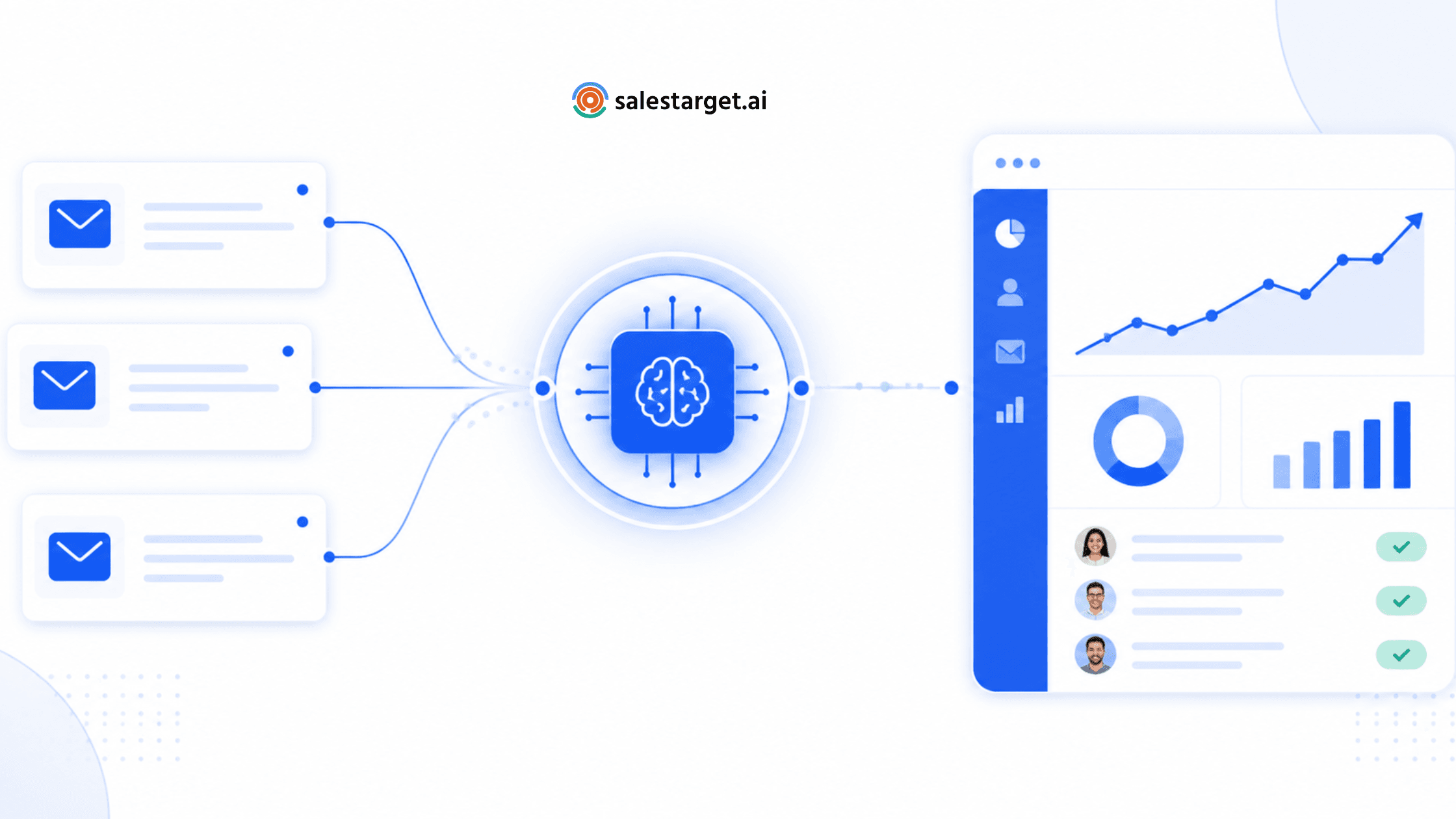
In the AI era, cold email marketing works best when personalization, timing, and follow-up are handled by intelligent automation rather than manual effort. AI email automation analyzes prospect data, writes contextual messages, and adapts sequences based on engagement — replacing static templates with dynamic, high-converting outreach that scales without adding headcount.
Cold Email Marketing Beyond Manual Outreach
Buyer behavior has evolved faster than most outbound playbooks. Decision-makers now receive hundreds of emails a week, have sharper filters for generic pitches, and expect communication that reflects actual knowledge of their business. A subject line referencing a funding round or a recent product launch gets opened. A subject line that says 'Quick question' does not.
The inbox is also more competitive. Spam filters have improved significantly, and email clients have grown smarter about clustering promotional messages away from primary inboxes. Deliverability is no longer just a technical concern — it's a strategic one.
Manual outreach used to work because it was inherently personal. One rep, one prospect, one crafted message. But as teams scaled, that precision eroded into copy-paste templates, inconsistent follow-up, and missed timing windows. The gap between what buyers expect and what most outbound teams deliver has never been wider. That gap is exactly where AI-powered email outreach platforms are making the most impact.
The personalization expectation is now baseline, not bonus. Buyers in competitive SaaS verticals can identify a mass email within seconds. If your first line reads like it was written for fifty people, it was — and they know it.
The Evolution of Cold Email Marketing with AI
Understanding the mechanics of AI-driven outreach helps clarify why it outperforms traditional sequencing. This isn't about automating the same broken process faster. It's about replacing each manual step with something smarter.
Smarter Prospect Research
AI tools pull from CRM data, LinkedIn activity, company websites, news mentions, and job postings to build prospect profiles automatically. Instead of a rep spending thirty minutes researching one account, the system surfaces the three signals most likely to resonate — funding stage, hiring trends, recent leadership changes — and uses them to inform the opening line.
Personalized Email Creation
Modern cold email copy frameworks built into AI platforms go well beyond {FirstName} tokens. The system understands prospect context and constructs opening lines, value propositions, and CTAs that reflect individual relevance. What used to take a skilled copywriter an hour now happens in seconds — at scale, without sacrificing quality.
Automated Email Campaigns
Automated email campaigns eliminate the manual coordination of who gets what message and when. AI handles scheduling, timezone adjustments, and send-time optimization simultaneously. Campaigns that once required daily oversight now run on predefined logic with real-time adaptability.
Dynamic Follow-up Cadence
Follow-up is where most manual sequences fall apart. Reps forget, get busy, or send the same message three times. AI-managed follow-up cadence adjusts based on behavior — if a prospect opened the email twice but didn't reply, the next touch is different from the one sent to a cold non-opener. That behavioral logic is what separates a good sequence from a great one. For a deeper breakdown of how to structure this, this guide on building high-converting outreach sequences covers the architecture in detail.
Reply Rate Optimization
Reply rate optimization is where AI earns its keep long-term. The system tracks which subject lines, openers, and CTAs generate replies, identifies patterns across segments, and continuously improves sequence performance. According to research published by HubSpot's Sales Blog, personalized subject lines alone can lift open rates significantly — and AI enables that personalization at a scale no manual process can replicate.
Building Modern Cold Email Sequences
Effective cold email sequences today follow a deliberate structure. The first touchpoint establishes relevance — a specific insight, a shared context, or a reference to something in their world that signals you actually did your research. It's not a pitch. It's an opening.
Timing matters more than most teams acknowledge. The best sequences send follow-ups based on engagement signals rather than arbitrary day intervals. Day 3, Day 7, Day 14 might work on average — but if someone opened your email four times on Day 2, waiting until Day 3 to follow up is a missed opportunity.
Triggers built into modern outbound email playbooks can fire based on link clicks, reply intent scores, or even time-of-day patterns. Your cold email system for SaaS agencies should incorporate these behavioral triggers rather than relying on static scheduling.
B2B email templates within AI platforms are rarely static. They function more like adaptive frameworks - the AI starts with a structure, then modifies language, tone, and emphasis based on the prospect's industry, seniority level, and prior engagement history. This is fundamentally different from a template library where reps pick and paste.
AI optimization across a sequence also means A/B testing happens continuously in the background. You don't need to manually set up split tests. The system tests variations, identifies winners, and rolls them out automatically across the campaign.
Real Use Cases
The applications vary by team size and structure, but the core value is consistent.
SaaS founders running lean growth operations use AI email automation to handle initial outreach and qualification without hiring an SDR. They define their ICP, set the sequence logic, and let the system build pipeline while they focus on product and customer conversations.
SDR teams at growth-stage companies use AI to increase coverage without sacrificing quality. A rep who manually managed 60 accounts can now handle 200 — because research, first drafts, and follow-up logic are handled automatically. The rep focuses on replies and conversations, not administrative sequencing tasks.
Agencies managing outreach for multiple clients find that AI platforms let them run distinct sequences for each client without the operational chaos. One SaaS outreach case study highlights how a growth agency scaled outbound for a SaaS client without proportionally growing their ops team — a direct result of replacing manual sequencing with AI-managed campaigns.
Consultants and independent advisors use AI outreach to maintain a consistent pipeline without dedicating full days to prospecting. The system keeps them visible to prospects in their pipeline even during project-heavy periods when manual follow-up would otherwise stop entirely.
Key Challenges in Cold Email Marketing
AI doesn't eliminate the possibility of a poor outreach strategy — it just makes poor strategies scale faster. A few patterns consistently undermine results.
Over-automation is the most frequent issue. Teams set up a sequence, turn it on, and walk away. Effective AI outreach still requires human review of reply intent, periodic refreshes of messaging, and adjustments when market conditions shift.
Poor targeting compounds every other problem. If your list is wrong, a well-written email is wasted. ICP definition needs to precede sequence design, not follow it.
Generic messaging - even with AI - happens when the personalization inputs are thin. If you're only feeding the system a company name and job title, the output won't be meaningfully different from a template. The quality of the data going in determines the quality of the emails coming out.
Ignoring reply intent is a costly oversight. When a prospect replies with something like 'not now, check back in Q3,' that's a qualified lead on a delay — not a rejection. Teams that fail to tag and re-engage these responses leave pipeline on the table.
Sending too many emails without sufficient value in each touch erodes deliverability and trust simultaneously. Four to six well-spaced, high-relevance touches outperform ten generic ones every time.
Choosing an AI Email Outreach Platform
The platform you choose shapes everything downstream. Personalization capability is the first filter — can the system build genuinely custom first lines, or is it running token substitutions on a template? There's a meaningful difference.
Deliverability infrastructure is non-negotiable. Platforms that manage domain warming, rotation, and sending reputation proactively outperform those that treat deliverability as a user's responsibility. A message that doesn't reach the inbox cannot generate a reply.
Analytics need to go beyond open and click rates. You want reply rate trends, sequence-level performance data, and the ability to see which touchpoints generate the most engagement across different segments.
CRM integration determines how smoothly AI outreach connects to your existing workflow. Platforms that sync bidirectionally — pulling prospect data in and pushing engagement signals back — reduce manual data entry and keep your pipeline clean. The email outreach solution from SalesTarget.ai is built with these workflows in mind, combining sequence automation, deliverability management, and AI-generated personalization in a single platform designed for B2B outbound teams.
Industry data from Gartner consistently shows that sales teams investing in AI-assisted tools are outperforming those relying on manual processes — not just in efficiency, but in revenue outcomes. The gap will only widen as the technology matures.
Teams that continuously optimize AI-assisted sequences across multiple touchpoints can reduce manual outreach time by approximately 60% while achieving noticeably higher reply consistency compared with static campaigns. That's not a theoretical ceiling — it's a benchmark observed across well-structured outbound programs that commit to iterative sequence improvement.
Cold email marketing isn't broken — the manual approach to it is. Buyers have moved on, inboxes have evolved, and the personalization bar has risen to a level that manual sequencing simply cannot sustain at scale. AI email automation isn't a shortcut. It's a structural upgrade.
The teams seeing the best results aren't those with the biggest lists or the most aggressive send volumes. They're the ones using AI to research smarter, write more relevant messages, time their follow-up based on actual engagement, and optimize continuously based on real performance data.
The outbound function hasn't disappeared — it's been rebuilt around intelligence rather than effort. And that shift is what separates growing pipelines from stalling ones.
Ready to move beyond manual sequencing?
Explore the full AI Outreach Suite — designed for SaaS founders, SDR teams, and revenue leaders who want pipeline results without the manual overhead.