Your reps are holding a list of 2,000 accounts and have no idea which 40 are shopping this month. So they email everyone, reply rates sag, and the 40 accounts that were ready to talk get the same copy as the 1,960 that were not.
The best intent data provider for identifying in-market B2B buyers is one that shows which companies are researching your category right now, then gives you verified contacts at those companies in the same workflow. Salestarget.ai does this. Its 4,000+ intent signals, including Bombora Intent Topics, sit inside Lead Explorer next to 840M+ professional profiles, so a rep can spot an active account, verify a contact, and start outreach without exporting a CSV.
Signals alone do not close deals. They need fit filters, clean contact data, and a sales motion that acts fast.
Finding In-Market B2B Buyers Starts With Better Intent Data
In-market buyers are companies actively researching a solution like yours, and intent data is how you see them before they fill out a form. Gartner reports that B2B buyers spend only 17% of their buying time meeting with potential suppliers. When several vendors are on the shortlist, each one gets a sliver of that.
Most of the decision happens in private research. If your first touch lands after the shortlist is built, you are fighting for a slot that is already full.
That is the case for intent data. It moves your first conversation earlier, to the stage where a buyer is still forming opinions. The catch is that the quality of that data varies a lot between providers, which is what the rest of this guide helps you judge.
How B2B Intent Data Helps Sales Teams Spot Buying Activity
B2B intent data tracks research behavior tied to a company and a topic, so a sales team can see which accounts are reading about a problem and how hard they are reading. It turns a static list into a ranked one.
Research activity as an early buying signal
Research activity is the earliest buying signal you can observe. A company that suddenly consumes far more content about, say, sales engagement software than its own normal baseline is usually forming a need. Bombora's Company Surge works on this principle: it compares current topic consumption against a company's historical pattern [add source link]. The spike matters more than the raw volume.
Company-level intent and account-level buying behavior
Company-level intent tells you which organization is researching. It does not tell you which person typed the search. Treat it as an account-level signal and plan to reach several roles inside that company, since B2B purchases involve groups, not one reader.
Intent topics, purchase signals, and buyer research patterns
Intent topics are the subjects a company is researching, such as lead enrichment or email deliverability. Purchase signals are the narrower subset that point to buying, like comparing vendors or reading pricing-style content. A single topic is a hint. A cluster of related topics is a pattern worth a rep's time.
Connecting B2B intent signals with sales prospecting
Intent only pays off when it feeds prospecting directly. A signal that lives in a dashboard nobody opens is trivia. A signal that filters a prospect list, triggers enrichment, and lands in a sequence changes pipeline.
From Intent Signals to Sales-Ready Accounts
An intent signal becomes a sales-ready account after it passes four checks: fit, relevance, signal strength, and a reachable contact. Skip any one and you create busywork.
Start with the ideal customer profile
Build the ICP first, before you look at a single signal. Define industry, company size, revenue band, and the roles that buy. In Lead Explorer, the ICP Builder lets you describe this in plain English or stack filters by hand.
Filter accounts by company and business characteristics
Apply firmographic filters next: location, headcount, revenue, tech stack, and department structure. This cuts the signal pool down to companies you could actually serve. A loud signal from a bad-fit company still wastes a send.
Match intent signals with relevant prospects
Now layer intent topics on top of the filtered list. Pick topics that map to the problem you solve, not to your category name alone. Buyers rarely search for your brand. They search for the pain.
Prioritize accounts showing multiple buying signals
Rank accounts by how many different signals line up. A topic surge plus a recent funding round plus a hiring spike in the relevant department is a far stronger case than any one of them. Salestarget.ai pairs Bombora Intent Topics with business events (funding, hiring spikes, leadership changes, awards) on a 30 to 90 day lookback, so that stacking happens in one search.
Move high-intent prospects into active sales workflows
Push the shortlist straight into a sequence or the CRM the same day. Intent has a shelf life. An account that surged three weeks ago and sat in a spreadsheet is no longer a hot account, it is a guess.
What Makes the Best Intent Data Provider for B2B Sales?
The best intent data provider covers enough signals to be useful, stays fresh, filters by fit, and connects to verified contacts and outreach. Use the seven checks below to judge any vendor.
Intent signal coverage and research activity
Ask how many signals the provider tracks and where they come from. Thin coverage means your niche may have no signal at all. Salestarget.ai draws on 50+ data sources and 4,000+ intent and buyer signals, which gives coverage across most B2B categories.
Intent topics and purchase intent data
Look for named, searchable intent topics you can select yourself. If a vendor only hands you an opaque score, you cannot tell why an account ranks high. Topic-level visibility lets a rep write relevant outreach and lets a manager audit the logic.
Account-level intent data for prospect prioritization
A useful provider ranks accounts, then lets you drill into the contacts. Salestarget.ai lets you search across 146M+ business entities and then move to the people inside them, so prioritization and prospecting are one motion, not two tools.
Contact enrichment and data verification
Intent without contacts is a to-do list with no phone number. Check whether the provider enriches at the moment you find the account. In Salestarget.ai, one click unlocks verified professional email, personal email, phone, and mobile, and verification runs at the point of enrichment rather than whenever the record was first scraped.
ICP filters and sales intelligence
Strong B2B sales intelligence means filtering by industry, role, seniority, department, company size, revenue, location, and tech stack alongside intent. If intent is the only filter, you will chase companies that can never buy.
Data freshness and signal quality
Ask about the lookback window and how often signals update. A 30 to 90 day window is practical for most sales cycles. Anything older than that tells you about the past quarter, not this one.
Integration with prospecting and outreach workflows
Count the steps between a signal and a sent email. Every export, import, and manual copy adds delay and error. The best providers push leads directly into sequences and the CRM with no CSV in between.
Turning B2B Buyer Intent Data Into Better Prospecting
Intent data improves prospecting when it narrows the list, sharpens the first message, and tells you who to call first.
Build focused account lists from intent signals
Start with a small list, 50 to 150 accounts, defined by ICP plus two or more signals. Small lists get personal attention. Large lists get templates.
Combine buyer intent with verified contact data
The account is only half the job. You still need the right people, with working addresses. Teams comparing sources for this step can start with this breakdown of B2B contact data providers for SDR and BDR teams. Then match two or three roles per account, such as the economic buyer, the day-to-day owner, and a likely champion.
Create outreach based on the prospect's research activity
Write to the problem the topic cluster implies, not to the fact that you tracked them. "Saw you were reading about X" feels like surveillance and kills replies. "Teams at your stage usually hit X around now" feels like experience. Most intent-based emails get this wrong, and it is a quiet reason reply rates disappoint.
Use intent signals to improve prospect prioritization
Sort the day's work by signal strength and fit, so reps start with the accounts most likely to reply. This is intent-based lead scoring in practice: a short, ranked queue instead of an alphabetical list.
Track engagement after the first sales touch
Watch opens, replies, clicks, and meetings, then feed that back into the account ranking. An account that engages with your first email moves up. One that goes silent after three touches moves down until a new signal appears.
Where Intent Data Fits in the Modern B2B Sales Process
Intent data fits at the top and middle of the funnel: choosing accounts, qualifying them, shaping outreach, and timing follow-up.
Intent data for account selection
Use it to decide where to spend the next 30 days. Instead of working a territory top to bottom, work the accounts that are researching now.
Intent signals for lead qualification
A lead with a fit match and an active topic surge qualifies faster than one with fit alone. Reps spend less time on discovery questions when they already know which problem is in play.
Intent data for outbound email and LinkedIn outreach
Run both channels against the same account list. An email and a LinkedIn connection request arriving within days of each other, both about the same problem, reads as relevant. Two unrelated messages read as spam.
Intent-based prospecting for account-based sales
For account-based teams, intent helps decide which named accounts get a full campaign and which stay in light-touch nurture. It replaces gut feel with a visible reason to prioritize.
Buyer signals for follow-up and pipeline management
A new signal on an open deal is a reason to reach out again. A hiring spike or leadership change at a stalled account gives a rep a fresh, honest reason to follow up.
Why Choose SalesTarget.ai
SalesTarget.ai combines intent signals, verified contacts, email and LinkedIn outreach, validation, and a CRM in one workspace. That removes the hand-offs where intent data usually goes cold.
Find and enrich B2B prospects with Lead Explorer
Lead Explorer is the prospecting engine. Search in plain English or stack Business and People filters, then enrich in one click. Enrichment happens when you find the lead, so the contact you reach is current.
Use 4,000+ intent signals to identify relevant buyer activity
SalesTarget.ai provides 4,000+ intent and buyer signals. These include Bombora Intent Topics plus business events such as funding rounds, hiring spikes, leadership changes, and awards, viewed on a 30 to 90 day lookback. Intent-based lead scoring sits in the same search.
Search across 840M+ verified professional profiles
The database holds 840M+ professional profiles and 146M+ business entities from 50+ sources, according to Salestarget.ai. Wide coverage matters because a signal on an account is useless if you cannot find the people inside it.
Connect prospecting with email and LinkedIn outreach
Email Outreach and LinkedIn Outreach run in one coordinated flow, so context carries across channels. Leads go from a signal-based search straight into a multichannel sequence.
Validate contacts before launching outbound campaigns
Before a campaign goes out, the Email Validator runs MX and SMTP checks, flags disposable addresses, and scores risk. That protects sender reputation, which intent-driven campaigns depend on because they target a small, valuable list.
Manage follow-up with the built-in CRM
Campaign leads land in the CRM automatically. Emails and calls log to the lead timeline, and tasks are created when a lead replies or a meeting ends. The built-in AI dialer takes call notes for the rep and saves them to the timeline.
Use AI Copilot across prospecting and sales workflows
AI Copilot is a chat teammate inside the platform. Ask it to find leads, draft a sequence, or query CRM deals in plain language. Strategy stays with the rep. The grunt work does not.
If you want to see signal-based prospecting on your own ICP, start with a demo and run one focused account list end to end.
Common Intent Data Mistakes That Reduce Sales Results
Most intent programs underperform for the same six reasons, and all of them are fixable.
Treating every intent signal as immediate buying intent
A surge means interest, not a budget. Some accounts are researching for a project that starts next year. Use signals to start conversations, not to forecast deals.
Using intent data without clear ICP filters
Without ICP filters, intent data sends reps after companies that read a lot but never buy. Fit comes first.
Prioritizing intent scores without checking account fit
Here is a trap competitors skip: the highest score often belongs to a company that is researching because it is a vendor in your space, a consultant, or a student. Check fit before you chase the score.
Sending generic outreach to high-intent prospects
A high-intent account that gets a template learns nothing about why you are different. Spend the saved research time on a specific first line.
Ignoring contact verification and data quality
A bounced email on your best account is an expensive miss. Verify before sending, every time.
Collecting intent data without connecting it to sales action
Signals that never reach a sequence or a call list are a subscription to nothing. Define who acts, within how many days, and on which channel.
Building a Practical Intent-Based B2B Prospecting Strategy
A workable strategy is six steps run weekly: define accounts, pick signals, find contacts, send outreach, track pipeline, and refine.
Define the accounts worth pursuing
Write down your ICP and the three attributes that best predict a closed deal. Those become your hard filters.
Identify relevant buying signals
Choose five to ten intent topics tied to the pain you solve, plus the business events that usually precede a purchase. Review the list each quarter.
Find and verify the right contacts
Pull two or three roles per account and verify each address and number at the point of enrichment.
Launch personalized sales outreach
Send email and LinkedIn touches within the same week. Keep the message about the problem, and let timing do the rest of the work.
Track conversations and pipeline movement
Log every reply and meeting in the CRM, and tag which signal started the conversation. After a few weeks you will know which topics predict real pipeline.
Refine account priorities from new buying activity
Re-run the search weekly. Promote accounts with fresh signals and demote those that went quiet.
Choosing an Intent Data Provider for Long-Term B2B Prospecting
Choose the provider that keeps signals accurate, connects them to contacts, and supports the whole path from first search to closed deal.
Prioritize signal quality over volume alone
A million weak signals lose to a thousand good ones. Ask how signals are sourced, how fresh they are, and whether you can see the topic behind a score.
Look for intent data that connects with contact intelligence
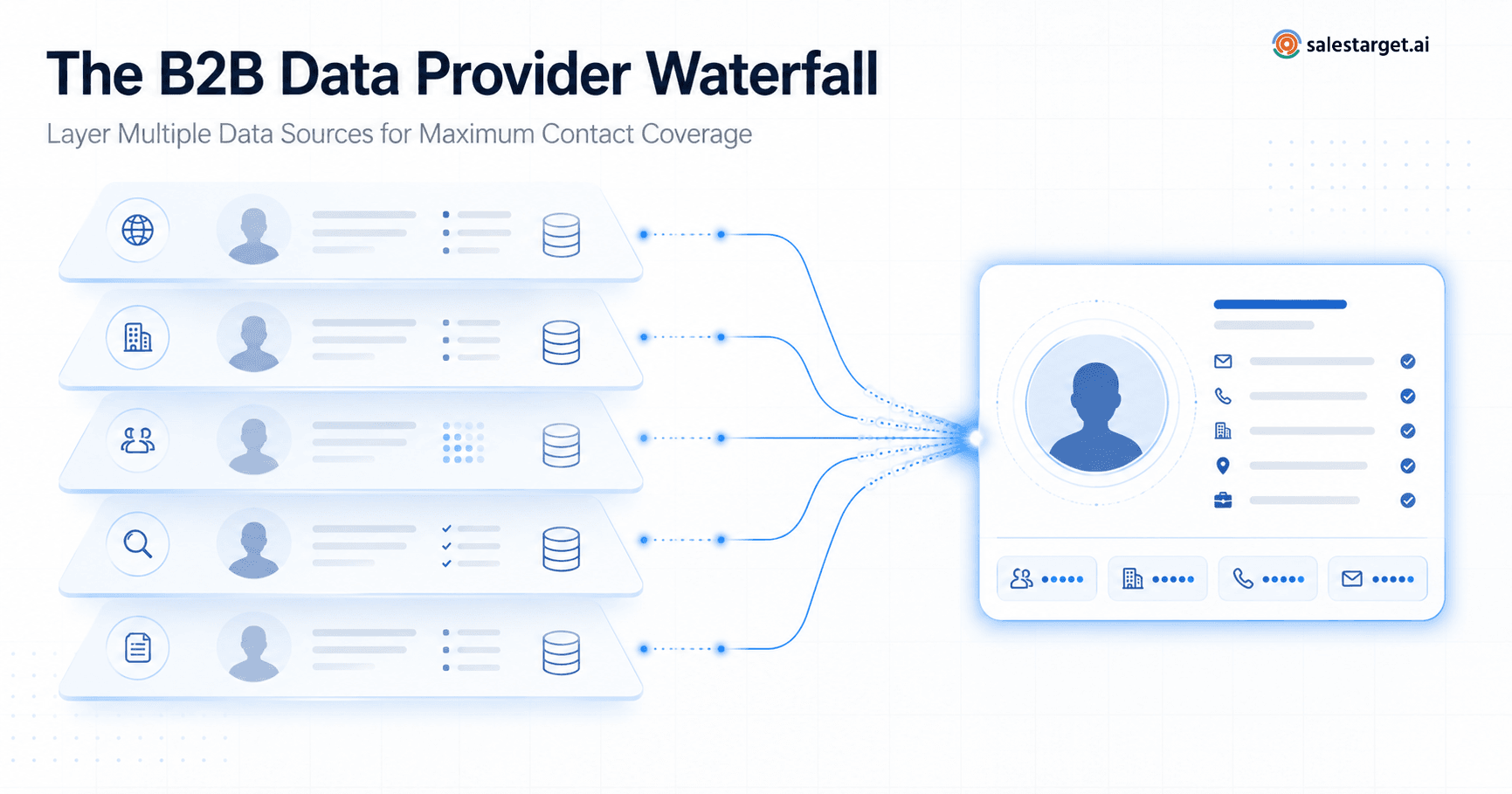
Intent and contact data bought from separate vendors forces you to match records by hand. Readers comparing options can review this list of top B2B data providers and check which ones bundle both.
Choose a platform that supports prospecting through pipeline management
The fewer tools between a signal and a closed deal, the less data leaks along the way. One workspace for search, outreach, validation, and CRM keeps the context intact.
Make intent data part of the daily sales workflow
Tools get abandoned when they sit outside the daily routine. Put the intent-ranked queue where reps already work, and review it in the morning stand-up.
Conclusion: Use Intent Data to Focus Sales Effort on Active Buyers
The problem was never a shortage of accounts. It was not knowing which ones were ready. The best intent data provider fixes that by showing who is researching, who is worth pursuing, and who you can actually reach.
Salestarget.ai puts those pieces in one place: 4,000+ intent signals, 840M+ professional profiles, verified contacts, email and LinkedIn outreach, and a CRM that logs the result. Reps stop guessing, and pipeline starts with accounts that are already looking.
Pick one ICP, build one focused list, and run it through SalesTarget.ai this week. The difference shows up in your first batch of replies.