If you're in B2B sales, you already know the grind. Hours spent researching prospects, writing cold emails, following up, updating the CRM — and somehow still missing quota. A sales AI assistant changes that equation entirely.
In 2025, AI isn't just a buzzword in sales. It's the backbone of how high-performing SDR teams operate. And if your team isn't using one yet, your competitors probably are.
What Is a Sales AI Assistant?
A sales AI assistant is software that uses artificial intelligence to automate and enhance sales tasks — from prospecting and research to outreach, follow-ups, and pipeline tracking.
Think of it as a tireless digital team member that handles repetitive work so your reps can focus on conversations that convert.
Modern tools like the AI sales copilot from SalesTarget.ai go a step further — they don't just automate tasks, they personalize every touchpoint at scale.
Why B2B Sales Teams Are Moving to AI ?
The numbers tell the story:
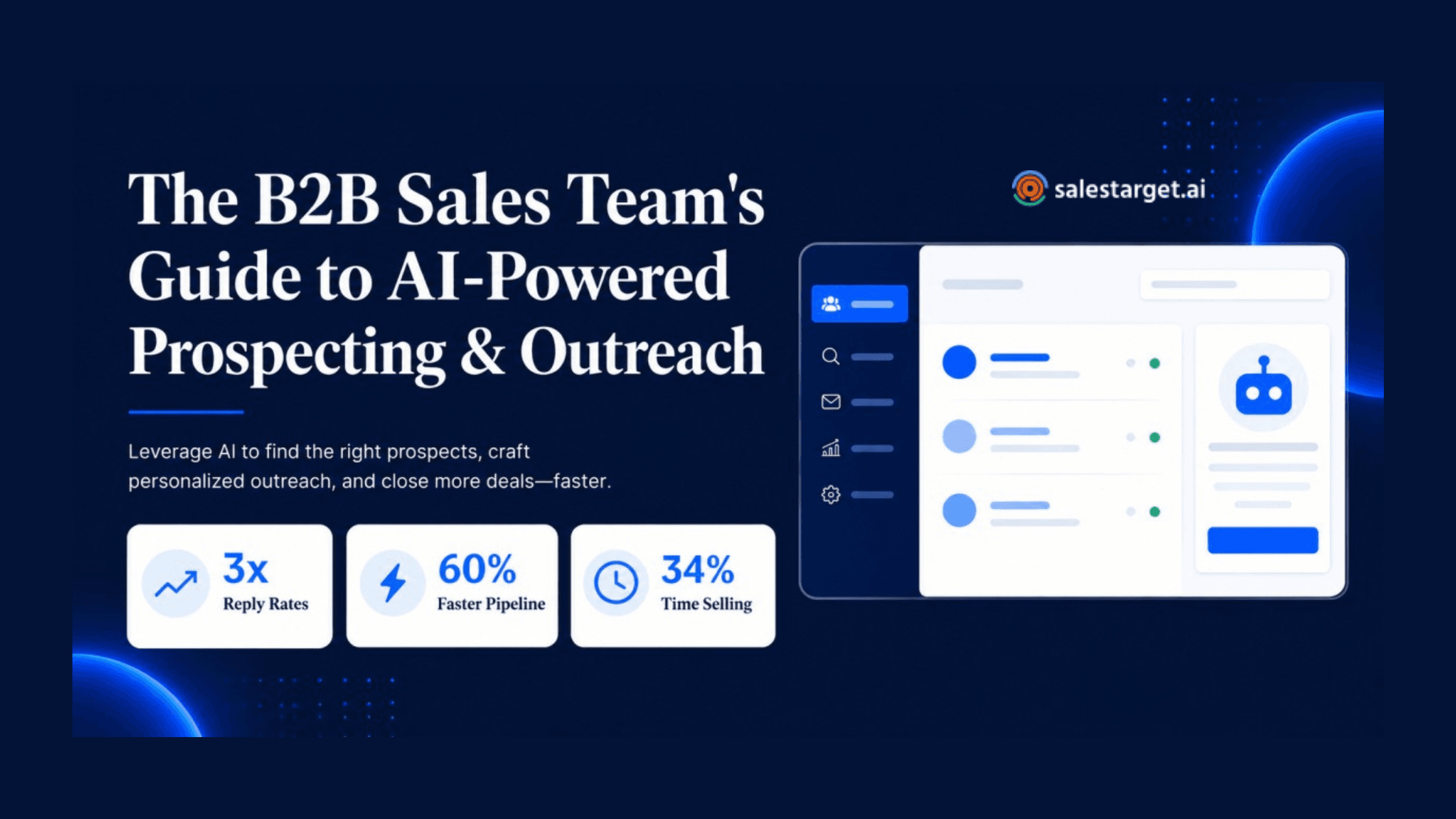
- Sales reps spend only 34% of their time actually selling (Salesforce, 2024)
- AI-driven outreach sees up to 3x higher reply rates compared to generic cold email
- Teams using AI sales automation report 40–60% faster pipeline build time
The reason? AI removes the bottleneck between data and action. Instead of spending two hours researching a prospect before writing one email, AI does that in seconds.
Platforms like Apollo.io,Lemlist, Instantly.ai, and Woodpecker all offer some level of automation — but they largely focus on email sequencing. The newer generation of AI sales assistant software goes deeper, combining research, personalization, and outreach into one intelligent workflow.
Key Features to Look For in an AI Sales Assistant
Not all tools are equal. Here's what a truly useful AI sales assistant should do:
- Prospect research automation — Pull verified contact data and company insights without manual lookup
- Personalized email generation — Write unique, context-aware outreach based on each prospect's role, industry, and activity
- Multi-channel follow-up — Automate touchpoints across email, LinkedIn, and more
- CRM automation — Log activities, update deal stages, and surface next actions automatically
- Pipeline visibility — Flag stalled deals and suggest re-engagement strategies
- Performance analytics — Track open rates, reply rates, and conversion signals in real time
How AI Improves Prospecting and Outreach ?
Here's a typical SDR workflow without AI:
- Search LinkedIn or a database for leads
- Manually qualify each one
- Write a personalized email (repeat 50 times)
- Schedule follow-ups
- Update CRM manually
With an AI prospecting assistant, steps 1–4 are handled automatically. The rep reviews, approves, and engages — spending energy only where human judgment matters.
The result isn't just faster outreach. It's better outreach. AI personalizes at a level that's impossible to sustain manually — referencing a prospect's recent funding round, their LinkedIn post, or a competitor they just switched from.
AI Sales Assistant vs. Traditional Sales Tools
| Feature | Traditional Tools | AI Sales Assistant |
|---|---|---|
| Prospect Research | Manual | Automated |
| Email Personalization | Template-based | AI-generated, contextual |
| Follow-up Scheduling | Manual sequences | Smart, behavior-triggered |
| CRM Updates | Rep-driven | Auto-logged |
| Insights & Suggestions | Static reports | Real-time AI recommendations |
Traditional tools like basic CRMs or even early-gen sequencers (think Woodpecker or early Instantly.ai) were built for volume. AI sales tools are built for relevance.
Best Use Cases for SDRs and Sales Teams
1. Cold Outreach at Scale
Write and send hundreds of personalized emails without sacrificing quality. AI handles the research and drafting; reps hit send.
2. Lead Qualification
Use AI to score and prioritize inbound leads based on fit signals, reducing time wasted on poor-fit accounts.
3. Re-Engaging Dormant Leads
AI identifies when a prospect visited your pricing page or opened an email three times — and triggers a perfectly timed follow-up.
4. Meeting Prep
Before a call, get an AI-generated brief covering the prospect's company news, pain points, and likely objections.
5. Pipeline Health Monitoring
Get alerts when deals go cold and receive suggested next actions to keep momentum.
How SalesTarget.ai Automates Your Sales Workflow ?
SalesTarget.ai is built specifically for B2B sales teams that want to move faster without hiring more reps.
The platform's AI sales copilot combines prospect research, personalized outreach generation, and workflow automation into a single tool. It doesn't just send emails — it learns what works for your audience and continuously improves.
Key capabilities include:
- AI-generated, hyper-personalized outreach messages
- Automated follow-up sequences triggered by prospect behavior
- Real-time pipeline insights and deal scoring
- CRM sync to keep your data clean without manual entry
- Multi-channel outreach management from one dashboard
Unlike general-purpose platforms, SalesTarget.ai is purpose-built for outbound sales — which means less setup, faster results, and a tool that speaks the language of revenue teams.
Common Mistakes to Avoid
Even with great AI tools, teams can stumble. Watch out for:
- Over-automating without review — AI drafts are great, but a quick human check prevents tone-deaf messaging
- Ignoring personalization signals — If your AI isn't using prospect-specific data, you're just sending fancy templates
- Skipping CRM hygiene — AI works best with clean input data; garbage in, garbage out
- Not A/B testing — Use AI-generated variants to learn what messaging resonates with your ICP
The Future of AI in B2B Sales
AI in sales is moving from automation to intelligence. The next wave includes:
- Predictive deal scoring that flags churn risk before it's visible
- Voice AI assistants that handle discovery calls and surface insights post-conversation
- Autonomous SDR agents that prospect, engage, and qualify with minimal human oversight
The teams that build AI into their sales DNA today will have a compounding advantage over the next three years.