Every quarter, the same scene plays out on sales floors. A rep closes a deal, the team celebrates the logo, and then everyone goes back to hunting for the next account from a blank slate. The signal buried inside that new win, what it says about the market and the competitors watching, usually walks out the door with the champagne.
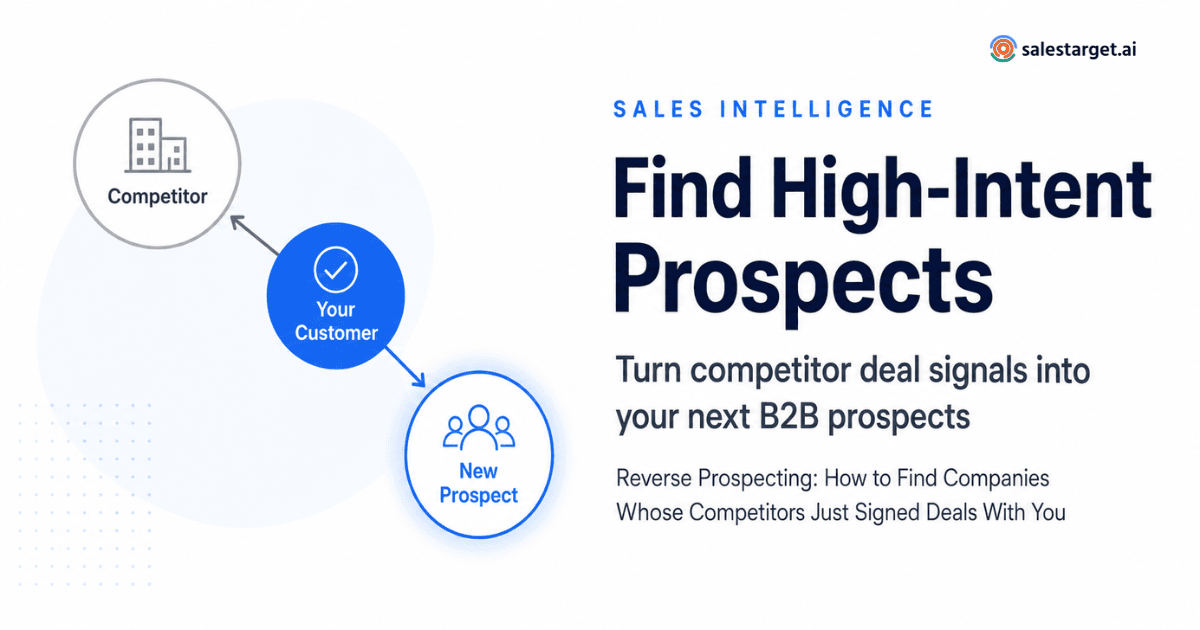
Reverse prospecting flips that habit. Instead of building lists from vague firmographics, sales teams start with a proven win and work backward, asking a sharper question: whose competitors just bought from us, and who else looks like them? Modern b2b prospecting tools make that motion practical at real scale.
Reverse prospecting is a B2B sales strategy that uses recently won customers, and the competitors those customers were evaluating, to identify look-alike companies with a likely active need. Sales teams combine this signal with lead enrichment, decision-maker mapping, and intent data inside b2b prospecting tools to build a shorter, higher-conviction target account list.
What Is Reverse Prospecting?
Traditional prospecting starts wide. You pick an industry, filter by company size, and export a list. Reverse prospecting starts narrow. You begin with a signal, usually a specific closed-won deal, and expand outward to companies most likely to share that buying motion.
The logic is simple. If a mid-market fintech just chose your platform over a specific competitor, other mid-market fintechs currently evaluating that same competitor are far more likely to buy than a random name pulled from a filter.
Why Competitor Deals Are a Useful Prospecting Signal ?
A closed-won deal is one of the strongest pieces of sales intelligence a team can generate on its own. It confirms real budget, a validated problem, an internal champion, and a competitive landscape.
When you carry those signals across to look-alike accounts, you skip several early qualification steps. You already know the buyer profile exists, what messaging worked, and which objections came up in discovery. That context turns cold outreach into something closer to informed outreach.
How to Build a Reverse-Prospecting Workflow ?
The workflow only needs to be repeatable, not complicated.
Step 1: Start With Recently Won Customers
Pull the last 90 days of closed-won deals. Note the industry, sub-vertical, employee count band, tech stack, and, critically, the primary competitor named in the deal.
Step 2: Identify Their Direct Competitors
For each new customer, list three to five direct competitors. Useful sources include public customer directories, LinkedIn "similar pages," G2 and Capterra category pages, and your reps' own notes from discovery calls. Watching for buyer movement matters too. Our guide on using job-change alerts inside a B2B contact database explains how leadership shifts often trigger new vendor evaluations at exactly these look-alike accounts.
Step 3: Enrich the Competitor Accounts
Raw company names are not a pipeline. A lead enrichment tool fills in headcount, funding, technographics, hiring signals, and location so you can qualify before you touch a phone. Enrichment is what separates a spreadsheet from a working account list.
Step 4: Find the Right Decision-Makers
For each enriched account, map two or three roles: the economic buyer, the likely champion persona, and one blocker. A b2b lead finder scoped to titles, seniority, and department keeps this from turning into manual LinkedIn digging.
Step 5: Add Intent and Fit Signals
Now layer behavior on top of firmographics. Recent funding, job postings that mention the competitor's product, review activity, and confirmed technology installs are all fair game. Each signal should push an account up or down your list.
Step 6: Prioritize the Best Accounts
Not every competitor account deserves outreach this week. This is where a simple scoring framework earns its keep, as shown in the sample below.
Step 7: Turn the List Into Outreach
Assign accounts to reps with a message tied directly to the original win: what the customer chose you for, what the competitor lacked, and how the prospect's context maps to that story.
An Original Scoring Framework: From 200 Names to 20 Accounts
Here is a lightweight priority score you can run in a spreadsheet. Treat it as an example framework, not market research.
- Industry match to won customer: 0 to 3 points
- Employee count within one band: 0 to 2 points
- Uses the losing competitor's product today: 0 to 3 points
- Recent funding, expansion, or leadership change: 0 to 2 points
- Reachable decision-maker identified and verified: 0 to 2 points
An account scoring 8 or above enters your top tier. In practice, a starting list of 200 competitor accounts usually narrows to 20 to 30 tier-one targets, roughly an 85 to 90 percent reduction that reps can actually work in a week.
How B2B Prospecting Tools Make Reverse Prospecting Easier ?
Doing this by hand works for ten accounts and breaks down at a hundred. Sales prospecting software is what makes the workflow scalable.
Good b2b prospecting software should let you filter companies by industry, size, geography, and technology install, enrich records with verified contact data, segment by role and seniority, and export or sync to your CRM without manual cleanup. The best b2b data providers focus heavily on data freshness, because stale records are the fastest way to burn a rep's morning.
An ai prospecting tool can go further, surfacing look-alike accounts automatically and ranking them against a seed list. That capability is especially useful for reverse prospecting, because your seed list, the recent wins, already carries the signal the model needs.
How to Combine Reverse Prospecting With Other B2B Lead-Generation Strategies
Reverse prospecting works best alongside, not instead of, your other motions. Pair it with account-based outbound, inbound follow-up, and event-driven plays. For teams building broader programs, this walkthrough of AI lead generation strategies for B2B sales is a useful companion read.
A close cousin worth borrowing from is look-alike modeling. Our overview of building a B2B lead finder around look-alike audiences explains how to define a seed customer and expand it into a defensible target list. Reverse prospecting is essentially a look-alike model with a competitor lens applied on top.
According to Salesforce's State of Sales research, sales reps spend a majority of their week on tasks other than selling. Anything that shortens the list-building step, like starting with proven customer analogues, buys back hours that go straight into conversations.
Common Reverse-Prospecting Mistakes
A few patterns show up on nearly every sales team that tries this for the first time.
- Treating every competitor account as equally hot. Score first, then reach out.
- Skipping enrichment because "we already have the name." A name is not a lead.
- Copying the pitch that won the original deal word for word. Borrow the theme, not the transcript.
- Ignoring buying-committee changes. Deals move when people move, so track new hires and role changes.
- Running the play once and abandoning it. The value only compounds when it becomes a monthly habit.
Turn Competitor Signals Into Your Next Pipeline
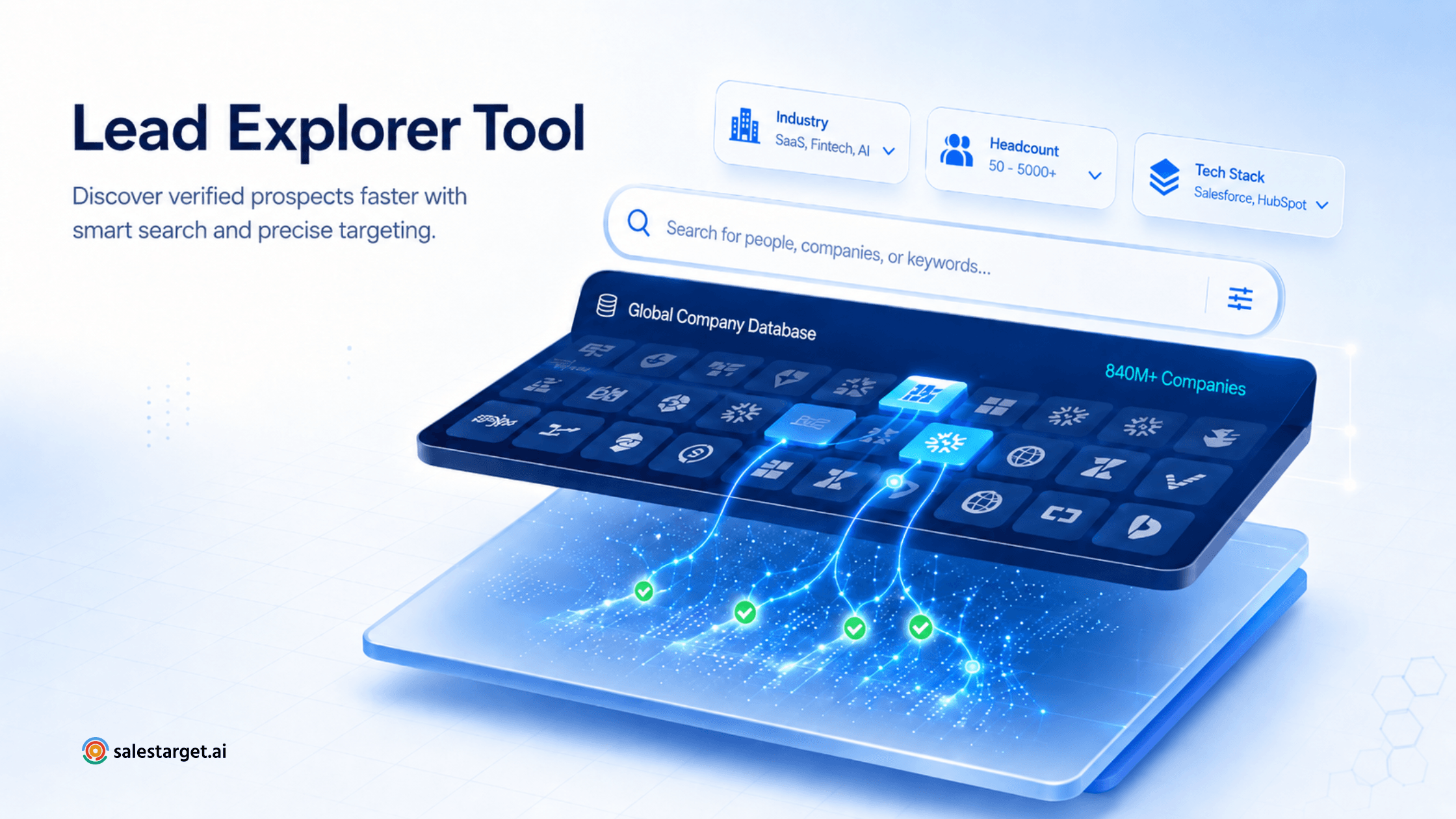
Every closed-won deal in your CRM is a map to the next five. SalesTarget Lead Explorer helps sales teams discover relevant B2B accounts, filter by firmographic and technographic signals, and build focused target lists instead of starting cold every quarter.
How to Turn Reverse Prospecting Into a Repeatable Sales Process
Make it a monthly ritual, not a one-off project. At the end of every month, pull the wins, list the competitors, score the look-alikes, and hand the top tier to reps with a one-page brief. Track hit rate against your normal outbound baseline. If reverse-sourced accounts convert better, which they usually do, give the motion more of your prospecting budget next quarter.
For structure and governance, the U.S. Small Business Administration's guidance on market research and competitive analysis offers a solid foundation for any team formalizing how it studies competitors.
Your best next prospects are hiding in your last month of closed-won deals. Reverse prospecting turns that hidden signal into a repeatable pipeline motion, one that is faster than filter-based lists, cheaper than paid intent alone, and more grounded than pure AI guesses. Pair it with the right b2b prospecting tools, and your sales team stops starting from zero.