If you run outbound, you already know the real bottleneck isn't finding names. It's finding the right names fast enough to act on them before a competitor does. SDRs waste hours scrubbing spreadsheets, founders selling solo can't justify a research-heavy funnel, and RevOps teams are stuck stitching together five tools just to get one clean lead list.
AI lead generation fixes that bottleneck. Instead of manually hunting for prospects, verifying emails by hand, and guessing who's actually in-market, AI tools now handle discovery, enrichment, scoring, and even the first few touches of outreach. Done well, this doesn't replace your reps' judgment. It gives them a shorter, better-qualified list to work every morning.
This guide covers what AI lead generation actually means in practice, the strategies that move the needle, and the mistakes that quietly waste budget.
What AI Lead Generation Actually Means for B2B Teams
AI lead generation is the use of machine learning and large language models to find, enrich, score, and engage prospects with less manual effort than traditional prospecting.
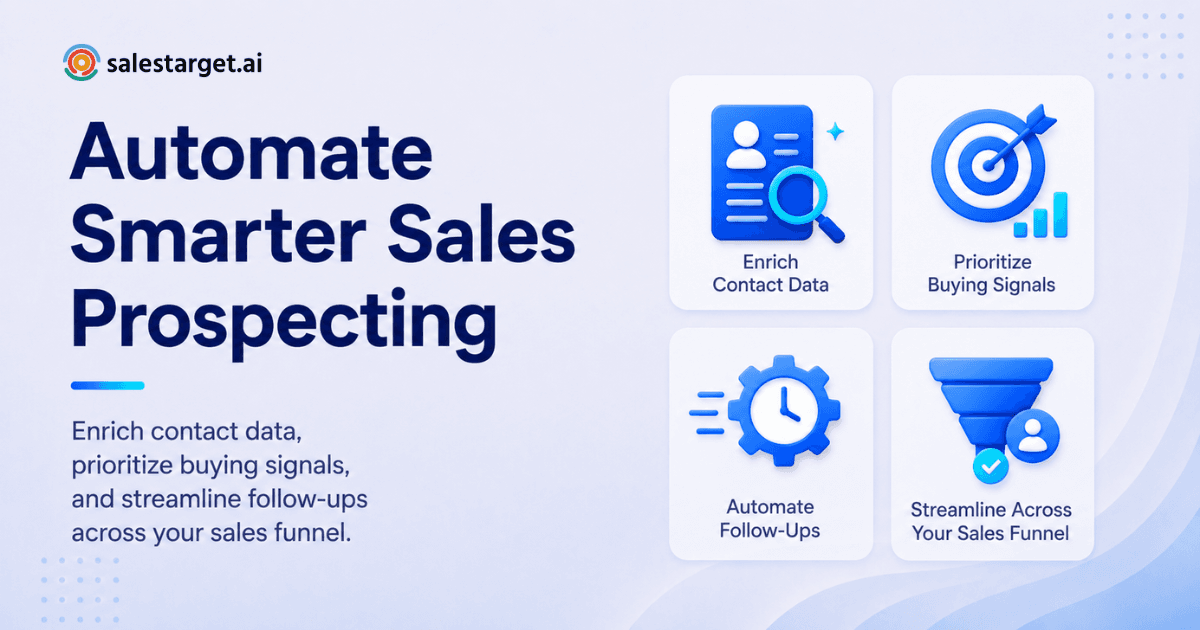
In a B2B context, that usually covers four jobs:
- Discovery — surfacing companies and contacts that match your ideal customer profile, often from firmographic and intent data rather than a static list
- Enrichment — filling in verified emails, phone numbers, job titles, and technographic details automatically
- Scoring — ranking leads by fit and buying intent so reps work the hottest accounts first
- Engagement — drafting and sequencing outreach across email and LinkedIn, personalized at scale
None of this is theoretical anymore. Data enrichment quality is now treated as the root variable behind conversion rate, since reps who reach out with verified context personalize faster and qualify prospects quicker, according to SyncGTM's 2026 B2B conversion benchmark report.
Where AI Fits Across the Lead Generation Funnel
Most teams bolt AI onto one stage of the funnel, usually outreach, and leave the rest manual. That's a mistake. AI adds the most value when it's connected end to end, because each stage feeds the next with better data.
Here's the practical breakdown:
- Top of funnel: AI prospecting tools search massive B2B databases using plain-English criteria instead of rigid Boolean filters, then auto-enrich matches with verified contact data.
- Mid-funnel: AI drafts and sequences multichannel outreach, personalizes messaging per recipient, and validates emails before send to protect domain reputation.
- Bottom of funnel: AI logs activity automatically, flags follow-up tasks, and surfaces which leads are showing real buying signals so reps stop guessing who to call next.
A connected system like this is also where choosing the right lead generation platform starts to matter more than any single feature, since fragmented tools break the handoff between stages.
Top AI Lead Generation Strategies for B2B Teams
1. Build and enrich lead lists with AI prospecting instead of manual research
Manual list-building is the single biggest time sink in outbound. AI prospecting engines let you describe your ideal buyer in plain language (for example, "VP of Sales at Series B SaaS companies with 50 to 200 employees, hiring for SDR roles") and return a ranked list of matching contacts.
The best tools go a step further and enrich each match in the same click, pulling verified professional email, direct phone, and firmographic data without a separate export-and-match workflow. SalesTarget.ai's Lead Explorer works this way, searching across 840M+ verified professional profiles and 146M+ business entities with real-time buying signals layered on top.
If you're still deciding where your list data should come from, this breakdown of the best sources for B2B lead generation is worth reading before you commit to a vendor.
2. Automate multichannel outreach without losing personalization
Cold email alone has gotten harder to land in the inbox, and LinkedIn alone doesn't scale past a handful of manual touches per day. The strategy that's working now is coordinated multichannel sequencing, where email and LinkedIn touches are timed together instead of run as separate campaigns.
AI-generated sequences can build a multi-step cadence from a short audience description, then adapt subject lines and messaging per segment. On the email side, tools like Email Outreach handle inbox warm-up and rotation automatically so deliverability doesn't degrade as volume scales. On LinkedIn, automation should include human-like send delays and built-in rate limiting, which is exactly what LinkedIn Outreach is designed to enforce so accounts don't get flagged.
Personalization still matters more than volume. Generic, templated messaging is the fastest way to burn a list, no matter how well-targeted it was to begin with.
3. Validate every email before it leaves your outbound tool
Deliverability problems usually start upstream, with bad data. Sending to invalid or risky addresses tanks your sender reputation and can get a warmed-up domain blacklisted within days.
A dedicated validation step, using MX and SMTP checks plus disposable-email detection, should run before every send and periodically across your existing list. SalesTarget.ai's Lead / Email Validator does this in real time via API or in bulk for list cleaning, and it's built into the platform's send flow rather than a separate step reps have to remember to run.
4. Score and prioritize leads using real buying intent, not just fit
A lead that matches your ICP but shows zero buying activity is a worse use of a rep's time than a slightly-off-ICP lead who's actively researching your category. Intent data, things like recent job changes, technology adoption, or topic research activity, tells you which accounts are actually in-market right now.
This is where AI earns its keep on prioritization. Instead of a rep manually cross-referencing signals, the system surfaces and ranks them automatically. For a closer look at how this works mechanically, see this guide on how AI finds, verifies, and prioritizes buyers.
5. Centralize activity and follow-up in one CRM built for outbound
Speed matters more than most teams assume. Leads contacted within five minutes are dramatically more likely to qualify than those contacted after 30, according to 2024 HubSpot research showing that response speed makes qualification roughly 21 times more likely. Yet most outbound tools don't automatically create the follow-up task the moment a reply lands, which means that window quietly closes.
A CRM built specifically for outbound closes that gap by logging every email and call to the lead timeline automatically and generating follow-up tasks without manual entry. SalesTarget.ai's CRM reports 91% follow-up task completion and roughly 6 hours saved per rep per week as a result of removing that manual step.
6. Use an AI assistant to speed up daily execution, not replace judgment
Even with good tooling, reps still lose time context-switching between finding leads, writing sequences, and checking pipeline numbers. A conversational AI layer that sits across all of it, letting a rep ask for a lead list, generate a sequence, or pull campaign revenue in plain language, cuts that friction.
SalesTarget.ai's AI Copilot is built into the platform for exactly this, and it's free to use inside the workspace rather than a separate paid add-on.
Common Mistakes Teams Make with AI Lead Generation
- Automating outreach before fixing data quality. Sending fast to a bad list just gets you flagged faster. Enrichment and validation should happen before scale, not after.
- Treating every AI-sourced lead as sales-ready. Fit and intent are not the same thing. A lead can match your ICP perfectly and still be six months from buying.
- Running email and LinkedIn as disconnected campaigns. Uncoordinated multichannel outreach often means a prospect gets the same pitch twice, from two different systems, in the same week.
- Skipping the CRM handoff. AI can generate a huge volume of qualified conversations, but if reps have to manually log and remember to follow up, most of that value gets lost between the reply and the next touch.
Why Choose SalesTarget.ai for AI Lead Generation
Most AI sales tools solve one piece of this problem and leave you to stitch the rest together yourself. SalesTarget.ai was built to avoid that.
SalesTarget.ai covers the B2B lead database, enrichment, email and LinkedIn outreach, validation, a built-in CRM, and an AI Copilot in one workspace. Apollo gives you lead data and engagement, but you still have to bolt on deliverability tooling and a full CRM separately. Instantly, Smartlead, Lemlist, and Woodpecker are strong at cold email and deliverability, but none of them include a native B2B contact database, LinkedIn automation, or a real CRM, so you're back to running multiple tools on multiple bills.
The practical difference shows up in workflow, not just feature lists. With SalesTarget.ai, a rep finds a lead in Lead Explorer, enriches and verifies it in the same click, pushes it directly into a coordinated email and LinkedIn sequence, and works the resulting deal inside the built-in CRM, all on one platform and one bill.
That connected flow is reflected in the platform's reported numbers: 99% verified contact data, 35% faster campaign creation, 90% of emails validated before sending, and 3.2X faster deal cycles with 2.4X more meetings booked from the same lead volume. Enriched, verified data is consistently linked to faster qualification and better conversion outcomes across the industry, which lines up with why enrichment is treated as the root variable behind B2B conversion rate improvements in current benchmark research.
If your stack currently includes three or four separate tools to do what one workspace could handle, that's usually the first place to look for wasted spend and lost follow-up speed.
Getting Started
You don't need to overhaul your entire stack in one week. Start with the stage that's currently costing you the most time or the most leads, whether that's list-building, deliverability, or follow-up consistency, and layer AI into that one stage first.
From there, the value compounds. Better enrichment feeds better scoring. Better scoring feeds faster, more relevant outreach. Faster outreach feeds a CRM that actually reflects what's happening in your pipeline.
SalesTarget.ai brings all four stages into one workspace, so you can start free and see where the biggest time savings show up for your team first.