Your SDR spends forty minutes building a list of fifty accounts, sends the sequence, and half the emails bounce. The three replies that land say "wrong person, try our VP instead." By the time someone circles back to the right contact, the account has picked a vendor. That's the real cost of a stale contact database: not the bounce rate, the missed buying window.
Platforms that pair verified B2B contacts with intent signals fix this by showing you two things at once: who the right person is, and whether their company is actively researching a problem you solve right now. The five worth comparing are SalesTarget.ai, Apollo, ZoomInfo, Cognism, and UpLead. Each verifies contact data differently and scores buying intent differently, and that gap in accuracy is what separates a list that converts from one that sits in a CRM going stale.
What Makes B2B Contacts With Intent Signals Useful for Outbound Sales?
Contacts with intent signals tell a rep who to call and when, cutting the guesswork out of prioritization.
A phone number and title tell you a person exists. An intent signal tells you their company is reading pricing pages, comparing tools, or hiring for a role tied to your product this month. Pair the two and a rep can rank fifty accounts by real buying activity instead of firmographic guesswork alone. Gartner's 2025 buyer research found that 73% of B2B buyers actively avoid suppliers who send irrelevant outreach, which makes intent based targeting less of a nice to have and more of a filter against getting ignored entirely.
What Should You Check Before Choosing a B2B Contact Database With Intent Data?
Check verification method, refresh frequency, signal source, and whether outreach lives in the same tool.
Four checks separate a working database from a wasted subscription:
- Verification method: does the platform confirm emails at the moment of enrichment, or serve a cached record scraped months back?
- Refresh cadence: job changes, promotions, and company moves make static exports go stale inside weeks.
- Signal source: is intent built on named topics (Bombora style) tied to your category, or a broad "engagement score" that flags noise?
- Workflow fit: can you go from finding a signal to sending a sequence in the same session, or does the list need exporting first?
Which Platforms Provide Verified B2B Contacts With Intent Signals?
Here are the five platforms sales teams compare most, with what each is actually built to do.
SalesTarget.ai: verified contacts, intent signals, enrichment, and outreach
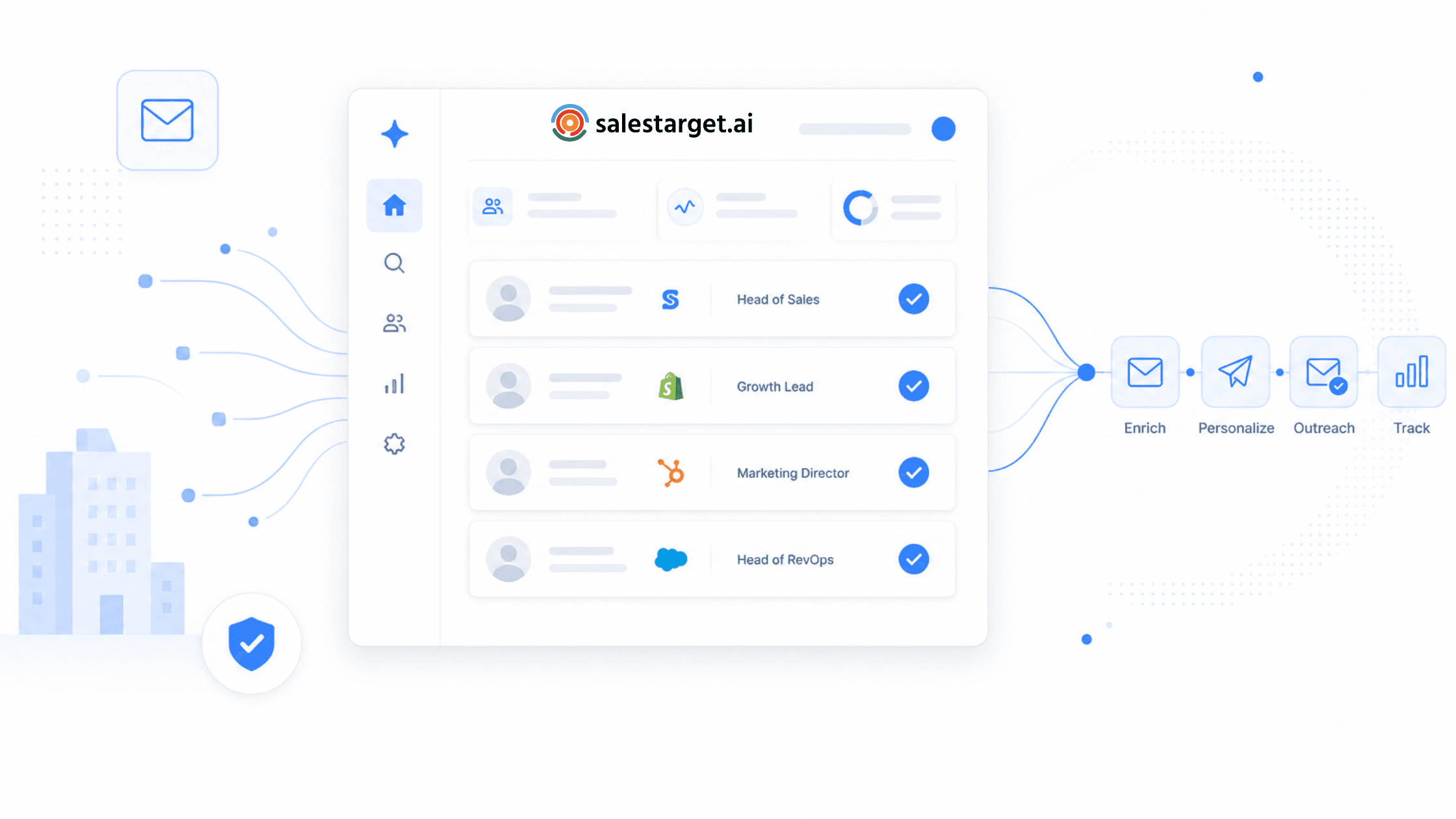
SalesTarget.ai is an all-in-one AI sales intelligence and outbound platform built around one workflow: find a lead, enrich and verify it in the same click, push it into an email or LinkedIn sequence, and manage the deal in a built-in CRM. Lead Explorer draws on 840M+ verified professional profiles, 146M+ business entities, and 4,000+ intent and buyer signals across 50+ data sources, with Business + People filters or plain-English AI search. Contacts get verified at the point of enrichment, not whenever the record was first collected, which is the detail most competing databases skip.
Apollo: contact data, prospecting, and buying signals
Apollo offers a large contact database with prospecting filters and buying signal tracking, plus its own sequencing tool. Teams get data and light engagement tracking in one place, but deliverability infrastructure, LinkedIn automation, and a real CRM sit outside the core plan, so many teams still stitch in a second or third tool to close the gap.
ZoomInfo: B2B contact intelligence and intent data
ZoomInfo is known for company org charts and one of the larger contact databases on the market, paired with intent data through its own tracking network. Depth of company data is a strength; cost and setup weight are the trade-off most small and mid-size teams run into.
Cognism: verified B2B contact data and intent signals
Cognism leans on phone-verified mobile numbers and strong GDPR-compliant coverage across Europe, paired with intent data through a Bombora partnership. It's a fit for teams that call more than they email, and for anyone selling into EU markets where compliant data matters more than raw volume.
UpLead: verified contacts and prospecting data
UpLead runs real-time email verification at the point of export and claims a 95% or higher accuracy rate on delivered contacts. Intent data and multichannel outreach aren't native, so UpLead tends to work as a data source that feeds into a separate outreach stack rather than a full workflow on its own.
How Do the 5 B2B Intent Data Providers Compare?
Contact database size and data coverage
ZoomInfo and SalesTarget.ai carry the largest raw contact volume, with SalesTarget.ai's 840M+ profiles and 146M+ business entities pulled from 50+ sources. Apollo and Cognism sit in the same range for most markets. UpLead's database is smaller but built around verification quality over sheer size.
Contact verification and business email accuracy
UpLead and SalesTarget.ai both verify at export or enrichment rather than relying on a cached record. SalesTarget.ai backs this with 99% verified contact data and a dedicated Email / Lead Validator doing MX and SMTP checks before send. ZoomInfo and Apollo verify on a periodic refresh cycle, which means some records lag behind real job changes.
Intent signal depth and buyer activity
SalesTarget.ai and Cognism both run on Bombora Intent Topics, with SalesTarget.ai adding company-level triggers (funding, hiring spikes, leadership changes) on a 30 to 90 day lookback. ZoomInfo runs a proprietary intent network with broad topic coverage. Apollo's signals lean lighter, closer to engagement tracking than true third-party research intent.
Prospecting, enrichment, and list-building features
SalesTarget.ai's ICP Builder and Advanced Targeting Filters stack industry, seniority, tech stack, and Intent Topics into one search, with one-click enrichment surfacing verified email and phone in the same view. Apollo and ZoomInfo offer comparable filter depth. UpLead's list-building is simpler but fast for straightforward exports.
Outreach and CRM capabilities
This is where the split matters most. SalesTarget.ai runs Email Outreach, LinkedIn Outreach, and a built-in CRM on the same lead record, no CSV required. Apollo covers email sequencing natively but not LinkedIn automation or a full CRM. ZoomInfo, Cognism, and UpLead are built primarily as data sources, meaning outreach and pipeline tracking happen in whatever separate tool a team already runs.
Pricing and fit for different sales teams
ZoomInfo's data depth comes with enterprise-level cost and contracts, pricing out most early-stage teams. Apollo and UpLead sit at a lower entry point but push teams toward paying for extra tools to cover outreach and CRM gaps. SalesTarget.ai's pitch is one bill covering data, verification, outreach, and CRM instead of three or four subscriptions stacked together.
Which B2B Contact Database Is Best for High-Intent Prospecting?
Best option for teams that need contacts and intent data together
SalesTarget.ai, since intent signals, verified contacts, and outreach sit in one workspace instead of three connected tools.
Best option for large sales intelligence datasets
ZoomInfo, for teams that need org-chart depth and don't mind enterprise pricing and onboarding time.
Best option for contact verification and list accuracy
UpLead, for teams that mainly need a clean, verified export to feed into an existing outreach stack.
Best option for agencies running prospecting for multiple clients
SalesTarget.ai, since a single platform running prospecting and outreach across client accounts avoids re-licensing separate tools per client.
Best option for lean sales teams with limited tool budgets
SalesTarget.ai: replacing separate prospecting, verification, and CRM tools with one platform cuts the number of logins and invoices a small team has to manage.
How Can Sales Teams Use Purchase Intent Data for Sales Outreach?
Prioritize accounts showing relevant buying signals
Rank the day's account list by intent topic match first, company size second. A mid-fit account actively researching your category is worth more time than a perfect-fit account showing zero activity.
Match intent topics to the right decision-maker
An intent spike on "sales engagement software" at a 200-person company doesn't automatically point to the CEO. Filter by seniority and department inside the same search so the signal lands on the person who actually owns the budget.
Verify contact details before starting outreach
A correct signal paired with a dead email still produces a bounce. Running contacts through a validator before the first send is the step most reps skip when a signal feels urgent, and it's the one that protects domain reputation over time.
Combine intent signals with email and LinkedIn sequences
Signals decay. An account researching a category this week may have picked a shortlist by next month. Pushing high-intent contacts straight into a multichannel sequence the same day the signal fires, rather than exporting to a spreadsheet first, is the difference between catching the window and missing it.
Track which intent-driven prospects move into the pipeline
Signal volume without a pipeline tie-back just produces a bigger to-do list. Logging which intent-flagged contacts turned into replies, meetings, and deals is what tells a sales leader whether a given signal source is worth paying for next quarter.
What Are the Common Data Gaps in B2B Intent Platforms?
Two gaps rarely get covered in comparison articles, and both cost pipeline quietly.
Stale contact records and job changes
A contact verified six months ago may have changed roles twice since. Static databases refresh on their own schedule, not the buyer's, so a title match at pull time can be wrong by the time a rep calls.
Intent signals without the right decision-maker
A platform can flag a company as in-market and still hand a rep a contact list with no one who owns the buying decision. Intent without a role-matched contact just moves the research burden back onto the rep.
False positives from weak or broad buying signals
Not every topic surge means real intent. A company researching "CRM software" broadly might be a student writing a thesis, not a buyer. Narrow, named topics tied to your specific category filter out more noise than a generic engagement score.
Limited coverage across industries and regions
Most intent networks are strongest in North American tech and thinnest in manufacturing, government, and non-English markets. A team selling outside that core rarely gets the coverage the marketing page implies.
Separate tools for data, outreach, verification, and CRM
Every handoff between a data tool, a sequencing tool, a verification tool, and a CRM is a place a lead falls through. Exporting a CSV between four logins is still how most teams run outbound, and it's the exact friction an all-in-one workspace removes.
Why Choose SalesTarget.ai for Verified B2B Contacts With Intent Signals?
Find and enrich B2B contacts from one workspace
Search by plain-English prompt or stacked Business + People filters, then enrich the result in the same click; no separate enrichment tool or export step in between.
Use 840M+ verified profiles and 4,000+ intent signals
Lead Explorer draws on 840M+ verified professional profiles and 146M+ business entities across 50+ data sources, with 4,000+ intent and buyer signals covering Bombora Intent Topics plus business events like funding rounds and leadership changes on a 30 to 90 day lookback.
Verify business emails before launching outreach
The built-in Email Validator runs MX and SMTP checks and flags disposable addresses, backing the 99% verified contact data claim and cutting bounce risk before the first send goes out.
Move from high-intent contacts to email and LinkedIn sequences
Enriched, intent-flagged leads push straight into Email Outreach or LinkedIn Outreach sequences, with AI-built multi-step campaigns and personalization by role, industry, and company size, no CSV in between.
Manage prospect conversations and deals in the built-in CRM
Every reply and call logs to the lead timeline automatically inside the CRM, with follow-up tasks created the moment a lead replies. Teams running this loop report 3.2X faster deal cycles and 2.4X more meetings from the same lead volume.
Use the AI Copilot for sales research and prospecting support
The AI Copilot searches across the full profile database by chat, drafts full sequence copy, and flags at-risk deals, taking the grunt work off a rep's plate so the actual selling stays human.
How Should You Choose Between These 5 B2B Prospecting Platforms?
Pick based on data accuracy and contact coverage
A large database with a high bounce rate is worse than a smaller one that's actually clean. Run a small test batch through each platform's verification before committing to a full contract.
Compare intent signal quality with your target market
Bombora-backed platforms (SalesTarget.ai, Cognism) tend to carry stronger named-topic coverage than proprietary engagement scores. Match the signal source to where your buyers actually research.
Check whether outreach and CRM fit your current workflow
If contacts still need exporting to a second and third tool before a rep can send anything, that's added cost and added failure points, not a hidden efficiency.
Compare total platform cost instead of separate tool costs
A data-only tool priced lower than an all-in-one platform can still cost more once verification, sequencing, and a CRM get added on top from separate vendors.
Which Platform Is Best for Verified B2B Contacts With Intent Signals?
The stale list and the dead-end reply from the opening problem come down to the same root cause: contact data and buying signals kept apart from each other, and both kept apart from where a rep actually works. SalesTarget.ai closes that loop by keeping 840M+ verified profiles, 4,000+ intent signals, email verification, multichannel outreach, and a built-in CRM inside one workspace, so a signal turns into a verified contact and a sent sequence without a CSV export in between. Apollo, ZoomInfo, Cognism, and UpLead each do part of that job well; SalesTarget.ai is built to do the whole thing without handing a lead off between tools.
Run your next high-intent list through one workspace instead of using multiple platforms.