TL;DR
- Technical buyers receive 100+ sales emails per week — generic outreach fails before it lands in their inbox.
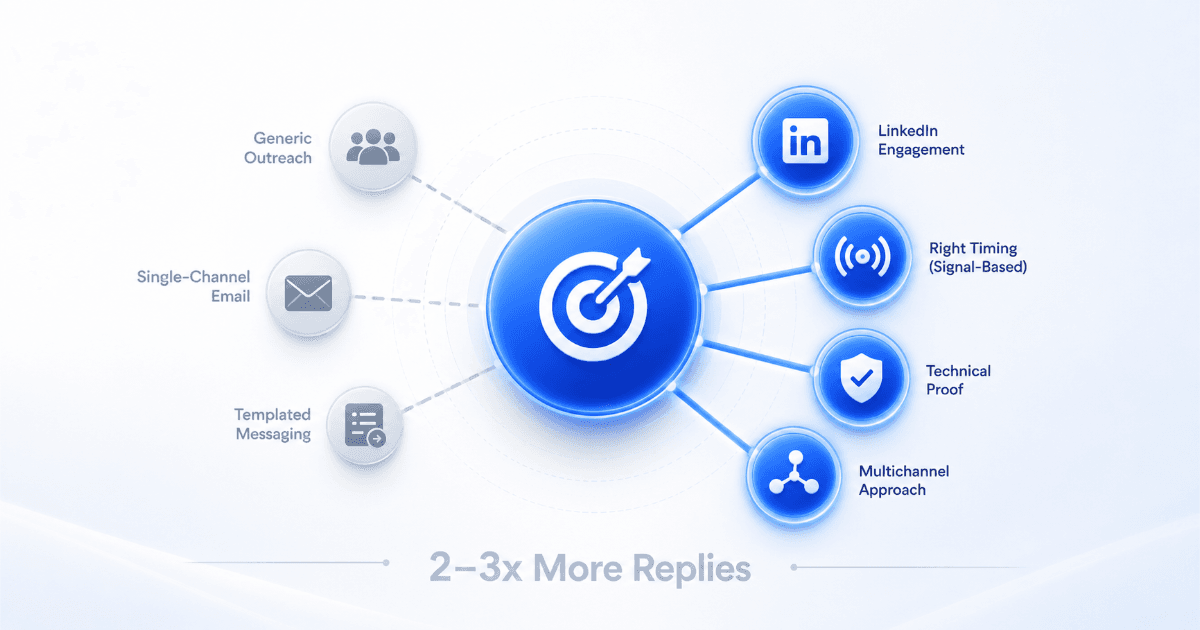
- Multichannel sequences (email + LinkedIn + engagement) deliver 2x–3x more replies than single-channel cold email.
- Cybersecurity/IT vendors must lead with technical proof, not sales benefits — engineers distrust benefit statements.
- Technographic signals (new Kubernetes deployment, AWS growth) let you time outreach when buyers are actively evaluating.
- LinkedIn drives credibility for technical buyers; email delivers depth; follow-up on both channels closes skeptics who ignore single touches.
Your security software is technically superior. Your team understands the CISO's infrastructure challenges better than anyone. And yet your cold emails vanish into the void, your LinkedIn requests get ignored, and your demo pipeline stays empty. The problem isn't your product — it's that technical buyers operate by a different set of rules than traditional B2B prospects. They see sales language as noise. They distrust benefit statements. And they actively ignore outreach on a single channel.
Why Technical Buyers Reject Generic Outreach
Technical buyers — CISOs, infrastructure engineers, DevOps leads, security architects — have trained themselves to filter out sales noise. Unlike traditional procurement buyers who welcome vendor research, technical decision-makers see cold outreach as an interruption. And their skepticism is justified.
The Inbox Overload Problem
The average B2B buyer receives over 120 sales-related emails per week — roughly 25 per business day. For technical buyers in high-growth companies (startups scaling security, enterprises managing hybrid cloud), that number doubles. Your cold email isn't competing against silence. It's competing against two dozen other security vendors, all claiming to "simplify your infrastructure security" or "reduce your attack surface."
Why Benefit-First Copy Fails With Engineers
Traditional B2B sales copy leads with benefits: "Reduce your security overhead by 40%. Detect threats 3x faster. Save your team 10 hours per week." Engineers read this and hear marketing fluff. They don't want benefits — they want technical proof. They want to know: How does your platform integrate with our Kubernetes clusters? What's your false-positive rate on the MITRE ATT&CK framework? Do you have native support for our cloud provider's identity layer?
Lead with benefit statements in an email to a technical buyer, and your message gets archived before the third line. Lead with technical proof — "We've detected an average of 23 policy violations per deployment in similar infrastructure setups" — and you've earned three more seconds of attention.
What Technical Buyers Actually Ignore
Outreach patterns that fail
- Generic benefit statements: "Reduce security overhead." Engineers want architecture details, not time savings.
- Single-channel persistence: Sending five emails to the same engineer without a LinkedIn touchpoint or community engagement signal. They've already ignored channel one; channel five feels like stalking.
- No proof points: Claiming "enterprise-grade" security without naming detection methods, compliance frameworks, or technical integration examples.
- Timing against the buying signal: Reaching out when they're not actively evaluating. You need a signal (new deployment, job posting, technical blog) to justify your timing.
How Multichannel Sequences Break Through to Skeptical Buyers
The solution isn't to send more cold emails or blast more LinkedIn requests. It's to coordinate your touchpoints across channels so each one reinforces the last — and so you meet the technical buyer where they're actually paying attention.
The Multichannel Impact
Multichannel sequences produce 2x to 3x more booked meetings than single-channel sequences on the same prospect list. The reason: you're not relying on one person opening one email on one platform. You're creating multiple surface areas — email, LinkedIn profile visits, connection requests with context, engagement on technical content — so the buyer encounters your message across their actual workflow.
For technical buyers especially, multichannel works because different channels serve different purposes. LinkedIn is where credibility lives. Email is where technical depth goes. Community engagement (GitHub, security forums, internal Slack communities) is where trust compounds.
Why This Matters for Cybersecurity/IT Vendors
Your CISO prospect isn't just evaluating your platform in isolation. They're running a technical evaluation against three other vendors, attending security conferences, following thought leaders on LinkedIn, and reading security research. If you show up only in their inbox, you're invisible across the other 80% of their evaluation process.
But if you're visible on LinkedIn (through relevant thought leadership content), engaging with their technical posts, then following up with an email that references a specific technical insight from that post — suddenly you're not a cold vendor. You're a peer who understands their infrastructure.
The Five-Touch Multichannel Sequence for Technical Buyers
Here's the sequence structure that works for cybersecurity and IT vendors selling to skeptical technical buyers. Each touch builds on the last. Each channel serves a specific purpose. And timing matters — you execute this sequence only when you have a technographic signal that they're actually evaluating.
| Touch # | Channel | What You Do | Why It Works |
|---|---|---|---|
| 1 | LinkedIn Profile Visit + Context Research | Visit their profile. Spend 2 mins reading their posts, company announcements, recent activity. Leave a thoughtful comment on 1–2 technical posts. | Establishes presence. Shows you're not spray-and-praying. Signals you understand their world. |
| 2 | LinkedIn Connection Request | Send connection request with personalized note tied to their recent activity. Example: "Saw your post on Kubernetes policy enforcement — building something similar for [your domain]. Would be good to connect." | Personalized connection requests see acceptance rates as high as 42% compared to roughly 12% for generic ones. |
| 3 | Email #1 — Technical Proof | Send email within 24 hours referencing the same technical signal. Lead with proof (detection rate, MITRE framework coverage, architecture specifics), not benefits. Close with one specific question tied to their stack. | Bridges LinkedIn into inbox with continuity. Technical proof prevents the delete-before-read reaction. Specific question signals personalization, not blast. |
| 4 | LinkedIn Direct Message (if connected) | If connection accepted within 48 hours, send LinkedIn DM referencing email. Keep it short: "Just sent a technical brief on [specifics]. Curious what you think of [specific technical point]." | Reinforces email without spamming inbox. LinkedIn DMs feel less intrusive to technical buyers than email follow-ups. Consolidates context across channels. |
| 5 | Email #2 — Follow-up + Community Signal | 7–10 days after Email #1, send follow-up with a concrete resource: GitHub example, security research whitepaper, case study from similar infrastructure. "Thought this might be relevant to the [specific challenge] you're solving." | Demonstrates ongoing value, not persistence. Gives them a reason to re-engage beyond "just checking in." Tangible resource = reason to reply or forward internally. |
Timing is critical
Don't execute this sequence randomly. Launch it only when you have a technographic signal: they've hired a new infrastructure engineer, they're migrating cloud platforms, they've open-sourced security tooling, or they've announced a funding round. The signal justifies your outreach and makes the timing feel relevant, not stalker-like.
Using Technographic Signals to Time Outreach for Maximum Impact
Technical buyers evaluate software only when they have a concrete reason. New Kubernetes deployment. AWS migration underway. Post-acquisition integration where systems need consolidation. Your job is to detect that signal, then time your multichannel sequence to land when they're actively evaluating.
What Technographic Signals Look Like
📊 Signals That Trigger Active Evaluation
- Cloud infrastructure changes — new AWS regions spinning up, increased Kubernetes cluster count, migration from on-prem to hybrid cloud
- Team hiring — new CISO, infrastructure engineer, security architect, or DevOps lead — they're evaluating tools in their first 60 days
- Compliance/regulation changes — new regulatory requirement (GDPR expansion, SOC 2 audit, new industry mandate) triggers tooling review
- Funding or acquisition — new capital + new systems integration = buying window
- Technology stack announcements — company blog post about adopting a new infrastructure tool, open-sourcing security code, or attending a relevant conference
How to Operationalize Signal-Based Timing
Set up saved searches in your prospecting platform: "Companies with new CISO hires in security infrastructure," "Series B–D companies migrating to multi-cloud," "Companies increasing Kubernetes infrastructure." These saved searches surface prospects when they're actively evaluating — not six months before, not six months after. Right in the buying window.
When a prospect matches a signal, your multichannel sequence becomes instantly justified. Your outreach email can say: "Noticed you hired [name] as CISO — she's built security programs at companies at similar scale. Thought she might find this technical brief relevant to standing up infrastructure controls at [company]." That's not cold outreach. That's peer-to-peer relevance.
How SalesTarget Powers Multichannel Sequences for Technical Buyers
Running this sequence manually is unsustainable. Researching profiles, tracking timing across channels, following up without losing context — it's a full-time job for one person or a part-time job distributed across your SDR team. The infrastructure has to handle it.
Lead Explorer: Finding Signals-Based Technical Buyers
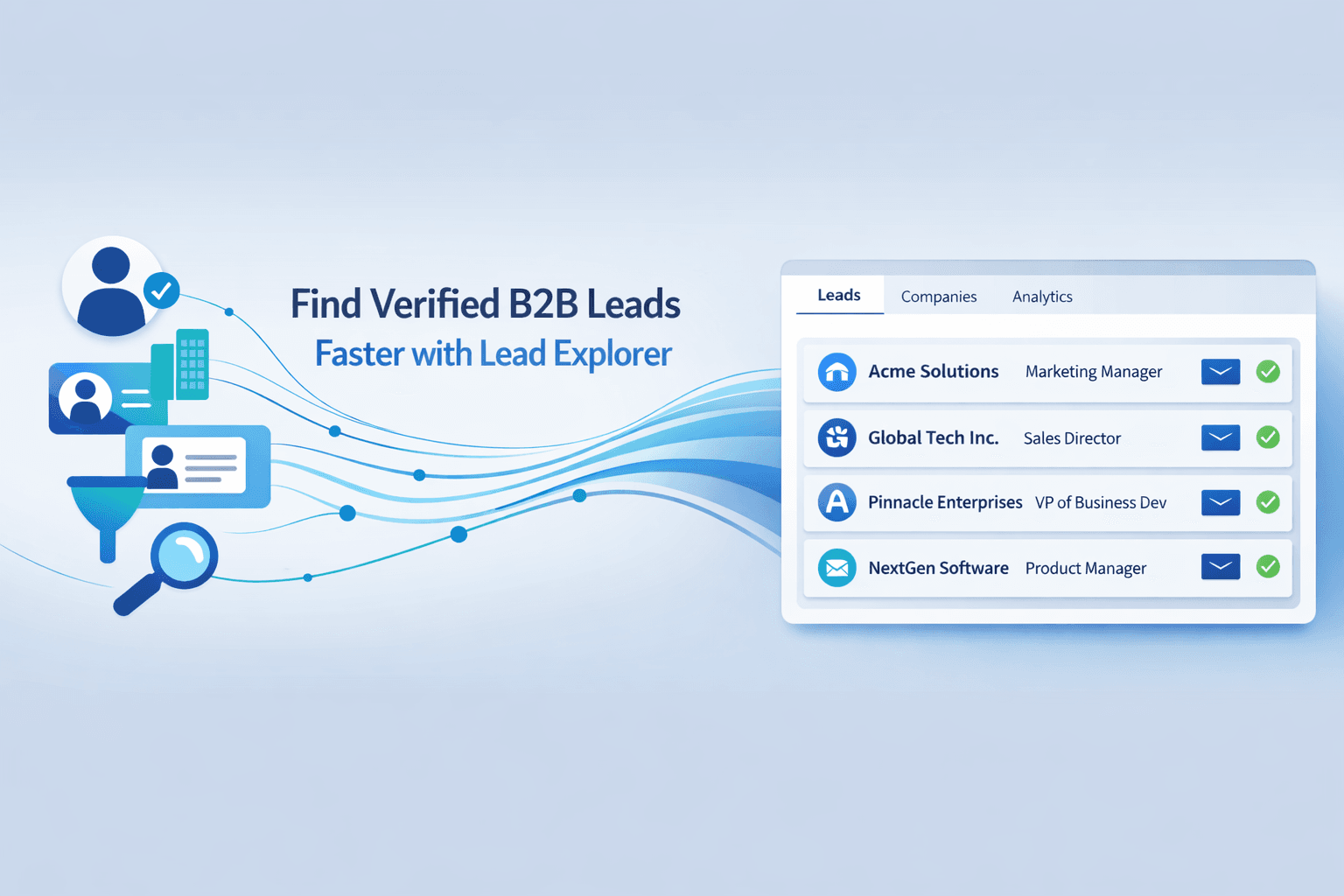
Lead Explorer's Advanced Targeting Filters let you segment prospects by technographic data: cloud infrastructure, hiring changes, company growth signals, compliance certifications. When you're looking for "companies with new CISO hires actively using Kubernetes," you build that ICP once, then let the system surface matches in real time. No more manual list-building or guesswork about timing.
The system also flags signal decay — it tells you when a prospect's hiring has stabilized or their infrastructure has matured. You'll know when the buying window is closing, so you don't waste sequences on prospects no longer actively evaluating.
LinkedIn Outreach + Email Coordination
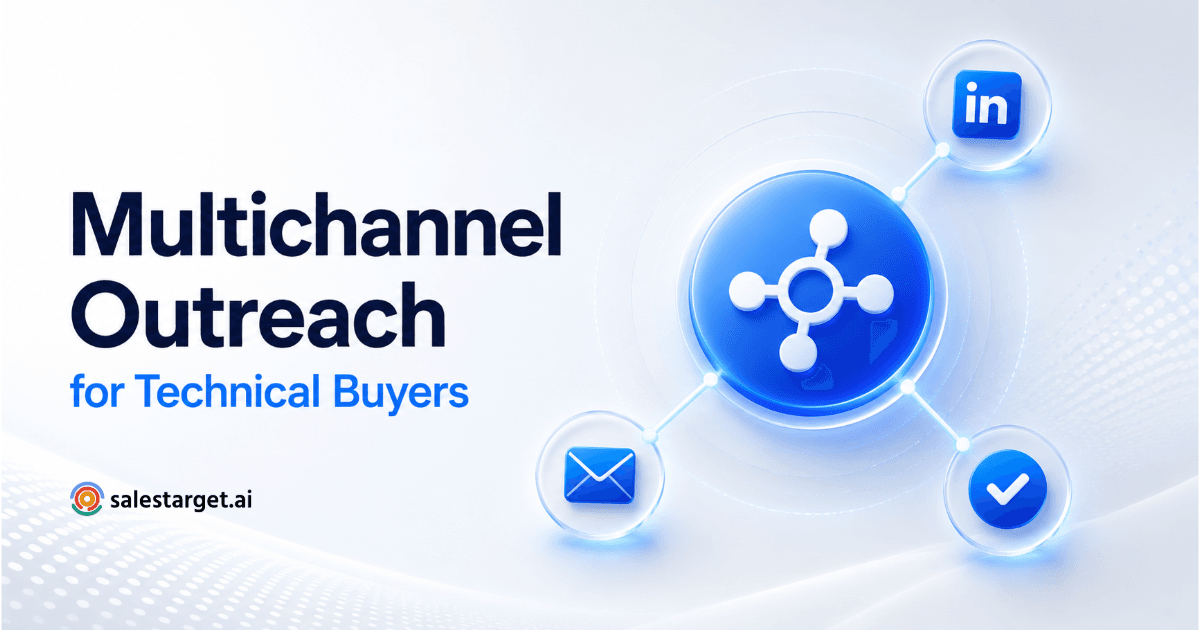
SalesTarget's Multichannel Outreach orchestrates the five-touch sequence across both channels in one workflow. You set up the sequence once — LinkedIn connection with context note, wait for acceptance, trigger email with technical proof, follow with LinkedIn DM, close with resource-based follow-up email — and the system handles the timing and pacing.
For technical buyers, this coordination is critical. If your email lands before the LinkedIn connection is accepted, it feels like spam. If your follow-up emails go out without LinkedIn context, they're just noise. Multichannel orchestration keeps each touchpoint synchronized.
CRM Activity Tracking Across Channels
SalesTarget's CRM logs every interaction — LinkedIn connection accepted, email opened, link clicked, DM sent — in a single activity timeline per prospect. For technical buyers who evaluate over weeks or months, this context is invaluable. You'll know exactly which touchpoint drove engagement and which part of your technical proof resonated.
Common Mistakes That Derail Technical Buyer Outreach
Mistake #1: Sending Multiple Emails Without LinkedIn Engagement
Why it fails
You send Email #1 on Tuesday. No reply. You send Email #2 on Friday. Still nothing. By Email #3 the following Tuesday, the engineer's mental model is: "This person is spamming me." You've burned the relationship by relying on email-only persistence. If you can't get traction with email after two touches, shift to LinkedIn engagement or pivot away from that prospect. Adding more emails is a waste.
Mistake #2: Leading With Your Demo Instead of Proof
Why it fails
You send: "I'd love to show you how SalesTarget works." The engineer thinks: "I don't want to watch a demo. I want to know if this tool solves my specific problem." Send technical proof first — "Detection rate: 94% accuracy on misconfigurations in Kubernetes RBAC," "Integrates natively with your current Terraform stack," "Deployed in 15 minutes without infrastructure changes" — and ask for a demo only after they've validated that your solution might actually fit their architecture.
Mistake #3: Ignoring Technographic Signals and Timing Blind
Why it fails
You reach out to a prospect based only on title (CISO) or company size (500+ employees). No signal. They're not evaluating anything right now; they're maintaining existing tooling. Your sequence lands in a dead inbox because there's no buying trigger. Result: 2% reply rate. Instead, wait for a signal — hiring change, cloud migration, compliance audit — so your outreach lands when they're actually in market.
Mistake #4: Generic Personalization That Doesn't Prove You've Done Your Homework
Why it fails
You send: "I saw on LinkedIn you work in infrastructure. Thought you'd be interested in our security platform." That's not personalization; that's a wild guess. Technical buyers can smell low-effort outreach. Instead, prove you've researched them: "Saw your blog post on containerized security — you mentioned MITRE ATT&CK framework. We've found that enterprises typically miss coverage on [specific technique]. Thought this might be relevant."
Your Multichannel Playbook: 5 Steps to Launch
| Step | Action | Output | Timeline |
|---|---|---|---|
| 1 | Define your ICP for technical buyers. Document the specific technographic signals that indicate active evaluation. | ICP doc + 5–7 signal types to track (e.g., "Series B companies hiring new CISO," "Enterprises migrating to multi-cloud") | Day 1 |
| 2 | Set up saved prospect searches in Lead Explorer. Build searches for each signal type so you surface prospects in market automatically. | 5–7 active searches generating 20–50 new prospects/week | Days 2–3 |
| 3 | Write your technical proof points for each signal type. Don't lead with benefits. Lead with specific detection rates, integration examples, or architecture details. | 5 email templates + 5 LinkedIn connection note templates, each tied to a specific signal + technical proof point | Days 4–5 |
| 4 | Set up your multichannel sequence in SalesTarget's Multichannel Outreach. Configure the five-touch sequence: LinkedIn visit → connection + context note → email #1 (technical proof) → LinkedIn DM → email #2 (resource-based). | 1 active workflow generating 50–100 sequences/week across LinkedIn + email | Days 6–7 |
| 5 | Monitor CRM Analytics for channel performance. Track which touchpoint drives acceptance/engagement for technical buyers (likely: LinkedIn engagement → email open → technical resource). Optimize sequences based on data. | Weekly analytics review showing reply rates, channel breakdown, and conversion to demo by signal type | Week 2+ |
Bring Proof, Not Persistence
Technical buyers aren't your enemy — they're your opportunity. Every skeptical CISO and wary engineer you reach is a prospect who will buy from vendors they trust. Build that trust through multichannel coordination, technographic signal timing, and technical proof-first messaging. Bring them proof instead of benefits. Show up on LinkedIn where they expect thought leadership, not sales. Time your outreach for when they're actively evaluating. And suddenly, your security software isn't competing in a crowded inbox — it's the peer recommendation they've been waiting for.
See Multichannel Sequences in Action
Book a demo with a SalesTarget specialist. We'll show you how to orchestrate LinkedIn + email sequences, target technical buyers by technographic signal, and coordinate follow-up across channels — all in one platform.
✓ 50 credits ✓ 7-day trial ✓ No credit card required