What to Do When a LinkedIn Prospect Views Your Profile But Doesn't Connect
Your prospect viewed your profile. Then nothing. No connection, no message, no bounce. Here's how to read that silence — and what to do next without coming off pushy.
TL;DR
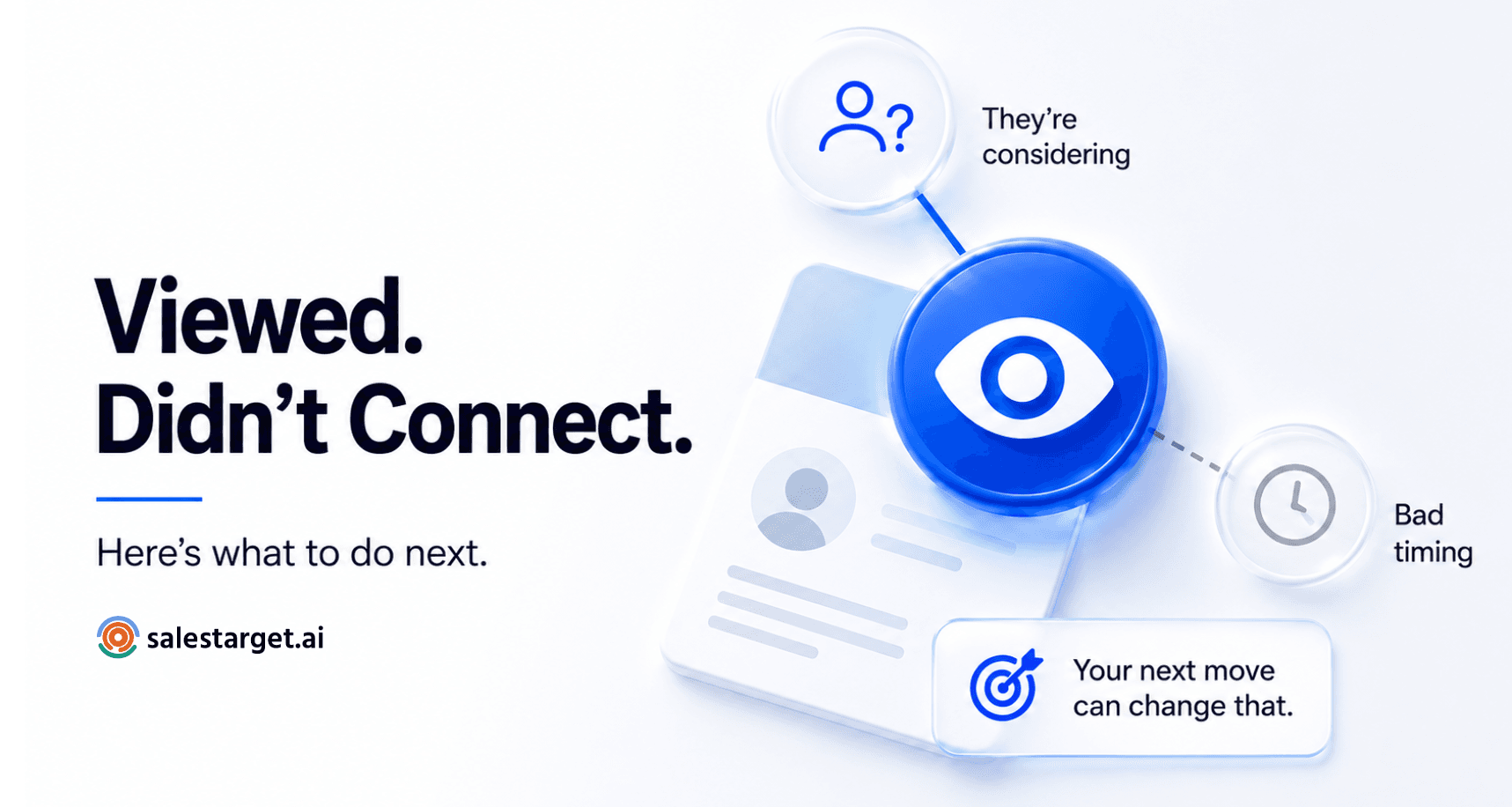
- A profile view without a connection is not a rejection — it's an ambiguous middle state that usually means one of three things: not relevant, bad timing, or still considering.
- Whether to follow up depends on which of those three it is — and you can usually tell from context clues, not guesswork.
- A good soft follow-up references something specific and gives an easy out — it never says "I saw you viewed my profile."
- There's a wrong-move list here worth avoiding: re-sending the same request, following up same-day, or treating a view as buying intent.
- Visibility into where a connection request stalled — and AI-personalized language for the follow-up — makes this a system, not a guessing game.
You send a connection request. A few hours later, LinkedIn tells you they viewed your profile. Then — nothing. No accept, no decline, no reply. Just a quiet little status that sits there, unresolved, somewhere between "interested" and "ignored."
Most outreach advice skips straight past this moment. It covers what to do once someone accepts, or how to write a first message that gets replies. Almost nothing addresses the specific, common, slightly maddening in-between: they looked, and they didn't move. Here's how to read it, and what — if anything — to do about it.
What a profile view without a connection actually signals
First, the reassurance: a view-without-connect is not a no. If it were a hard no, most people simply wouldn't click through at all — ignoring a request costs zero effort, while opening a profile is a small, deliberate action. Someone took thirty seconds to look at your name, your headline, your company, and your mutual connections before deciding not to decide yet. That's curiosity without commitment, and it's a completely normal stop on the way to either a yes or a no.
What it isn't, though, is a green light either. It's easy to over-read a profile view as warm interest and jump straight to a pitch. Resist that. A view is one data point, not a buying signal on its own — treat it as "worth a second look," not "ready to talk."
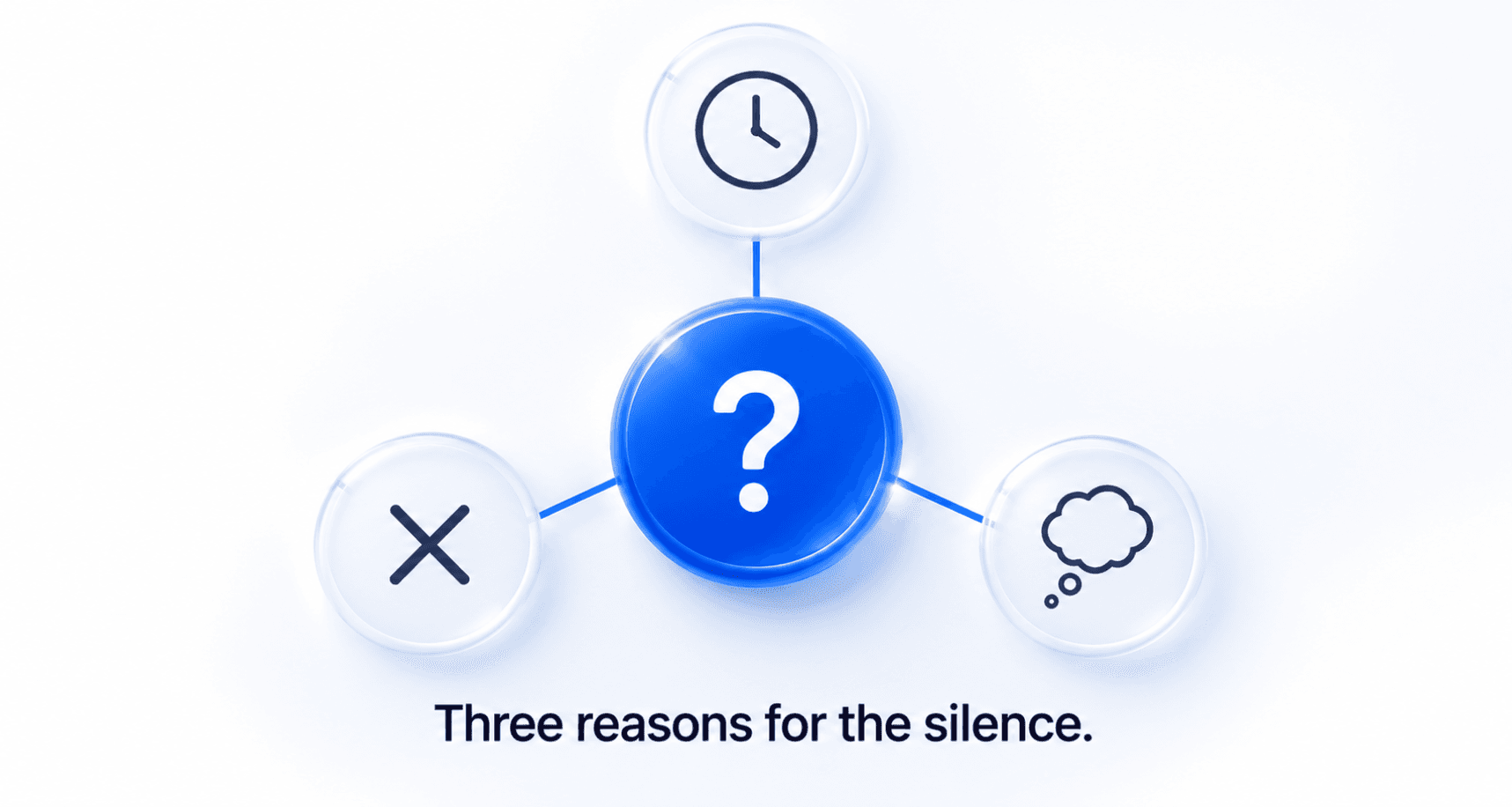
The 3 likely reasons behind the silence
In practice, a stalled view-without-connect almost always comes down to one of three situations. Each one calls for a different response, so it's worth taking a moment to figure out which one you're probably looking at before you do anything.
1. Not relevant to them right now
They checked your profile, decided you're not the right fit or the timing's wrong for their team, and moved on. This is the most common reason and the hardest one to fight — no follow-up sequence fixes a genuine mismatch. Look for signals that point here: your ICP fit was a stretch to begin with, or the industry/role skew is off from what you'd expect for their company size.
2. Bad timing, not bad fit
They're interested enough to look, but something else is louder right now — a deadline, a reorg, a vacation, a hundred other things competing for attention this week. The profile view was a "come back to this later" click that never got revisited. This is the version worth following up on, because the fit hasn't changed — only the moment has.
3. Still considering
They're genuinely weighing it — maybe checking if you're connected to anyone they know, sizing up your company, or deciding if your message was worth the risk of accepting a stranger. This one often just needs a small nudge: a bit more context, a lower-commitment ask, or simply a few more days before they decide on their own.
Should you follow up? When yes, when no
This is the actual decision, and it's simpler than it feels once you separate it from your ego. You're not trying to "win" the connection — you're trying to figure out if there's a real reason to spend one more touch on this person.
| Situation | Follow up? | Why |
|---|---|---|
| Strong ICP fit, viewed within the last week | Yes | Likely timing, not fit — worth one more soft touch |
| Weak ICP fit or wrong seniority | Probably not | Chasing a mismatch rarely converts; better spent elsewhere |
| Viewed more than 3–4 weeks ago, no other activity | Only with new context | Stale interest needs a real reason to resurface, not a repeat |
| Viewed right after a relevant trigger (funding, hire, launch) | Yes | Timing lines up with a real reason to reach out again |
The general rule: follow up when fit is strong and something explains the pause. Skip it when fit is genuinely weak — no message is clever enough to manufacture relevance that isn't there.
How to craft a soft follow-up that doesn't feel pushy
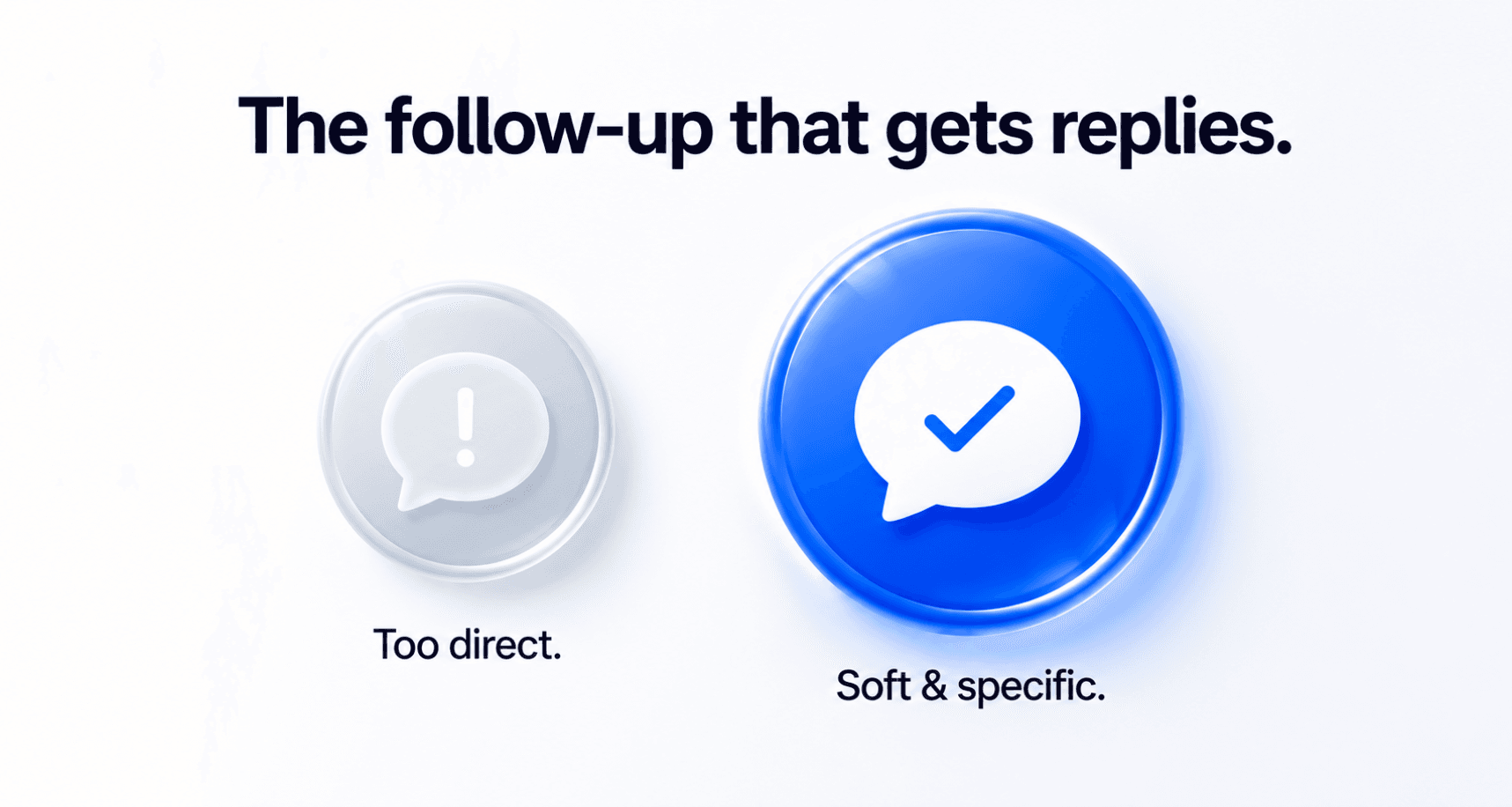
The follow-up only works if it doesn't feel like a follow-up. Three rules keep it soft.
Never mention the view
"I noticed you viewed my profile" is the fastest way to make someone feel watched instead of considered. It turns a low-stakes browse into an accountability moment, and most people's instinct is to disengage entirely rather than explain themselves. Leave it out completely — act as if the view never happened, and let the message stand on its own.
Anchor to something specific
A generic "just checking in" restates the ambiguity instead of resolving it. A good soft follow-up gives them a fresh, small, specific reason to engage — a relevant insight, a one-line observation about their company, or a genuinely useful resource. Specificity signals you did homework, not that you're running a sequence.
Give them an easy out
Low-pressure language — "no worries if now's not the right time" or "happy to leave this here if it's not relevant" — does two things at once. It removes the social cost of ignoring you again, and paradoxically, that's exactly what makes people comfortable enough to respond. Nobody wants to feel cornered into a reply; take the corner away.
Mistakes to avoid with a stalled profile view
Re-sending the same connection request
Why it backfires
If they were going to accept your original note, they would have. A repeat with no new context just repeats the ask, not the reason.
Following up the same day
Why it backfires
Same-day speed reads as automation, not attentiveness. Give a view a few days to breathe before assuming it needs a nudge.
Treating a view as buying intent
Why it backfires
Opening a message meeting invite or pricing conversation off a single view skips several steps a prospect hasn't taken yet — it reads as presumptuous, not proactive.
Turning this into a system instead of a guessing game
The hardest part of this whole scenario isn't writing one good follow-up message — it's remembering which requests stalled, for how long, and whether you already tried once. Do this manually across a real pipeline of dozens or hundreds of prospects and the ambiguous middle state turns into an unmanageable spreadsheet.
This is where LinkedIn analytics and CRM visibility earns its keep. SalesTarget tracks every connection request's status — sent, accepted, replied — and keeps that lead's full activity history connected to your CRM, so a request that's been sitting unaccepted for two weeks doesn't quietly disappear into your outbound history. You can see exactly which leads stalled and for how long, instead of relying on memory or a manual tracker.
And when it is time to follow up, AI-powered LinkedIn personalization writes the soft, specific version of that message instead of a generic template — adapting to the prospect's role, company, and industry so the follow-up reads like it was written for them, not pulled from a sequence. You stay in control of what goes out — review or approve every message — while AI does the part that's hardest to scale: sounding human, every time.
Stop losing track of stalled connections.
See exactly where every LinkedIn request stands, and follow up with AI-personalized messages that don't sound automated.
✓ 7-day trial ✓ No credit card required ✓ Set up in minutes
Frequently Asked Questions

See It In Action: Book Your Free Demo
Get a personalized walkthrough and see how it works for your team.
Book My Demo →