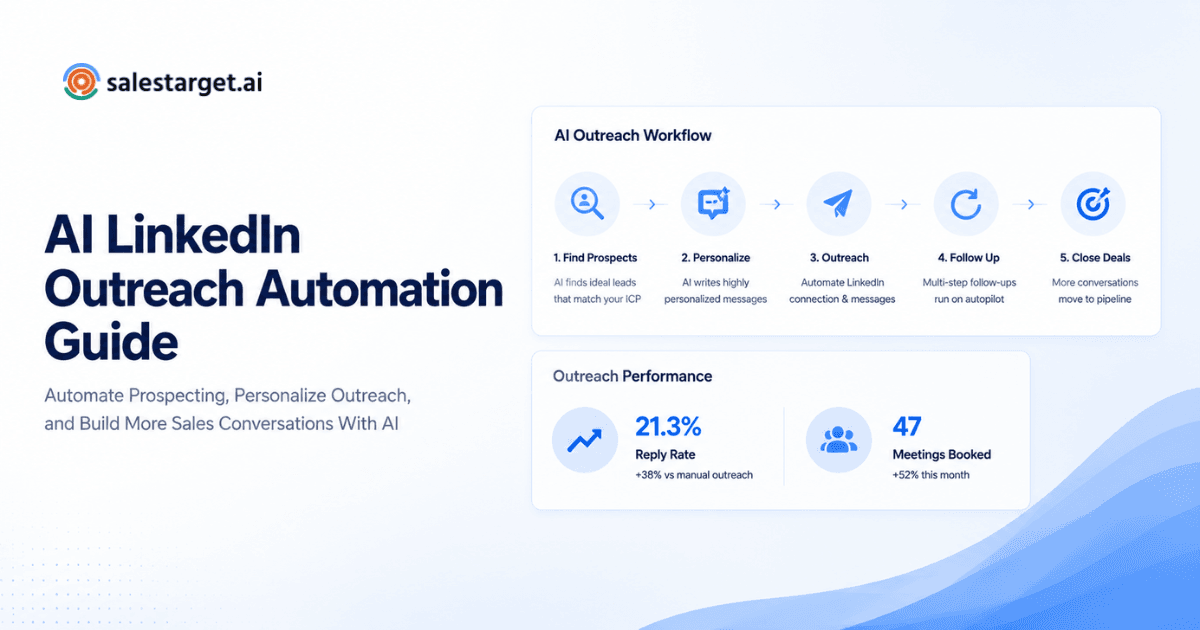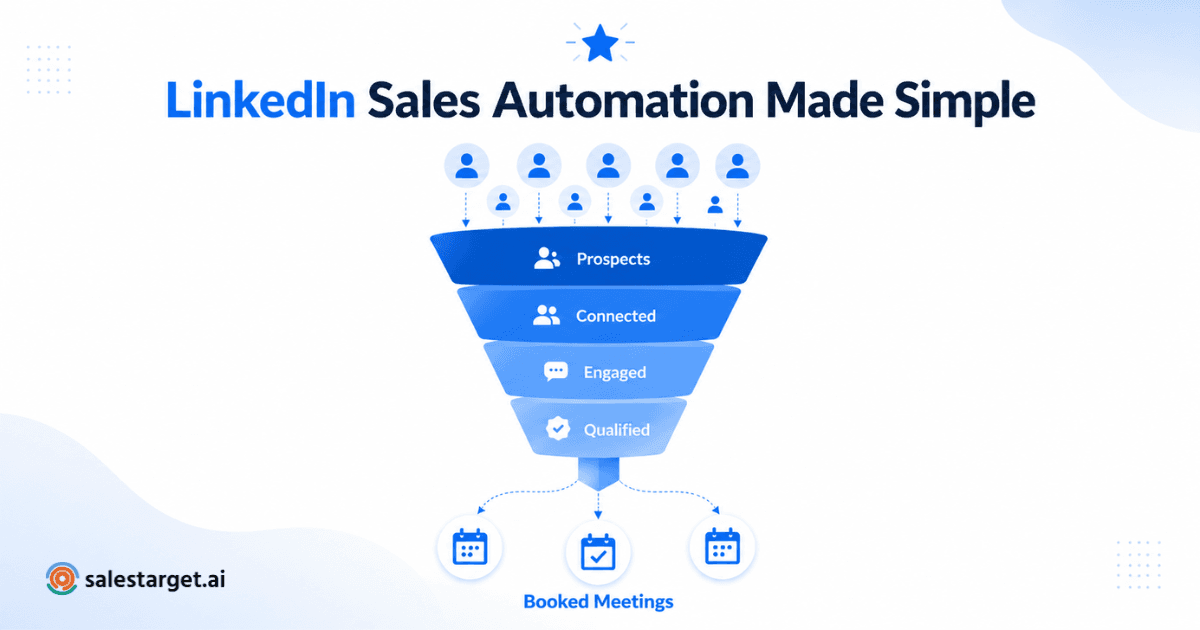
If you're an SDR or account executive still grinding through manual LinkedIn prospecting, you already know the math doesn't work. LinkedIn sales automation changes that equation. It's the practice of using software to handle repetitive outreach tasks—connection requests, follow-up messages, profile visits, and engagement tracking—so reps can focus on actual selling instead of busywork.
In short: LinkedIn sales automation lets B2B sales teams scale personalized outreach without scaling headcount. When done right, the results are clear—higher reply rates, fuller pipelines, and more booked meetings.
Why LinkedIn Sales Automation Has Become Essential for Modern Sales Teams
LinkedIn is the dominant platform for B2B lead generation. According to LinkedIn's own business data, over 80% of B2B leads generated through social media come from LinkedIn. That makes it the single most important outbound prospecting channel for most sales organizations.
But manual LinkedIn outreach doesn't scale. A rep sending 30–40 personalized requests per day, writing individual follow-ups, and tracking responses in a spreadsheet will hit a ceiling fast. The volume is too low, the process is inconsistent, and prospects slip through the cracks.
That's where LinkedIn outreach automation comes in. By automating the repetitive mechanics of prospecting—without sacrificing personalization—sales teams can maintain steady pipeline flow and reach two to three times more qualified prospects daily. If you're ready to move past manual workflows, the first step is to automate LinkedIn outreach with a structured system.
How LinkedIn Sales Automation Works ?
At a high level, LinkedIn sales automation tools replicate what a rep would do manually—but faster, more consistently, and with built-in intelligence. Here's how the core functions break down.
Automating Connection Requests
Instead of clicking "Connect" one by one, automation tools let you define your ideal customer profile, build targeted lists, and send requests on a schedule. Most tools pull personalization from profile data—job title, company name, mutual connections—so the request feels intentional, not spammy.
Personalized Follow-ups at Scale
The real revenue in LinkedIn prospecting comes from follow-ups. Most prospects won't reply to the first message. A good LinkedIn automation tool lets you build multi-step sequences—connection request, thank-you after acceptance, value-driven follow-up, and a final nudge—all personalized with dynamic fields. This is where multi-channel outreach becomes valuable too: pairing LinkedIn messaging with email touchpoints creates more opportunities for engagement.
Tracking Prospect Engagement
Visibility matters. The best platforms show you who accepted your request, who replied, and who went silent. This data helps reps prioritize warm leads, adjust messaging, and understand which sequences convert. Without tracking, you're flying blind.
Benefits That Help Sales Reps Book More Meetings
When sales teams implement LinkedIn sales automation effectively, several measurable improvements show up quickly:
- Consistency: Automated sequences run daily without gaps. No more "I forgot to follow up" moments that kill deals.
- Personalization at scale: Dynamic fields and conditional logic let you tailor every message without writing each one from scratch.
- Time savings: Reps reclaim 1–2 hours per day that would otherwise go to manual prospecting tasks.
- Higher response rates: Timely, well-sequenced follow-ups dramatically outperform one-off cold messages.
- Better pipeline management: Real-time engagement data keeps your CRM accurate and your forecast honest.
Here's a benchmark worth noting: Teams that automate consistent LinkedIn follow-ups often experience up to 3× more booked meetings compared to inconsistent manual outreach. We've seen this pattern repeatedly across mid-market and enterprise sales organizations running structured outbound campaigns.
Common Mistakes That Reduce LinkedIn Performance
Automation isn't a magic bullet. Plenty of teams adopt a LinkedIn automation tool and still see poor results because of avoidable mistakes.
Sending generic messages. If every prospect gets the same templated pitch, response rates will tank. Personalization—even small touches like referencing a recent post or a shared connection—makes a measurable difference.
Over-automating too fast. LinkedIn has daily activity limits. Reps who blast 100 requests on day one risk account restrictions. A gradual ramp-up—starting with 20–25 per day and increasing over a few weeks—is safer and more sustainable.
Ignoring sequence performance data. If your second follow-up has a 2% reply rate but your third has 12%, your sequence needs restructuring. Most reps never look at these numbers. The best ones obsess over them.
Neglecting profile optimization. Your LinkedIn profile is the landing page for every outreach message. If it reads like a resume instead of a value proposition, even great automation won't save you.
For a deeper dive into avoiding these pitfalls, check out this LinkedIn Outreach Automation Guide covering setup, targeting, and messaging strategy.
Best Practices for Successful LinkedIn Outreach
Successful social selling on LinkedIn comes down to a few key principles:
- Lead with relevance. Every message should answer the prospect's unspoken question: "Why should I care?" Tie your outreach to their role, industry, or a specific challenge they face.
- Keep it short. LinkedIn messages that get replies are typically under 100 words. Respect the prospect's time.
- Test and iterate. Run A/B tests on connection note copy, follow-up timing, and CTA phrasing. Small tweaks compound over time.
- Warm up before the ask. Engage with a prospect's content—like a post, leave a comment—before sending a cold connection request. It builds familiarity.
- Align outbound with content. Share valuable posts on your own profile so that when prospects check you out, they see someone worth talking to—not just another rep with a pitch.
How AI Improves LinkedIn Sales Automation ?
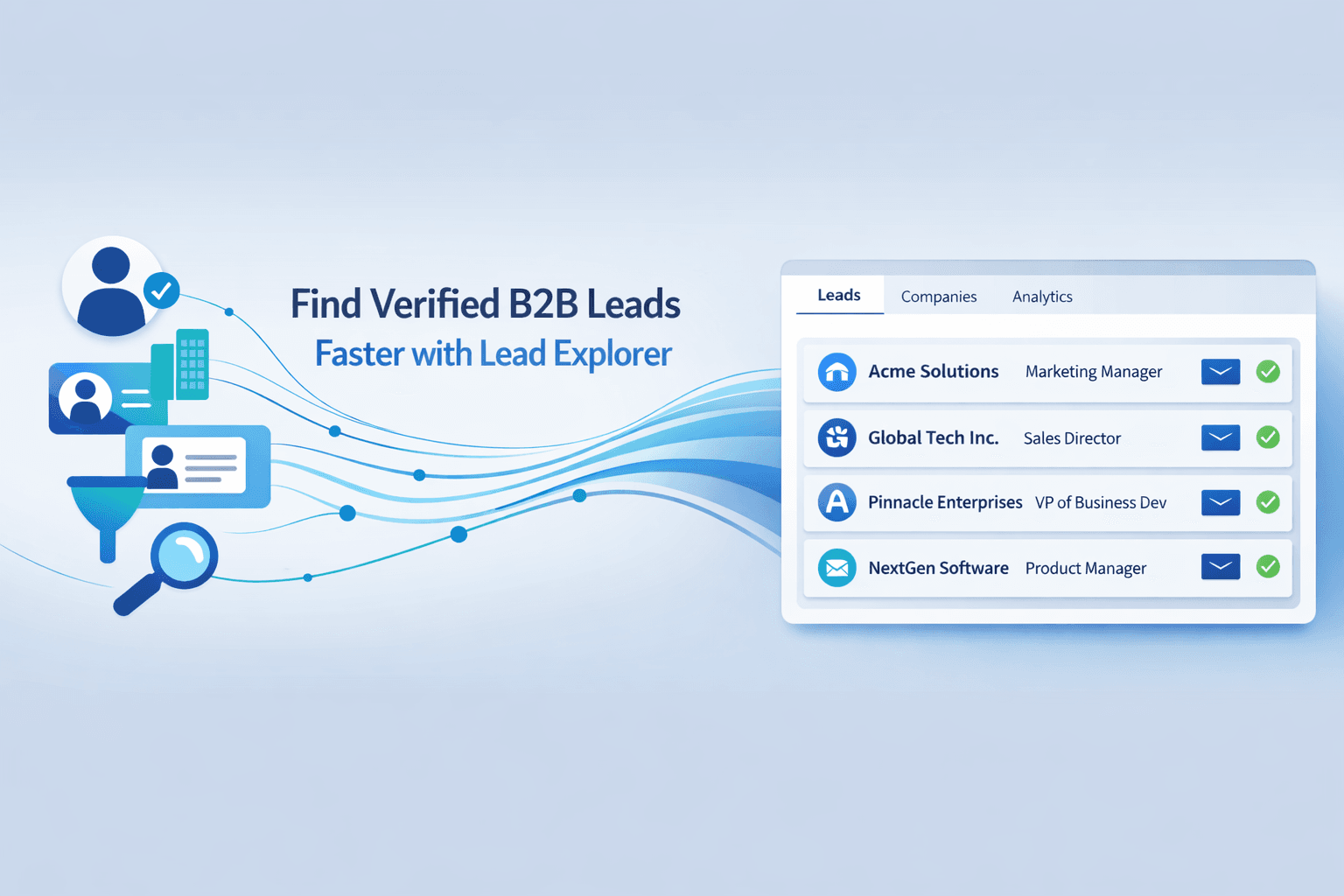
The latest generation of LinkedIn automation tools leverages AI in ways that genuinely move the needle. AI-powered personalization engines analyze a prospect's profile, recent activity, and company news to generate message variations that feel custom-written—even at scale.
Workflow automation has gotten smarter too. Instead of rigid, linear sequences, AI-driven platforms branch campaigns based on prospect behavior: if someone views your profile but doesn't accept, the system triggers a different follow-up path than for someone who accepts immediately.
Campaign optimization is another strong suit. AI models flag underperforming sequences, suggest copy improvements, and recommend optimal send times based on historical engagement data. Gartner's research on sales technology consistently highlights AI-driven sales engagement as one of the fastest-growing categories in the B2B tech stack—and the results support that trend.
If you want to see how AI-powered outbound prospecting works in practice, this guide on how to automate LinkedIn outreach for better sales breaks down the workflow in detail.
Choosing the Right LinkedIn Automation Tool
Not all LinkedIn automation tools are built equal. When evaluating your options, focus on a few critical factors:
- Safety and compliance. The tool should respect LinkedIn's daily activity limits and mimic natural human behavior to protect your account.
- Personalization depth. Look for dynamic fields, conditional logic, and AI-assisted message generation—not just "{first_name}" merge tags.
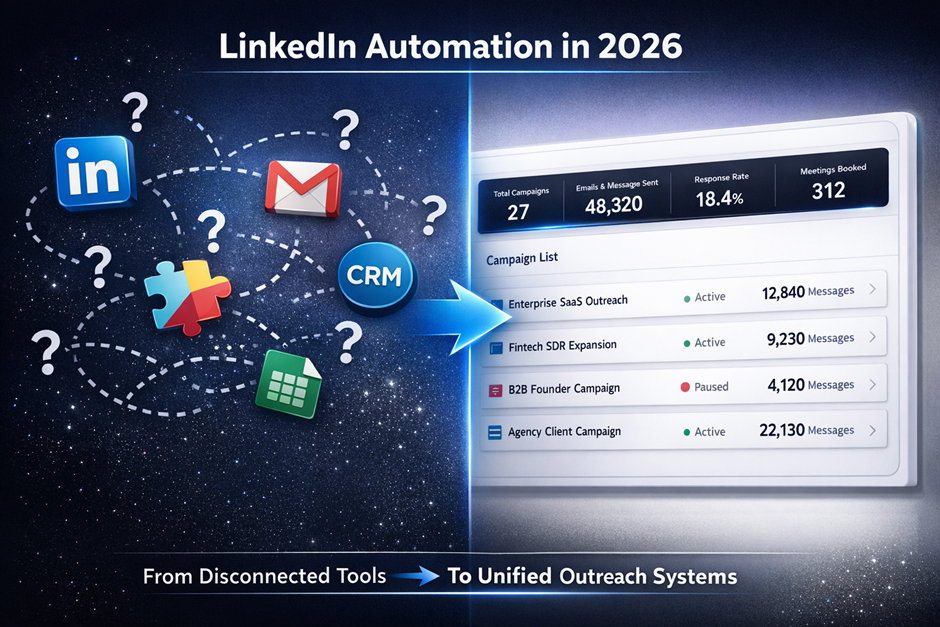
- Multi-channel capabilities. The best sales workflow automation platforms combine LinkedIn messaging automation with email, allowing reps to run coordinated sequences across channels.
- CRM integration. Engagement data should flow directly into your CRM so nothing gets lost between platforms.
- Analytics and reporting. You need sequence-level and step-level performance data to optimize campaigns over time.
- Ease of onboarding. If it takes two weeks to train a rep, adoption will suffer. Prioritize tools with intuitive interfaces and solid onboarding support.
Match these criteria to your team's deal size and sales cycle. A tool built for high-volume transactional outreach won't work for complex enterprise deals.
LinkedIn sales automation isn't about replacing the human element in sales. It's about removing the friction that prevents good reps from doing what they do best: building relationships and closing deals. When you automate the repetitive mechanics, you free up time and mental energy for conversations that actually move pipeline forward.
The teams booking 3× more meetings aren't working 3× harder. They're working with systems that let them show up consistently and engage prospects with relevant, timely messaging. If your team is ready to stop leaving meetings on the table, now's the time to put a structured LinkedIn outreach system in place.
Ready to scale your LinkedIn pipeline?