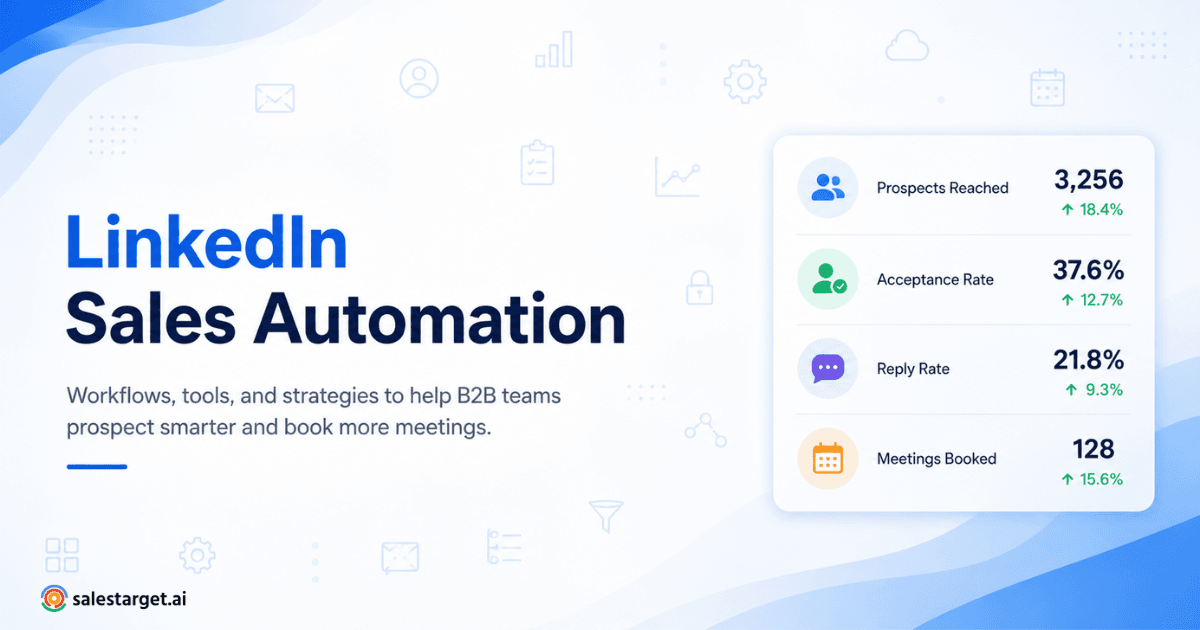
LinkedIn sales automation is the process of using software to automate prospect discovery, connection requests, follow-ups, and engagement activities while maintaining personalization at scale.
If you're still running LinkedIn outreach by hand — copying profiles into spreadsheets, sending connection requests one by one, and following up days later — you already know something has to change. LinkedIn sales automation gives revenue teams the ability to prospect, engage, and nurture buyers at scale without burning hours on repetitive tasks. As sales cycles lengthen and buying committees grow, teams that automate strategically are outperforming those that don't.
This guide covers how LinkedIn outreach automation works, what to look for in a tool, and how to avoid the mistakes that get accounts flagged.
What Is LinkedIn Sales Automation?
At its core, LinkedIn sales automation means using dedicated software to handle the repetitive mechanics of outreach — finding prospects, sending connection requests, scheduling follow-ups, and tracking engagement — so your team can focus on conversations that matter.
Core automation activities include prospect list building, sequenced connection requests, multi-touch follow-ups, profile engagement, and performance analytics across the outreach funnel.
Why Sales Teams Are Adopting LinkedIn Sales Automation?
The shift toward LinkedIn prospecting automation is driven by practical realities most outbound teams face daily.
- Scale without adding headcount. A single SDR manually prospecting on LinkedIn can touch 30–50 profiles per day. With automation, that same rep engages hundreds of targeted prospects weekly.
- Consistency across the team. Automation enforces a repeatable cadence. Every prospect gets the right touches at the right intervals.
- Personalization that works. Modern LinkedIn automation tools use dynamic variables and AI-generated copy to tailor messages based on job title, company, or recent activity.
- Measurable pipeline growth. Track connection acceptance rates, reply rates, and meeting conversion by sequence — then iterate fast.
INDUSTRY OBSERVATION
Based on analysis of modern outbound workflows, sales teams using automated prospecting and structured follow-ups can reclaim up to 8–12 hours per week compared with fully manual LinkedIn outreach. (Operational benchmark — not sourced from a third-party study.)
The Typical LinkedIn Outreach Workflow
Here's how a well-structured automated workflow typically looks.
Finding Prospects
Use Sales Navigator filters, uploaded account lists, or intent data to build targeted prospect pools. Automation tools pull results directly into sequencing workflows.
Segmenting Audiences
Group prospects by persona, industry, company size, or buying stage. Segmentation separates relevant outreach from generic blasts.
Sending Connection Requests
Automated requests go out with personalized notes based on segment-level or individual-level variables. Daily volume limits stay within LinkedIn's guidelines.
Automated Follow-Ups
If a connection is accepted but doesn't reply, the sequence triggers follow-ups at defined intervals. Two to three follow-ups spaced across seven to fourteen days typically perform best.
Engagement Tracking
Every touchpoint — profile view, acceptance, message open, reply — is logged for analysis, showing which sequences work and which need tuning.
Meeting Conversion
When a prospect replies positively, automation pauses so your rep can step in to schedule the meeting.
LinkedIn Prospecting Automation vs. Manual Prospecting
| Factor | Manual Prospecting | Automated Prospecting |
|---|---|---|
| Time Investment | 3–4 hours/day on repetitive tasks | Under 30 minutes/day for setup and review |
| Scale | 30–50 touches per day | 200+ targeted touches per week |
| Consistency | Depends on rep discipline | Enforced by sequences and schedules |
| Personalization | High per message, but limited volume | Dynamic personalization at scale |
| ROI | Low throughput, high cost per touch | Higher throughput, lower cost per touch |
Neither approach is wrong, but automation gives teams the leverage to do more with less — especially when reps juggle multiple channels and deal stages.
Key Features to Look for in a LinkedIn Automation Tool
Not every tool is built the same. When evaluating a LinkedIn automation tool, prioritize these:
- Prospect discovery and list building — Integrate with Sales Navigator or use built-in search to build targeted lists without manual exports.
- Sequence automation — Multi-step builders supporting connection requests, follow-ups, and engagement actions in one workflow.
- AI-powered personalization — Pull from prospect profiles, company data, and recent activity to generate relevant message variations beyond basic merge fields.
- CRM syncing — Bi-directional sync with Salesforce, HubSpot, or your CRM keeps every interaction visible to the revenue team. HubSpot's guide to sales automation outlines why CRM integration matters for pipeline visibility.
- Analytics and reporting — Dashboards showing acceptance, reply, and meeting conversion rates by sequence.
- Compliance controls — Daily send limits, cool-down periods, and activity randomization to stay within LinkedIn's terms.
Common Mistakes to Avoid
Even with good tools, poor execution kills results:
- Over-automation. Automating every interaction, including replies, feels robotic. Use automation for repetitive steps, but let humans handle conversations.
- Generic messaging. If your first message could apply to anyone in any industry, it'll get ignored. Tailor messaging to specific pain points.
- Poor targeting. Sending hundreds of requests to wrong personas wastes daily limits and damages sender reputation.
- Ignoring engagement signals. If someone views your profile after a connection request but doesn't accept, that's a signal. Good tools trigger alternate follow-up paths based on these behaviors.
- Violating LinkedIn best practices. Aggressive volume, spammy copy, and rapid-fire actions get accounts restricted. Respect daily limits and keep messaging conversational.
How LinkedIn Sales Outreach Fits into a Multi-Channel Strategy?
LinkedIn works best as one part of a broader outreach engine. The strongest revenue teams combine LinkedIn with email, phone, and content touchpoints to meet buyers wherever they engage.
A prospect who ignores your LinkedIn message might respond to a well-timed email two days later. A connection who goes quiet can be retargeted with a case study via email. The key is sequencing channels so each touchpoint reinforces the last.
LinkedIn sales automation isn't about replacing the human side of selling — it's about removing manual bottlenecks so your team spends time on actual conversations. The teams getting the best results combine smart automation with genuine personalization, clean targeting, and multi-channel coordination.
Start with a focused workflow. Measure what converts. Then scale what works.
Ready to scale your LinkedIn outreach without sacrificing personalization?
Explore how SalesTarget.ai helps automate prospecting, outreach, and follow-ups at scale →