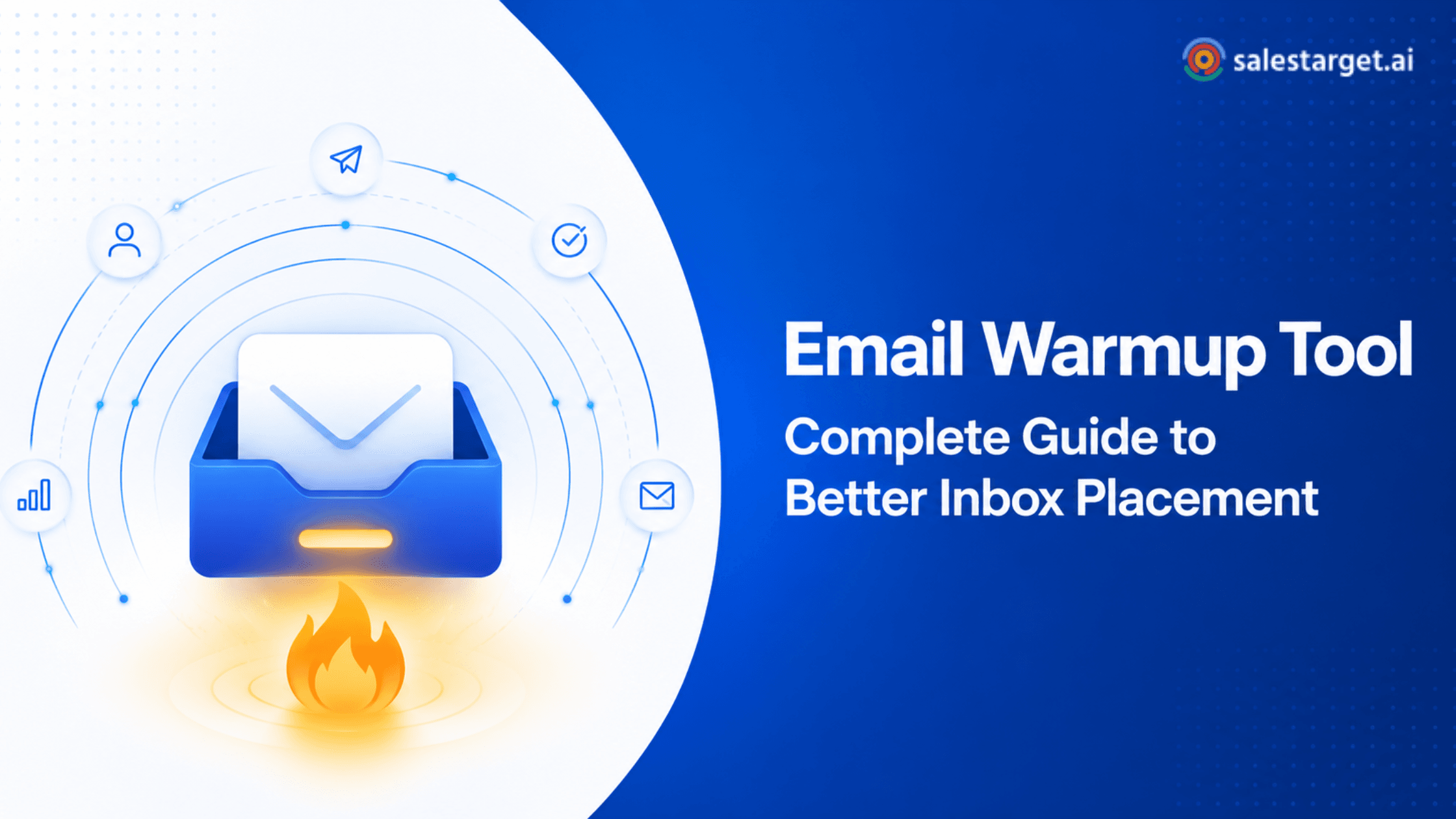
An email warmup tool is software that gradually builds your sending domain's reputation by simulating real email activity — opens, replies, and positive engagement — before you launch outreach campaigns. It matters because inbox providers (Gmail, Outlook, etc.) filter senders they don't recognize, routing cold emails to spam.
SDRs, BDRs, agency recruiters, and SaaS founders running outbound should use one before sending a single cold email from a new or re-activated domain.
Why Email Deliverability Matters More Than Open Rates ?
Most sales teams obsess over open rates. They A/B test subject lines, swap emojis in and out, and argue over send times. Meanwhile, the real problem is happening before any of that — their emails are never reaching the inbox in the first place.
Industry data consistently shows that roughly 1 in 6 legitimate business emails lands in spam or goes completely undelivered. That's not a copywriting problem. It's a deliverability problem.
When you send from a cold or under-established domain, inbox providers like Gmail and Microsoft 365 don't have enough history to trust you. Their filtering algorithms evaluate dozens of signals: authentication records, domain age, sending volume ramp, engagement patterns, and complaint rates. Without a solid foundation, even the best-crafted message gets buried.
That's why deliverability should be the first metric any outbound team fixes — not the last.
What Is an Email Warmup Tool?
An email warmup tool is software designed to build inbox reputation by generating authentic-looking email activity on your behalf. It works by connecting your email account to a network of real mailboxes, then automatically sending emails between those accounts with natural open-and-reply patterns.
Here's what it's actually building:
- Sender reputation: Your domain and IP's trustworthiness score with inbox providers
- Domain health: The overall standing of your sending domain based on historical behavior
- Engagement signals: Positive actions (opens, replies, not-spam flags) that prove recipients want your mail
- Inbox reputation: A cumulative track record that tells Gmail, Outlook, and others you're a legitimate sender
Think of it like a credit score for your email. A new domain has zero history. A warmed domain has a track record that says: this sender is real, people engage with their emails, and they've never generated spam complaints.
How an Email Warmup Tool Works ?
The mechanics are straightforward, but the impact is significant.
When you connect your inbox to a warmup tool, it starts sending low volumes of emails to other accounts within a trusted network. Those accounts automatically open the emails, reply to some, and — critically — move any that land in spam back to the inbox and mark them as 'not spam.'
Over two to four weeks, the sending volume increases gradually. The ratio of positive engagements remains high throughout. This tells inbox providers that:
- Your domain has a consistent sending history
- Recipients are engaging with your emails
- Nobody is marking your mail as unwanted
The result is a domain that looks like a trustworthy, established sender — even if it was registered last month.
Signs You Need an Inbox Warming Software
If any of these describe your situation, you need inbox warming software before your next send:
You registered a new domain for outreach
New domains have zero reputation. Without warmup, expect 40–60% of emails to land in spam immediately.
Your open rates dropped suddenly
If you went from 30% opens to under 10% with no changes to your list or messaging, inbox placement is likely the issue.
Prospects tell you they never received your email
This is a classic sign your emails are being silently filtered — no bounce, no delivery failure, just disappearing into a spam folder.
You're scaling outbound campaigns fast
Jumping from 50 to 500 emails per day without warming is one of the fastest ways to get your domain blacklisted.
You're starting fresh after a deliverability incident
If a previous domain got flagged or blacklisted, warming a new domain slowly is non-negotiable.
Benefits of Using an Email Warmup Tool for Sales Teams
| Challenge | Without Warmup | With Warmup |
|---|---|---|
| New domain outreach | 40–60% spam rate | Gradual inbox placement from day one |
| Cold email open rates | Below 5% on cold sends | Consistent 25–45% open rate possible |
| Sender reputation | Unknown / untrusted | Established and monitored |
| Campaign scaling | Risk of domain blacklisting | Controlled ramp with safe scaling |
| Reply rates | Near zero if emails don't land | Directly tied to deliverability |
| Compliance risk | Higher complaint rates | Positive engagement lowers complaint signals |
Email Warmup Tool vs Manual Warmup
Manual warmup is possible — but it's slow, inconsistent, and nearly impossible to scale.
With manual warmup, you'd personally send emails to colleagues, have them reply, move things from spam, and gradually increase volume. You'd also need to track everything in a spreadsheet while managing dozens of other tasks.
Automated warmup tools eliminate this entirely. They handle the entire process in the background — volume ramp schedules, engagement ratios, spam recovery — without you lifting a finger. Most tools also surface real-time reputation scores so you can see exactly where you stand before hitting send.
For any team sending more than 100 emails per day across multiple inboxes, manual warmup isn't realistic. It's the kind of task that sounds manageable until you're doing it across five domains simultaneously.
Common Deliverability Mistakes That Hurt Outreach
Even with warmup in place, these mistakes can undo your progress quickly:
- Sending too much, too fast. Jumping from 100 to 1,000 daily emails in a week is a red flag for spam filters. Volume ramps should be gradual.
- Low-quality lists. Sending to unverified, outdated, or scraped lists drives bounce rates up and engagement rates down.
- Missing authentication. SPF, DKIM, and DMARC records are non-negotiable. Verify your records at Google Postmaster Tools.
- Generic, template-driven messaging. Emails nobody opens or replies to drag your reputation down. This is why AI email personalization strategies have become essential — personalized emails generate the engagement signals that protect your sender score.
- Inconsistent sending cadence. Sending 500 emails one day and nothing for two weeks sends confusing signals. Inbox providers reward consistent, predictable behavior.
How Sales Teams Can Scale Cold Outreach Safely ?
The answer to scaling isn't sending more from one inbox — it's distributing volume across multiple warmed inboxes.
Here's what a safe scaling structure looks like in practice:
- Multiple inboxes per domain: Use 2–3 inboxes per domain, each warmed independently. Keep per-inbox daily volume under 50–100 for cold outreach.
- Dedicated sending domains: Never send cold outreach from your primary company domain. Use variations like reply.yourcompany.com or team.yourcompany.com.
- Deliverability monitoring: Track bounce rates, spam complaint rates, and inbox placement in real time. Microsoft Sender Support provides tools for monitoring your reputation on Outlook specifically.
- Gradual volume ramp: Even after warmup, scale sending volume incrementally over weeks.
- Platforms like the AI Email Outreach Platform from SalesTarget AI are purpose-built for multi-inbox, scalable outreach — combining warmup, sending, and deliverability monitoring in one place.
Real Example: SaaS Team That Improved Deliverability
A 12-person SaaS sales team running outbound for a B2B project management tool was generating fewer than 3 qualified meetings per week from cold email. Their open rate had fallen to 7%, down from 28% six months earlier. Replies were almost nonexistent.
After auditing their setup, the core issues were a single over-used sending domain, no warmup on recently added inboxes, and templated messaging generating very low engagement.
They restructured around four sending domains, warmed each inbox for three weeks using automated tooling, tightened their list qualification process, and introduced personalization at scale.
Within six weeks, open rates climbed back to 31%. Reply rates more than doubled. Booked meetings increased to 9–11 per week from the same number of sends.
The full breakdown of what changed — and the week-by-week results — is documented in this SaaS email outreach case study.
What to Look for in an Email Deliverability Software ?
Not all warmup tools are built the same. When evaluating email deliverability software, prioritize:
- Automated warmup with real accounts. Avoid tools using bot networks — inbox providers detect artificial patterns. The warmup network should consist of genuine mailboxes with real engagement history.
- Inbox monitoring. You need visibility into where your emails are landing — inbox, promotions, or spam — not just delivery confirmations.
- Sender reputation tracking. Real-time domain health scores and reputation dashboards let you respond before problems escalate.
- Scalability for multiple inboxes. If you're planning to run outreach across five or ten inboxes, the tool needs to handle warmup at that scale without manual overhead.
- Reporting and audit trails. Deliverability is an ongoing process, not a one-time fix. Look for tools that show trends over time so you can spot reputation dips early.
An email warmup tool isn't optional for teams serious about cold outreach — it's foundational. Without it, you're spending money on lists, copy, and sequences that may never reach the inbox.
The good news: with the right setup, deliverability is very fixable. Warm your inboxes before you send. Use multiple sending domains. Authenticate properly. Personalize at scale. Monitor reputation continuously.
When these pieces work together, outbound becomes predictable — and predictable outbound is what drives consistent pipeline.
Ready to Improve Your Email Deliverability?
Warming your inboxes is the single highest-leverage step before scaling cold outreach. SalesTarget AI handles the entire process automatically — building sender reputation, monitoring inbox placement, and protecting your domain health while your team focuses on closing deals.