TL;DR
- B2B prospecting has moved through three distinct generations: bought lists, static databases, and now real-time intelligence.
- B2B buyers complete roughly 70% of their journey before ever contacting a vendor — a static database can't tell you when that 70% has happened.
- Real-time intelligence used to require enterprise-only budgets — that's no longer true.
- The shift changes what an SDR's day looks like: less list-scrubbing, more acting on live signals.
- SalesTarget.ai's real-time signal discovery brings Gen 3 intelligence to teams who never had access to it before.
Every prospect list you've ever bought was already half wrong by the time it landed in your CRM. Not because the vendor lied — because the list was a photograph of a moment that had already passed. That's the quiet failure baked into how B2B teams have sourced prospects for two decades, and it's finally catching up with the static-database era the same way the static database once caught up with the bought list.
Generation 1: Bought Lists (Why They Failed)
The first generation of B2B prospecting was the purchased list — a flat file of names, titles, and emails, sold once and used for months. The fundamental flaw was structural, not a quality issue with any specific vendor: a list is a snapshot, and snapshots age the moment they're taken. People change jobs, companies restructure, and the contact you bought six months ago may now sit in a completely different role, if they're even at the same company.
Worse, a bought list tells you nothing about timing. It can't distinguish between a company that's actively evaluating a solution like yours right now and one that has no budget or appetite for change this year. You were buying names, not moments — and moments are what actually drive a deal forward.
Generation 2: Static Databases (Why They're Not Enough)
The second generation solved part of the problem. Large searchable databases replaced one-time list purchases with ongoing access to millions of contacts, refreshed on a schedule instead of frozen at the point of sale. This was a real improvement — better coverage, better filtering, fewer obviously dead contacts.
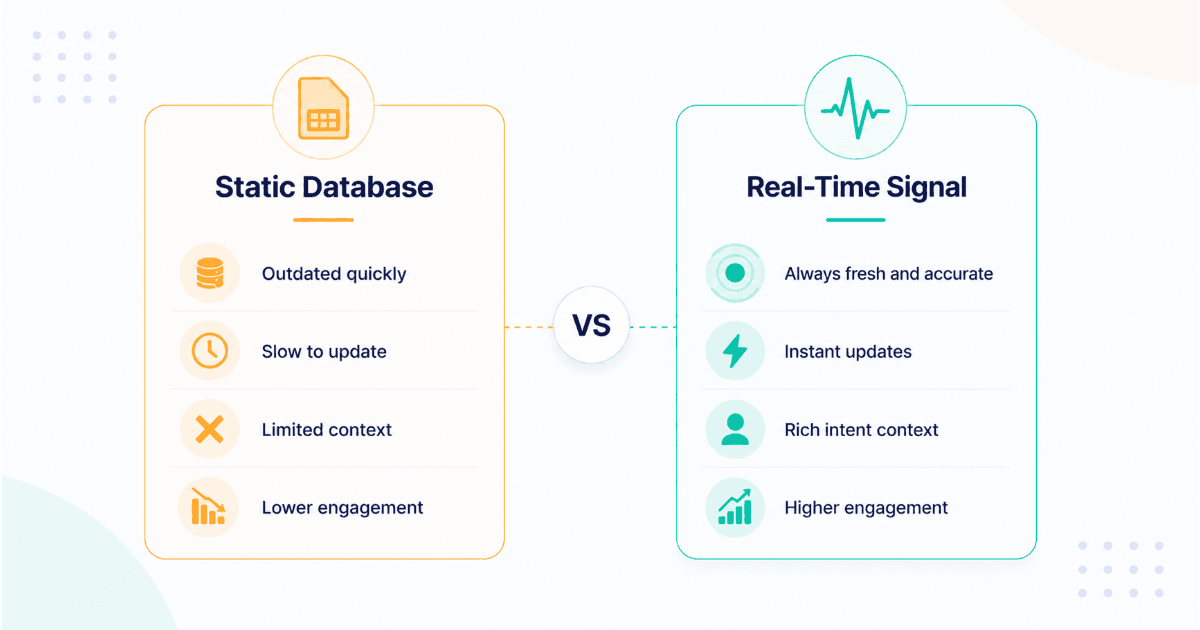
But "refreshed on a schedule" still isn't "real-time," and the gap between those two things is exactly where deals are won and lost. The buying journey itself has shifted underneath this model. Buyers now complete roughly 70% of their purchase decision before ever speaking to a vendor, according to widely cited Gartner research on the modern B2B buying journey — meaning a database that tells you who a company is, but not what they're actively doing right now, hands you the contact information with no signal about whether this is the moment to use it.
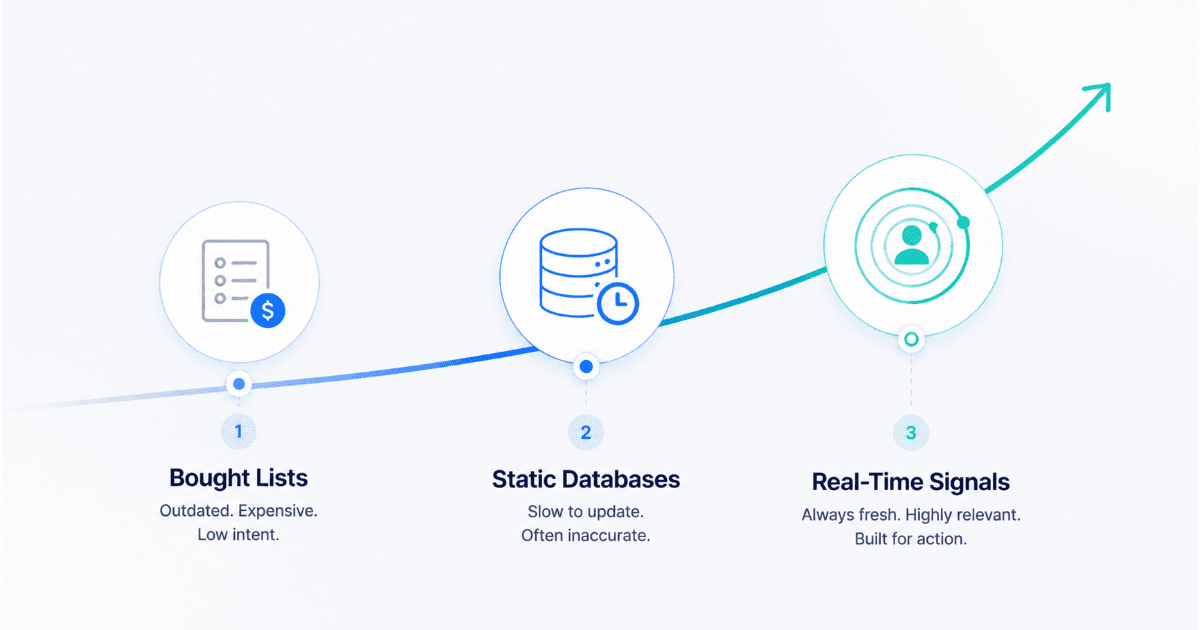
Generation 3: Real-Time Intelligence (Signals + Enrichment at Point of Discovery)
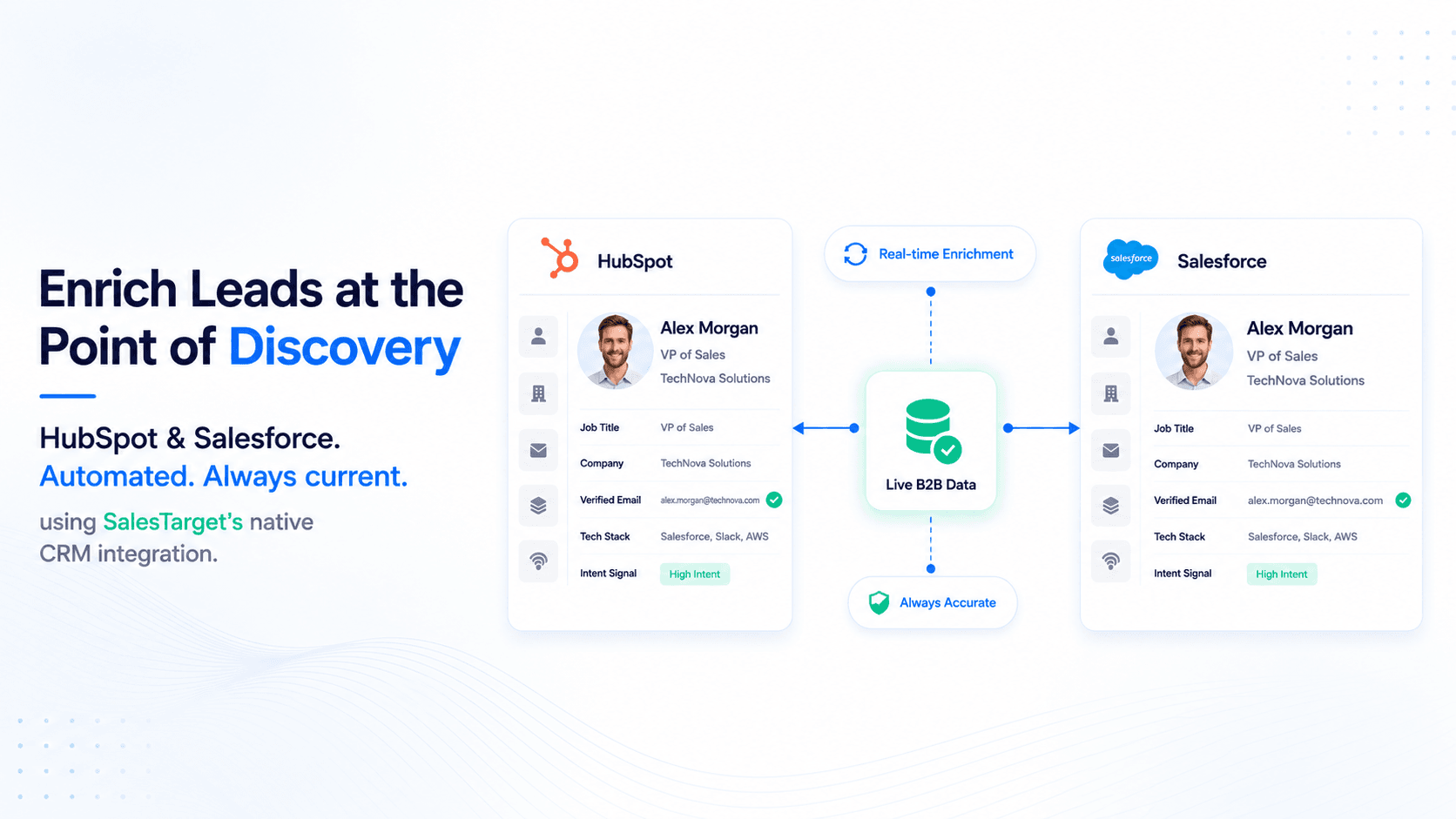
The third generation flips the model. Instead of starting from a static record and hoping the timing happens to line up, real-time intelligence starts from a signal — a hiring spike, a funding announcement, a leadership change, a technology adoption — and enriches the contact data at the moment that signal fires. The list isn't the starting point anymore. The moment is.
This matters because of what those signals actually represent. According to research on B2B buying signals, the categories that consistently correlate with active buying intent — leadership changes, funding events, hiring surges, technology adoption — are observable in real time, well before a company ever fills out a form or requests a demo. A static database has no mechanism to surface that. It can tell you a company exists. It can't tell you a company just became worth calling this week instead of last quarter.
What the Shift Means for SDRs and Revenue Teams
For an SDR, this changes the actual shape of a working day. The old model spent a meaningful share of prospecting time scrubbing lists — checking which contacts were still employed, which emails still worked, which companies still mattered to the ICP. None of that effort touched the buyer's actual readiness to talk. It was maintenance work disguised as prospecting.
A real-time model redirects that same time toward acting on signals as they appear, rather than maintaining a list that decays the moment it's built. The work shifts from "is this contact still valid" to "is this company doing something right now that makes today the day to reach out" — a fundamentally different, higher-leverage question.
| Dimension | Static Database Model | Real-Time Intelligence Model |
|---|---|---|
| Starting point | A contact record | A buying signal |
| Timing logic | Whenever the rep gets to that row on the list | When the signal fires — close to the moment of relevance |
| SDR time spent | Significant share on list maintenance and validation | Mostly on outreach to companies already showing intent |
| Historical accessibility | Accessible to most team sizes | Historically enterprise-only — now accessible to SMB/mid-market |
How to Build a Real-Time Intelligence Workflow Without Enterprise Tools
Enterprise intent platforms have offered this capability for years, but the price point put it out of reach for most growing teams. That's changed — the core mechanics of a real-time workflow are simpler to assemble at this end of the market than they used to be.
| Step | What to Do |
|---|---|
| 1 | Define the 3–5 signal types that actually correlate with your ICP being ready to buy — not every available signal matters equally for every product |
| 2 | Set up signal monitoring against your defined ICP, rather than monitoring broadly and filtering later |
| 3 | Enrich contact data at the point a signal fires, not on a separate static schedule disconnected from the signal |
| 4 | Score and route signal-triggered leads to reps quickly — value decays fast once a buying window opens |
| 5 | Track which signal types actually convert for your specific ICP, and prune the ones that generate noise without pipeline |
How SalesTarget.ai Delivers Gen 3 Intelligence for SMB/Mid-Market
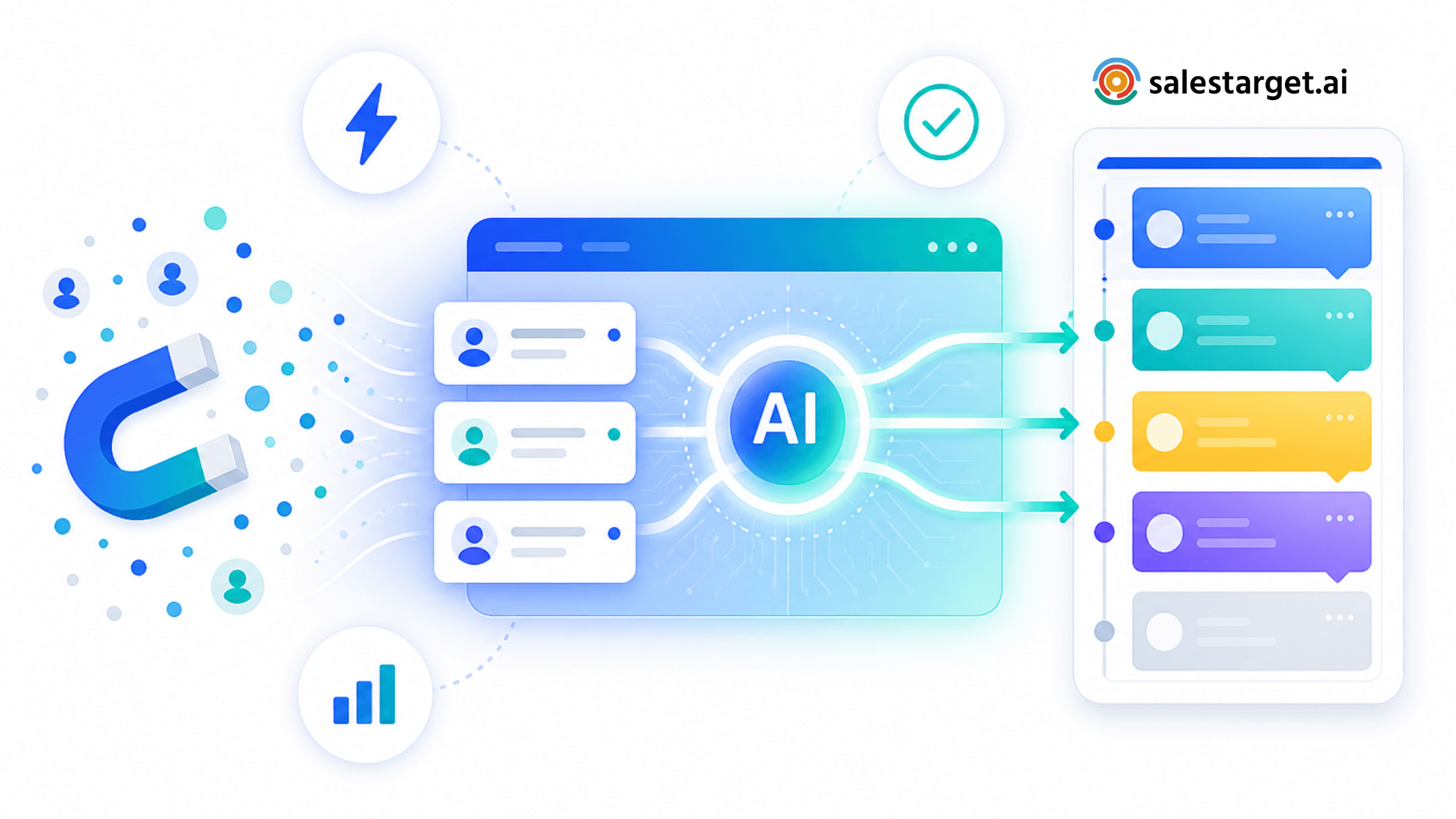
This is exactly the gap Real-Time Signal Discovery in Lead Explorer is built to close — surfacing the moments that actually indicate buying intent, instead of handing teams a static list and leaving timing to chance. Paired with intent-based lead scoring, signals get prioritized automatically, so reps spend their day on the companies showing real movement rather than working a list top to bottom regardless of timing.
For teams that have never had this kind of access before, the shift isn't a marginal improvement on the old database model — it's a different way of deciding who to call today.
Mistakes to Avoid
Treating every available signal as equally important
Mistake
Monitoring everything generates noise, not pipeline. Define the few signal types that actually predict buying readiness for your specific ICP.
Letting signal-triggered leads sit in a queue
Mistake
The entire value of a real-time signal decays fast. A signal acted on a week late is functionally a static-database lead again.
Assuming this only works at enterprise scale
Mistake
This was true a few years ago. It's no longer the constraint it used to be — the cost and complexity barrier has come down significantly.
Keeping the old list-scrubbing workflow alongside the new one
Mistake
Running both models in parallel just splits attention. The shift only pays off when the team's time genuinely moves toward acting on signals.
Stop working a list. Start acting on signals.
Real-time intelligence that used to be enterprise-only — now built for teams of any size.
✓ 50 credits ✓ 7-day trial ✓ No credit card required