Your rep dials forty numbers before lunch. Eleven are main lines, six are disconnected, and the rest ring through to voicemail for someone who left the company in spring. The list looked clean in the export. The calling block says otherwise.
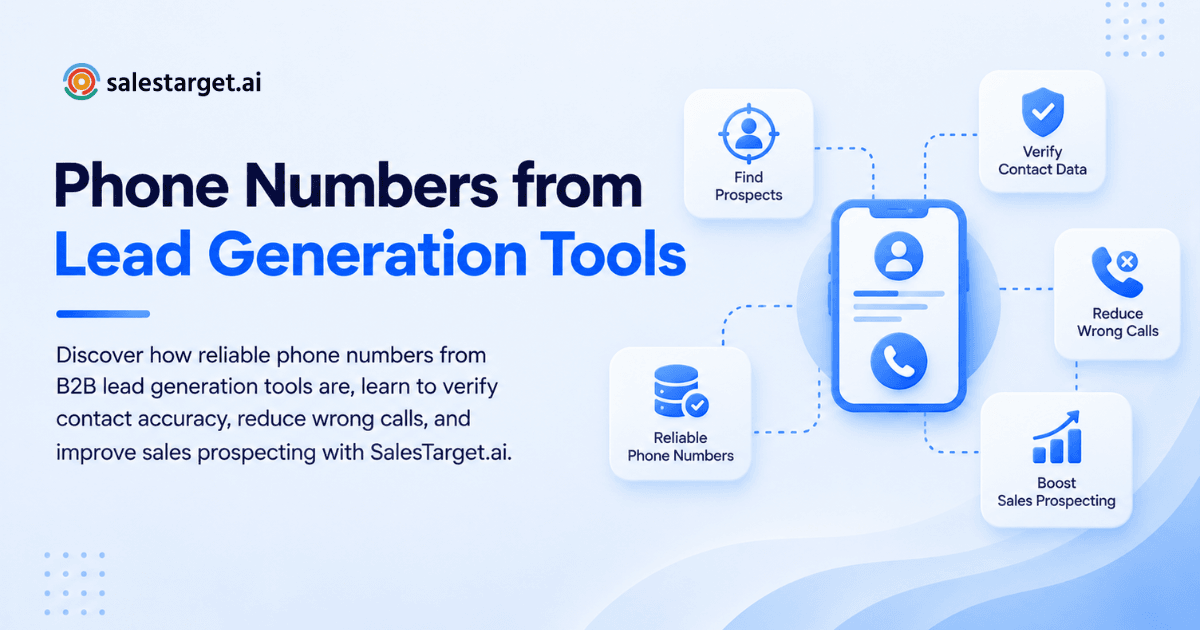
So, how reliable are phone numbers from B2B lead generation tools? Reliable enough to use, never reliable enough to trust blind. A Salesfinity benchmark of nine providers, reported by Prospeo, found accuracy ranging from 63% to 91%. The result depends on how fresh the record is, how the number was verified, and whether it is a direct dial, a mobile, or an office line. Treat every list as a draft. Test a sample, track your connect rate, and pick a tool that verifies at the moment you pull the contact.
B2B Phone Number Accuracy and Data Reliability
Accuracy is the share of numbers that reach the right person today. Reliability is whether a provider delivers that result list after list. A tool can look great on one export and weak on the next, so you need to measure both.
Factors Affecting Phone Number Accuracy
Four things move the number: how recently the record was verified, the number type, how many sources agree on it, and the seniority of the contact. Senior buyers are the hardest to reach, since gatekeepers and call screening sit in front of them. Belkins analyzed more than 175,000 dials and found a per-dial connect rate of 9.9%, but a per-prospect rate of 24.5% once reps made repeat attempts. Judge a list on both views, or you will blame good data for a persistence problem.
Contact Data Sources and Verification Methods
Most tools pull from licensed datasets, public web sources, contributor networks, and enrichment partners. Verification runs from a one-time scrape to a fresh check at the moment you request a number. Ask the vendor which one they use. A number contributed to a network two years ago and never rechecked will behave like a two-year-old number. SalesTarget.ai draws on 50+ data sources and verifies contacts at the point of enrichment, not whenever the data was first collected.
Common Causes of Inaccurate B2B Phone Numbers
Four causes explain most dead numbers: stale records, job changes, disconnected or misassigned lines, and mixing up number types. Each one is fixable once you know which you are dealing with.
Outdated Business Contact Records
A phone number gives no warning when it goes bad. An email at least bounces. A phone number only fails when your rep burns a dial on it. That silence is why old records sit in CRMs for years, looking fine on screen and failing on every call.
Job Changes, Disconnected Lines, and Incorrect Numbers
People move roles, and their desk lines get reassigned or shut off. Company mergers rename departments and reroute switchboards. Parsing errors attach one person's number to another person's record. The worst case is not a dead line. It is a live line that reaches a stranger, which wastes the call and annoys someone who will never buy.
Differences Between Direct Dials, Mobile Numbers, and Office Lines
Prospeo's dial-to-connect figures show how much type matters: about 10 dials per connect on work mobiles, about 59 on switchboards, and about 73 on desk direct dials. Here is an angle most vendors skip. A desk direct dial can be fully accurate and still be your weakest number, since it may route straight to voicemail. Ask any provider for accuracy broken out by number type, not one blended percentage.
The Impact of Inaccurate Phone Numbers on Sales Performance
Bad numbers cost you conversations, rep morale, and forecast quality. The damage is easy to miss since dial counts still look healthy.
Lost Calling Time and Lower Connection Rates
Run the arithmetic on a rep making 60 dials a day. At a 5% connect rate, that is 3 conversations. At 25%, it is 15. Same rep, same hours, five times the pipeline activity. The only variable that moved is data quality, which makes it the cheapest lever in outbound.
Reduced SDR Productivity and Pipeline Efficiency
When numbers fail, reps patch the gap by hand. They open LinkedIn, hunt for a company switchboard, or paste names into a second lookup tool. Every detour breaks the calling rhythm. Worse, activity reports stay green while conversations drop, so managers coach on effort when the real problem is the list.
The Cost of Poor Contact Data for Sales Teams and Agencies
For an in-house team, the loss is hours and momentum. For an agency, it reaches the client relationship: a weak list produces a thin call report, and the retainer conversation gets harder. Hours spent redialing dead numbers are hours you cannot get back, and they come out of the best part of the week, the live calling blocks.
B2B Phone Number Verification and Validation Process
Verify in four moves: check the source, check the format and line, test on a sample, and log every outcome. Skip any one and bad numbers slip back in.
Cross-Checking Numbers Against Official Business Sources
Match the number against the company website, the contact's LinkedIn profile, and business registry details. Check that the area code fits the office location and that a main line really belongs to the company. Two independent sources agreeing on a number is a stronger signal than one source repeated.
Validating Phone Number Formats and Active Lines
A format check confirms country code, length, and structure. A line-type lookup tells you whether the number is mobile, landline, or VoIP, and whether it is active. Passing both still does not prove the right person answers. Treat validation as a filter that removes obvious junk, not as proof.
Testing Contact Accuracy Before Purchasing a Database
Pull 100 contacts you already know are correct, such as people from closed-won deals, and see how many numbers the tool returns and how many match. Then pull 100 random contacts from your target market and call them across two days. Measure right-person connects by number type. Known-good contacts give you ground truth that no vendor claim can.
Maintaining Updated Contact Records in the CRM
Add outcome codes to every call: right person, wrong person, disconnected, switchboard, voicemail. Suppress numbers marked wrong so three reps do not dial the same dead line. Re-verify before any large campaign. If you are still choosing a source, this guide on where to find a reliable B2B lead database walks through what to check first.
Want to run that 100-contact test yourself? You can start free on SalesTarget.ai and enrich a sample list before you commit to anything.
Key Criteria for Evaluating B2B Lead Generation Tools
Judge tools on number-type coverage, freshness, geography, workflow fit, and the terms behind the numbers. Database size is the least useful measure on the list.
Verified Phone Numbers and Contact Data Coverage
Coverage and accuracy are different scores. A tool that returns a number for nine out of ten contacts sounds strong until you learn half are main lines. Ask what share of returned numbers are direct dials and mobiles, and verify that figure on your own sample.
Data Freshness and Update Frequency
Ask when each record was last verified, not when the database was last refreshed in bulk. A per-record verification date is the most useful field a vendor can show you. If they cannot produce one, assume the data is older than the sales page suggests.
Direct Dial Availability and Geographic Coverage
Accuracy shifts by region. A tool that performs well on US contacts may be thin in Germany or India. Test the specific countries and titles you sell into, and weigh those results above any global average.
Data Enrichment, CRM Integration, and Verification Support
The best moment to verify a number is the moment you ask for it. Look for enrichment that happens at lookup and pushes the contact straight into a sequence or CRM with no CSV in between. Every exported file starts aging the minute it lands in your downloads folder.
Pricing, Usage Limits, and Data Accuracy Policies
Read the usage terms closely. Find out what counts as a lookup, whether failed lookups still count, and whether the vendor replaces bad numbers. Compare plans on those terms, not on headline volume. Our breakdown of the best B2B lead generation tool lays out a full checklist you can reuse.
Best Practices for Maintaining Accurate B2B Contact Data
Accuracy is a habit, not a purchase. Set a review rhythm, track the right numbers, use more than one source, and write the standard down.
Setting Up a Regular Contact Data Review Process
Pick an owner, usually RevOps or the sales ops lead. Each month, sample 50 records, call them, and score the results. Run the same check before any big campaign. A fixed cadence catches decay while it is still a small problem.
Tracking Wrong Numbers and Call Connection Rates
Watch three numbers every week: wrong-number rate, per-dial connect rate, and per-prospect connect rate. Set your own baseline first, then watch for drops. A falling connect rate on a stable list points at data decay. A falling rate on a fresh list points at your script or call timing.
Combining Multiple Data Sources for Better Accuracy
When two independent sources return the same mobile, confidence rises. When they disagree, you know to check before dialing. SalesTarget.ai draws on 50+ sources inside Lead Explorer, so the cross-checking happens during enrichment instead of in a spreadsheet afterward.
Establishing Contact Data Quality Standards for Sales Teams
Write a one-page standard. Define the minimum fields for a callable record, the maximum age before re-verification, the outcome codes reps must use, and who fixes flagged records. A shared standard stops each rep from inventing their own rules, and it gives new SDRs a clear baseline on day one.
Why Choose SalesTarget.ai
SalesTarget.ai keeps finding, verifying, reaching, and tracking a lead in one workspace on one bill. That removes the handoffs where contact data usually goes stale.
Lead Explorer for B2B Prospecting and Contact Enrichment
Lead Explorer searches 840M+ verified professional profiles and 146M+ business entities, using plain-English AI search or stacked filters for role, seniority, industry, company size, and tech stack. One-click enrichment returns verified professional email, personal email, phone, and mobile in the same step. SalesTarget.ai reports 99% verified contact data, and enriched leads go straight to sequences or the CRM.
Email Validation for Better Outreach Data Quality
The Email Validator runs MX and SMTP checks, flags disposable addresses, and scores risk before you send. It works through bulk list cleaning or a real-time API. To be precise about scope: it validates emails, not phone numbers, so treat it as one layer of your contact quality process.
Email and LinkedIn Outreach in One Platform
When a number is wrong or a prospect never picks up, another channel should carry the lead. Email Outreach handles AI-built sequences, unlimited inboxes with warm-up, and a unified inbox. LinkedIn Outreach automates connection requests and messages with built-in safety limits. Both run as one coordinated flow, so context carries across channels.
Built-In CRM and AI Dialer for Call Management
The CRM includes a built-in dialer with click-to-call, and every call is logged to the lead timeline automatically. That gives you the outcome data from the verification process above without asking reps to type it twice. Follow-up tasks are created when a meeting ends or a lead replies.
AI Copilot for Sales Prospecting Support
AI Copilot is a conversational teammate, free inside the platform. Ask it to find leads across the 840M+ profiles, draft a sequence, or pull deals, meetings, and tasks from your CRM in plain language. It handles the grunt work so reps spend their time on conversations.
Common Mistakes in B2B Phone Number Verification
Most errors come from trusting a headline number. Four mistakes show up again and again.
Choosing Tools Based Only on Database Size
A bigger database means more records to check, not better ones. Size tells you nothing about how many numbers are direct dials, how recent they are, or whether your target titles are covered. Rank vendors on your own sample test.
Assuming Email Verification Confirms Phone Accuracy
A validated email proves a mailbox exists. It says nothing about whether the phone number on that record is current. These are separate checks with separate failure modes. A contact can have a perfect email and a dead phone line.
Ignoring Data Freshness and Regional Coverage
Teams buy a global list, test it on US contacts, and then dial APAC or EMEA with the same expectations. Run a sample in every region you sell into, and ask each vendor for record-level verification dates.
Overlooking Privacy Requirements and Calling Regulations
Rules differ by country, and by whether the number is a business line or a personal mobile. Check the regime for each market you dial, keep records of opt-outs, and honor them every time. Bring legal in for gray areas. Reliable data you are not allowed to call is still a problem.
Conclusion: Building a More Reliable B2B Contact Database
Phone numbers from B2B lead generation tools are as reliable as the verification behind them. Freshness, number type, and region decide whether a rep has a 15-conversation day or a 5-conversation day. Test before you buy, log every outcome, track connect rates weekly, and write a data standard your team follows.
SalesTarget.ai is built around that workflow. Lead Explorer enriches and verifies contacts at the moment you find them, Email Validator cleans the email side, outreach runs across email and LinkedIn, and the CRM logs every call. One workspace, no stitched-together tools, no stale exports. Ready to see your own connect rate move? Start free with SalesTarget.ai and test it on a real list.