Your rep spent two hours building a list last night. Half the emails bounce this morning. The three that land get no reply, and the one prospect who does answer says they switched jobs eight months ago. That's not a small data problem. That's the daily tax most sales teams pay for running prospecting, outreach, and pipeline tracking as three separate tools that don't talk to each other.
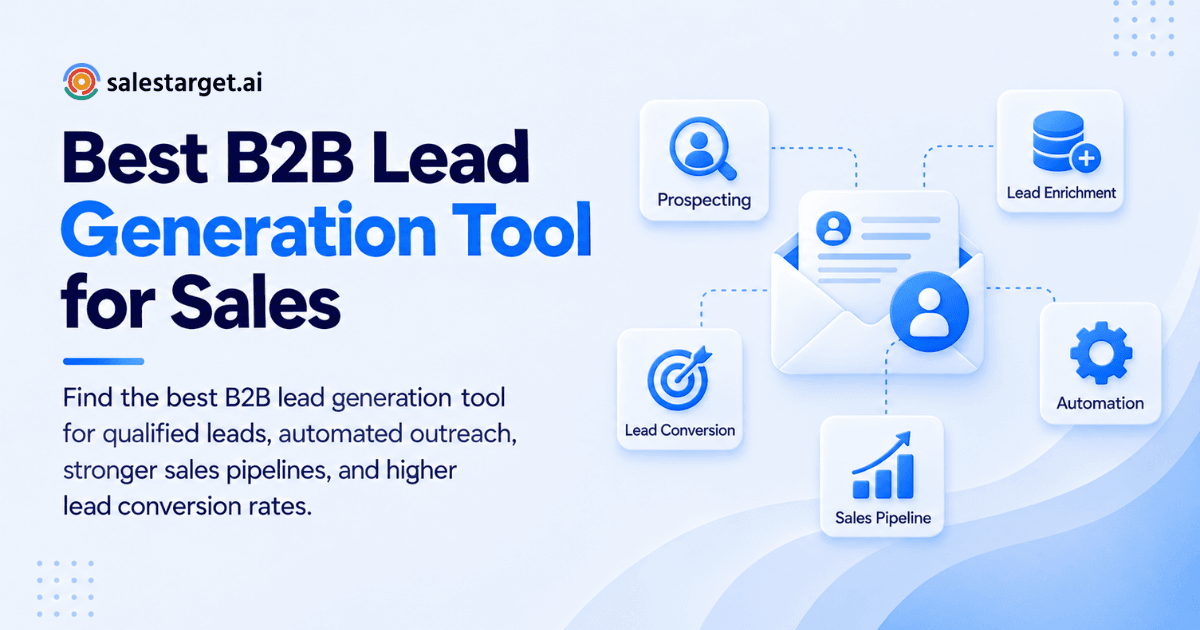
The best B2B lead generation tool is the one that finds accurate buyer data, verifies it before you send a single message, reaches prospects across email and LinkedIn from the same workflow, and hands qualified replies straight to a CRM your reps will actually use. A platform that does all four in one place, like SalesTarget.ai, cuts the busywork that keeps reps from selling and closes the gap between a name on a list and a booked meeting.
That's the short answer. The rest of this guide breaks down what a modern lead generation tool needs to do, how to judge one against another, and where SalesTarget.ai fits for teams tired of stitching five subscriptions together to run one outbound motion.
The Role of B2B Lead Generation Tools in Modern Sales
A B2B lead generation tool exists to shrink the distance between "who should we sell to" and "who is ready to talk." Ten years ago that meant a static contact database and a spreadsheet. Buyer behavior has moved on since then: B2B buyers now use an average of 10.2 interaction channels during a purchase, up from just 5 in 2016, according to McKinsey's B2B Pulse research. A single-channel tool built for 2016 buying habits simply can't keep pace.
Gartner's research adds a second wrinkle: B2B buyers spend only about 17% of their total buying time meeting with potential suppliers, and that share drops further once a buyer is comparing several vendors at once. A lead generation tool that only helps you find names does nothing to earn attention in that shrinking window. It has to help you show up with the right message, on the right channel, at the moment a buyer is actually paying attention.
Key Capabilities of Modern B2B Lead Generation Software
B2B Prospecting and Buyer Discovery
Good prospecting software lets you search by role, seniority, industry, company size, revenue, and tech stack instead of scrolling a flat list of names. Plain-English search, where you describe your buyer instead of stacking ten filters by hand, cuts list-building time from hours to minutes for reps who don't want to become database experts to do their job.
Lead Data Enrichment and Verification
A name and a job title aren't a lead. Enrichment fills in verified email, phone, and company context; verification confirms that email won't bounce before it ever leaves your outbox. Tools that separate these two steps, or run them on a delay, let stale data back into your pipeline between the search and the send.
Lead Qualification and Intent Signals
Not every match on your ICP is ready to buy today. Intent data, such as a company researching your category, a leadership change, a funding round, or a hiring spike in a relevant department, tells you who's moving now versus who's a good fit for next quarter. This is one of the pieces most generic prospecting tools skip entirely, and it can be the difference between a cold list and a warm one.
Email and LinkedIn Outreach Automation
Sequencing tools that only cover one channel force reps to manage LinkedIn touches by hand alongside an automated email cadence, which is exactly the kind of split workflow that causes missed follow-ups. Outreach automation that runs email and LinkedIn from the same sequence keeps context intact across both channels and removes a second tool from the stack.
CRM and Sales Pipeline Management
Prospecting and outreach tools that dump results into a CSV for someone to manually import into a CRM add a step where leads get lost, duplicated, or ignored for days. A connected CRM that pulls campaign leads and replies in automatically closes that gap.
How B2B Lead Generation Tools Improve Sales Performance
Finding Higher-Quality Prospects
Filtering by firmographic and intent data instead of buying a static list means reps spend their time on accounts that actually match the ICP, not chasing contacts who left the company a year ago.
Reducing Manual Prospecting Tasks
Search, enrichment, and list-building that used to take a rep half a day can run in minutes when the data source and the enrichment engine are the same tool. That time goes back into calls, follow-ups, and deal work.
Improving Outreach and Follow-Up
Automated, multi-step sequences with built-in pacing keep touches consistent instead of relying on a rep to remember day 4 of a 12-day cadence. This matters more than most reps assume: HubSpot's sales research points to 80% of sales needing 5 or more follow-ups, and 44% of reps quitting after just one attempt. Software that automates the sequence removes the human tendency to give up early.
Moving Leads From Prospecting to Conversion
A reply sorted by intent, whether interested, needing follow-up, or not a fit, and routed to the right owner the moment it lands beats a shared inbox where replies sit for a day before anyone notices.
How to Choose the Right B2B Lead Generation Tool
Define Your Target Accounts and Buyer Profiles
Before comparing tools, write down firmographic filters (industry, size, region) and buyer filters (role, seniority, department) you'll actually use. A tool with a massive database is only useful if its filters match how you define a good-fit account.
Compare Data Quality and Lead Coverage
Ask how large the underlying database is, how frequently it refreshes, and how many verified emails and direct dials it actually returns, not just how many "contacts" it claims to hold. A best b2b lead generation tool comparison should weigh coverage and freshness over raw headline numbers.
Evaluate Prospecting and Enrichment Features
Look for enrichment that happens at the point you find a contact, not on a separate schedule. A gap between discovery and enrichment is where outdated emails creep back into your list.
Review Outreach and Automation Workflows
Check whether the tool supports multichannel sequencing, conditional logic (branching based on a reply or no response), and safeguards against sending too fast on LinkedIn or triggering spam filters on email.
Compare CRM, Reporting, Pricing, and Integrations
A tool that hands off cleanly to your CRM, or includes one built for outbound, saves a step every single rep repeats every single day. Check native integrations with your calendar, dialer, and existing stack before you commit.
B2B Lead Generation Tool Features by Sales Team Needs
For Founders and Small Sales Teams
Founders running sales themselves need one login that covers prospecting, outreach, and tracking, not five tools and five invoices to manage on top of the product itself.
For SDR and BDR Teams
Reps hitting daily activity targets need speed: fast list-building, ready-made sequence templates, and a unified inbox so replies don't get missed between tabs.
For Sales Leaders and RevOps Teams
Leaders need visibility into pipeline health, campaign performance, and rep activity in one dashboard instead of pulling numbers from four separate exports before a forecast call.
For Lead Generation Agencies and Consultants
Agencies running outbound for multiple clients need a workspace that keeps campaigns, data, and reporting separated cleanly by account, with enough automation to run several client motions without hiring a person per client.
Why Choose SalesTarget.ai
SalesTarget.ai brings prospecting, enrichment, multichannel outreach, verification, and a CRM into one workspace, on one bill, so reps stop bouncing between tools to do one job.
Lead Explorer for B2B Prospecting and Enrichment
Lead Explorer searches 840M+ verified professional profiles and 146M+ business entities using plain-English queries or stacked filters across industry, role, seniority, and tech stack. One click enriches a match with verified professional email, personal email, and phone, pulling in real-time buying signals like funding rounds, leadership changes, and hiring spikes on a 30 to 90 day lookback, drawn from 4,000+ intent topics and 50+ data sources.
Email and LinkedIn Outreach in One Workflow
Email Outreach builds multi-step sequences from a plain-English audience description, with unlimited inboxes, automatic AI warm-up, and SPF/DKIM/DMARC checks that protect sender reputation. LinkedIn Outreach runs connection requests, DMs, and follow-ups in the same coordinated flow, with timezone-aware scheduling and built-in rate limits that keep accounts safe. Running both channels from one sequence means a reply on LinkedIn updates the same lead record as an email reply, with nothing to reconcile by hand.
Email Verification for Better Deliverability
The Lead/Email Validator checks MX and SMTP records and flags disposable addresses before a send goes out, plus bulk list cleaning for lists built elsewhere. SalesTarget.ai's own outreach data shows 90% of emails validated before sending, a habit that keeps bounce rates low and domains off blacklist tools.
Built-In CRM for Lead and Pipeline Management
The CRM pulls campaign leads in automatically, no CSV import required, and logs every email and call to the lead timeline on its own. Follow-up tasks generate automatically when a lead replies or a meeting wraps, and a built-in AI dialer takes call notes for the rep so nothing gets written up after the fact. Teams using it report 3.2X faster deal cycles and 91% follow-up completion, with about 6 hours saved per rep, per week.
AI Copilot for Sales Research and Tasks
AI Copilot is a free, conversational teammate inside the platform. Chat to find leads across the full database, generate a personalized sequence in seconds, or ask which campaigns actually drove revenue this quarter, all in plain language. Strategy stays in the rep's hands.
Ready to see it running on your own list? Start a free trial and pull your first enriched list before lunch.
Common B2B Lead Generation Challenges and How to Solve Them
Poor-Quality or Outdated Lead Data
Contact data decays fast: people change jobs, companies merge, phone numbers turn over. The fix is enrichment and verification at the moment of use, not a database that was scraped once and never refreshed.
Too Many Tools Across the Sales Workflow
Five subscriptions for prospecting, email, LinkedIn, verification, and CRM means five logins, five sets of exported data, and five places for a lead to fall through. Consolidating into one connected platform removes the seams where leads go missing.
Low Engagement From Generic Outreach
A message that reads like it was blasted to a thousand people gets ignored or reported. Personalization built from role, industry, and company context, not a mail-merge first name, is what earns a reply instead of a spam flag.
Leads Getting Lost Between Prospecting and Sales
A lead who replies to a campaign and sits in an inbox for two days is a lead you're about to lose to a competitor who answered sooner. Automatic routing from reply to CRM task closes that gap before it costs you the deal.
Building a B2B Lead Generation and Conversion Workflow
Identify High-Fit Prospects
Start with a tight ICP definition and search a prospecting database against it, using intent signals to prioritize accounts already showing buying activity.
Enrich and Verify Contact Data
Pull verified email and phone at the point of discovery, not from a static export that was accurate six months ago.
Launch Personalized Outreach
Send across email and LinkedIn from one sequence, with messaging built around role and company context instead of a generic template.
Track Engagement and Follow Up
Route replies by intent, assign an owner immediately, and keep the follow-up cadence running for prospects who haven't answered yet. Read more on how LinkedIn and email finders improve lead generation for a deeper look at pairing the two channels.
Convert Qualified Leads Into Sales Opportunities
Move a qualified reply into a CRM pipeline stage the moment it's flagged, with the full email and call history already attached, so the rep picking it up has full context on the first touch.
For a closer look at picking the right stack for your team size and motion, see this prospecting tool selection guide.
Final Takeaway: Choosing the Best B2B Lead Generation Tool
The right B2B lead generation tool isn't the one with the biggest database headline. It's the one that finds accurate contacts, verifies them before you send, reaches buyers across the channels they actually use, and hands qualified replies to a CRM your team will keep updated. Every extra tool in that chain is another place a lead can go cold.
SalesTarget.ai runs all of it: prospecting, enrichment, email and LinkedIn outreach, verification, and CRM, from one workspace built for teams that would rather sell than manage software. See SalesTarget.ai in action and find out how much faster your pipeline moves when nothing falls between the cracks.