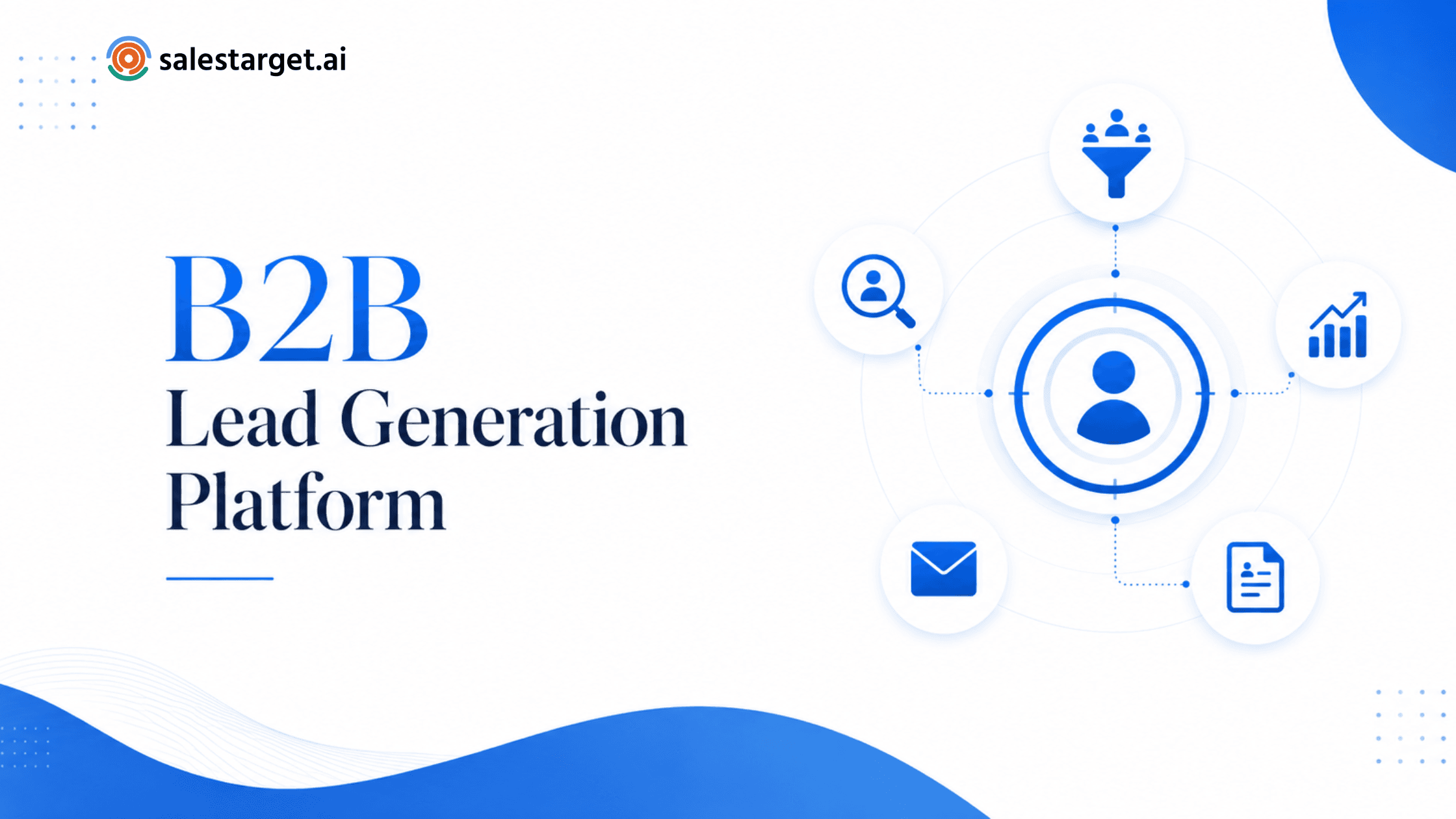
A B2B lead generation platform is a software solution that helps sales and marketing teams identify, discover, and connect with potential business customers. It combines verified contact data, company intelligence, and prospect search tools to streamline the process of building qualified pipelines — replacing manual research with automated, data-driven prospecting.
If your sales team is still building prospect lists manually — scraping LinkedIn, guessing email formats, or buying static contact lists that are outdated before you even open them — you already know how painful that process is. A B2B lead generation platform is designed to fix exactly that.
These platforms have become the engine room of modern outbound and inbound sales. They connect your team to verified contact data, company intelligence, and smart search capabilities — all in one place. But with so many tools claiming to do the same thing, it helps to understand what these platforms actually do, what separates a good one from a great one, and whether your team actually needs one.
This guide answers all of that, and more.
What Is a B2B Lead Generation Platform?
A B2B lead generation platform is a software tool — or suite of tools — that helps sales and marketing teams systematically find, qualify, and engage potential business customers. Unlike generic CRM systems (which manage existing relationships), a lead gen platform is built specifically for the front end of the funnel: identifying who to talk to, finding their contact details, and understanding enough about them to make outreach relevant.
At their core, these platforms typically combine three capabilities: a database of companies and contacts, tools to search and filter that database by relevant criteria (industry, company size, job title, location, technology used, etc.), and some form of workflow or export functionality to push those leads into your sales process.
The best platforms go further — adding intent data (signals that a company is actively researching a solution like yours), AI-powered recommendations, and CRM integrations that make the entire prospecting workflow feel seamless rather than fragmented.
Why Modern Sales Teams Need a Lead Generation Platform
The numbers are hard to argue with. According to HubSpot's State of Sales research, sales reps spend less than 30% of their time actually selling — the rest goes to administrative tasks, research, and data entry. A well-implemented lead generation platform attacks that problem directly.
Data Accuracy
Stale data is one of the biggest silent killers of outbound performance. B2B contact databases decay at a rate of around 25–30% per year — meaning a third of your list is probably wrong before your campaign even launches. Lead gen platforms that invest in continuous data verification and real-time enrichment give your team a fighting chance of actually reaching the right person.
Prospect Discovery
Rather than starting from a blank spreadsheet, reps can use platform search tools to identify companies and contacts that fit a defined Ideal Customer Profile (ICP). This shifts the work from "finding anyone" to "finding the right people" — a small distinction with a massive impact on conversion rates.
Sales Productivity
When prospecting research that used to take three hours can be done in twenty minutes, reps spend more time in conversation and less time digging through company websites. For SDR teams running high-volume outbound, this productivity lift compounds quickly across the team.
Better Pipeline Visibility
Knowing where your leads are coming from — and being able to track quality by source — helps revenue operations teams make smarter decisions about where to focus prospecting effort. Lead generation platforms that integrate with your CRM create a cleaner data trail from first touch to closed deal.
Key Features to Look for in a B2B Lead Generation Platform
Not every platform is built the same way. Here's what actually separates useful tools from ones that collect dust after the first month:
Verified Contact Data
Phone numbers and email addresses that have been independently verified — not just scraped and stored. Look for platforms that flag data freshness and show verification methodology transparently.
Company Intelligence
Firmographic data (industry, headcount, revenue range, location) helps your team qualify at the account level before diving into individual contacts. The best platforms layer on technographic data — tools a company uses — which is often a stronger buying signal than firmographics alone.
Smart Prospect Search
Advanced filtering that goes beyond basic keyword search. You should be able to define your ICP in the platform and surface matching contacts quickly, without needing a data analyst to help you build the query. Lead Explorer's Smart Prospect Search is a good example of this done well — it's built specifically to make ICP-based search fast and intuitive for sales reps, not just ops teams.
Intent Signals
Behavioural signals that indicate a prospect is actively researching a solution — visiting relevant content, engaging with competitors' ads, attending industry webinars. Intent data helps teams prioritise outreach to accounts that are "in market" right now, rather than spraying and praying across a cold list.
CRM Integration
A platform that doesn't talk to your CRM creates more work, not less. Native integrations with Salesforce, HubSpot, Pipedrive, and similar tools should be table stakes — along with the ability to push leads into sequences without copying and pasting.
AI-Powered Prospecting
The more mature platforms now use AI to surface look-alike accounts (companies similar to your best customers), recommend contacts based on historical win patterns, and score leads automatically based on ICP fit. This is rapidly becoming a differentiator rather than a bonus feature.
How a B2B Lead Generation Platform Supports Revenue Growth
Revenue growth isn't just about generating more leads — it's about generating the right ones consistently. A lead generation platform contributes to revenue in three distinct ways.
First, it shortens the time from "territory assigned" to "first qualified conversation." New reps can start prospecting in their ICP on day one rather than spending weeks building lists. Second, it improves conversion rates downstream because better-qualified leads mean less wasted time in discovery calls that go nowhere. Third, it creates a repeatable, documented process for prospecting — which matters enormously when you're scaling a sales team and need predictable pipeline.
For a deeper look at practical prospecting tactics, the SalesTarget AI blog on finding qualified B2B leads fast covers specific approaches that complement what a platform enables.
Common Challenges Sales Teams Face Without One
Teams operating without a dedicated lead generation platform tend to hit the same walls repeatedly:
- Reps spend hours each week on manual research that yields inconsistent results
- Contact data is unreliable, leading to high bounce rates and wasted outreach effort
- There's no shared definition of what a "qualified prospect" looks like, so different reps prospect differently
- Pipeline forecasting is guesswork because lead quality and volume fluctuate unpredictably
- Senior sales leaders can't identify which prospecting methods are working and which aren't
These aren't just efficiency problems — they're revenue problems. Teams that can't prospect reliably can't forecast reliably, and teams that can't forecast reliably don't scale.
Why Lead Explorer Is Built for Modern Prospecting Teams
What differentiates Lead Explorer isn't any single feature — it's how the product is designed around actual sales rep workflows rather than data analyst workflows.
The Smart Prospect Search functionality lets reps define their ICP — by industry, geography, company size, job function, seniority level — and surface matching results in seconds. There's no need to know SQL, no need to export a CSV and manually filter, no need to submit a request to an ops team. Reps search, find, qualify, and export in one continuous motion.
The underlying data is verified B2B contact information, which means fewer bounced emails, fewer disconnected phone numbers, and more conversations that actually happen. For teams doing high-volume B2B prospecting, the accuracy difference between verified and unverified data directly affects how many conversations a rep can book per week.
Workflow efficiency is where the productivity gains stack up. When a rep can research, qualify, and prepare outreach for twenty accounts in the time it used to take to research five, the math on pipeline generation changes significantly. That's the practical value proposition — not just "better data," but more selling time for the same headcount.
Ready to Build a Smarter Pipeline?
Stop chasing cold lists and start finding prospects who actually match your ICP. Lead Explorer gives your team verified B2B data, smart search filters, and the workflow efficiency to fill your pipeline faster.
▶ Start Free Trial — Explore Leads
A B2B lead generation platform is not a luxury for sales teams at scale — it's a foundational tool for any team that wants to build pipeline with any degree of consistency or predictability. The alternative — manual research, static lists, and guesswork — costs more in wasted rep time than most platforms charge in annual subscription fees.
The right platform depends on your team's size, budget, existing tech stack, and how you prospect. Enterprise teams with dedicated RevOps may need the depth of ZoomInfo. Relationship-led teams will lean on Sales Navigator. Fast-moving, efficiency-focused teams that need verified data and smart search without a long implementation cycle will find Lead Explorer fits the brief.
Whatever platform you evaluate, run a real prospecting exercise during the trial. Build a list in your actual ICP, try to export it to your CRM, and measure how long it takes. That single test will tell you more than any feature comparison table.