TL;DR
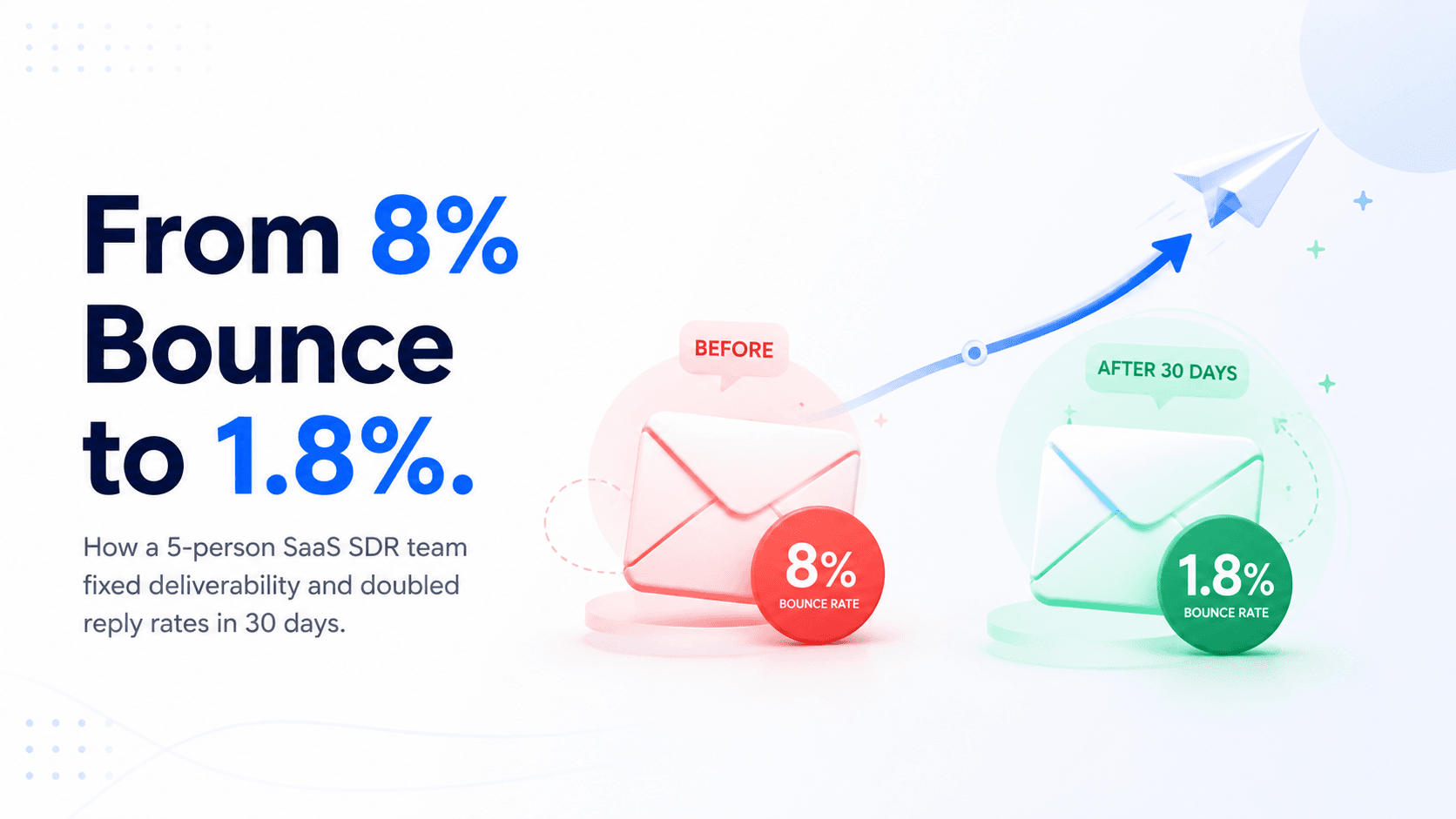
- A 5-person SaaS SDR team had an 8% bounce rate and 1.4% positive reply rate — both symptoms of the same root cause: no email validation, no warmup, no personalisation.
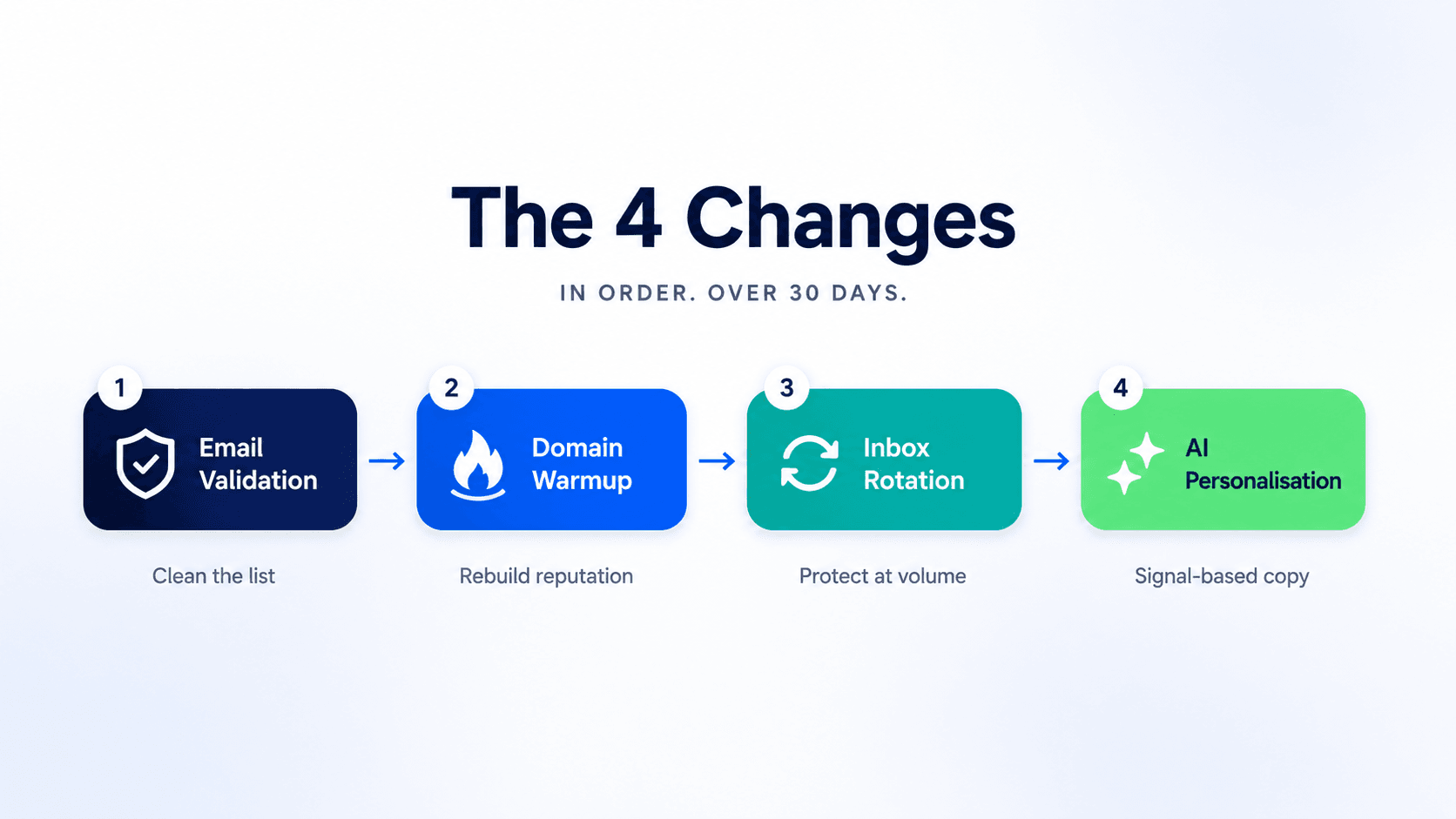
- Four changes over 30 days: email list validation, domain warmup, inbox rotation, and AI-powered sequence personalisation.
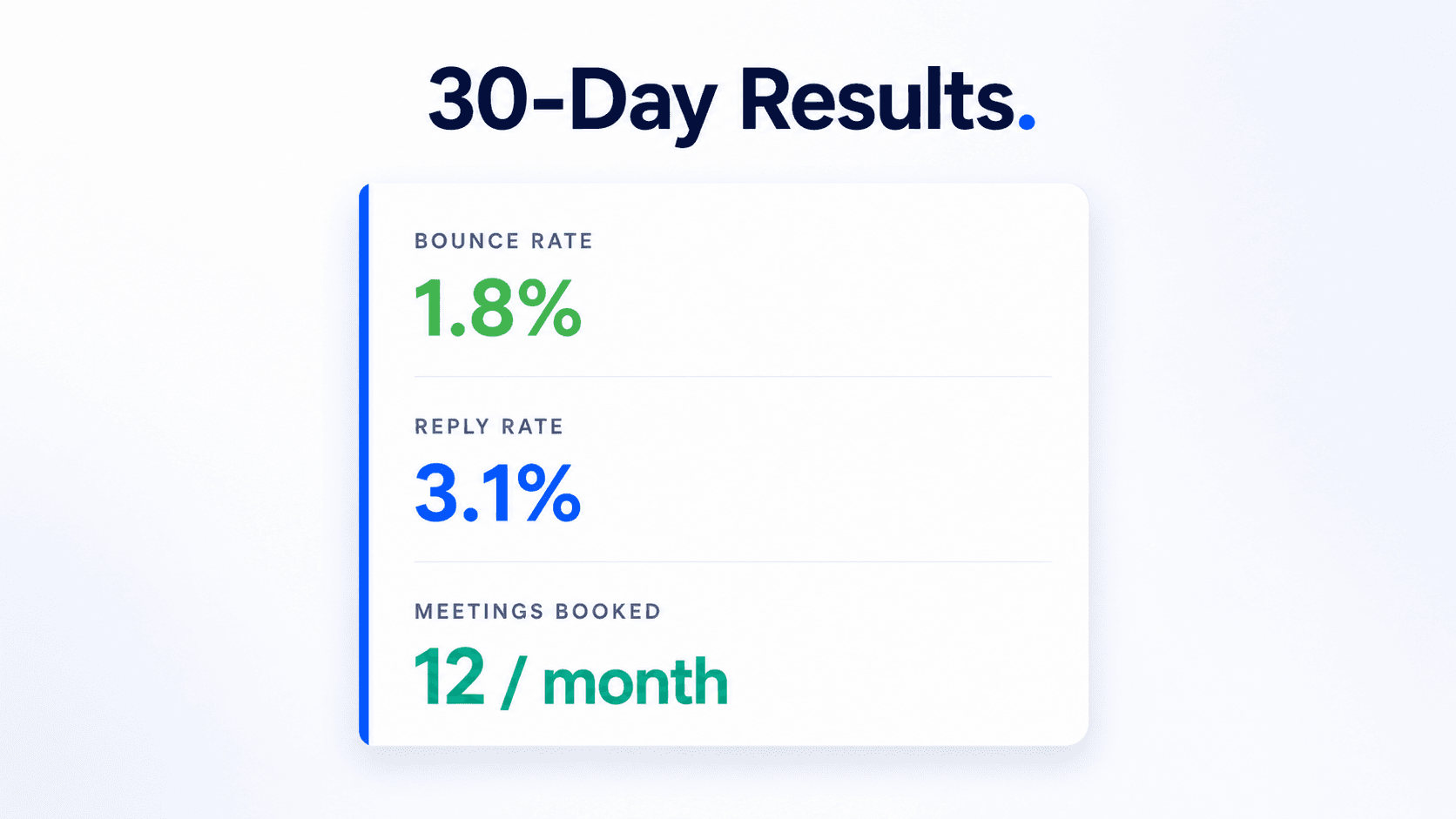
- 30-day results: bounce rate dropped to 1.8%, positive reply rate rose to 3.1%, meetings booked went from 2–3 to 12 per month.
- The bounce rate fix came first — deliverability is the foundation. No personalisation strategy works if the emails aren't landing in the inbox.
- All four changes are replicable in Week 1 using SalesTarget's email outreach platform — no technical setup required.
An 8% bounce rate does not just waste emails. It tells inbox providers that your domain cannot be trusted — and once that signal is established, every email you send gets penalised, including the ones that reach real people. According to Mailchimp's email benchmarks, the average hard bounce rate across industries sits below 2%. At 8%, this team was not just underperforming. They were actively damaging the infrastructure their entire outreach programme depended on. Here is what the audit found, the four changes made, and what 30 days of fixes produced.
The Starting Point: What the Numbers Looked Like Before
The team had been running cold email outreach for four months. Their ICP was clearly defined — mid-market SaaS companies between 50 and 300 employees, targeting VP of Sales and Sales Operations titles. Their copy had been iterated on. Their offer was specific. By any reasonable measure, the targeting and messaging were solid.
The results told a different story.
📊 Starting metrics — Month 4 of outreach
- Emails sent per day: 80
- Bounce rate: 8% — 4x above the industry average
- Positive reply rate: 1.4% — below average for well-targeted outbound
- Meetings booked per month: 2–3
- Domain warmup: None — sending from a 4-month-old domain at full volume from day one
- List source: Scraped and unverified — no validation run before sending
The immediate assumption was a copy problem. The actual problem was infrastructure — three compounding issues that were suppressing results before a single prospect read a word of the email.
The Root Cause Audit: Three Problems Hiding in Plain Sight
| Problem | What it was causing | Severity |
|---|---|---|
| Unvalidated contact list | Invalid addresses generating hard bounces that flagged the sending domain with inbox providers | Critical |
| No domain warmup | Sending 80 emails per day from a cold domain with no reputation history — inbox providers had no reason to trust it | Critical |
| Generic, untailored sequences | Identical copy sent to all contacts — low personalisation scores triggered additional filtering, and reply rates reflected it | High |
The sequence was: unvalidated list → high bounce rate → damaged domain reputation → more emails routed to spam → even lower effective reply rate than the numbers suggested. The 1.4% positive reply rate was almost certainly higher than the real delivery-adjusted rate once spam folder placements were accounted for.
The Four Changes Made in 30 Days
Change 1 — Email List Validation
Before sending another email, the entire contact list was run through SalesTarget's email validator. The results were immediate and clarifying: 11% of the list returned as invalid or high-risk addresses — the direct source of the 8% bounce rate. Those contacts were removed entirely before any further sends.
A second category — catch-all addresses — was flagged separately. Rather than removing them outright, they were moved to a lower-priority sending pool with reduced daily volume, protecting domain reputation while still reaching potentially valid contacts.
Change 2 — Domain Warmup
Sending was paused for 72 hours while a structured warmup programme was activated via SalesTarget's unlimited inboxes warmup tool. The warmup ran for 14 days at graduated volume — starting at 10 emails per day and increasing incrementally while monitoring spam placement rates and engagement signals.
According to SendGrid's email deliverability research, domain reputation recovery after bounce-related damage typically takes 2–4 weeks when sending volume is reduced and positive engagement signals are introduced systematically. The warmup programme accelerates this by generating genuine open and reply activity that signals trustworthiness to inbox providers.
Change 3 — Inbox Rotation
Rather than resuming 80 daily sends from a single inbox, the team split volume across multiple sending accounts using SalesTarget's inbox rotation feature. Each individual inbox stayed well below the daily sending threshold that triggers inbox provider scrutiny — typically 30–50 emails per inbox per day on a warmed domain.
This had two effects: it protected the newly recovered domain reputation from being re-damaged by high volume, and it increased total addressable send capacity without the deliverability risk of concentrating all sends on one address.
Change 4 — AI-Powered Sequence Personalisation
With deliverability fixed, the team rebuilt their sequences using SalesTarget's AI content generation to introduce signal-based personalisation at scale. Each email now referenced a specific, verifiable detail about the prospect's company — a recent job posting, a technology they used, or a stage-relevant trigger. The structure stayed consistent across the sequence; the first line was unique per prospect.
The Instantly 2026 Cold Email Benchmark Report notes that personalised first lines increase positive reply rates by an average of 32.7% compared to generic openers. For this team, the personalisation layer was the difference between an email that read like a blast and one that read like someone had actually looked at the prospect's company before writing.
30-Day Results: The Numbers
| Metric | Before | After (30 days) | Change |
|---|---|---|---|
| Bounce rate | 8% | 1.8% | −77% |
| Positive reply rate | 1.4% | 3.1% | +121% |
| Meetings booked (monthly) | 2–3 | 12 | +4x |
| Email delivery rate | 91% | 98.2% | +7.2pp |
📊 What drove the reply rate improvement
- ~40% of the gain came from deliverability — emails were now actually reaching the primary inbox rather than spam folders
- ~35% came from personalisation — signal-based first lines increased positive reply rate independent of deliverability improvement
- ~25% came from list quality — removing invalid contacts meant a higher proportion of sends reached real decision-makers
The Exact SalesTarget Features Used
| Change | SalesTarget feature | What it did |
|---|---|---|
| List validation | Email Validator | Identified and removed invalid, risky, and catch-all addresses before sending |
| Domain warmup | Unlimited Inboxes Warmup | Rebuilt domain reputation over 14 days with graduated sending volume and positive engagement signals |
| Volume protection | Inbox Rotation | Distributed daily sends across multiple inboxes to stay below per-inbox thresholds |
| Personalisation at scale | AI Outreach Suite | Generated signal-based personalised first lines for each contact using company and role data |
What You Can Replicate in Week 1
The most important insight from this scenario is the sequence: fix deliverability first, then optimise copy. Most teams do it backwards — they iterate on templates while their bounce rate continues to damage the domain, compounding the problem with every send. Here is the Week 1 action order:
📋 Week 1 — Deliverability-first action plan
- Day 1 — Pause active sends. Do not send another email until the list is clean. Every additional send on a dirty list compounds the domain damage.
- Day 1 — Run email validation. Upload your full contact list to SalesTarget's Email Validator. Remove all invalid and risky contacts. Flag catch-all addresses for a separate, lower-volume pool.
- Day 2 — Start domain warmup. Activate the warmup tool and let it run for a minimum of 14 days before resuming real sends. Do not shortcut this step — warmup duration is directly correlated with recovery speed per SendGrid's deliverability research.
- Day 2 — Set up inbox rotation. Configure multiple sending inboxes now, before warmup completes. When you resume sending, distribute volume from day one.
- Days 3–7 — Rebuild sequences with AI personalisation. Use the warmup period productively — rebuild your sequences with signal-based first lines. One unique line per contact. Do not change the structure, just personalise the opening. See the email warmup and deliverability guide for the full technical checklist.
Key Takeaways
1. Low reply rate is often a deliverability problem, not a copy problem
If your bounce rate is above 3%, your copy improvements are being applied to emails that are not reaching the inbox. Fix infrastructure first. Benchmark your bounce rate against Mailchimp's industry data — anything above 2% warrants immediate list validation before any further sends.
2. Warmup and rotation are not optional at any send volume
Even teams sending 30 emails per day from a new domain need warmup. The threshold for inbox provider scrutiny is lower than most teams assume, and the recovery process takes longer than the damage did. Building warmup into the setup process costs 14 days upfront and saves months of suppressed results.
3. Personalisation multiplies good deliverability — it cannot replace bad deliverability
AI-powered personalisation drove a meaningful share of the reply rate improvement in this scenario. But that improvement only materialised after deliverability was fixed. Personalised emails in the spam folder are still emails in the spam folder. The sequence matters: validate → warm up → rotate → then personalise.
Replicate these results. Start free.
Email validation, domain warmup, inbox rotation, and AI personalisation — all in one platform. No technical setup required.
✓ 50 credits ✓ 7-day trial ✓ No credit card required