TL;DR
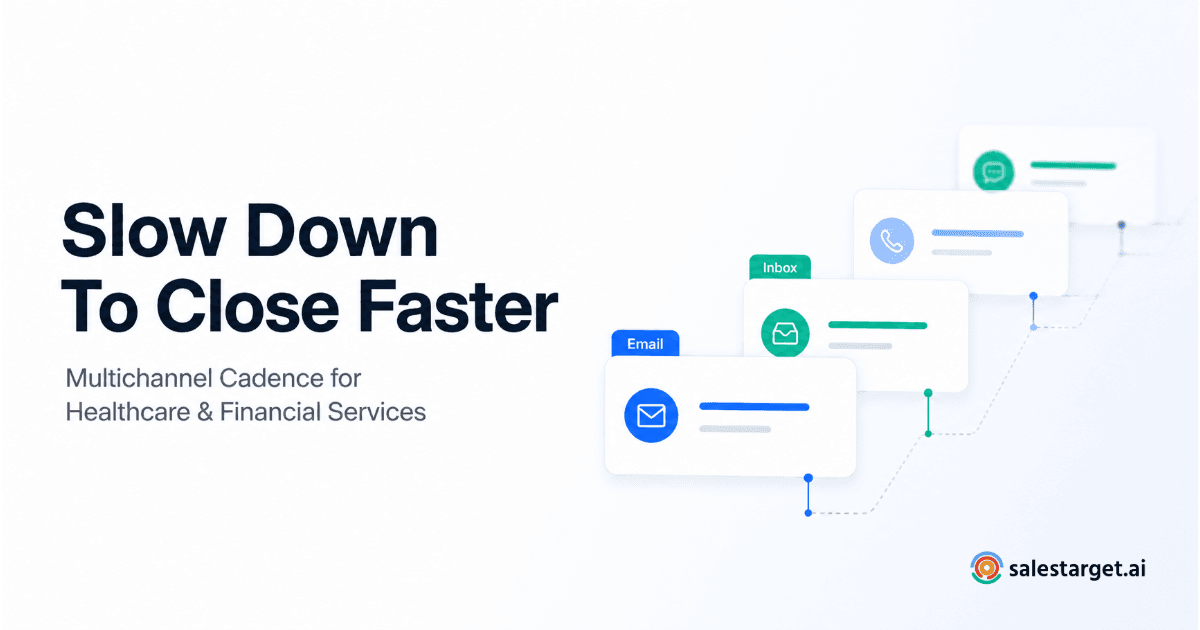
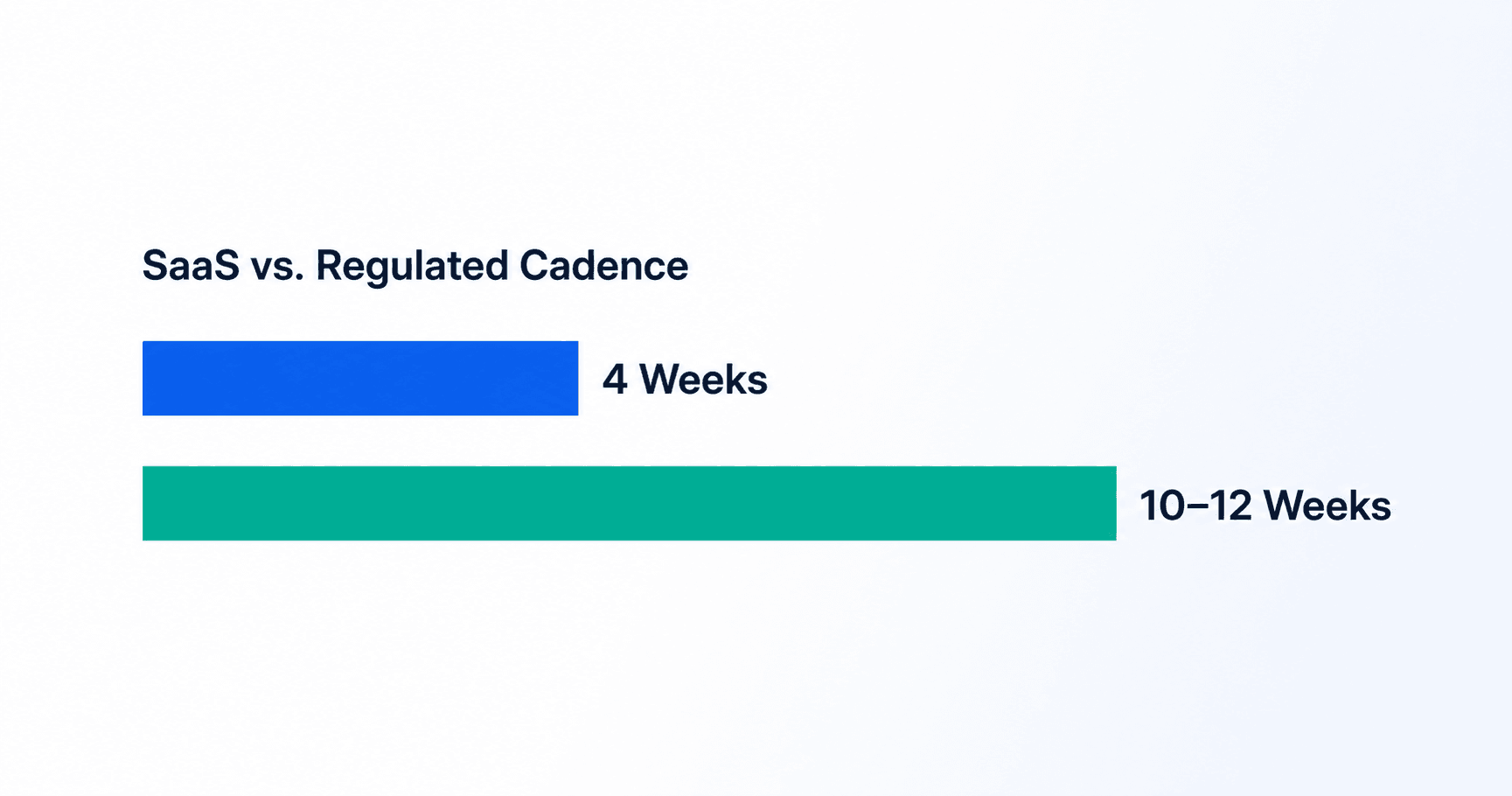
- Healthcare and financial services need a 10–12 week multichannel cadence, not the 4-week sprint that works for SaaS.
- A typical healthcare deal involves about nine decision-makers across a 12-month buying cycle — one inbox can't carry that.
- Phone earns 20–30% of total touches in regulated verticals, more than double its weight in a typical tech sequence.
- Compliance — HIPAA, GDPR, CAN-SPAM, and FINRA-style recordkeeping — should shape your cadence design, not just sit in a post-send legal review.
- A multichannel sequence builder that can weight channels and space touches over 10–12 weeks removes the manual coordination that usually breaks this down.
A financial services VP who hasn't replied to your third email isn't ghosting you. They're waiting on a security review that hasn't even started yet. Run a SaaS-speed cadence on a healthcare or fintech account and you won't get a fast no — you'll burn through the account before the buying committee has finished forming.
Why a SaaS-Speed Cadence Falls Apart in Regulated Industries
Most multichannel playbooks are built for a deal shape that doesn't exist in healthcare or financial services: one or two buyers, a short evaluation window, and a sequence that can afford to compress into a month. A typical SaaS deal closes in weeks, with a buyer who can sign off without looping in three other departments. That's why the standard playbook — 8 to 12 touches across 4 to 6 weeks — works for tech and staffing teams in the first place: the buyer can actually keep pace with the sequence.
Healthcare and financial services aren't built that way. A typical healthcare deal involves around nine decision-makers and runs roughly 12 months, according to Salesmotion's healthcare selling analysis. Financial services tracks closely behind it — longer evaluation windows, security and compliance review front-loaded early, and a buying committee that signs off in sequence, not all at once.
Send a 4-week SaaS cadence into that environment and the math breaks. By week 3, you've already hit the "breakup email" stage — while the prospect's internal security review hasn't even started. The deeper problem is what the pace signals. A fast cadence tells a tech buyer "this vendor is responsive." It tells a hospital IT director or a compliance officer "this vendor doesn't understand how we buy" — a credibility problem before the conversation has even started.
📊 The cadence-by-vertical gap
- 10–12 week sequences recommended for healthcare and financial services — vs. 4 weeks for SaaS and staffing running the same channel mix (research from LeadHaste's 2026 outbound benchmarking)
- Phone touches make up 20–30% of total outreach mix in longer-cycle verticals, vs. roughly 10% in tech-focused sequences
- ~9 decision-makers, ~12 month cycle for a typical healthcare purchase, per Salesmotion's healthcare selling analysis
How Long Should a Multichannel Sequence Run for Healthcare and Fintech Prospects?
The Committee Problem
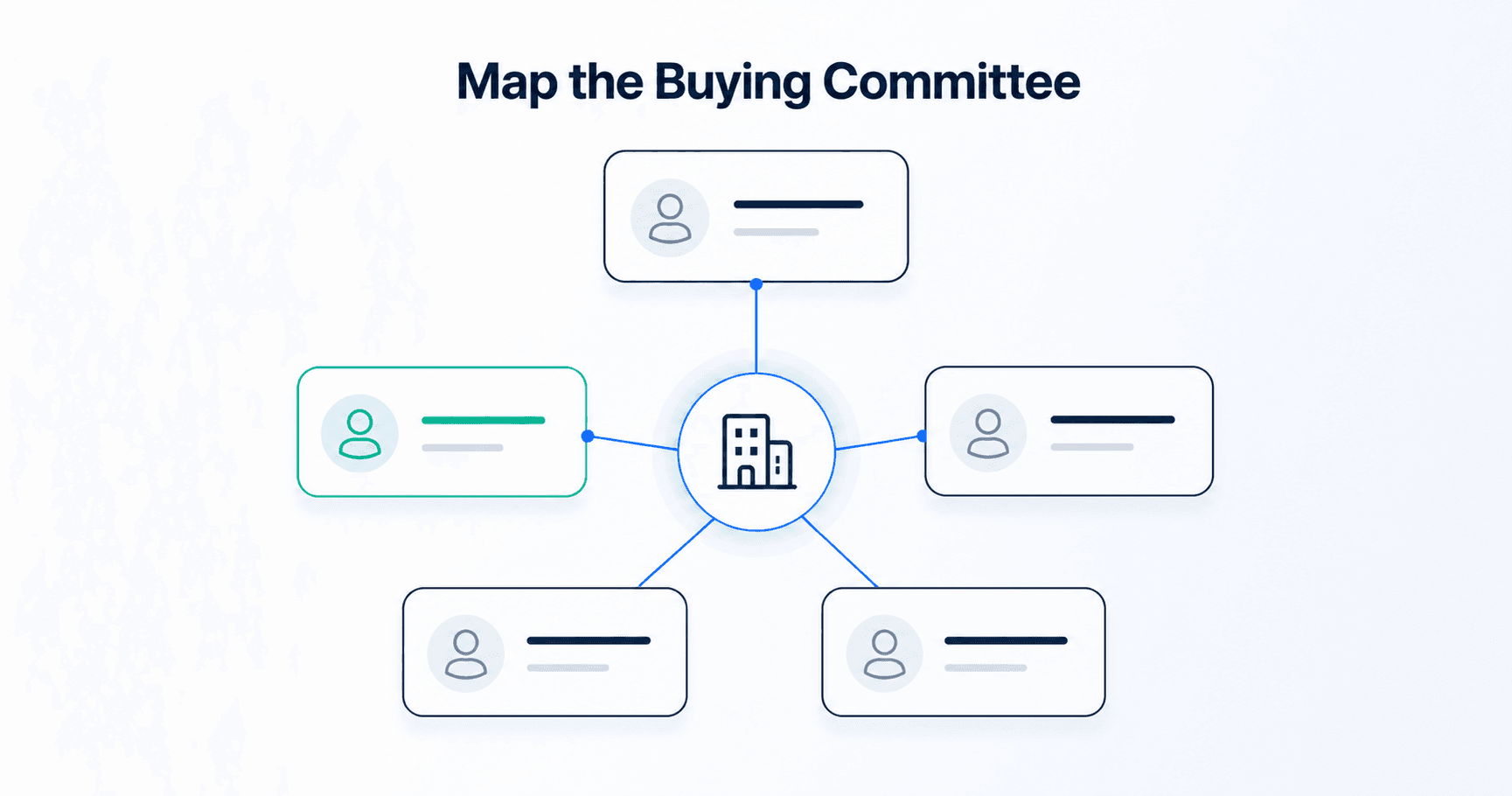
The cadence has to stretch because the org chart does. A hospital purchase moves through clinical leadership, IT and security, finance, and procurement, each evaluating the same deal from a different angle — and often in sequence, not in parallel. Skip a stage and the deal doesn't move faster; it stalls at whichever gate you skipped.
Why Financial Services Follows the Same Shape
Financial services rarely gets discussed alongside healthcare in outreach research, but the structural drivers are nearly identical: a risk or compliance function that has to clear vendor communications before a deal can move, an IT security review running parallel to the business conversation, and a sponsor who often can't approve spend alone past a certain threshold. The committee composition differs — risk and compliance instead of clinical leadership — but the sequencing problem is the same: outreach has to wait for internal gates that don't open on a SaaS timeline.
What the Research Says
Outbound research backs this up directly: research from LeadHaste's outbound benchmarking recommends stretching the cadence to 10–12 weeks for healthcare and financial services, compared to 4 weeks for SaaS and staffing running the identical channel mix — roughly three times the runway. Those extra weeks aren't filler. They're built around the actual order of committee approval: an informal first touch, a value-add stage once a champion starts circulating your material, a security and compliance stage once IT gets looped in, and a final-ask stage once the group has actually reached consensus.
SaaS Cadence vs. Regulated-Industry Cadence: Side by Side
Put the two cadences next to each other and the differences aren't subtle — every dimension shifts, not just the calendar.
| Dimension | SaaS / Staffing | Healthcare / Financial Services |
|---|---|---|
| Total sequence length | 4 weeks | 10–12 weeks |
| Total touches | 8–12 | 14–20 |
| Email weight | 50–70% | 40–55% |
| LinkedIn weight | 15–30% | 10–20% |
| Phone weight | ~10% | 20–30% |
| Decision-makers typically reached | 1–2 | 5+ (committee avg. ~9) |
| Typical deal cycle | Weeks | ~12 months |
The practical takeaway: more touches, spread over a much longer window, weighted toward the channel that builds trust fastest in these verticals — phone, not LinkedIn.
The 10–12 Week Cadence Structure, Step by Step
Here's how to phase a 10–12 week sequence so it matches how a regulated-industry buying committee actually moves — not a SaaS sequence with the dates stretched out.
| Week | Channel | Touch | Why it's placed here |
|---|---|---|---|
| Week 1 | Trigger-based opener, under 100 words, role-specific framing | Starts the relationship without assuming urgency | |
| Week 1–2 | Connection request, one-line note tied to the trigger | Builds visibility while staying low-pressure | |
| Week 2–3 | Value-add follow-up: peer benchmark or short resource | Gives an internal champion something to forward | |
| Week 3–4 | Phone | Direct call — voicemail counts as the touch | Phone converts higher in these verticals once trust starts building |
| Week 4–5 | Follow-up referencing the email thread (if connected) | Reinforces the same persona across channels | |
| Week 5–6 | Role-specific asset: security brief for IT, ROI model for finance, outcomes data for clinical/risk | Matches the committee, not a single buyer | |
| Week 6–8 | Phone | Second call, focused on whichever stakeholder engaged | Targets the warmest committee member, not the whole list |
| Week 8–9 | Direct ask, two specific time options | Tests whether the internal conversation has progressed | |
| Week 9–10 | LinkedIn / Phone | Light-touch check-in, paced and patient | Keeps the door open without escalating pressure |
| Week 10–12 | Pattern-interrupt or "right time" close | Final, low-pressure close that respects the committee's timeline |
Adjust the exact pacing by sub-vertical — an enterprise health system or large regional bank will run closer to 12 weeks, while a mid-size clinic or fintech startup can sit closer to 10. Every asset in weeks 5 through 9 should be pre-cleared by compliance before it goes out, not reviewed after a prospect (or a regulator) flags something.
Channel Weighting: Why Phone Earns 20–30% of Your Touches Here
In SaaS sequences, phone is almost an afterthought — roughly 10% of the mix, reserved for high-intent accounts. In healthcare and financial services, phone earns 20–30% of total touches, and the reason is trust, not tradition. A compliance officer or hospital CFO is more willing to have a real conversation about risk and security than to keep replying to an email thread about it.
That doesn't mean replacing email — it means rebalancing it. Email still carries roughly 40–55% of the sequence (lower than the 50–70% typical in tech, where email is the default channel), and LinkedIn drops to roughly 10–20%, mostly because the connection-request cadence itself needs to slow down. The standard LinkedIn pacing — 15 to 25 connection requests per account, per day — still technically applies, but in regulated accounts you're sending far fewer total LinkedIn touches per contact across a much longer window, not hitting daily caps.
SalesTarget's email outreach sequencing lets you set these weights once — heavier phone reminders, a lighter LinkedIn cadence — and apply the same logic across every account in the segment, instead of manually tracking which touch is "due" on which channel for each contact.
Compliance Considerations Before You Build This (Not Legal Advice)
This is outreach strategy, not legal advice — loop in your compliance or legal team before finalizing messaging for either vertical.
For healthcare, outreach should never reference or imply access to protected health information (PHI). HIPAA governs how patient data is handled even in B2B marketing, and the safest practice is to keep targeting entirely at the organizational and role level — job title, department, facility type — never anything patient-specific. GDPR and CAN-SPAM apply on top of that for international or cold-email touches.
For financial services, firms operating under FINRA or SEC-style oversight typically need external communications — including LinkedIn messages — captured and retained for examination, and many require pre-approval of any messaging referencing performance, returns, or specific products. Build your cadence assuming a compliance review step exists between drafting and sending, not as an emergency fix after the fact.
The commercial case for compliance
Why it's not just paperwork
Healthcare carries the highest data-breach cost of any sector — roughly $408 per record, about three times the cross-industry average, per Salesmotion's analysis. Buyers in both verticals already expect compliance-first behavior from any vendor reaching out — get it visibly right and it becomes part of your credibility, not just a checkbox.
Mistakes to Avoid When Slowing Down Your Cadence
Mistake #1: Treating "slower" as "less effort"
Stretching a cadence to 10–12 weeks doesn't mean fewer touches matter less — it means each one has to earn its place even more. A generic "just checking in" email reads the same in a slow cadence as it does in a fast one: low-effort, and easy to ignore.
Mistake #2: Sending one asset to the whole buying committee
A CFO and a clinical lead don't care about the same things. Sending the same ROI one-pager to both is one of the most common reasons a deal stalls — a champion forwards it internally with a single skeptical line attached, and the conversation dies in someone else's inbox. Build role-specific content for each seat at the table and route it deliberately.
Mistake #3: Compressing the cadence after a quiet first two weeks
Silence in week 2 of a 10–12 week sequence isn't a signal to escalate — it's the buying committee operating at its normal pace. Teams that panic and accelerate touches end up making the exact mistake that breaks SaaS cadences in these verticals in the first place: outrunning the buyer.
How to Build This Cadence in salestarget.ai
None of this requires more headcount — it requires a sequence builder that can hold a longer, unevenly weighted cadence without falling apart after week 3.
Start with the committee, not the contact. SalesTarget's advanced targeting filters let you build out the full buying group for an account — clinical leadership, IT/security, finance, procurement — by role and seniority, instead of working off a single contact and hoping they forward your message internally.
From there, build the sequence inside SalesTarget's multichannel outreach builder: set the cadence to 10–12 weeks, weight phone touches at 20–30% instead of the SaaS-default 10%, slow the LinkedIn connection pacing, and branch messaging by role so the CFO gets the ROI model and the clinical lead gets outcomes data — automatically, not copy-pasted contact by contact.
Two things matter more here than in a SaaS sequence: persona consistency (the same sender name and voice across email, LinkedIn, and the voicemail script) and reply routing speed. A compliance-cleared reply that sits unanswered for two days reads as slow in a relationship that's already moving slowly enough — route every reply, regardless of channel, into your pipeline view within hours, not days.
Build a cadence that matches how your buyers actually decide.
Map the committee, weight your channels, and run a 10–12 week sequence without juggling four separate tools.
✓ 50 credits ✓ 7-day trial ✓ No credit card required