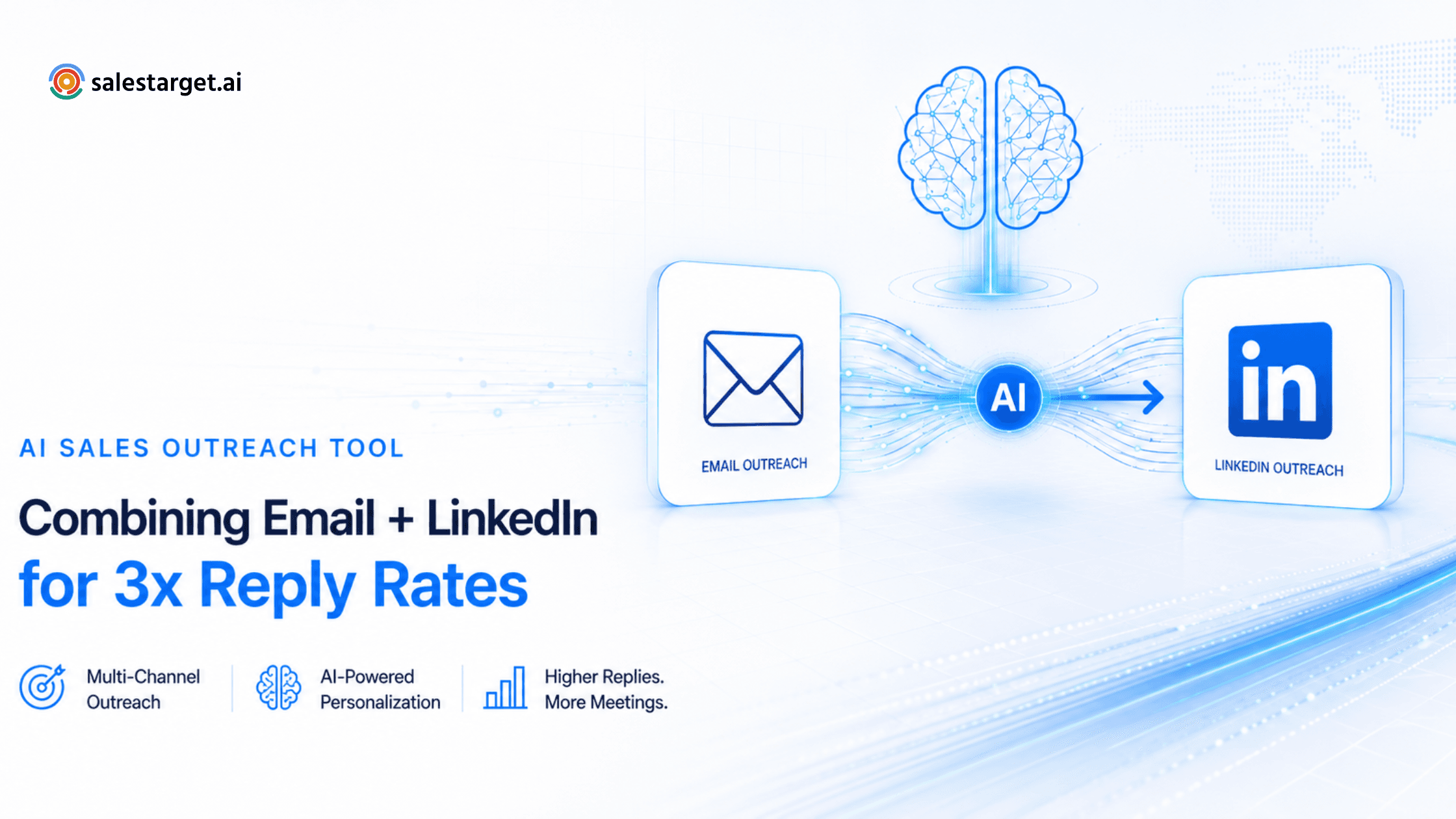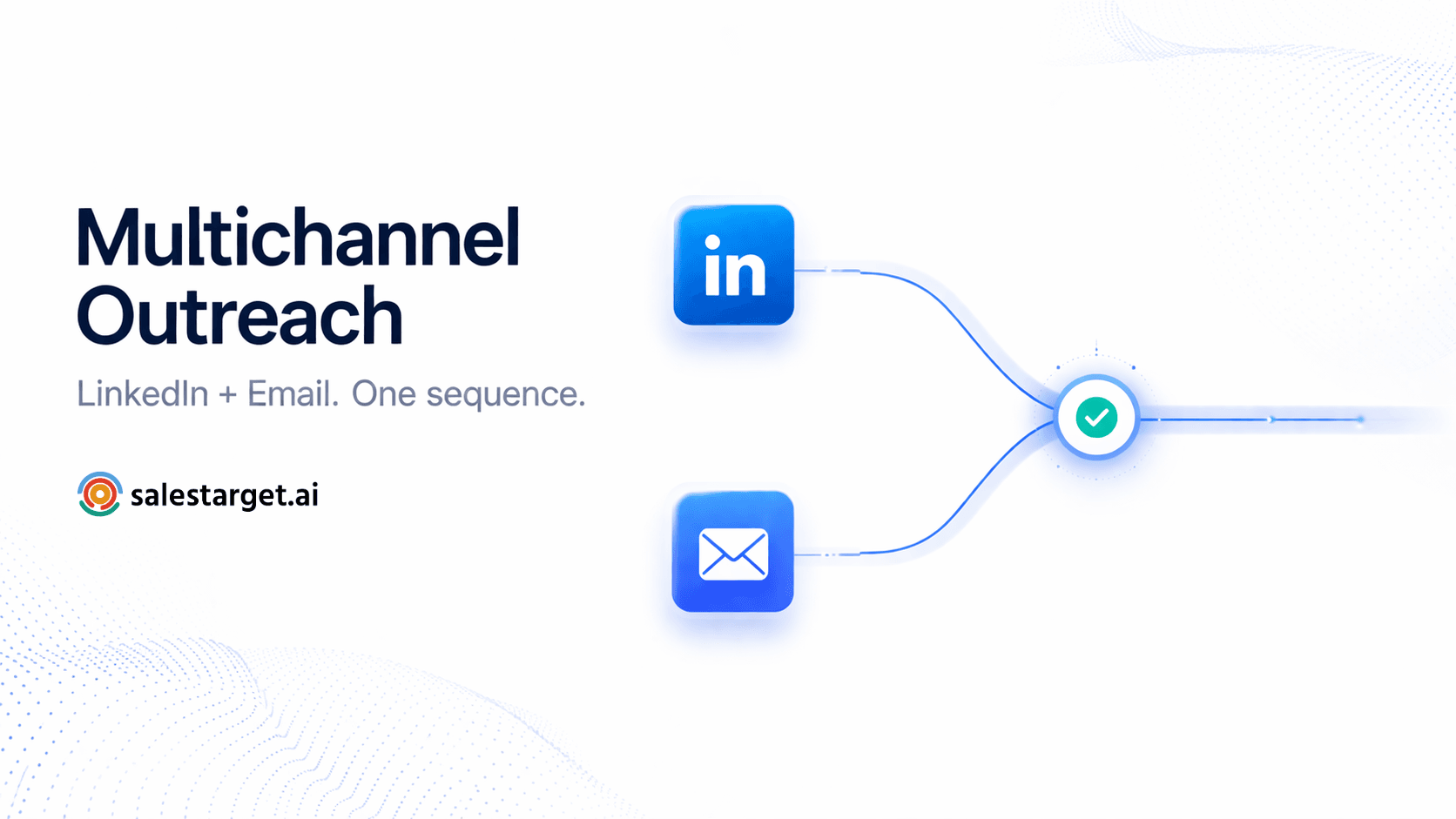
Every SDR leader eventually faces this question: should we double down on LinkedIn, go all-in on cold email, or spread our effort across both? The answer is less about picking a winner and more about understanding how multi-channel outreach compounds results that neither channel delivers alone.
LinkedIn DMs and cold email serve different roles in the outbound funnel. LinkedIn builds trust and opens doors; email scales follow-up and delivers detail. The strongest SDR teams use both in coordinated sequences, and the data backs this up—multi-channel campaigns combining email and LinkedIn outperform single-channel efforts by 30–50% on reply rates.
This article breaks down the strengths, limitations, and ideal use cases for each channel—and explains why combining them through a LinkedIn Outreach platform is the fastest path to predictable pipeline.
Why Multi-Channel Outreach Outperforms Single-Channel Prospecting ?
Sales teams that rely on a single channel are essentially betting everything on one hand. If your cold emails land in spam, your pipeline dries up overnight. If LinkedIn throttles your connection requests, the same thing happens. Spreading outbound across multiple channels isn’t just a hedge—it’s a multiplier.
The numbers tell the story. According to research from Built for B2B, coordinated email-plus-LinkedIn sequences lift reply rates by 30–50% compared to email-only campaigns at the same volume. That’s not because either channel got magically better. It’s because multiple touchpoints create familiarity, and familiarity lowers the barrier to reply.
Think about your own inbox behavior. If someone emails you out of the blue, you might ignore it. But if you’ve already seen that person’s name on LinkedIn—maybe they liked your post or sent a thoughtful connection request - you’re far more likely to open and respond to their email. That’s the compounding effect of multi-channel outreach in practice. Following LinkedIn outreach automation best practices ensures those touchpoints feel organic rather than intrusive.
LinkedIn DMs: Strengths and Limitations
LinkedIn is where B2B buying decisions start. The platform drives roughly 80% of all B2B social media leads, according to LinkedIn’s own data—a figure that HubSpot’s research on visitor-to-lead conversion rates corroborates. When you send a DM on LinkedIn, your prospect can immediately see your headline, your mutual connections, and your recent content. That context does heavy lifting that a cold email simply can’t replicate.
The strengths are real. Connection requests with a personalized note see acceptance rates above 30% when the note references something specific—a shared connection, a recent post, or a job change. InMail response rates can range from 10–25% depending on targeting quality. And because LinkedIn profiles serve as built-in social proof, prospects feel like they’re talking to a person, not a template.
But LinkedIn has hard ceilings. The platform caps connection requests and InMail sends. You’re limited in how many messages you can push out daily without triggering restrictions. Long-form pitches feel awkward in the DM format. And if your prospect isn’t active on LinkedIn—which is more common than most SDRs assume, given that only about 310 million of LinkedIn’s 1.3 billion members are monthly active users—your message sits unseen. For a deeper look at structuring LinkedIn outreach at scale, read the complete LinkedIn outbound campaign playbook.
Cold Email: Strengths and Limitations
Cold email remains the workhorse of B2B outbound for one reason: scale. You can reach hundreds of prospects daily with personalized sequences, A/B test subject lines in real time, and track opens, clicks, and replies with precision. No other channel gives SDRs that kind of volume with that level of measurability.
Email also lets you go deeper. You can attach case studies, link to demos, and write multi-paragraph value propositions that would feel out of place in a LinkedIn DM. For complex sales with multiple stakeholders, email threads make it easy to loop in colleagues, forward context, and keep the conversation moving.
The limitations are equally clear. Inbox saturation is brutal—the average B2B buyer receives over 120 sales-related emails per week. Deliverability has become its own discipline, with Google and Microsoft’s authentication requirements (DMARC, DKIM, SPF) punishing poorly configured sending domains. And cold email reply rates continue to slide. The average platform-wide reply rate dropped to around 3.4% in 2025, down from roughly 5% the year before, according to Instantly’s 2026 Benchmark Report. That’s still workable, but it means your targeting, copy, and timing all need to be sharp.
Cold Email vs LinkedIn: When Each Works Best
The cold email vs LinkedIn debate misses the point when framed as an either/or question. Each channel has contexts where it clearly outperforms the other.
LinkedIn works best when: you’re targeting C-suite or VP-level buyers who are active on the platform, when your product requires trust-building before a conversation (think high-ACV enterprise deals), and when you want to leverage mutual connections or shared content engagement as a warm-up. It’s also the stronger channel for account-based motions where you’re working a small number of high-value targets.
Cold email works best when: you need volume, when your ICP spans mid-market companies where buyers may not be LinkedIn-active, when you’re running sequences with multiple follow-ups, and when you want to share detailed collateral. It’s the better channel for testing messaging at scale before committing resources to high-touch outreach.
The most effective approach borrows from both. A senior director at a target account might accept your LinkedIn connection request on Monday, see your thoughtful comment on their post Tuesday, and then find a relevant, personalized email in their inbox Thursday. That sequence feels less like outbound and more like a natural professional interaction.
Why SDR Teams Are Combining Both Channels?
The shift toward multi-channel sequences isn’t theoretical. According to LinkedIn’s own B2B marketing data, four out of five platform members drive business decisions at their organizations. Meanwhile, 61% of B2B decision-makers still prefer email as their primary channel for vendor outreach. These aren’t contradictory data points—they’re complementary ones. Buyers use LinkedIn for discovery and vetting. They use email for deeper engagement and scheduling.
Smart SDR teams structure their sequences to mirror this behavior. They open on LinkedIn with a low-friction touchpoint—a connection request, a profile view, or a reaction to a post. Then they follow up by email with a message that references the LinkedIn interaction. The email feels warmer because it’s not arriving cold; there’s already a thread of familiarity.
How AI Improves Multi-Channel Outreach?
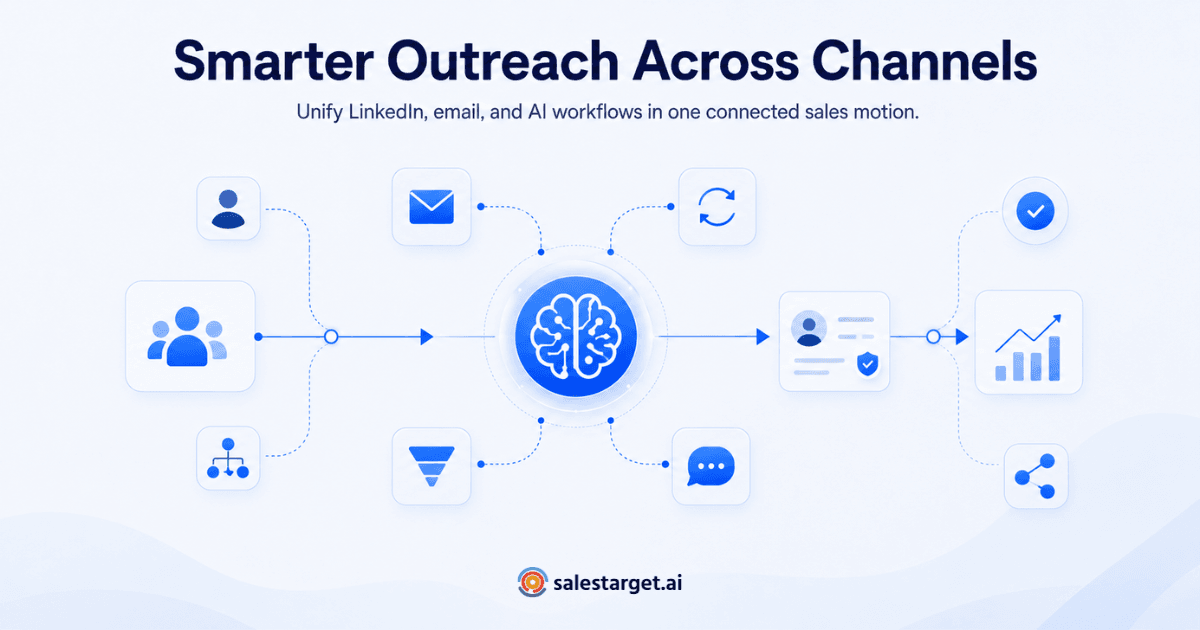
Here’s where things get interesting. Multi-channel AI sales automation is removing the operational friction that used to make cross-channel sequences a nightmare to manage. Instead of manually tracking which prospects received a LinkedIn touch versus an email follow-up, AI-powered tools handle sequencing, timing, and personalization across both channels simultaneously.
The real productivity gain isn’t just speed—it’s intelligence. Modern LinkedIn outreach automation tools can identify when a prospect engages with your content on LinkedIn and trigger a follow-up email within hours, while the engagement is fresh. They can rotate messaging based on which channel a prospect responds to. And they can flag when a prospect has gone quiet across all channels, so reps know when to pause rather than push. The 2026 LinkedIn automation guide covers the latest tooling landscape and compliance considerations.
One pattern we’ve observed across high-performing outbound teams: LinkedIn engagement before the first email doesn’t always lift overall reply rates—but it dramatically improves reply quality. Prospects who’ve already interacted with you on LinkedIn tend to write longer, more substantive replies. They ask real questions about your product. They bring up specific pain points. Compare that to cold-email-only replies, which are more likely to be one-line brush-offs or polite “not interested” responses. In other words, LinkedIn pre-engagement acts as a qualification filter—it self-selects for prospects who are actually curious, not just clearing their inbox.
Choosing the Right Strategy for Modern Outbound
Your channel mix should reflect your ICP, your deal size, and your team’s capacity. Here are some practical guidelines.
- For enterprise and high-ACV sales: Lead with LinkedIn. Build familiarity before the first email. Use connection requests, content engagement, and InMail strategically. Then layer in email for follow-up and collateral delivery.
- For mid-market and SMB outreach: Lead with email at scale and use LinkedIn as a secondary touch. Profile views and connection requests add warmth without requiring heavy manual effort.
- For account-based plays: Go all-in on both channels simultaneously. Multi-thread across multiple stakeholders at the same account, alternating between LinkedIn touches and email sequences.
If managing two channels sounds complex, it doesn’t have to be. Run both channels from one inbox with SalesTarget and keep your sequences, replies, and analytics unified in a single workflow.
The LinkedIn DMs vs cold email debate is a false choice. Both channels have clear strengths, and the data consistently shows that multi-channel outreach outperforms any single-channel strategy. LinkedIn builds trust and creates context. Email provides scale and depth. Together, they create a sequence that feels personal at every touchpoint.
The winning move for SDR teams in 2026 isn’t choosing one channel over the other. It’s building workflows where LinkedIn and email work in concert—supported by automation that handles the operational complexity while your reps focus on conversations that actually close deals.
Start by auditing your current channel mix. If you’re running single-channel campaigns, even a simple two-touch sequence that adds LinkedIn before email will show measurable improvement. Test, measure, and iterate—because the teams that treat multi-channel outreach as a system, not an experiment, are the ones building predictable pipeline.