TL;DR
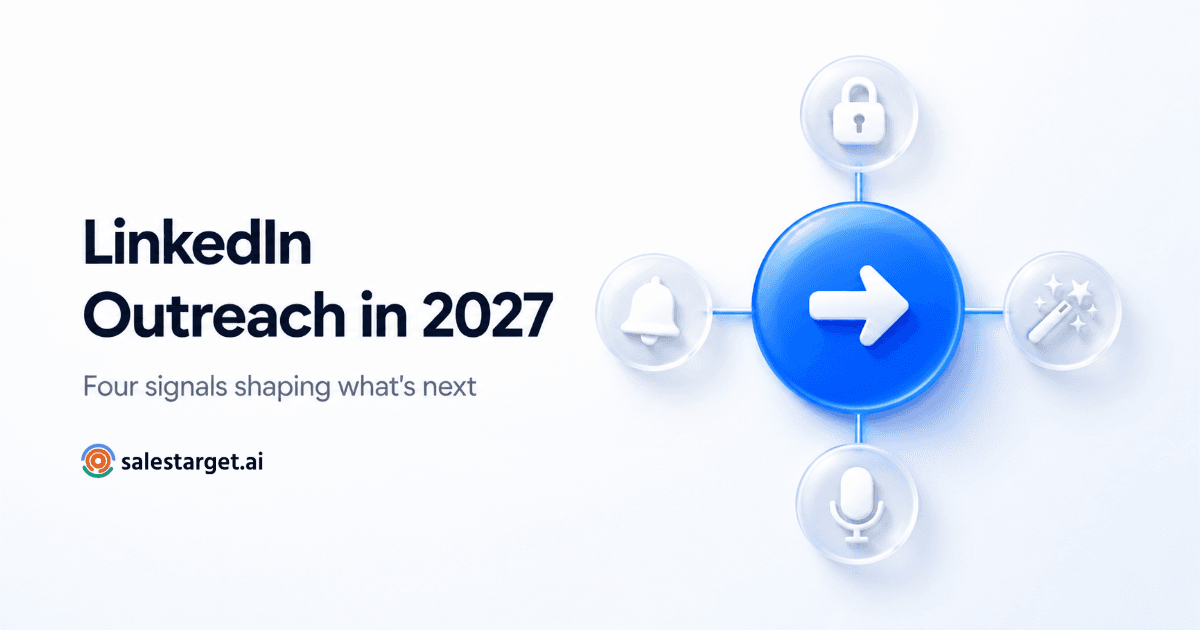
- LinkedIn's per-account limits are tightening, not loosening. The teams that grow in 2027 will grow by adding accounts and improving conversion, not by raising daily send volume.
- Templated first messages are already failing. By 2027, personalization stops being a differentiator and becomes the price of entry.
- Voice and video are rising because text fatigue is real — but they work as a second or third touch, not a cold opener.
- Signal-based timing is the trend most teams will get wrong. Buying the signal data is easy; acting on it inside the same working day is the actual edge.
- The strategic shift: stop optimizing for messages sent and start optimizing for conversations earned per account, per week.
Every LinkedIn outreach playbook written in the last three years assumes one thing: that you can send more. That assumption is dying. The platform is getting tighter, buyers are getting faster at pattern-matching automation, and the teams still measuring success in connection requests sent are optimizing a number that stopped mattering.
Why 2027 breaks the current playbook
Most predictions about LinkedIn outreach are really predictions about tools. They are not useful. Tools change every quarter. What actually determines how outbound works is the relationship between three things: what the platform permits, what buyers tolerate, and what technology makes cheap.
All three are moving at once right now, and they are moving in the same direction. The platform permits less. Buyers tolerate less. Technology has made personalization nearly free — which means it has also made bad personalization nearly free, and buyers have learned to spot it.
That convergence is the whole story. Four trends fall out of it, and each one changes a decision you are probably making this quarter.
Trend 1: Limits keep tightening, and multi-account becomes table stakes
The direction of travel on LinkedIn's connection and messaging limits has been one-way for years. Weekly invitation caps arrived, then got enforced more consistently. Behavioural detection got sharper. Restriction and warning flows got faster. Nothing in the platform's incentives suggests a reversal — every tightening step improves the member experience and protects the paid Sales Navigator and InMail products at the same time.
Here is what most teams miss. The limit is not really a limit on your outreach. It is a limit on your outreach per account. That single distinction reshapes how a 2027 LinkedIn motion gets built.
The capacity math changes shape
What this means in practice
In 2023, a team that needed more pipeline pushed each rep's daily volume higher. In 2027, that lever is gone. Capacity comes from two places instead: more sending identities operating within safe limits, and a higher percentage of those limited touches converting into conversations. Volume becomes a fixed input. Conversion becomes the only variable you control.
What smart teams are already doing
The teams ahead of this have stopped treating LinkedIn seats as individual rep tools and started treating them as a managed sending pool — warmed properly, monitored for health signals, and governed by conservative activity floors rather than aggressive ceilings. It looks slower on a weekly activity dashboard. It produces more conversations per quarter because nothing gets restricted mid-campaign.
The uncomfortable implication for 2027 planning: if your growth model assumes higher per-rep LinkedIn throughput next year, your growth model is broken. Rebuild it around accounts and acceptance rates.
Trend 2: The AI personalization arms race ends the templated message
Personalization used to be expensive, which is exactly why it worked. When writing a genuinely researched opener took eight minutes, the reps who did it stood out — not because personalization is magic, but because scarcity made it a credible signal of effort.
AI removed the cost. And when the cost of a signal drops to zero, the signal stops signalling. That is the trap most outbound teams are walking into right now: they adopted AI personalization expecting the old lift, and instead they got parity. Everyone's messages reference a recent post. Everyone's opener names the prospect's tech stack. The buyer's inbox now contains twelve equally personalized messages, which reads exactly like twelve templates.
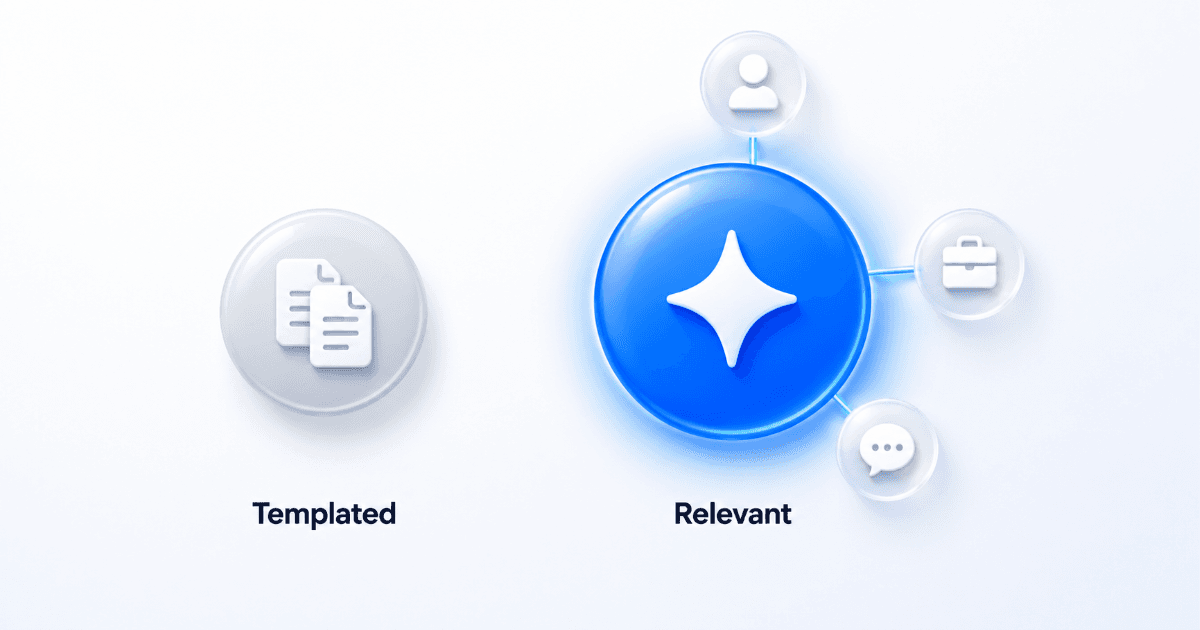
By 2027, the divide will not be personalized versus templated. It will be relevant versus decorated. Decorated personalization inserts a fact about the prospect into a message that would otherwise be identical. Relevant personalization changes what you are actually saying — the problem you lead with, the outcome you claim, the proof you cite — based on something true about that account's situation.
📊 The pattern to watch
- Decorated: "Saw your post on hiring — quick question about your SDR ramp." Interchangeable across 500 prospects.
- Relevant: A different opening problem and a different proof point for a Series A team hiring its first SDRs than for a 40-rep org consolidating tools.
- Research from outbound sales platforms consistently shows message relevance outperforming surface personalization on reply rate — the variable that moves is what you say, not what you mention.
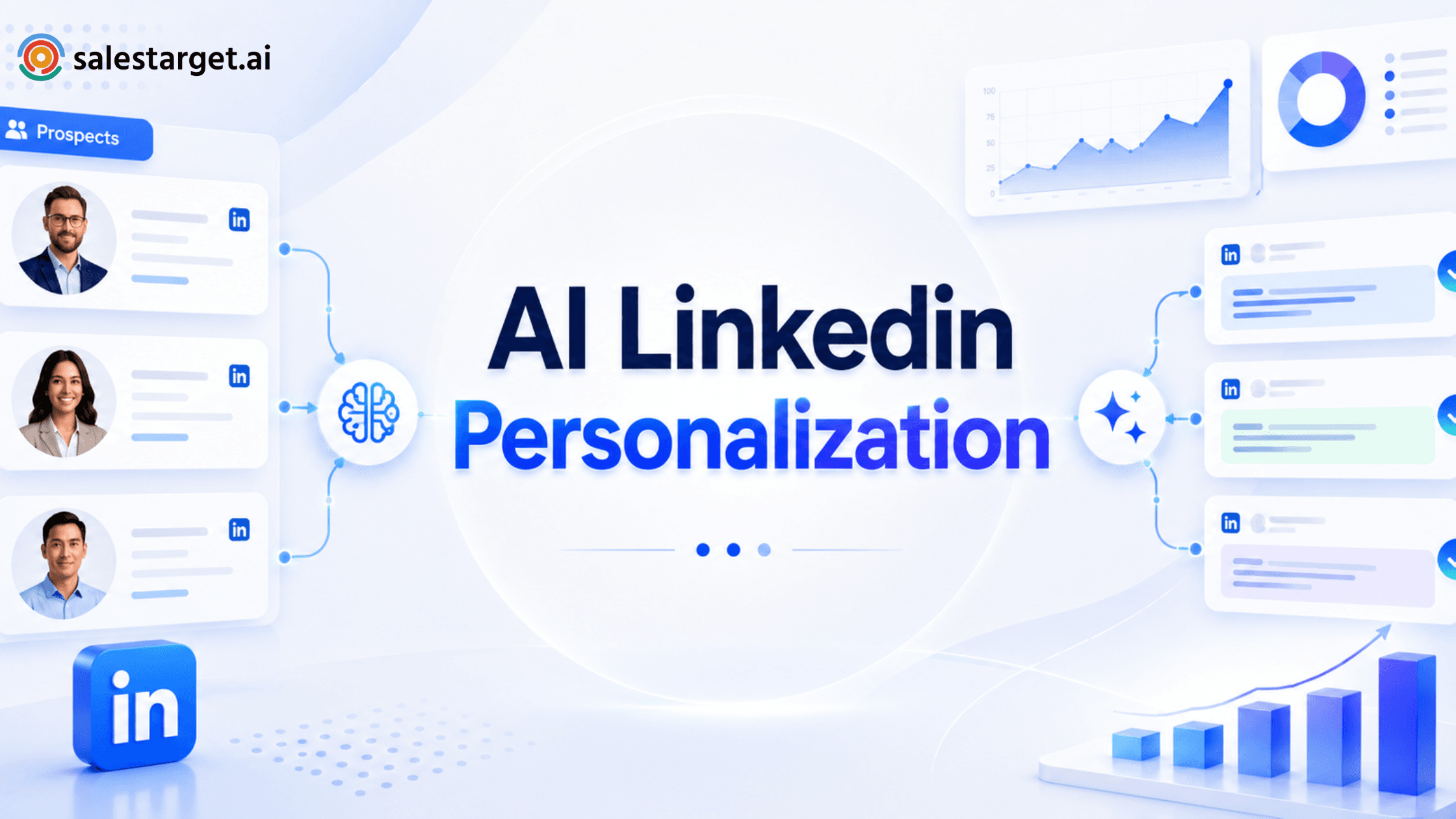
Practically, this means personalization has to live inside the sequence logic rather than sit on top of it as a first-line variable. The message branches on segment and situation before a single word gets personalized. Platforms that build AI personalization into the sequence itself rather than bolting it onto a static template are solving the right half of the problem.
Trend 3: Voice and video rise as text fatigue sets in
There is a reason voice notes and short video keep resurfacing in LinkedIn outreach conversations. They are the only formats AI has not commoditized yet. A voice note carries something a generated paragraph cannot fake at scale: a specific human took ninety seconds for this specific person.
Expect adoption to accelerate through 2027 for exactly that reason — and expect the same decay curve that hit text personalization to eventually hit voice, once generation gets cheap enough. The window is real but not permanent.
The tactical detail most teams get wrong: voice and video underperform badly as cold openers. A voice note from a stranger reads as intrusive, and it demands more of the recipient than a message they can scan in four seconds. Where these formats consistently earn their keep is the second or third touch — after acceptance, when there is a thread and a reason to escalate the effort. That is a sequencing decision, not a format decision.
Trend 4: Signal-based timing becomes the default, not the differentiator
This is the trend where most teams will be confidently wrong, so it is worth being precise.
Right now, reaching out to a company within days of a funding round, a leadership hire, or a relevant tech change still feels like an advantage. It won't in 2027. Signal data is becoming a commodity — the same funding announcement, the same job-change alert, the same hiring surge is visible to every vendor selling into that account, at roughly the same moment.
The result is predictable and already visible: signals create their own inbox floods. Post-funding announcements are the clearest example — the window between "this is a great time to reach out" and "this buyer has received forty pitches" is compressing fast.
Where the real edge moves
The 2027 differentiator
Not having the signal — everyone has it. The edge is latency and interpretation: how fast a signal moves from detection to a sequence entering the queue, and whether your team knows which signals actually predict a buying conversation for your ICP versus which ones just look impressive on a dashboard. Real-time signal discovery matters far less than what happens in the hour after the signal fires.
Practically: a team that acts on three well-chosen signals within the same working day will outperform a team monitoring twenty signals with a weekly review cadence. Signal breadth is a vanity metric. Signal-to-sequence latency is the one to instrument.
The 2026 motion versus the 2027 motion
Put the four trends together and the shape of the change becomes clear. This is not a tactical refresh. It is a different set of things to be good at.
| Dimension | The 2026 default | Where it lands in 2027 |
|---|---|---|
| Growth lever | Increase touches per rep | Increase accounts and acceptance rate |
| Personalization | AI-inserted detail on a shared template | Message logic branches by situation |
| Primary format | Text, every touch | Text opener, escalating formats later |
| Timing | Sequence start date | Signal detection to send latency |
| Core metric | Requests and messages sent | Conversations per account per week |
| Main risk | Low reply rates | Account restriction mid-campaign |

How to build your LinkedIn motion for 2027, starting now
None of this requires waiting. Every trend above is already partially arrived — which means the moves that make sense in 2027 are moves you can make this quarter at lower cost.
- Audit the volume assumption in your plan. Find the number in your 2027 model that represents touches per rep per week. If it is higher than today's, replace it with a flat number and rebuild the pipeline math from acceptance and reply rates instead. This one change surfaces most of the other work.
- Move personalization into the sequence, not the first line. Split your one sequence into three, segmented by buyer situation rather than title. Different lead problem, different proof point, different ask. Then let AI personalize within each branch.
- Test a non-text format on touch three before you need it. Pick one sequence, add a voice or video step after acceptance, and run it for four weeks. Learning the format while it still works beats scrambling when text reply rates drop another point.
- Instrument signal-to-send latency. Pick your three highest-conviction signals and measure the hours between detection and first touch. If the number is measured in days, that is your single highest-leverage fix — and it is usually a workflow problem, not a data problem.
- Set a safety floor and hold it. Define conservative per-account activity limits and warmup rules in writing, then treat them as non-negotiable. One restricted account mid-quarter costs more than the volume it was chasing.
- Consolidate the reporting view. If acceptance, reply, and pipeline sit in three tools, nobody will see the conversion shift in time to act on it. Running the motion inside one LinkedIn outreach system makes the trendline visible while it is still cheap to correct.
Four bets that will age badly
Betting on volume recovery
Why it fails
Assuming limits will loosen, or that a workaround will restore old throughput. Every workaround that has worked at scale has eventually been detected and penalized. Planning around one is planning around a countdown.
Treating AI personalization as a finish line
Why it fails
Adopting AI personalization and expecting a durable lift. It is now a baseline requirement, not an advantage. The advantage sits one level up, in whether your segmentation makes the personalization say something different.
Waiting for voice and video to be proven
Why it fails
By the time a format is unambiguously proven in public benchmarks, its advantage window is closing. The cost of testing one format on one sequence is a few weeks. The cost of adopting late is a full year of parity.
Treating signals as a data purchase
Why it fails
Buying broader signal coverage and calling it a strategy. Coverage without a fast, defined response workflow just produces a longer list arriving at the same time as everyone else's. Fix the response loop first, then widen the aperture.
What this actually means for your team
Strip the four trends down and they say the same thing from different angles: the inputs to LinkedIn outreach are becoming fixed, and the outputs are becoming a function of judgment rather than effort. How many accounts you run safely. Which three segments you actually write differently for. Which signals you trust. How fast you move when one fires.
That is a harder game than sending more, and a better one for teams that can think. The reps who thrived when outbound meant volume were the ones with stamina. The reps who will thrive in 2027 are the ones with taste — and the systems that let them apply it consistently across every account they run.
Build for that now, while the shift is still a choice rather than a correction.
Build the LinkedIn motion 2027 rewards.
Personalization, safe limits, and signal timing in one system — not four.
✓ 50 credits ✓ 7-day trial ✓ No credit card required