TL;DR
- A breakup message closes the loop after a sequence has gone unanswered — it's a professional exit, not another follow-up disguised as one.
- The optimal window is 4-6 touches over 14-21 days before sending it — reply rates show diminishing returns past the fourth touch, so the breakup message belongs near the end, not the middle.
- The right tone closes the loop respectfully, without guilt, pressure, or a disguised sixth pitch.
- LinkedIn adds a wrinkle email doesn't have: whether to disconnect afterward, and whether re-approaching later is still fair game.
You've sent four LinkedIn touches. Nothing. The instinct is either to keep going — a fifth message, then a sixth — or to give up and move on with no closure at all. There's a better option than either: a breakup message that closes the loop on your terms, respects the prospect's silence as an answer, and leaves the door open without sounding like you're still trying to sell them something.
What a Breakup Message Is and Why It Works
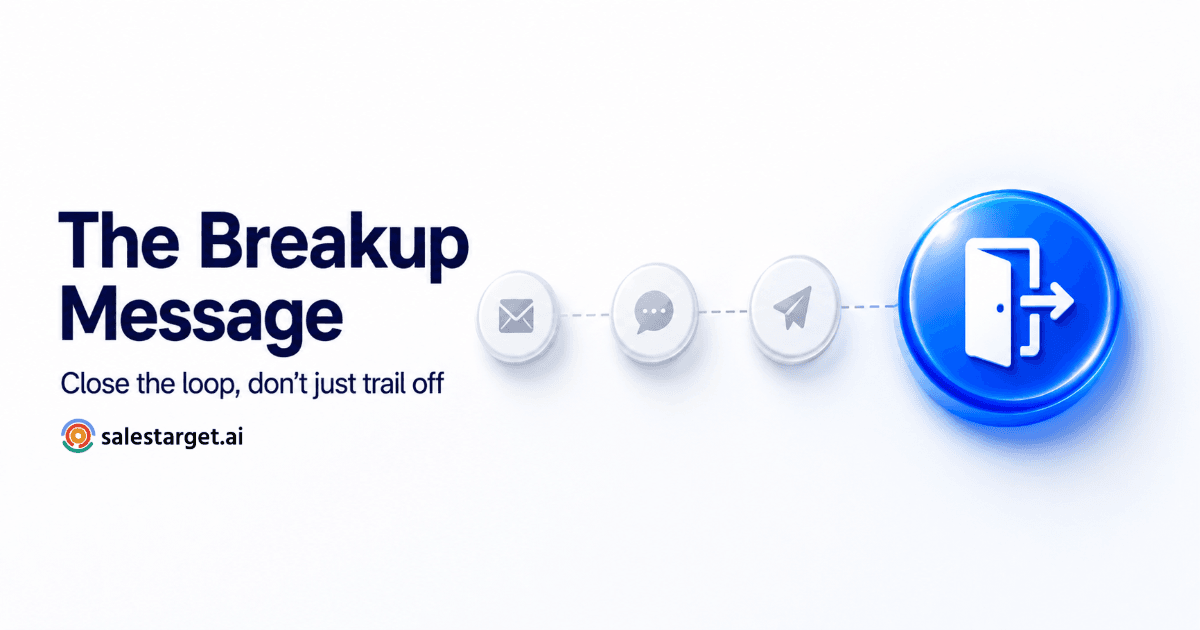
A breakup message is the deliberate final touch in a sequence — sent specifically to acknowledge the silence and close the loop, rather than to pitch again. It's a recognized enough practice that outbound playbooks now build it into the sequence by default: after a full sequence with zero engagement, sending a professional message to close the loop respectfully is standard practice precisely because it performs better than either silently disappearing or sending an endless string of "just following up" messages.
It works because it reframes the interaction. Every message before it implicitly asked for a response. The breakup message doesn't — it states that you're closing the loop, which paradoxically makes it easier for a silent prospect to respond, since replying no longer feels like conceding to pressure. It's often the highest-performing message in the entire sequence for exactly this reason.
When to Send It (After How Many Silent Touches)
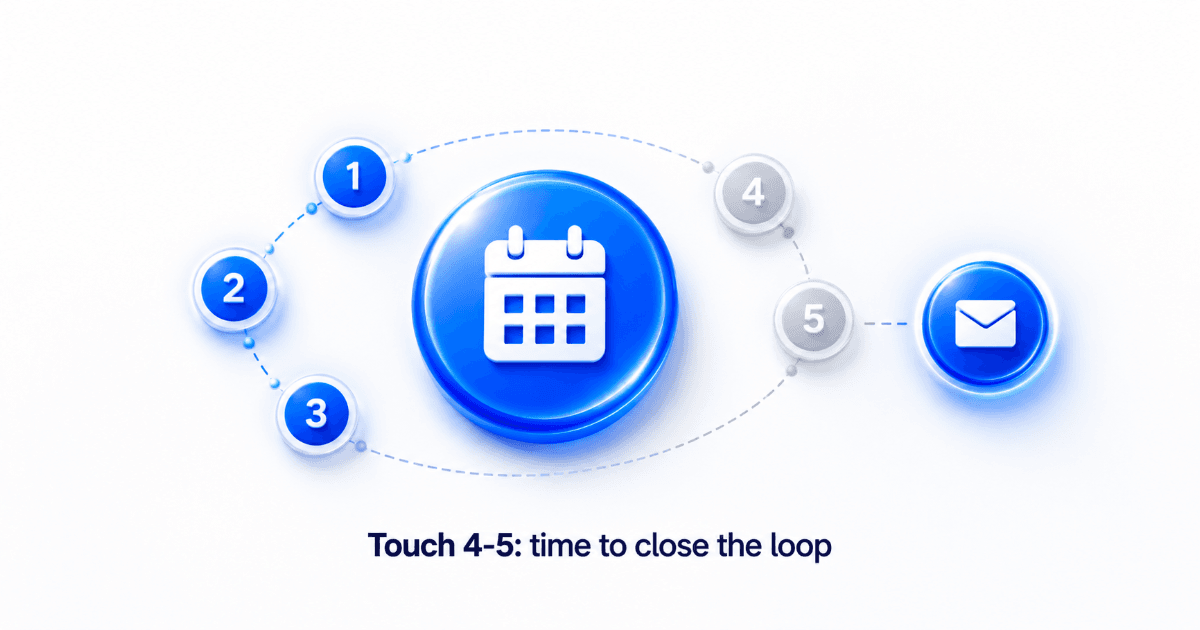
The generally recommended range is 4-6 follow-ups spread over 14-21 days before considering the sequence complete — with the first follow-up generating the highest incremental lift in replies, and returns diminishing meaningfully after the fourth touch. That structure gives a natural home for the breakup message: not the fifth touch out of five aggressive ones, but the deliberate final note once you've genuinely given the sequence a fair chance.
Sending it too early — after just one or two silent touches — reads as impatient and undercuts the sequence you haven't finished yet. Sending it too late, after eight or nine touches, has usually already burned whatever goodwill the breakup message is designed to recover. Right around touch four or five, once you've made a genuine, varied attempt, is the point where closing the loop starts to do more good than one more regular follow-up would.
 " />
" />
The Tone: Closing the Loop Without Burning the Bridge
The single most common way a breakup message fails is by not actually being one — it's a sixth pitch wearing a "just checking in one last time" costume, and prospects can tell. A genuine breakup message does three things a regular follow-up doesn't:
- States the closing plainly — "I'll stop reaching out unless I hear back" or equivalent, rather than another vague "wanted to follow up."
- Removes pressure rather than adding it — no guilt, no urgency language, no "last chance" framing that just repeats the ask with more intensity.
- Leaves a genuine, low-effort door open — a simple "feel free to reach out if this becomes relevant later" costs the prospect nothing to receive and gives them an easy out to respond to if they were quietly interested but hadn't gotten around to replying.
Short is also part of the tone. A long breakup message undercuts its own premise — if you're closing the loop, the message itself should feel like a closing, not another full pitch.
Should You Disconnect? Can You Re-Approach Later?
This is where LinkedIn's mechanics diverge from email's. An unanswered email thread has no equivalent decision — nothing to disconnect from, nothing to re-friend later. LinkedIn does.
| Question | Guidance |
|---|---|
| Should I disconnect after a breakup message? | Generally no. Staying connected keeps you visible in their feed at zero cost, and a future trigger event (new role, funding, hiring) can justify a natural re-approach later without needing to reconnect first. |
| Can I re-approach the same person later? | Yes — but only with a genuinely new reason, not a repeat of the same pitch. A real trigger event resets the context; simply waiting a few months and sending the same message again does not. |
| What if they never accepted the connection at all? | There's no relationship to close gracefully — simply stop sending requests rather than crafting a formal breakup note to someone who never engaged in the first place. |
Mistakes That Undermine a Breakup Message
Disguising a pitch as a goodbye
Ending the message with another CTA or product detail undoes the entire point — a real breakup message closes, it doesn't pitch one more time with a softer wrapper.
Sending it before the sequence has genuinely run its course
A breakup message after only one or two silent touches reads as impatient rather than considerate, and skips the window where a normal follow-up would have had a fair chance to land.
Disconnecting immediately afterward
Removing the connection closes a door that costs nothing to leave open — staying connected preserves the option to re-approach later with a genuinely new reason.
Building the Breakup Step Into a LinkedIn Sequence
A breakup message only works as intended if it's actually the final, deliberate step in a sequence rather than something a rep has to remember to send manually once a prospect has gone quiet. LinkedIn Campaigns & Sequence Builder lets you configure a full sequence with a defined final step, so the closing message goes out on schedule as part of the same structured flow as every touch before it — rather than depending on someone noticing the silence and drafting one from scratch.
AI LinkedIn Personalization can then tailor that closing message to reference what was actually said earlier in the sequence, so the breakup message reads as a genuine closing of a specific conversation rather than a generic template — the same personalization discipline that makes the earlier touches land is what keeps the final one from sounding like a form letter too.
Close the Loop, Don't Just Trail Off
Silence isn't a failed sequence — it's information. A breakup message treats it that way: a respectful close, sent once you've genuinely given the sequence a fair run, that removes pressure instead of adding it and leaves the relationship intact for a future, better-timed approach. It's a small addition to a sequence that often outperforms the touches that came before it, simply because it's the one message that isn't asking for anything.
Close every sequence with intention.
Build the breakup step directly into your LinkedIn sequences.
✓ 50 credits ✓ 7-day trial ✓ No credit card required