TL;DR
- Most cold email follow-ups fail because they sound desperate or repetitive — killing reply rates that already average under 6%.
- Use psychology-driven value escalation with confident detachment instead of pushy persistence.
- Follow the right timing, tone, and structure — plus 3 proven templates you can adapt today.
- Scale it effectively with SalesTarget's AI Sequences for consistent non-desperate outreach.
70% of salespeople send just one cold email and give up. Yet research shows the first follow-up can boost reply rates by up to 49%. The problem? Most follow-ups scream "I'm desperate for your attention" instead of offering real value. This is exactly why your cold email follow up sequences are ghosted.
Why Most B2B Follow-Ups Fail (The Psychology Problem)
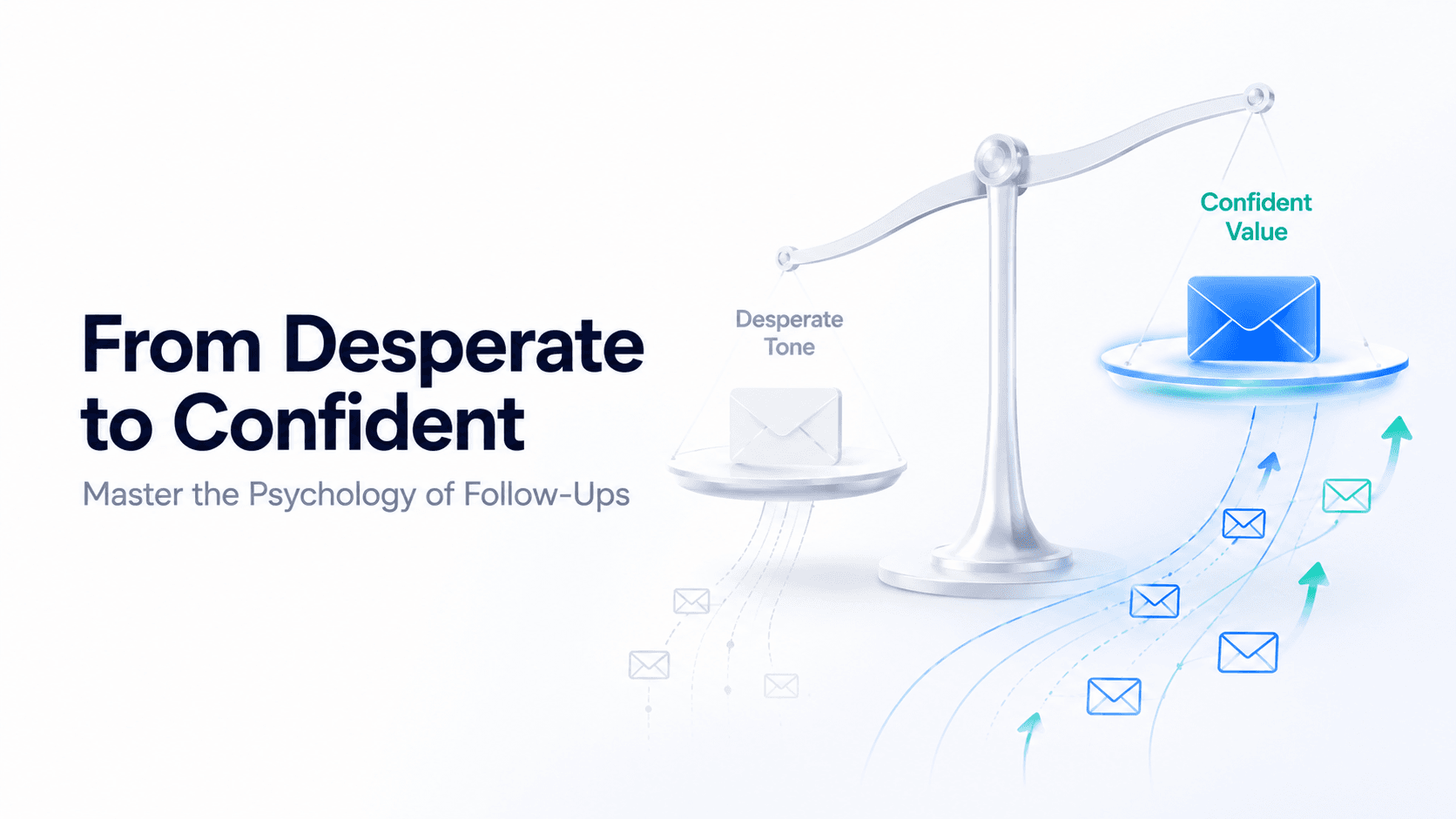
Buyers today are overwhelmed. Average cold email reply rates have dropped to around 3.43–5.8% in 2025–2026. The biggest culprit isn't bad timing — it's tone. Desperate follow-ups trigger psychological reactance: the more you push, the more prospects pull away.
📊 The Data Doesn't Lie
- First follow-up — can increase replies by up to 49% (Belkins 2025 study)
- 70% of reps stop after one email (multiple industry benchmarks)
- Well-crafted sequences with 4–7 touches can triple response rates vs single emails.
Core Principles of Non-Desperate B2B Follow Up Emails
The winning mindset is **confident detachment** — you have something valuable, but you don't *need* their reply.
Key Rules of Tone
Avoid These Traps
"Just checking in" • "Following up again" • "Did you see my last email?" • Overuse of exclamation marks and urgency.
1. Lead with New Value
Every follow-up must give the recipient a reason to open it. Reference a relevant insight, new data, or a specific way you can help their business.
2. Keep It Short and Scannable
3–8 sentences maximum. Busy decision-makers reward brevity.
3. Use Confident Language
Replace "I hope you're doing well" with direct, benefit-focused statements.
Optimal Timing for Cold Email Follow-Ups
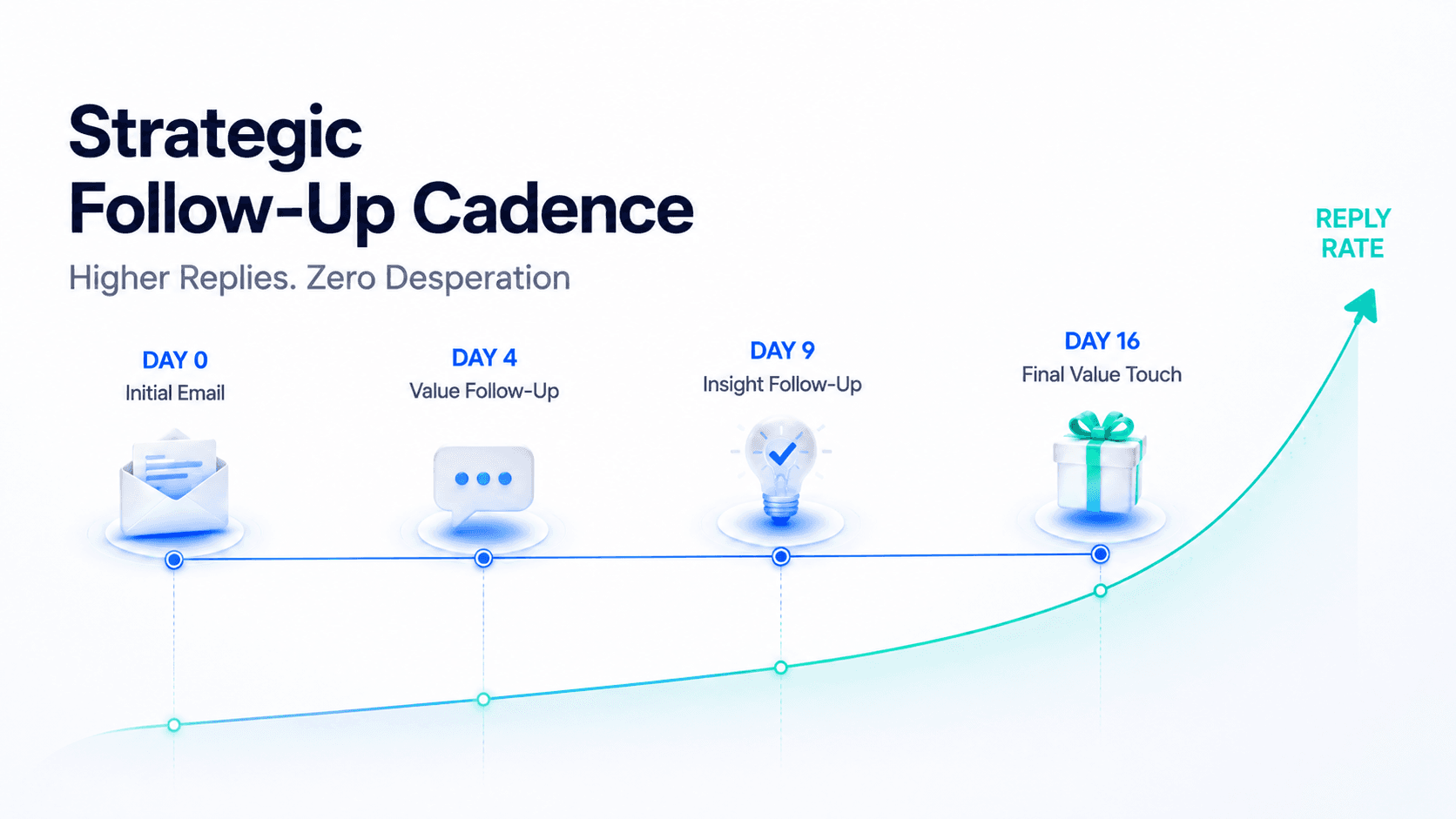
Wait 3–5 days after the initial email for the first follow-up. Mid-mornings on Tuesday–Thursday perform best.
💡 Recommended Cadence
- Email 1: Day 0
- Follow-up 1: Day 3–5
- Follow-up 2: Day 8–10
- Follow-up 3: Day 14–18 (then nurture or pause)
3 Proven Cold Email Follow Up Templates
Template 1: Value Add Follow-Up (Best for Second Email)
Subject: Quick thought on [Specific Challenge] at [Company]

Hi [First Name],

I shared [Initial Value] last week and wanted to add something relevant I came across.

[Brief new insight or data point relevant to their industry].

Would love your thoughts on whether this matches what you're seeing on your end.

Best,
[Your Name]
Template 2: Social Proof Follow-Up
Subject: How [Similar Company] improved [Metric] by X%

Hi [First Name],

Following up on my previous note.

We recently helped [Similar Company] achieve [Result] in [Timeframe] using a similar approach to what I outlined.

Curious if [Specific Goal] is still a priority for your team this quarter.

Happy to share the case study if useful.

Regards,
[Your Name]
Template 3: Gentle Break-Up / Last Touch
Subject: [First Name], closing the loop on [Topic]

Hi [First Name],

I haven't heard back, so I'll assume this isn't the right time.

If priorities shift and [Specific Benefit] becomes relevant, feel free to reach out anytime.

Wishing you success with [Relevant Initiative].

Best,
[Your Name]
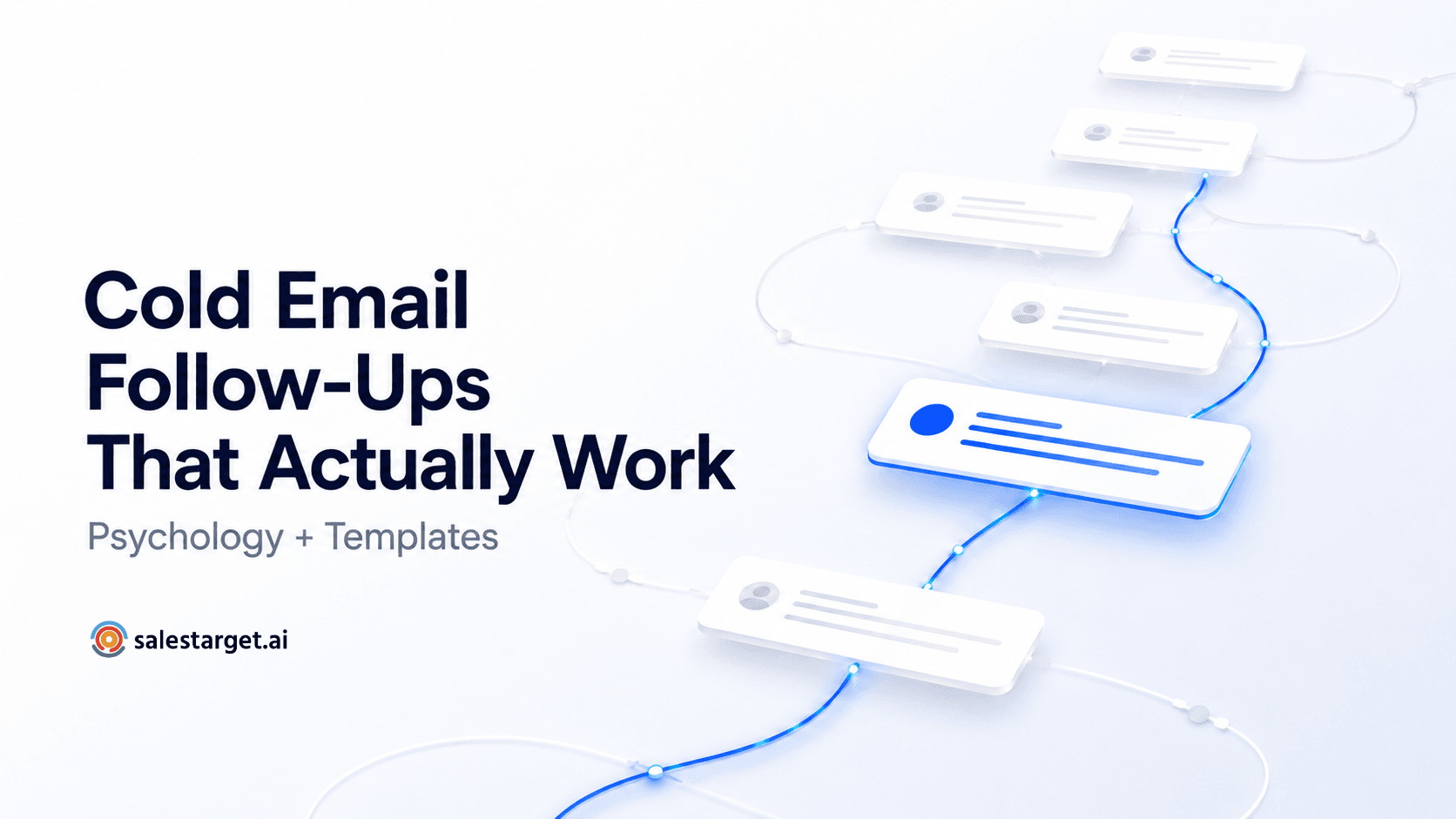
Step-by-Step Framework to Build Your Own Follow-Ups
- Reference the previous touch — without sounding repetitive.
- Add fresh value — new insight, data, or angle.
- Make the ask low-friction — "thoughts?" instead of "are you free for a call?"
- End with confident detachment.
Common Mistakes That Make You Sound Desperate
Mistakes to Avoid
- Using guilt-tripping phrases like "I haven't heard back..."
- Sending the exact same message with minor changes.
- Overusing urgency ("This offer ends soon!") on cold prospects.
How to Scale Non-Desperate Follow-Ups with AI
Manual personalization at volume is nearly impossible. This is where SalesTarget's Email Outreach platform shines — with AI Sequences & Content that maintain your voice while scaling confident, value-first follow-ups across unlimited inboxes.
| Approach | Reply Rate Impact |
|---|---|
| Generic "Just checking in" | Negative |
| Value + Confident Tone | +25–49% |
Ready to write better cold email follow-ups at scale?
Stop sounding desperate and start getting more replies with intelligent AI sequences.
✓ 50 credits ✓ 7-day trial ✓ No credit card required
Frequently Asked Questions

See It In Action: Book Your Free Demo
Get a personalized walkthrough and see how it works for your team.
Book My Demo →