Your marketing team says the webinar drove the quarter. Sales says it was the outbound sequence to VP-level titles. Finance just wants to know why pipeline and closed revenue don't match the funnel report. Nobody's lying; the tools just aren't talking to each other.
That's the real problem with lead generation metrics tracking tools: it's rarely about capturing more leads. It's about connecting first click to closed revenue without the numbers falling apart at every handoff. This guide breaks down which categories of lead generation tracking tools actually measure what matters, how CRM integration for lead gen makes or breaks your reporting, and how to build a stack that gives you one number everyone trusts, whether you're running online lead generation for a small team or a multi-touch B2B motion with a dozen channels.
Define Your Metrics Before You Buy Anything
The best lead generation analytics setup is the one that matches your funnel's actual definitions, not the one with the nicest dashboard. Before evaluating a single tool, write down what "Lead," "MQL," and "SQL" mean at your company. Most teams skip this step, buy sales lead tools first, and spend the next two quarters arguing about what the reports mean.
Core Acquisition and Conversion Metrics
At minimum, track:
- Traffic-to-lead conversion rate, by channel and landing page
- Cost per lead (CPL) and cost per acquisition (CPA)
- Lead-to-MQL rate and MQL-to-SQL rate
- SQL-to-opportunity rate and win rate
- Median sales cycle length (average hides your worst deals)
- Pipeline generated and revenue influenced, by source
Lead Quality and Velocity Metrics
These tell you whether you're getting better leads, not just more:
- Lead score distribution
- Time-to-first-response on inbound forms and chat
- Speed-to-MQL and speed-to-SQL
- Stage-to-stage conversion (where the funnel actually leaks)
- No-show rate on booked demos
Speed matters more than most teams assume. Analysis of B2B SaaS funnel data has found that leads followed up with inside the first hour convert to SQL at roughly 53%, compared to about 17% for leads contacted after 24 hours, nearly a 3x swing driven entirely by response time, not lead quality.
Data Integrity Metrics (the Ones Teams Skip)
If the underlying data is wrong, every metric downstream of it is fiction:
- Percentage of leads missing email or company data
- Duplicate rate
- Bounce rate and invalid-email rate
- Source and UTM coverage rate
This isn't a minor hygiene issue. Gartner estimates that poor data quality costs the average organization close to $12.9 million a year, and industry analysis of CRM decay puts the annual loss from bad contact data at over 10% of revenue for a large share of companies. A pipeline report is only as trustworthy as the contact records feeding it.
The Tool Categories That Actually Move Lead Gen Metrics
There's no single "best" lead generation software; there's a stack. An effective tracking stack usually spans a CRM for pipeline truth, marketing automation for lifecycle truth, capture tools for source truth, analytics for behavior truth, and enrichment or verification for data-quality truth. Here's how to evaluate each layer specifically for measurement, not just feature checklists.
CRM Platforms: Your Source of Truth for Revenue
If you care about revenue, and you should, your CRM is non-negotiable. It's where "leads" become "opportunities" and "closed-won," and it should make it easy to see lead source and campaign association, stage duration, revenue attribution at the opportunity level, and rep response time.
The HubSpot-vs-Salesforce debate for lead tracking usually comes down to complexity. HubSpot tends to reduce reporting friction for inbound-heavy funnels because marketing and CRM data live in one system. Salesforce offers deeper customization and governance for complex sales processes, but you'll often need to bolt on separate tools for automation and attribution to keep lead gen metrics from fragmenting across systems.
For outbound-led teams specifically, a CRM built around the outbound motion, where campaign leads land automatically, every call and email logs to the timeline, and follow-up tasks generate themselves, removes a lot of the manual reconciliation that breaks reporting in the first place.
Marketing Automation: Turning Behavior Into a Funnel You Can Measure
If your lead gen includes nurture sequences, scoring, or segmented campaigns, marketing automation is what connects acquisition to qualification. A strong automation layer should show campaign performance by segment, funnel movement over time, and, critically, whether lead scoring and routing actually sped up SQL creation.
Done well, this is the "metrics multiplier" in your stack: it's how you find out which nurture path converts best and which lead sources actually produce SQLs, rather than just MQLs that sales ignores.
Web Analytics and Attribution: Where "Best Channel" Gets Proven or Debunked
Most teams believe they know their best channel until attribution shows a chunk of "direct traffic" is actually untagged social shares or dark social. True sales funnel tracking analytics connects session to form start to form submit to MQL to SQL to opportunity to revenue, which requires a consistent ID strategy and disciplined UTM governance across every campaign, in every channel.
Write a short UTM policy, naming conventions and required fields, and enforce it. It's unglamorous, but it closes more reporting gaps than any dashboard purchase will.
Outbound Prospecting: Measuring List Quality, Not Just List Size
For teams running active outbound, B2B prospecting tools need to feed the same funnel as inbound, or you'll never be able to compare channel ROI honestly. That means tracking list-to-reply rate by segment, reply-to-meeting rate, and account penetration, and it means the prospecting tool needs a real sync back into your CRM, not a one-way export.
A prospecting layer like Lead Explorer, built with enrichment and verified contact data on the front end, reduces the volume of dead records entering your funnel in the first place, which matters more for reporting accuracy than most teams realize, since a large share of "lead quality" problems are actually data-quality problems in disguise.
Multichannel Outreach: Email and LinkedIn Working the Same Funnel
Email and LinkedIn outreach are usually tracked in separate tools with separate definitions of "engaged," which makes cross-channel reporting nearly impossible. If you're comparing email outreach performance to LinkedIn outreach performance, both need to log activity into the same CRM record so a single lead's journey, connection request, reply, email open, meeting booked, shows up as one thread instead of two disconnected stories. For deeper tactics on running both channels as one coordinated sequence, see this breakdown of active prospecting tools for lead generation.
Enrichment and Verification: The Quiet Backbone of Accurate Reporting
Bad data destroys dashboards before a single report ever gets built. Enrichment and verification tools catch typos, fake submissions, and incomplete records before they pollute your funnel. Track verification pass/fail rate, duplicate reduction, and, most usefully, MQL rate lift after better routing or segmentation.
A lead and email validator that checks MX/SMTP records and flags disposable addresses in real time (or in bulk, for cleaning an existing list) prevents the slow bounce-rate creep that damages sender reputation and, eventually, deliverability for every campaign after it. Industry data on CRM decay puts bounce-driven reputation damage at meaningful risk once bounce rates cross 3-5%, which is a low bar to clear if list hygiene isn't automated.
Lead Management: Routing, SLAs, and Where Leads Actually Die
If you're handling any real volume, lead management capability, whether inside your CRM or as a separate layer, is what keeps leads from sitting untouched. Track assignment accuracy, SLA compliance on first touch, and lead aging by status. At minimum, use more statuses than "New": Contacted, Working, Nurture, and Disqualified, or your funnel report won't tell you where the leakage is happening.
6 Best Tools for Tracking Lead Generation Metrics and Sales Performance
1. SalesTarget.ai: Best for B2B Lead Generation and Sales Tracking
SalesTarget.ai is designed for teams that want to combine lead generation, prospecting, CRM, and sales activity tracking in one platform. It can help sales teams identify prospects, manage leads, track outreach activity, and monitor campaign performance without relying on multiple disconnected tools.
Key features:
- B2B lead generation and prospecting
- Lead and contact management
- Sales pipeline tracking
- Outreach and campaign monitoring
- Lead qualification and enrichment
- Sales performance insights
Best for: B2B sales teams, SDRs, BDRs, and companies looking to connect lead generation with sales execution.
2. HubSpot: Best for All-in-One Lead and Marketing Analytics
HubSpot provides CRM, marketing, and sales tools that allow businesses to track leads throughout the customer journey. Its reporting features can help teams understand where leads come from, how they move through the funnel, and which activities contribute to conversions.
Key features:
- Lead tracking and management
- Marketing attribution
- Conversion tracking
- Sales pipeline reporting
- Campaign analytics
- Revenue and performance reports
Best for: Businesses that want CRM, marketing automation, and lead analytics in one ecosystem.
3. Salesforce: Best for Advanced Sales Reporting
Salesforce is a powerful CRM platform for organizations that need detailed visibility into leads, opportunities, pipelines, sales activities, and revenue performance. Its reporting and dashboard capabilities make it suitable for larger sales organizations with complex processes.
Key features:
- Lead and opportunity tracking
- Pipeline analytics
- Custom dashboards
- Sales forecasting
- Conversion reporting
- Activity and revenue tracking
Best for: Mid-market and enterprise sales teams with complex CRM and reporting requirements.
4. Pipedrive: Best for Sales Pipeline Tracking
Pipedrive is a sales-focused CRM built around pipeline and activity management. It helps sales teams track leads as they move through different stages and monitor activities such as calls, emails, meetings, and follow-ups.
Key features:
- Lead and deal tracking
- Sales pipeline management
- Activity tracking
- Conversion monitoring
- Sales reporting
- Revenue forecasting
Best for: Small and growing sales teams that need a straightforward CRM for managing leads and tracking sales performance.
5. Zoho CRM: Best for Lead Management and Sales Analytics
Zoho CRM is a CRM platform that helps businesses manage leads, track sales activities, monitor conversions, and analyze overall sales performance. It provides teams with a centralized system for organizing customer information, following leads through the sales funnel, and generating reports to understand what is driving revenue.
Key features:
- Lead and contact management
- Sales pipeline tracking
- Lead conversion tracking
- Sales analytics and reporting
- Workflow and process automation
- Performance dashboards and insights
Best for: Small to mid-sized businesses, sales teams, and organizations looking for a flexible CRM with lead management, sales reporting, and automation capabilities.
6. Microsoft Dynamics 365: Best for CRM Analytics and Pipeline Performance
Microsoft Dynamics 365 combines CRM capabilities with advanced business applications to help organizations manage leads, opportunities, customer relationships, and sales pipelines. Sales teams can track opportunities, analyze pipeline performance, forecast revenue, and use reporting insights to make more informed sales decisions.
Key features:
- Lead and opportunity tracking
- CRM analytics and reporting
- Sales pipeline management
- Revenue and sales forecasting
- Customer relationship management
- Sales performance dashboards
Best for: Mid-sized and enterprise organizations that need a comprehensive CRM ecosystem with advanced analytics, pipeline management, forecasting, and integration with Microsoft business tools.
Lead Scoring Models: How to Tell If Yours Is Actually Working
A scoring model earns its keep only if it increases conversion and reduces wasted rep time; existing on its own isn't enough.
Most models blend three inputs: fit (industry, size, role, region), intent or behavior (pricing page visits, demo clicks), and engagement (email clicks, return visits). To validate whether scoring is working, track MQL-to-SQL rate by score band, rep acceptance rate on scored leads, and win rate by band.
Cross-industry MQL-to-SQL conversion averages around 13%, but B2B SaaS companies with tuned scoring and fast follow-up regularly reach 25-35%, according to recent funnel-benchmark analysis. If your top-scored leads aren't converting meaningfully better than your unscored ones, the fix is adjusting the model, not generating more leads to compensate.
Why Choose SalesTarget.ai for Lead Generation Metrics Tracking
Most tracking problems aren't really tracking problems; they're stitching problems. Data lives in a prospecting tool, engagement lives in a separate email platform, LinkedIn activity lives nowhere searchable, and the CRM only sees what someone remembers to log manually. Every one of those seams is a place where your lead gen metrics quietly diverge from reality.
SalesTarget.ai keeps the full funnel on one platform instead of stitched across five: source a lead with 840M+ verified professional profiles and 146M+ business entities, verify and enrich it in the same click, push it into a coordinated email and LinkedIn sequence, and watch every reply and call log automatically to one CRM timeline. That single-record view is what makes cohort and lifecycle reporting possible in the first place; you can't segment by "webinar leads vs. outbound leads" if the two live in systems that don't talk.
The numbers reflect what a connected stack does to reporting accuracy and speed: 99% verified contact data reduces the bounce and duplicate noise that corrupts funnel metrics upstream, Email Outreach validates 90% of addresses before send and cuts campaign build time by 35%, and CRM customers see 3.2x faster deal cycles with 91% follow-up completion, worth roughly six hours saved per rep per week and 2.4x more meetings from the same lead volume. Given that industry research pegs the average cost of poor data quality at close to $12.9 million annually per organization, verified data at the point of capture isn't a nice-to-have; it's the difference between a funnel report you can act on and one you have to explain away.
The AI Copilot sits on top of all of it as a plain-language reporting layer: ask it which channel produced the most pipeline this month, or which sequence has the best reply-to-meeting rate, and it queries live CRM data instead of waiting for someone to build a dashboard.
Building the Right Stack for Your Stage
Starter stack (small teams validating what works): a CRM with basic source reporting, simple forms and landing pages, basic email automation, and web analytics with event tracking. Watch landing page conversion rate, CPL, lead-to-MQL rate, and time-to-first-response.
Growth stack (consistency at scale): CRM and marketing automation tightly integrated, verification and enrichment running automatically, and dashboards built around lifecycle cohorts. Watch MQL-to-SQL rate, SQL-to-opportunity rate, pipeline per channel, and SLA compliance.
Advanced stack (multi-touch, multi-team): a structured CRM data model, a dedicated attribution layer, account-based reporting, and disciplined data ops. Watch revenue influenced by multi-touch, stage velocity by segment, and forecast-impacting pipeline generation.
Whichever stage you're at, grade every tool the same way before buying: does it preserve UTMs through conversion, support more than last-click attribution, sync cleanly with your CRM, and let you report by cohort and lifecycle stage rather than just raw volume? If a tool can't answer those four questions, it will eventually become the reason your numbers don't add up.
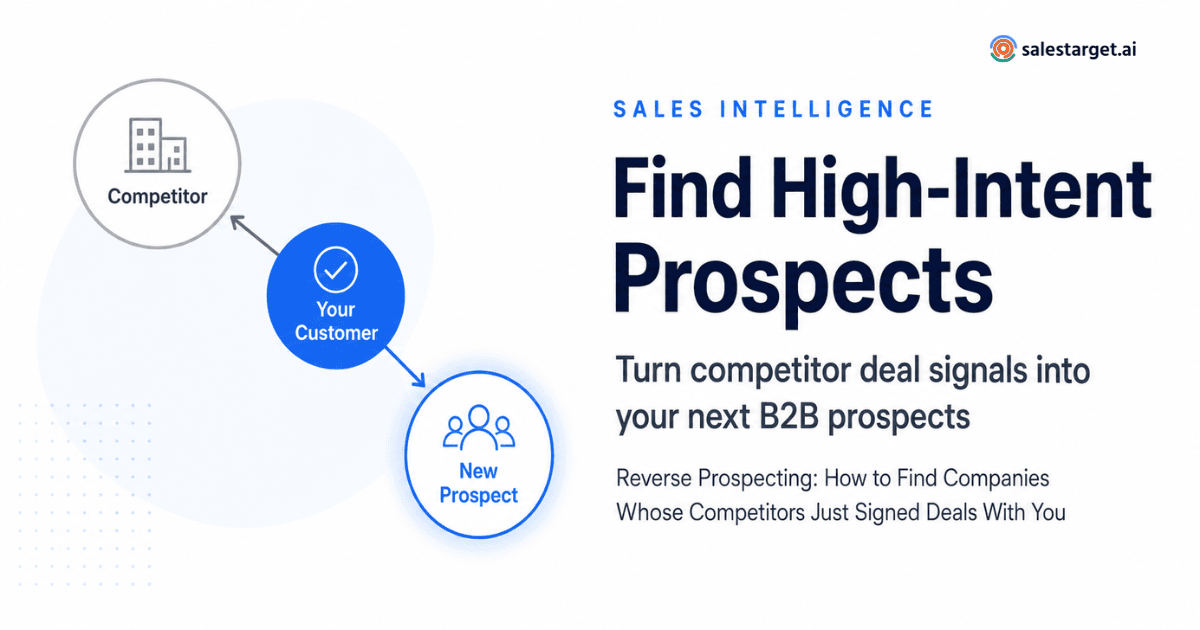
For a broader look at how these categories stack up outside the tracking lens specifically, this rundown of the best B2B lead generation tools for outbound teams and this guide to reverse prospecting are useful next reads.
The Goal Is Reporting Nobody Has to Argue With
The best lead generation metrics tracking tools don't just produce prettier charts; they make the argument about "what actually worked" disappear, because the data behind it is clean and connected end to end. Start with a CRM you trust for pipeline truth, add automation for lifecycle visibility, fix your inputs with enrichment and verification, and use analytics to prove, not guess at, your best channels.
If you want to see what that looks like with prospecting, outreach, verification, and CRM reporting running on one connected record instead of five disconnected ones, you can start free with SalesTarget.ai and see it in action on your own pipeline.