Your reps chase leads in one tool, email them from a second, message them on LinkedIn from a third, and log the deal in a fourth, if they remember to log it at all. By the time a prospect replies, nobody can say which touch actually worked. This is what a fragmented sales stack does to a pipeline: it hides the signal inside the noise.
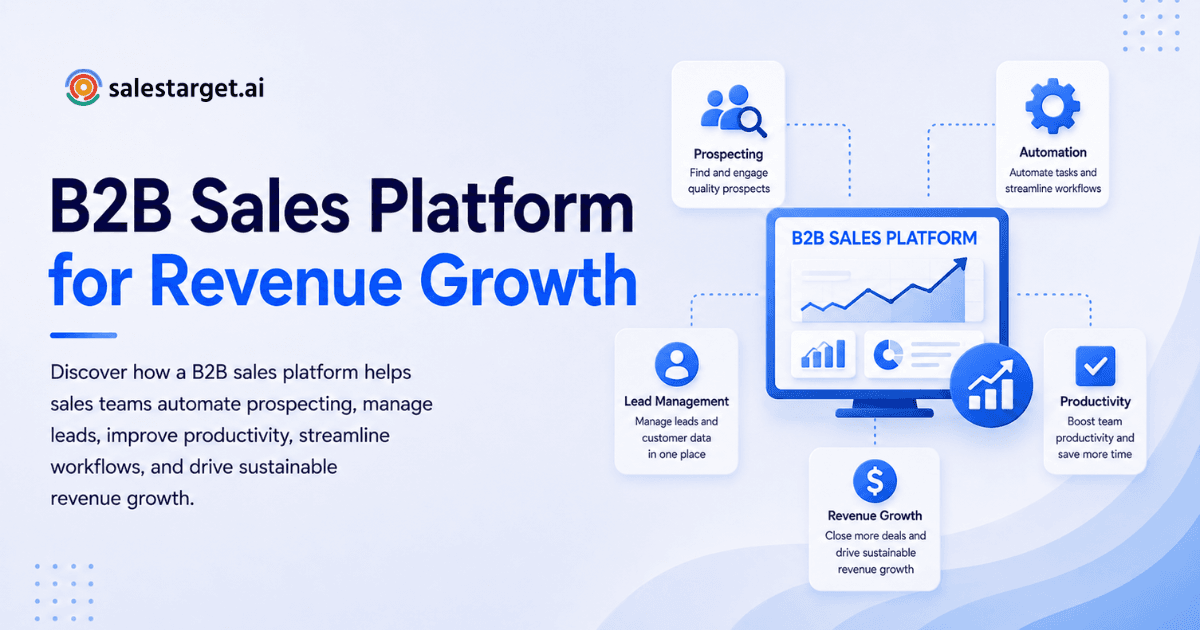
A B2B sales platform fixes this by putting lead data, outreach, and pipeline tracking in one workspace. Reps find verified contacts, reach them by email and LinkedIn, and move deals through a shared CRM without switching tools or re-entering data. That single flow is what turns more activity into more closed revenue, not just more busywork. Sales enablement software built this way removes the gaps where deals quietly die.
The Role of a B2B Sales Platform in Revenue Generation
A B2B sales platform sits between "we have a target market" and "we have signed contracts." It sources the right contacts, coordinates outreach across channels, and tracks every deal until it closes or dies. Revenue depends on how fast a team moves through that chain, not how many tools sit on the desktop. Sales leaders who consolidate this chain into one system see fewer dropped leads, faster follow-up, and a pipeline that reflects what is actually happening in the market instead of what got typed into a spreadsheet last week.
How B2B Sales Platforms Connect the Sales Process
Lead generation and prospect discovery
A platform pulls contacts and company data from a verified database instead of scattered spreadsheets and cold LinkedIn scraping. Reps filter by industry, role, company size, and buying signals to build a list that matches the ideal customer profile, not a generic export.
Contact enrichment and lead qualification
Raw names and titles do not close deals. Enrichment adds verified email, phone, and firmographic detail the moment a lead is found, so reps qualify against real data instead of guesswork.
Email and LinkedIn sales engagement
Once a list is built, outreach runs across email and LinkedIn from the same workspace. Messaging and timing stay coordinated across both channels, so a prospect gets one consistent conversation instead of two disconnected pitches.
CRM and sales pipeline management
Replies, meetings, and deal stages land in a CRM automatically. Nothing waits on a rep to copy information from an inbox into a spreadsheet at the end of the week.
The Revenue Problems Caused by a Fragmented Sales Stack
Lost time between prospecting and outreach
Every export and import between separate tools adds a delay. A lead found on Monday might not get a first email until Thursday, and by then a competitor may have already reached out.
Incomplete or outdated prospect data
Static lists decay fast. Job changes, mergers, and disconnected numbers turn a "clean" list into a bounce-heavy one within months, and reps waste hours chasing contacts who already left the company.
Missed follow-ups and inconsistent sales activity
Without one system tracking activity, follow-ups depend on memory and sticky notes. Deals stall not from a prospect saying no, but from a missed second email that nobody sent.
Limited visibility into pipeline performance
When prospecting data lives in one tool and deal data lives in another, leaders cannot connect a campaign to actual revenue. Reporting turns into a manual reconciliation project instead of a dashboard.
Key Ways a B2B Sales Platform Drives More Revenue
Generate more qualified B2B leads
Filtering by role, intent signal, and company data produces lists that match a real buying stage, not just a title match. That alone raises reply and close rates before a single email goes out.
Improve sales prospecting and lead qualification
Buying signals like funding rounds, leadership changes, and hiring spikes flag accounts that are already in motion. Reps spend time on prospects showing real intent instead of cold names picked at random.
Automate repetitive sales activities
Sequence building, follow-up timing, and CRM updates run in the background, freeing reps to put their research and admin hours into actual selling conversations. You can see this in action with AI-driven sales prospecting.
Increase sales engagement across email and LinkedIn
Coordinated multichannel outreach reaches a prospect where they are actually paying attention that week, instead of betting everything on one inbox that might be filtered to spam.
Move qualified leads through the pipeline faster
Automatic task creation and reply routing mean a hot lead gets a same-day response instead of sitting in a queue until someone checks their notifications.
B2B Sales Platform Features That Impact Sales Performance
B2B lead database and contact enrichment
A large, current database with built-in enrichment means reps skip the manual research step and start every list with verified contact details already attached.
Sales automation and outreach sequences
Multi-step sequences with built-in pacing keep follow-up consistent without a rep needing to remember to hit send every three days.
Email validation and deliverability
Checking every address before send protects the sending domain from blacklists and keeps campaigns landing in the inbox instead of spam.
Sales CRM and pipeline management
A CRM built around outbound activity logs every touch automatically and gives leaders a live view of the deal stage without a manual status meeting.
Sales analytics and performance tracking
Dashboards that connect campaign activity to closed revenue show which sequences, channels, and reps actually produce pipeline, not just volume.
Building a More Efficient B2B Sales Workflow
Define the ideal customer profile and target accounts
Start with the industries, roles, and company sizes that convert best today, using closed-won data as the filter instead of a guess.
Find and verify relevant decision-makers
Pull contacts matching that profile and confirm their emails and roles are current before any message goes out.
Create coordinated email and LinkedIn campaigns
Build one sequence that spans both channels with matching messaging, so a prospect recognizes the outreach whichever platform they see it on first.
Track responses, meetings, and opportunities
Every reply routes into the CRM with intent tagged automatically, so reps know which conversations need a same-day reply.
Convert sales activity into measurable revenue
Tie every closed deal back to the campaign and channel that sourced it, so the team knows what to repeat next quarter.
Why Choose SalesTarget.ai
SalesTarget.ai is built as one workspace instead of a bundle of point tools stitched together with disconnected integrations and manual patchwork. Here is where it actually shows up in daily work.
Lead Explorer for B2B prospecting and enrichment
Lead Explorer searches over 840 million verified professional profiles and 146 million business entities, with built-in enrichment that unlocks verified email, phone, and mobile the moment a lead is found. Buying signals from intent topics and business events surface accounts already in motion, not names picked at random.
Email and LinkedIn outreach in one workflow
Email Outreach and LinkedIn Outreach run from the same campaign, so a prospect gets one coordinated conversation across both channels instead of two disconnected pitches from separate tools.
Email validation for cleaner prospect data
Every send runs through the Lead/Email Validator, catching MX and SMTP issues and disposable addresses before they hit send, which keeps domains off blacklists.
Built-in CRM for managing the sales pipeline
The CRM pulls campaign leads in automatically with no CSV imports, and logs every email and call to the lead timeline. Teams using it report 3.2X faster deal cycles and 91% follow-up completion.
AI Copilot for everyday sales tasks
The AI Copilot finds leads, drafts full sequences, and answers plain-language questions about pipeline and deals, so reps spend less time digging through dashboards and more time on calls. See how the full workflow fits together with a free trial.
Measuring the Business Impact of a B2B Sales Platform
Lead-to-meeting conversion rate
This shows whether outreach messaging and targeting actually land, not just whether emails get sent.
Meeting-to-opportunity conversion rate
A high meeting count that never turns into real opportunities points to a qualification problem earlier in the funnel, not an outreach problem.
Sales cycle length and pipeline velocity
Faster movement from first touch to close signals fewer manual handoffs slowing deals down. Teams that want a full breakdown of this metric can track sales cycle metrics in detail.
Revenue generated from outbound campaigns
Attribution tying closed revenue back to the campaign that sourced it tells leaders which channels and sequences are worth scaling.
Time saved per sales representative
Salesforce's State of Sales research found reps spend around 28% of their week on actual selling activity, with the rest lost to admin, data entry, and research. A platform that removes manual steps gives that time back directly.
Common B2B Sales Platform Mistakes to Avoid
Choosing a platform based only on the number of features
A long feature list means nothing if reps never open half of it. Match the tool to the actual daily workflow, not a checkbox comparison sheet.
Scaling outreach without checking lead quality
More emails sent to a bad list just produces more bounces and a damaged sender reputation, not more meetings.
Tracking activity instead of revenue outcomes
Counting emails sent or calls made feels productive but says nothing about whether those touches turned into pipeline.
Keeping CRM and prospecting data in separate systems
Gartner's sales tech stack research found that a poorly integrated stack of individually strong tools can cost 30 to 50% more than a smaller, well-connected stack with equivalent results. Split systems create exactly that kind of hidden cost.
Choosing the Right B2B Sales Platform for Your Team
Lead data and prospecting requirements
Check database size, data freshness, and how enrichment happens, at the point of search versus a stale export from months ago.
Outreach and automation requirements
Confirm the platform covers every channel the team actually uses today, plus deliverability protections like warm-up and validation.
CRM and pipeline requirements
Look for automatic activity logging and task creation, not a CRM that still needs manual updates after every call.
Reporting, integrations, and pricing
Confirm the platform connects to the calendar, meeting, and existing tools the team relies on, and that reporting ties activity to revenue, not just volume.
Single-platform cost versus a fragmented sales stack
Add up every point tool currently in use, plus the hours spent maintaining integrations between them, before comparing that total to one consolidated bill.
Conclusion
A fragmented stack does not just cost money in extra subscriptions. It costs deals, every time a lead sits too long between discovery and first touch, or a follow-up gets missed with no single system tracking it. A B2B sales platform closes that gap by keeping prospecting, outreach, and pipeline management in one place, so reps spend their week selling instead of stitching tools together.
SalesTarget.ai was built around that exact problem: find who is buying, reach them across email and LinkedIn, and close the deal in one CRM without a single CSV export in between. Start free with SalesTarget.ai and see the full workflow for yourself.