Your reps are spending six hours a day on manual prospecting. Half the emails bounce. The leads that do reply get lost between your inbox, your spreadsheet, and a CRM nobody updates. You're paying for three different tools and none of them talk to each other.
The best tool for small business lead generation and nurturing is one that keeps lead discovery, contact verification, outreach, follow-ups, and CRM tracking inside a single workflow. SalesTarget.ai does this by combining a 840M+ contact database, built-in email verification, multichannel outreach (email and LinkedIn), and a lightweight CRM in one platform, so small teams stop losing leads between disconnected tools.
This article breaks down the top eight tools for the job, compares their strengths and blind spots, and walks through a complete lead-to-pipeline workflow you can run this week.
Best Lead Generation and Nurturing Tools for Small Businesses at a Glance
Top Picks for B2B Prospecting, Lead Nurturing, and Sales Automation
The small business lead generation software market is crowded with point solutions. Some tools give you data but no outreach. Others automate emails but can't find leads. A few handle nurturing but have no CRM. The eight tools below cover the widest range of needs for B2B small teams running outbound.
Quick Comparison of Features, Best Use Cases, and Pricing
| Tool | Best For | Lead Data | Outreach | CRM | Pricing Model |
|---|---|---|---|---|---|
| SalesTarget.ai | All-in-one B2B lead gen + nurturing | 840M+ profiles, intent signals | Email + LinkedIn | Built-in | Credits + seats |
| Apollo.io | Contact discovery + outbound | Large database | Email + dialer | Basic | Freemium + credits |
| HubSpot Sales Hub | CRM-based lead management | Limited native data | Email sequences | Full CRM | Per seat, tiered |
| Pipedrive | Pipeline tracking + follow-ups | No native data | Email only | Full CRM | Per seat |
| ActiveCampaign | Email marketing automation | No native data | Email only | Light CRM | Contact volume |
| Brevo | Budget email nurturing | No native data | Email + SMS | Light CRM | Email volume |
| lemlist | Personalized multichannel outreach | Limited | Email + LinkedIn | No native CRM | Per seat |
| LinkedIn Sales Navigator | Account research + prospect ID | LinkedIn profiles | InMail only | No CRM | Per seat |
All-in-One Platforms vs. Standalone Lead Generation Tools
Most small teams start with standalone tools: one for finding leads, another for sending emails, a third for tracking deals. This stacking creates gaps. Leads fall through when data doesn't sync. Reps waste time switching tabs. Reporting becomes guesswork.
An all-in-one platform connects those steps into a single workflow. When a lead is found, enriched, contacted, and tracked in the same system, nothing gets lost between handoffs.
The Hidden Gaps Between Lead Generation and Lead Nurturing
Why More Leads Don't Always Create More Sales Opportunities
A bigger list doesn't fix a broken follow-up process. According to Callbox research, roughly 61% of B2B marketers say generating quality leads (not just more leads) remains their top challenge. Volume without qualification just gives reps more noise to sort through.
Disconnected Prospect Data, Outreach, and CRM Workflows
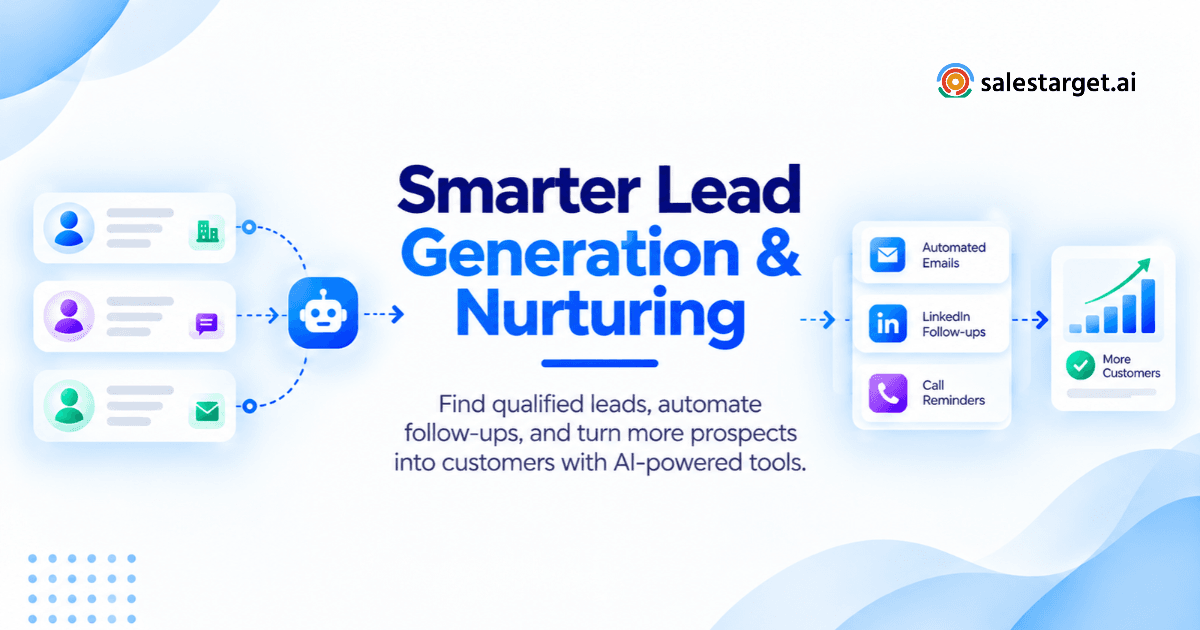
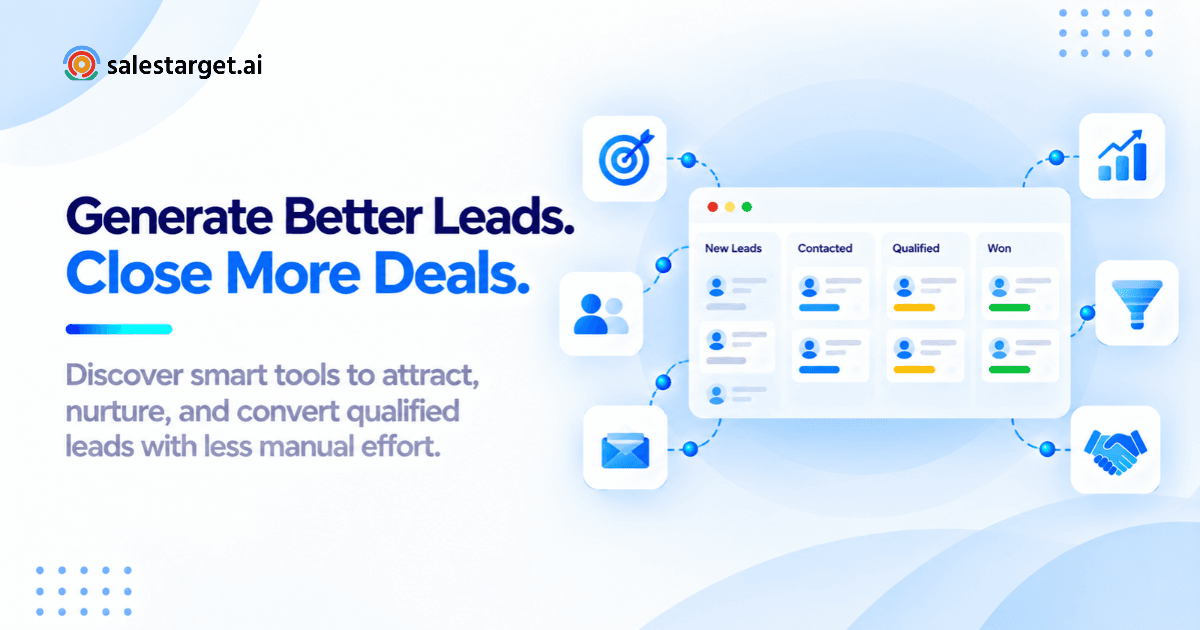
Here's a scenario that plays out daily: an SDR finds a prospect in one tool, exports a CSV, uploads it to an email platform, then manually logs the reply in a CRM. By the time a lead responds, context is scattered across three systems. SalesTarget.ai eliminates this by letting you push enriched leads straight from Lead Explorer into an email or LinkedIn sequence, with every interaction auto-logged to the built-in CRM.
The Difference Between Inbound Lead Nurturing and B2B Outbound Follow-Ups
Inbound nurturing (drip campaigns for blog subscribers, trial users, webinar attendees) runs on opt-in consent and marketing automation logic. Outbound follow-ups run on reply intent, timing, and persistence. Treating them identically is a fast way to tank deliverability or annoy a prospect who just asked for a case study, not another seven-email sequence. Your tool stack needs to handle both workflows separately.
8 Best Lead Generation and Nurturing Software Tools for Small Businesses
1. SalesTarget.ai – Best for All-in-One B2B Lead Generation and Sales Nurturing
Best fit: Solo founders, small SDR teams, and lead-gen agencies that need prospecting, outreach, and CRM in one place.
Main features: AI-powered Lead Explorer with 840M+ verified profiles and 4,000+ buyer intent signals across 50+ data sources. Built-in email verification at the point of enrichment (not whenever data was last scraped). Email and LinkedIn outreach with AI-generated sequences, unlimited inboxes, automatic warm-up, and inbox rotation. Unibox sorts replies by intent (Interested, Follow-Up, Not a Fit). Lightweight CRM with auto-logged activities, deal pipelines, a built-in dialer, and follow-up task creation on every reply. AI Copilot for plain-language lead search, campaign creation, and at-risk deal flagging.
Lead generation: Search by ICP filters (industry, role, seniority, tech stack, revenue, location) or describe your audience in plain English. One-click enrichment unlocks verified professional email, personal email, phone, and mobile. Real-time buying signals via Bombora Intent Topics plus business events (funding rounds, hiring spikes, leadership changes).
Nurturing: Multi-step sequences across email and LinkedIn with conditional branching. Timezone-aware scheduling. AI Spintax for human-like copy variation. Auto-created follow-up tasks in CRM when leads reply or meetings end. SalesTarget.ai reports 91% follow-up completion and 2.4X more meetings from the same lead lists.
Limitations: Newer platform with a smaller brand footprint than Apollo or HubSpot. Best suited for outbound-first teams; inbound marketing automation (landing pages, forms) is not the focus.
Verdict: The closest thing to a single-platform replacement for a separate data provider, cold email tool, LinkedIn automation tool, and CRM. If you're a small team tired of stitching four subscriptions together, start a free trial.
2. Apollo.io – Best for B2B Contact Discovery and Outbound Prospecting
Best fit: Teams that need a massive contact database with built-in email sequencing.
Main features: 275M+ contacts, email finder, sequences, dialer, and a basic CRM. Strong filtering by company size, industry, job title, tech stack, and intent topics.
Lead generation: One of the largest B2B databases available. Solid enrichment and contact verification.
Nurturing: Email sequences with A/B testing. Basic task management. No native LinkedIn automation. CRM is minimal; most teams still use Salesforce or HubSpot alongside it.
Limitations: Deliverability tools are limited compared to dedicated cold email platforms. You'll likely need a separate email warm-up service and a real CRM. Data freshness varies.
Verdict: Strong for data and initial outreach. Falls short when you need end-to-end nurturing and deal management without bolting on more tools.
3. HubSpot Sales Hub – Best for CRM-Based Lead Management and Nurturing
Best fit: Teams that already use HubSpot's marketing tools and want CRM-driven lead management.
Main features: Full CRM, email sequences, meeting scheduling, deal pipelines, reporting dashboards.
Lead generation: Limited native B2B prospecting data. You'll need a third-party data provider to fill the top of funnel.
Nurturing: Excellent for managing leads once they're in the system. Workflows, lead scoring, email templates, and automated task creation.
Limitations: Gets expensive fast as you add seats and upgrade tiers. No built-in B2B contact database. Cold outreach capabilities are basic compared to dedicated outbound tools.
Verdict: A mature CRM with strong nurturing, but not a lead generation tool. Best paired with a data provider.
4. Pipedrive – Best for Sales Pipeline Tracking and Follow-Up Management
Best fit: Small sales teams that need visual pipeline management and activity tracking.
Main features: Kanban-style deal pipeline, activity reminders, email integration, basic automation.
Lead generation: No native contact database. Relies on integrations or manual imports.
Nurturing: Activity-based follow-up reminders and email tracking. Automation is limited to pipeline triggers.
Limitations: No prospecting data, no multichannel outreach, no email warm-up. You need other tools for the top of your funnel.
Verdict: Good at what it does (pipeline tracking), but it's only one piece of the puzzle.
5. ActiveCampaign – Best for Email Marketing Automation and Lead Nurturing
Best fit: Businesses focused on inbound lead nurturing with sophisticated email workflows.
Main features: Email marketing automation, lead scoring, CRM, site tracking, conditional content.
Lead generation: No B2B contact database. Designed for nurturing existing contacts, not finding new ones.
Nurturing: Best-in-class email automation with branching logic, predictive sending, and engagement scoring. Great for warming inbound leads.
Limitations: Not built for cold outbound. No LinkedIn automation, no contact discovery, no email warm-up for cold sending.
Verdict: Excellent for inbound nurturing. Not a fit for teams whose primary motion is outbound prospecting.
6. Brevo – Best for Budget-Friendly Email Nurturing and Marketing Automation
Best fit: Small businesses on a tight budget that need transactional and marketing email with light CRM.
Main features: Email campaigns, SMS marketing, marketing automation, contact management, basic deal tracking.
Lead generation: No native B2B data. Relies on imported or captured contacts.
Nurturing: Solid email automation at an accessible price point. Decent segmentation and A/B testing.
Limitations: Automation depth is limited compared to ActiveCampaign. No outbound prospecting features. CRM is very basic.
Verdict: Best value for simple email nurturing. Not suited for outbound B2B lead generation.
7. lemlist – Best for Personalized Multichannel Sales Outreach
Best fit: SDRs and agencies running personalized cold email and LinkedIn campaigns.
Main features: Personalized email sequences with dynamic images and video. LinkedIn automation add-on. Deliverability tools (lemwarm).
Lead generation: Limited built-in contact data. Recent additions include a basic lead database, but it's not on par with dedicated data providers.
Nurturing: Multichannel sequences (email + LinkedIn) with conditional steps. No native CRM; you need to connect Salesforce, HubSpot, or Pipedrive.
Limitations: No built-in CRM. Contact data is thin. LinkedIn automation is an add-on cost. Limited reporting beyond campaign metrics.
Verdict: Strong outreach tool, but you'll need separate solutions for data and CRM.
8. LinkedIn Sales Navigator – Best for B2B Account Research and Prospect Identification
Best fit: Sales reps and founders who rely on LinkedIn for account-based research and warm introductions.
Main features: Advanced LinkedIn search, lead and account lists, InMail, buyer intent signals (in higher tiers), CRM sync.
Lead generation: Excellent for identifying decision-makers and mapping org charts. No direct email data.
Nurturing: InMail is the only native outreach channel. No email automation, no sequences, no CRM.
Limitations: Expensive per seat. No email addresses, no phone numbers. InMail response rates are low. Can't run automated outreach from inside the platform without third-party tools.
Verdict: A research and identification tool, not a lead generation and nurturing platform. Best paired with a tool that handles the rest of the workflow.
Key Features to Look for in Small Business Lead Generation Tools
Accurate B2B Contact Data and Prospect Enrichment
Bad data kills campaigns before they start. The median B2B cost per lead sits around $213 according to industry research, and every bounce or wrong-number dial inflates that number. Look for tools that verify contacts at the point of enrichment, not months before. SalesTarget.ai runs MX/SMTP checks, disposable-email detection, and risk scoring on every contact before it enters your sequence.
AI Lead Generation, Buyer Intent Signals, and Lead Qualification
Intent data separates "fits your ICP" from "fits your ICP and is actively looking." Tools that surface funding rounds, hiring spikes, and technology adoption signals help you prioritize the 5% of your list that's ready to buy right now.
Personalized Email and LinkedIn Outreach Automation
The average B2B deal requires about eight touchpoints before a meeting happens. Multichannel outreach (email plus LinkedIn) increases your surface area without doubling your workload, if the tool coordinates both channels in one sequence.
Automated Follow-Ups, Reply Management, and Lead Segmentation
Most deals are lost to poor follow-up, not poor pitch. Automated follow-up sequences with reply-based branching (stop the sequence when someone responds, route interested replies differently from objections) are non-negotiable for small teams that can't monitor inboxes all day.
CRM Integration, Pipeline Visibility, and Conversion Analytics
If your outreach tool doesn't feed data into a pipeline, you're flying blind. The best lead generation software for sales teams logs every touchpoint automatically and shows you conversion rates at each stage.
Building a Complete Lead Generation and Nurturing Workflow
Step 1: Identify High-Fit Accounts and Decision-Makers
Start with your ICP. Filter by industry, company size, revenue, and department. In SalesTarget.ai's Lead Explorer, you can stack 50+ filters or describe your audience in plain English and let the AI Copilot build the search.
Step 2: Verify and Enrich Prospect Contact Data
One-click enrichment in SalesTarget.ai pulls verified professional email, personal email, phone, and mobile. Verification happens at the moment of enrichment, so you're not working with stale data from a six-month-old scrape.
Step 3: Segment Prospects and Launch Personalized Outreach
Group leads by signal strength, role, or industry. Launch email and LinkedIn sequences with AI-generated copy that adapts to each prospect's profile. SalesTarget.ai's AI Spintax Generator creates human-like variations so no two emails read the same.
Step 4: Manage Replies, Follow-Ups, and Lead Nurturing Sequences
Unibox pulls every reply into one view and sorts them by intent. Interested leads get routed to reps with context. Follow-up tasks are created automatically. The CRM logs everything.
Step 5: Move Sales-Ready Prospects Into the CRM Pipeline
When a lead books a meeting or signals buying intent, they move into the deal pipeline. No CSV exports, no tab switching. SalesTarget.ai's CRM is already populated with the full conversation history.
Step 6: Measure Meetings, Opportunities, and Lead Conversion Rates
Track open deals, meetings booked, email stats, and pending tasks from a single dashboard. SalesTarget.ai reports 3.2X faster deal cycles and about six hours saved per rep per week by eliminating tool-switching and manual data entry.
The Real Cost of Lead Generation and Nurturing Software for Small Teams
Free vs. Paid Lead Generation Tools and Their Limitations
Free tiers exist for almost every tool on this list. They're useful for testing, but they cap contacts, emails, or features at levels that stall growth fast. A founder sending 50 emails a day will outgrow most free plans in a week.
Comparing Separate Prospecting, Outreach, and CRM Subscriptions
A common small-team stack looks like this: Apollo for data ($49+/mo), Instantly or lemlist for outreach ($59+/mo), and HubSpot or Pipedrive for CRM ($15+/mo per seat). That's $123+ per month per rep before add-ons, and you're still doing manual data transfers between systems.
Contact Credits, Email Volume, User Seats, and Hidden Software Costs
Watch for credit-based pricing that looks cheap until you realize each enrichment burns a credit. Watch for per-seat costs that spike when you add a second SDR. Watch for email volume limits that force upgrades mid-campaign.
Estimating Cost per Qualified Lead and Cost per Sales Opportunity
SDR-driven cold outbound carries a median cost per lead of roughly $350 to $950 when you factor in human time and tool overhead (GrowthSpree research). Consolidating your stack into one platform cuts the tool portion of that cost and reclaims rep hours for selling.
Why Choose SalesTarget.ai
Lead Explorer for AI-Powered B2B Prospect Discovery and Enrichment
SalesTarget.ai's Lead Explorer searches across 840M+ verified professional profiles and 146M+ business entities. Filters include industry, role, seniority, department, company size, revenue, location, and tech stack. AI-powered plain-English search means you describe your buyer and the system builds the query.
Built-In Email Verification for More Reliable Outbound Prospecting
The Email Validator runs MX/SMTP checks, disposable-email detection, and risk scoring before any email enters a sequence. SalesTarget.ai reports 90% of emails validated before sending and 99% verified contact data accuracy.
Email and LinkedIn Outreach for Connected Lead Engagement
Email outreach and LinkedIn outreach run in one coordinated flow. AI builds multi-step sequences from a plain-English audience description. Unlimited inboxes with automatic warm-up, SPF/DKIM/DMARC checks, and intelligent inbox rotation protect sender reputation.
CRM Management for Lead Tracking, Follow-Ups, and Sales Pipelines
Campaign leads land in the CRM automatically. Every email, call, and LinkedIn message is logged to the lead timeline. Follow-up tasks are created when a lead replies or a meeting ends. Built-in dialer, shared pipeline, and integrations with Google Calendar, Slack, Zapier, HubSpot, and Salesforce.
AI Copilot for Prospecting, Campaign Creation, and Sales Assistance
The AI Copilot lets you find leads, generate sequences, track campaign performance, query CRM data, and create tasks through conversation. It flags at-risk deals, recommends next moves, and personalizes by role, industry, and company size. A Memory feature pulls your website content for on-brand messaging.
One Connected Workflow From Lead Discovery to Sales Opportunity
This is the core argument: find a lead, enrich and verify it in the same click, push it into an email and LinkedIn sequence, manage replies in Unibox, close it in the CRM. One platform, one bill, zero CSV exports, zero lost leads between handoffs.
Common Lead Generation and Nurturing Mistakes That Reduce Sales Conversions
Building Large Lead Lists Without Checking Data Quality
A 10,000-contact list with 15% bounce rate damages your sender domain and wastes credits. Verify before you send. Always.
Sending Generic Outreach Without Lead Segmentation
"Hi {first_name}, I noticed your company..." is not personalization. Segment by industry, company size, role, and buying signal. Write different sequences for different segments. SalesTarget.ai's AI Content Generator adapts messaging to each profile, but the segmentation decision is still yours to make.
Treating Cold Outreach and Opt-In Email Nurturing as the Same Workflow
Cold outreach requires careful volume limits, warm-up protocols, and SPF/DKIM/DMARC setup. Opt-in nurturing runs through marketing platforms with different deliverability rules. Mixing them in one system with one sending domain is how you get blacklisted.
Losing Interested Prospects Through Poor Follow-Up Management
A prospect replies "send me more info" on a Tuesday. If nobody follows up by Thursday, that deal is gone. SalesTarget.ai creates follow-up tasks automatically on every reply and logs them to the CRM timeline so nothing slips.
Ignoring Email Deliverability, Consent Requirements, and Outreach Limits
Sending 500 cold emails from a brand-new domain on day one will land you in spam. Warm-up matters. Volume ramp matters. SalesTarget.ai's automatic warm-up logic, rate limits, and inbox rotation handle this without manual configuration.
Choosing the Best Tool for Small Business Lead Generation and Nurturing
Best Fit for Solo Founders and Early-Stage B2B Startups
You need everything in one place because you don't have time to manage multiple tools. SalesTarget.ai or Apollo are your strongest options. SalesTarget.ai wins if you want CRM and LinkedIn outreach built in.
Best Fit for Small SDR Teams Managing Outbound Campaigns
Volume, deliverability, and reply management matter most. SalesTarget.ai's unlimited inboxes, inbox rotation, Unibox, and auto-created follow-up tasks are built for this exact use case. lemlist is a solid alternative if you don't need built-in data or CRM.
Best Fit for Lead Generation Agencies and Sales Consultants
Agencies running campaigns for multiple clients need workspace separation, white-label options, and scalable outreach. SalesTarget.ai and lemlist both serve this segment, with SalesTarget.ai offering the advantage of built-in data and CRM.
Best Fit for Businesses Prioritizing Inbound Leads and Email Nurturing
If your primary motion is inbound (content, SEO, webinars) and you need to nurture opt-in leads, ActiveCampaign or HubSpot are better fits. Pair them with a lead generation tool for outbound when you're ready to add that channel.
Final Verdict: Connect Lead Generation, Nurturing, and CRM to Build a Stronger Sales Pipeline
The gap between "finding leads" and "closing deals" is where most small teams lose revenue. It happens in the handoffs: exporting a CSV, switching to a different tool for outreach, manually logging replies in a CRM that nobody checks. Every disconnected step is a leak in your pipeline.
The best tool for small business lead generation and nurturing is the one that removes those handoffs. SalesTarget.ai connects lead discovery, contact verification, multichannel outreach, reply management, and CRM tracking in one platform. No stitching tools together. No lost context. No wasted rep hours.
If you're running outbound on two or three separate subscriptions and wondering why your pipeline looks thin, the tools aren't the problem. The gaps between them are.
Start free with SalesTarget.ai and see what happens when every step from prospect to pipeline lives in one place.