TL;DR
- About 70% of cold dials go unanswered — but the roughly 30% that connect convert at 3-5x the rate of email-only outreach.
- Phone works best after two or three digital touches have already established some recognition — not as a cold first touch.
- Coordinated multi-channel sequences outperform email-only by 1.5-3x in reply rate and 2-4x in meetings booked.
- Phone's ideal share of the mix depends on deal cycle length — roughly 20-30% for longer-cycle verticals like manufacturing or financial services, closer to 10% for SaaS.
Most multichannel playbooks stop at two channels: email and LinkedIn. That's a reasonable default, but it leaves a proven lever on the table for accounts worth the extra effort. Phone is expensive to run well and most teams have quietly given up on it — which is exactly why the teams still doing it right have an edge nobody else is fighting them for.
Why Most Teams Stop at 2 Channels (And When That's a Mistake)
Email and LinkedIn both scale in a way phone doesn't. You can send hundreds of emails and dozens of LinkedIn touches a day with the right tooling; a phone call requires a person, in real time, dialing a number that mostly won't be answered. That operational reality is exactly why most teams limit their "multichannel" build to the two channels that don't require a live human on every touch.
The mistake is treating that as a universal rule rather than a cost-benefit decision that changes by account value and deal cycle. For a low-ACV, high-volume SaaS motion, skipping phone or keeping it to a small fraction of the mix is often the right call. For higher-value accounts, longer sales cycles, or verticals like manufacturing, healthcare, and financial services where deals take longer to close, the calculus shifts — the cost of a rep's time on the phone is small relative to the deal size, and email plus LinkedIn alone often isn't enough to earn a response.
The Economics: Phone Is Expensive But Converts 3-5x
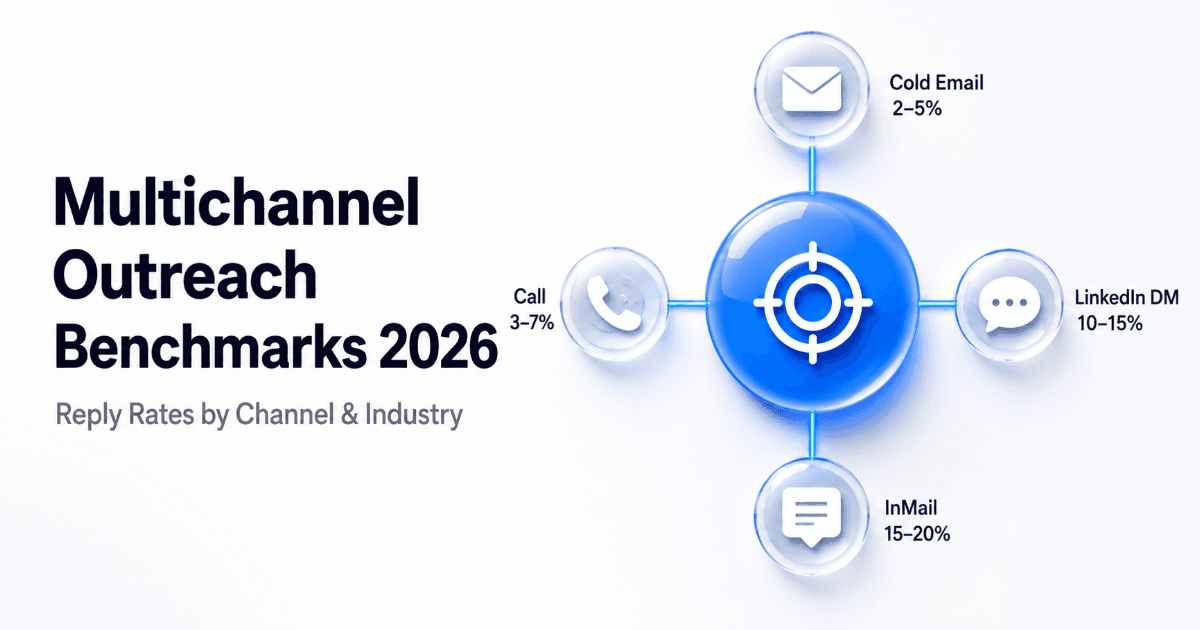
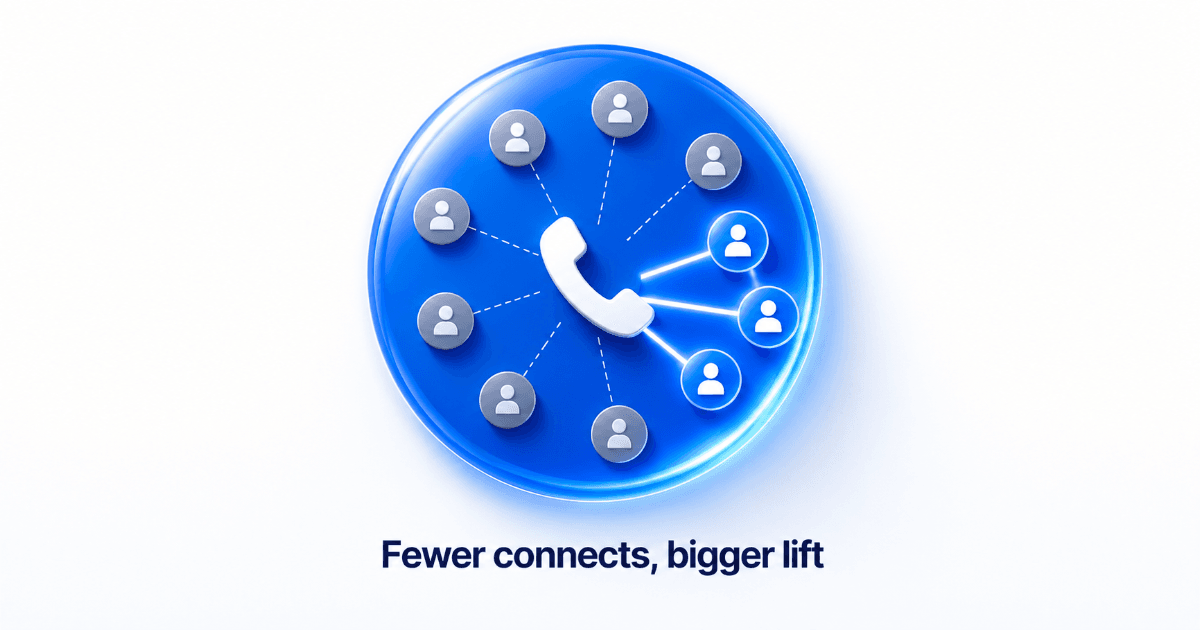
The honest numbers explain why phone gets written off, and why that's often a mistake. Roughly 70% of cold dials go unanswered. That's the real cost of the channel — most of the effort produces no direct connection. But the approximately 30% that do connect, or where a voicemail meaningfully lands, convert at 3 to 5 times the rate of email-only outreach. Phone isn't a volume channel; it's a conversion channel for the subset of the list where a real conversation is achievable.
This is why phone's ideal share of a channel mix isn't fixed — it should scale with how much a converted deal is worth relative to the operational cost of dialing. Recommended allocations put phone at roughly 20-30% of total touches for longer-cycle, higher-value verticals like manufacturing, healthcare, and financial services, versus closer to 10% for tech and SaaS motions where deal size doesn't justify the same rep-hours per contact.
Where Phone Fits: After Digital Signal, Not First Touch
Leading with a cold call to someone who's never heard of you produces the same low-recognition problem as a cold email — except it's far more expensive per attempt. Phone performs best once it's the third or fourth touch in a sequence, after an email or LinkedIn connection has already put your name in front of the prospect at least once. At that point, the call isn't a cold interruption — it's a follow-up to something the prospect may already recognize, even if they haven't engaged yet.
This also changes what the call itself should sound like. A phone touch that explicitly references the prior email or LinkedIn note — "following up on the note I sent last week" — gives the prospect a reason the call isn't random, and gives voicemail messages (which count as a touch even when the call isn't answered) a natural, non-pushy framing.
The 3-Channel Sequence Template
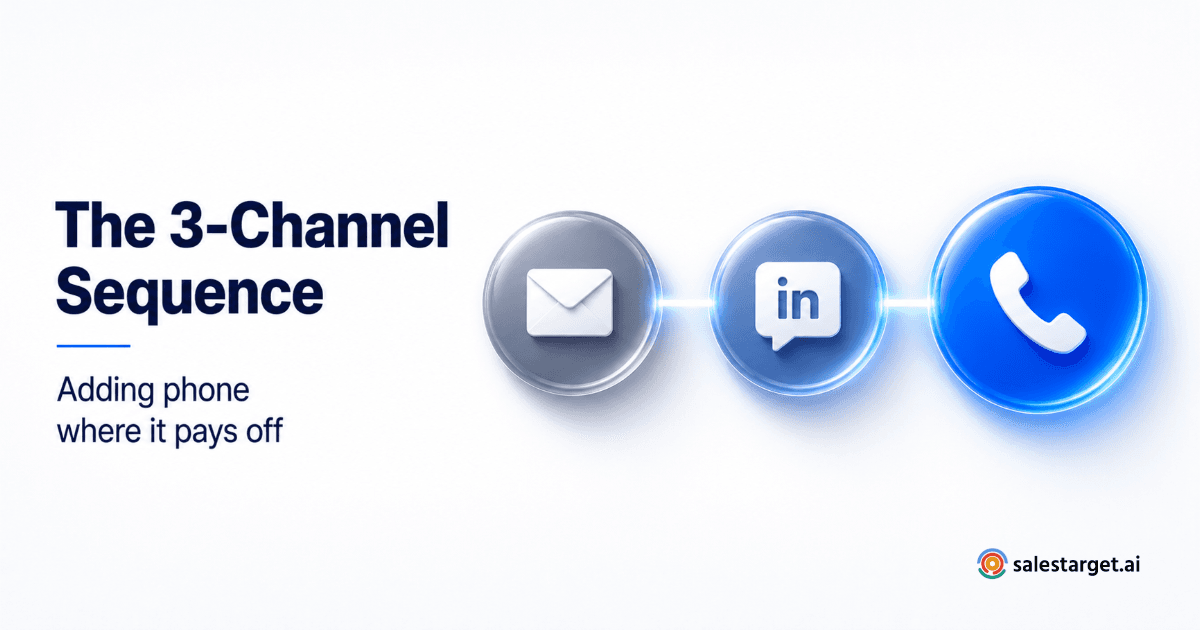
| Touch | Channel | What it does |
|---|---|---|
| Day 0 | Trigger-based opener, soft CTA, under 100 words | |
| Day 2 | Connection request, one-line note tied to the same trigger | |
| Day 5 | Value-add follow-up referencing a resource or benchmark | |
| Day 8 | Phone | Direct call referencing the prior touches — voicemail counts as the touch |
| Day 12 | If connected, follow-up message referencing the email/call thread | |
| Day 15 | Direct ask with two specific time options | |
| Day 25 | Phone | Second call attempt or voicemail |
| Day 30+ | Pattern interrupt, then a breakup email closing the loop |
The specific days matter less than the shape: email opens, LinkedIn reinforces, phone arrives once there's already some digital recognition, and every touch after the first references what came before it rather than repeating the same pitch. Coordinated sequences built this way outperform email-only outreach by roughly 1.5 to 3x in reply rate and 2 to 4x in meetings booked — the lift comes specifically from the coordination between channels, not from adding channels in isolation.
Mistakes That Undermine the 3-Channel Mix
Leading with a cold call
Calling before any digital touch has landed wastes the most expensive channel on the coldest possible attempt. Save phone for after email or LinkedIn has already put your name in front of the prospect.
Running phone at the same allocation for every vertical
A 20-30% phone allocation makes sense for long-cycle, high-value verticals. Applying the same ratio to a low-ACV SaaS motion burns rep hours on a channel that doesn't justify the cost per contact at that deal size.
Treating a call as disconnected from the rest of the sequence
A call that doesn't reference the prior email or LinkedIn touch reads as a random cold call rather than a coordinated follow-up — losing the exact advantage a three-channel sequence is supposed to create.
Tracking Call Outcomes Alongside Digital Touches
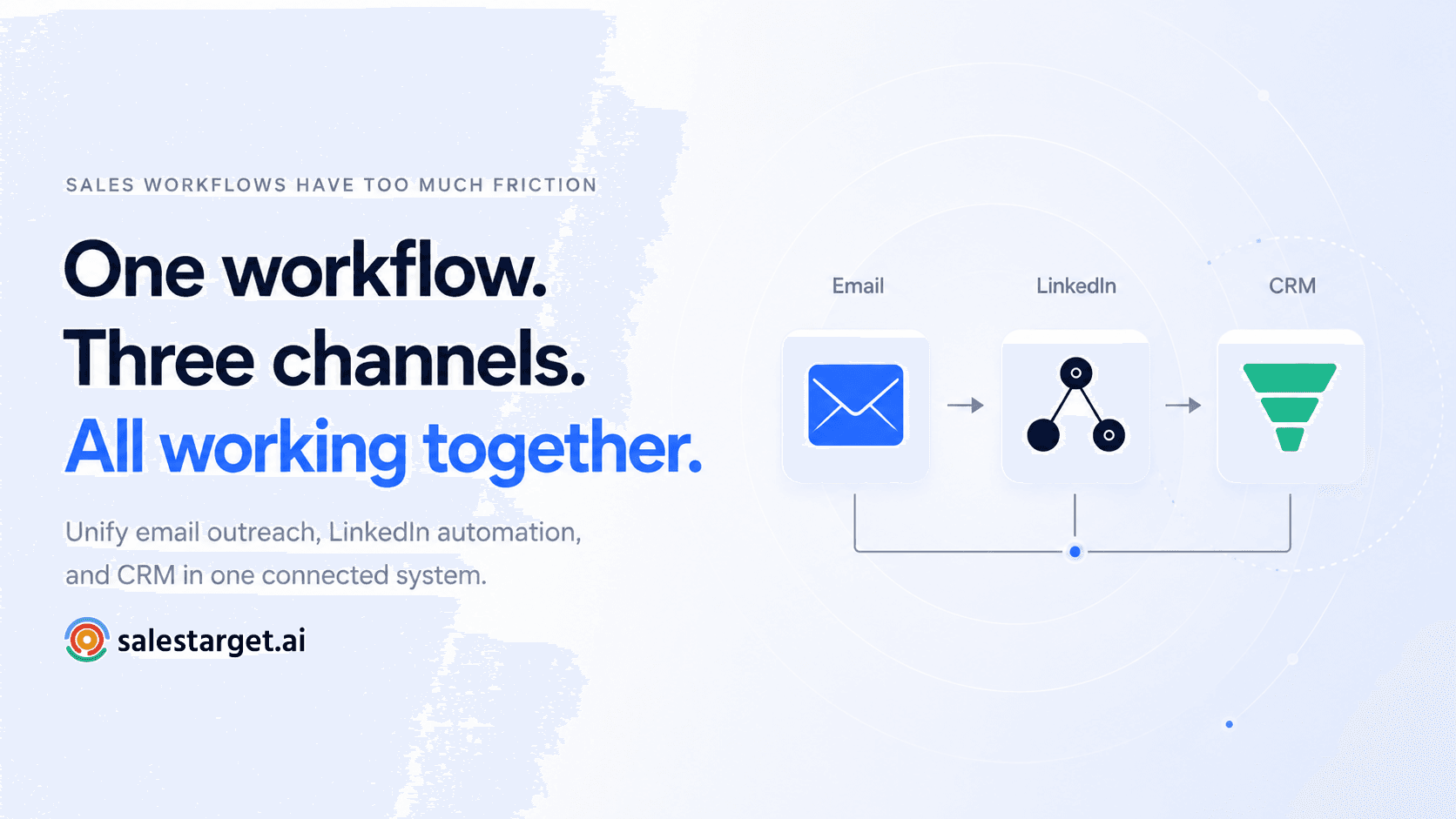
A three-channel sequence only works as a coordinated system if every touch is visible in one place — otherwise the rep making the day-8 call has no idea what the day-0 email or day-2 LinkedIn touch actually said or how the prospect responded. Activity Tracking automatically logs every email sent, opened, clicked, and replied to, along with meetings booked through Google Calendar or Calendly, directly to the lead's timeline — no manual entry required for those touches.
Phone calls made through your own dialer aren't automatically logged the same way, since they happen outside the platform — but call outcomes can be added as a Note or a Task on the same lead profile, sitting right alongside the auto-tracked email and LinkedIn activity. The rep making the day-25 follow-up call opens the lead and sees the full picture: the email that was opened twice, the LinkedIn connection that was accepted, and the note from the last call attempt — all on one timeline, even though the call logging itself is a manual step rather than an automatic one.
Add the Third Channel Where It Actually Pays Off
Phone isn't a channel worth running for every account or every motion — the 70% miss rate is real, and the operational cost is real too. But for the accounts where deal size justifies it, skipping phone means leaving a 3-5x conversion lift on the table simply because most competitors already gave up on the channel. Add it deliberately, place it after digital recognition has been established, and keep every touch visible in one timeline so the sequence actually behaves like one coordinated conversation instead of three disconnected campaigns.
See every touch in one timeline.
Coordinate email, LinkedIn, and call notes on a single lead profile.
✓ 50 credits ✓ 7-day trial ✓ No credit card required