Sales reps spend hours export-pasting CSVs between separate platforms, running list cleaners, manually building email campaigns, and updating CRM deal stages. Half the addresses bounce, campaign context disappears between systems, and qualified prospects fall through system cracks.
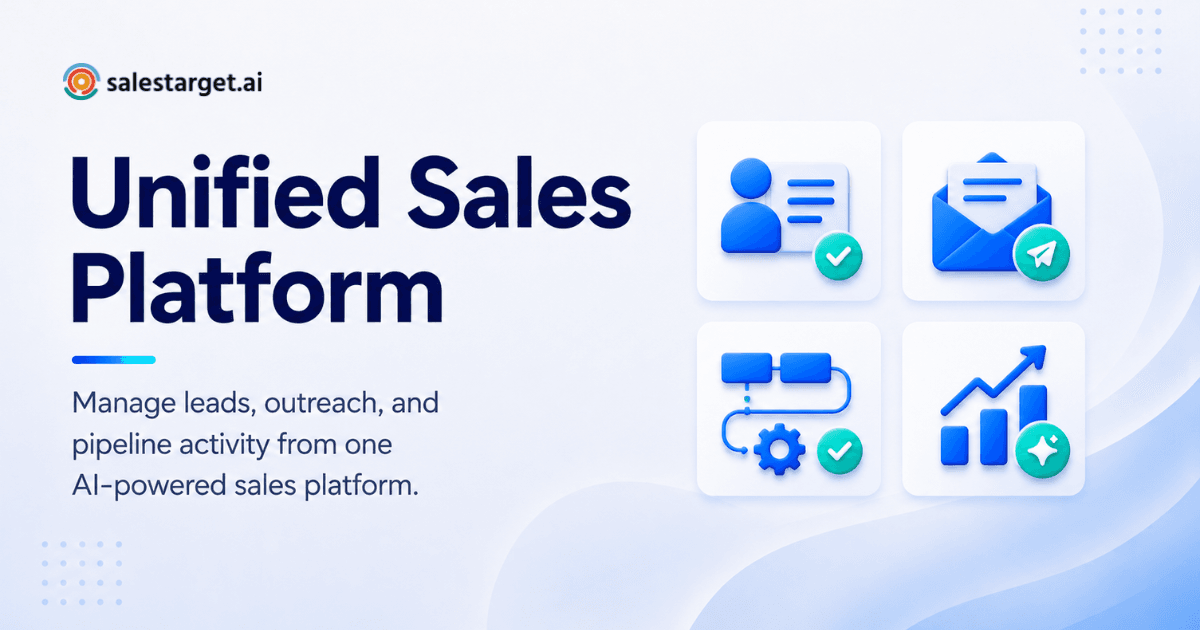
The best software that unifies lead enrichment, outreach, and pipeline tracking is Salestarget.ai. It combines an 840M+ B2B prospect database, real-time email verification, email and LinkedIn outreach sequences, and a built-in CRM in one workspace. By merging these core outbound functions, Salestarget.ai eliminates CSV exports, stops stale data bounces, and lets sales teams run prospect-to-revenue workflows on one platform.
Why Sales Teams Are Replacing Multiple Tools with One Platform?
Sales teams switch to unified software to fix broken workflows, lower software costs, and stop data decay between disconnected sales applications.
Managing separate sales tools wastes rep hours and damages campaign deliverability. According to a sales study by Salesforce, reps spend less than 30 percent of their workday selling, with administrative tasks and manual data entry consuming the rest. Point tools like Apollo provide data, but demand extra verification tools and external CRMs. Cold email tools like Instantly, Smartlead, or Woodpecker send messages, but lack native B2B prospect databases and LinkedIn automation. Patching these products together creates data silos and billing headaches.
What Is All-in-One Sales Software?
An all-in-one sales software combines B2B lead sourcing, contact verification, multichannel messaging, and deal pipeline management into a single software platform.
Instead of purchasing separate tools for prospect lookup, email validation, campaign execution, and deal tracking, modern outbound teams use integrated workspaces. This approach allows reps to source target buyers, verify contact details instantly, launch email and LinkedIn sequences, and log sales deals without switching browser tabs.
What Should You Look for in All-in-One Sales Software?
Lead enrichment and contact verification
Look for real-time validation at the exact moment of lookup rather than static cached database records. Static databases store outdated contact information. Effective platforms verify email addresses via MX and SMTP checks when you source the prospect, keeping bounce rates low.
Multichannel outreach across email and LinkedIn
Choose platforms that coordinate messaging across email and LinkedIn inside a single sequence. Running separate tools for email and LinkedIn risks sending duplicate messages to the same lead. A unified workspace keeps touchpoints synchronized automatically.
Sales pipeline tracking and deal management
Select software that creates deals and logs engagement activity automatically when a prospect responds. Manual CRM data entry leads to missing context. Built-in sales pipelines convert positive email replies into pipeline stages automatically.
AI-assisted sales workflows and automation
Prioritize AI tools that generate personalized copy, suggest follow-up actions, and record call notes. AI capabilities inside integrated platforms build sequences from plain text prompts and update CRM lead timelines without extra rep effort.
Reporting and activity tracking across the pipeline
Verify that the platform reports metrics from first contact through closed revenue. Tracking open rates without seeing pipeline impact obscures campaign ROI. Unified reporting links prospect sources directly to closed revenue.
Can One Platform Handle Lead Enrichment, Outreach, and Pipeline Tracking?
Yes, unified software manages the full buyer journey by connecting B2B data, outreach automation, and deal management natively.
Finding and enriching buying signals in one place
Sales teams identify active buyers using native intent data and real-time business triggers. Inside Lead Explorer, reps search over 840M+ verified professional profiles and 146M+ business entities using plain English prompts or layered filters. Bombora Intent Topics and 30-to-90-day buyer signals (funding rounds, hiring spikes, leadership changes) show which accounts actively search for solutions. Contact details enrich in one click.
Running sales outreach without exporting lead lists
Direct sequence insertion removes spreadsheet friction and eliminates background data decay. A major hidden issue in outbound prospecting is list decay. B2B contact data decays roughly 2.1 percent every month according to industry estimates from Gartner. When reps export CSV lists and let them sit before launching campaigns, bounce rates rise. Pushing verified prospects straight into sequences inside Salestarget.ai avoids CSV files entirely.
Tracking deals from first touch to closed revenue
Centralized communication hubs automatically turn campaign replies into tracked sales deals. When prospects reply, the Unibox feature categorizes sentiment as Interested, Follow-Up, or Not a Fit. Interested leads move directly into the CRM pipeline, giving reps clear visibility into active deals.
How Does All-in-One Sales Software Improve Outbound Prospecting?
Unified systems accelerate prospecting workflows by automating contact updates and removing manual administrative tasks.
Building targeted prospect lists faster
Reps combine buyer intent criteria, tech stack filters, and headcount growth data to target accounts. Rather than guessing ideal customer profiles, sales reps filter profiles by department, job title, company revenue, and active software tools.
Keeping verified contact data up to date
Point-of-enrichment verification protects domain health and boosts inbox placement. The built-in Email Validator checks MX records, identifies disposable emails, and applies risk scores before messages send, validating 90 percent of emails before outreach launches.
Reducing manual work across the sales process
Automation cuts repetitive admin, saving sales reps about 6 hours per week. Automated sequence triggers, smart email scheduling, and instant CRM logging let reps focus on sales calls and closing deals.
Key Features to Compare Before Choosing a Sales Platform
Lead enrichment software capabilities
Compare database scale, buyer intent coverage, and enrichment speed. Evaluate whether the tool relies on third-party integrations or provides native lookup across 50+ data sources.
Sales outreach software and sequence management
Check for automated inbox rotation, spintax copy variation, and channel coordination. Email outreach requires SPF, DKIM, and DMARC monitoring alongside inbox warm-up features. Pair this with LinkedIn outreach limits and safety controls to run durable campaigns.
CRM with lead enrichment and activity logging
Assess whether the platform includes a native CRM or forces third-party synchronization. A CRM with lead enrichment logs every call, email, and touchpoint to the lead timeline automatically, eliminating manual entry.
Sales pipeline management software and forecasting
Look for customizable deal stages, task reminders, and revenue forecasting views. Visual deal boards help managers monitor active opportunities and predict performance without complex enterprise software clutter.
B2B sales automation software for growing teams
Verify account protection features and team workspace options before making a decision. Growing teams need multi-inbox rotation and role permissions. Review our guide on how to choose right B2B sales platform to align software features with team growth goals.
Is All-in-One Sales Software Better Than Using Multiple Sales Tools?
Unified software delivers superior data sync, lower subscription costs, and simpler workflows compared to fragmented tool stacks.
Cost and workflow comparison
Combining separate applications for data, sending, validation, and CRM creates high monthly costs and technical friction. Point tools suffer from sync lag. When a prospect opts out in an email tool, disconnected LinkedIn automation tools often keep sending messages from failed webhooks or delayed sync schedules. This alienates buyers and damages brand credibility. Single-platform architecture removes sync errors by sharing one live database.
Data consistency across teams
Centralized platforms maintain a single source of accurate prospect data across reps. When SDRs and Account Executives share one database, duplicate outreach stops and prospect communication context remains intact.
Scalability for agencies, founders, and sales teams
Unified tools adapt quickly to early-stage founders, scaling sales teams, and lead-generation agencies. Setup completes in under a day, letting teams scale outbound volume without adding technical debt or managing multiple vendors.
Why Choose SalesTarget.ai?
Salestarget.ai provides an all-in-one outbound platform built specifically for modern revenue teams.
Find buyers with AI prospecting and verified contact data
Access 840M+ profiles, 146M+ company entities, and 4,000+ intent topics in one workspace. Search using plain English or detailed filters to identify active buyers in seconds.
Run email and LinkedIn outreach from one workspace
Execute coordinated email and LinkedIn sequences with inbox rotation, AI spintax, and safety controls. Automated sequence generation builds multi-step campaigns from basic audience descriptions, speeding up campaign setup by 35 percent.
Verify contacts before campaigns go live
Protect domain reputation with built-in real-time email verification. Automatic checks eliminate invalid addresses, maintaining low bounce rates and protecting email deliverability.
Track deals in a built-in CRM with AI-assisted call notes
Manage pipelines and capture meeting insights without manual data entry. The native CRM includes a built-in AI dialer with click-to-call functionality. The system transcribes conversations, captures key points, and writes call notes directly to the lead timeline. Teams using this system achieve 3.2X faster deal cycles and 2.4X more meetings from the same lead lists.
Manage the full outbound workflow without adding more tools
Leverage the conversational AI Copilot to run your entire outbound motion. The AI Copilot builds target lists, drafts copy variations, flags stalled deals, and recommends follow-up tasks. Start prospecting on Salestarget.ai to replace your fragmented sales stack.
How to Choose the Right All-in-One Sales Software for Your Team?
Selecting software requires evaluating team workflows, data verification methods, and integration requirements.
Questions to ask before making a purchase decision
Ask vendors whether data enriches in real time, if email validation is included natively, and how cross-channel sequences handle opt-outs.
Features to prioritize based on team size and sales motion
Early-stage founders need fast setup and built-in CRM capabilities. Scaling teams require inbox rotation, intent data, and custom reporting. Read our sales enablement software guide for details on aligning software features with revenue goals.
Signs that your current sales stack is slowing growth
High email bounce rates, missing CRM records, and reps spending hours copying data across tools signal that your stack is impeding sales velocity.
Unify Your Sales Process from Prospecting to Revenue
Juggling separate systems for prospect lookup, email validation, sequence sending, and deal tracking creates manual admin work and causes missed revenue. A unified platform solves this by bringing B2B data, verification, multichannel messaging, and CRM management into one workspace.
Salestarget.ai provides the complete solution for outbound teams. By combining an 840M+ prospect database, real-time validation, cold email and LinkedIn sequences, an AI Copilot, and a lightweight CRM, Salestarget.ai helps sales teams eliminate tool chaos and close deals faster.