Your sales representatives spend hours manual copying data between three different outreach tools, only to realize their email lists are full of inactive contacts. Your sales pipeline is stalled, your reps are fatigued by jumping between software tabs, and your target buyers are not replying to outreach.
Businesses choose the right B2B sales platform by selecting a unified workspace that combines high-quality lead data, multichannel outreach channels, email validation, and customer relationship tracking under one roof. By consolidating your prospecting database and CRM into a single system, your team eliminates integration delays and protects sender reputation. This coordinates your outbound campaigns across email and social channels to book more meetings without increasing technical overhead.
Outbound prospecting is increasingly complex. According to the Salesforce State of Sales report, sales representatives use an average of eight to ten different tools to manage their sales pipelines and close deals. This fragmentation leads to tool fatigue, where reps spend more time matching data than talking to potential buyers. Selecting a B2B Sales Platform that keeps your entire pipeline synchronized is the key to scaling your revenue without bloating your tech stack.
What Is a B2B Sales Platform?
A B2B sales platform is a software application that centralizes prospect data, outbound communication, and pipeline management for revenue teams. Instead of using separate tools for data scraping, email delivery, LinkedIn messaging, and deal tracking, a modern platform handles the entire outbound workflow in one workspace.
In a standard sales setup, a representative finds a contact in a database, imports it to a cold email tool, and then manually logs the activity in a CRM. A unified B2B sales automation platform handles these steps automatically. This structural coordination prevents data decay and keeps your marketing and sales activities aligned.
By comparison, point tools like Instantly, Smartlead, or Lemlist focus only on cold email delivery. They do not have built-in professional databases or native LinkedIn automation. Selecting a unified lead generation platform allows you to find target buyers and message them across multiple channels without leaving your workspace.
Why Your Current Sales Stack Is Costing You Time and Money?
Fragmented sales stacks create a hidden tax on your business. When you use multiple point tools, you pay separate bills for data enrichment, email warm-ups, LinkedIn bots, and pipeline management, which quickly drains your budget.
The real loss is representative productivity. According to the HubSpot State of Sales report, sales representatives spend less than 35% of their working hours actually selling. The rest of their time is lost to manual data entry, syncing lists, and fixing broken integrations.
When your database does not talk directly to your outreach tool, you suffer from list sync delay. Reps export CSV files, clean them manually, and upload them to different tools. This manual workflow leads to sequence collision, where a rep might send a cold email and a LinkedIn connection request to the same buyer at the exact same second. This makes your outreach look automated and ruins buyer trust.
What to Look For in a B2B Sales Software Solution?
When evaluating B2B sales software, you must prioritize workflow speed and data accuracy. Avoid platforms that offer hundreds of features but require complex API setups to work together.
A quality platform must provide real-time lead verification. Most databases sell scraped data that is months old, leading to high bounce rates. Look for a solution that verifies the contact's email address at the exact second you enrich the profile.
In addition, evaluate the workflow path from search to sequence. Your representatives should be able to find a buyer, verify their data, add them to a coordinated sequence, and track the deal inside a CRM in under three clicks. If your team has to export and import CSV files between modules, the platform will create operational bottlenecks.
Core Features of a B2B Sales Automation Platform
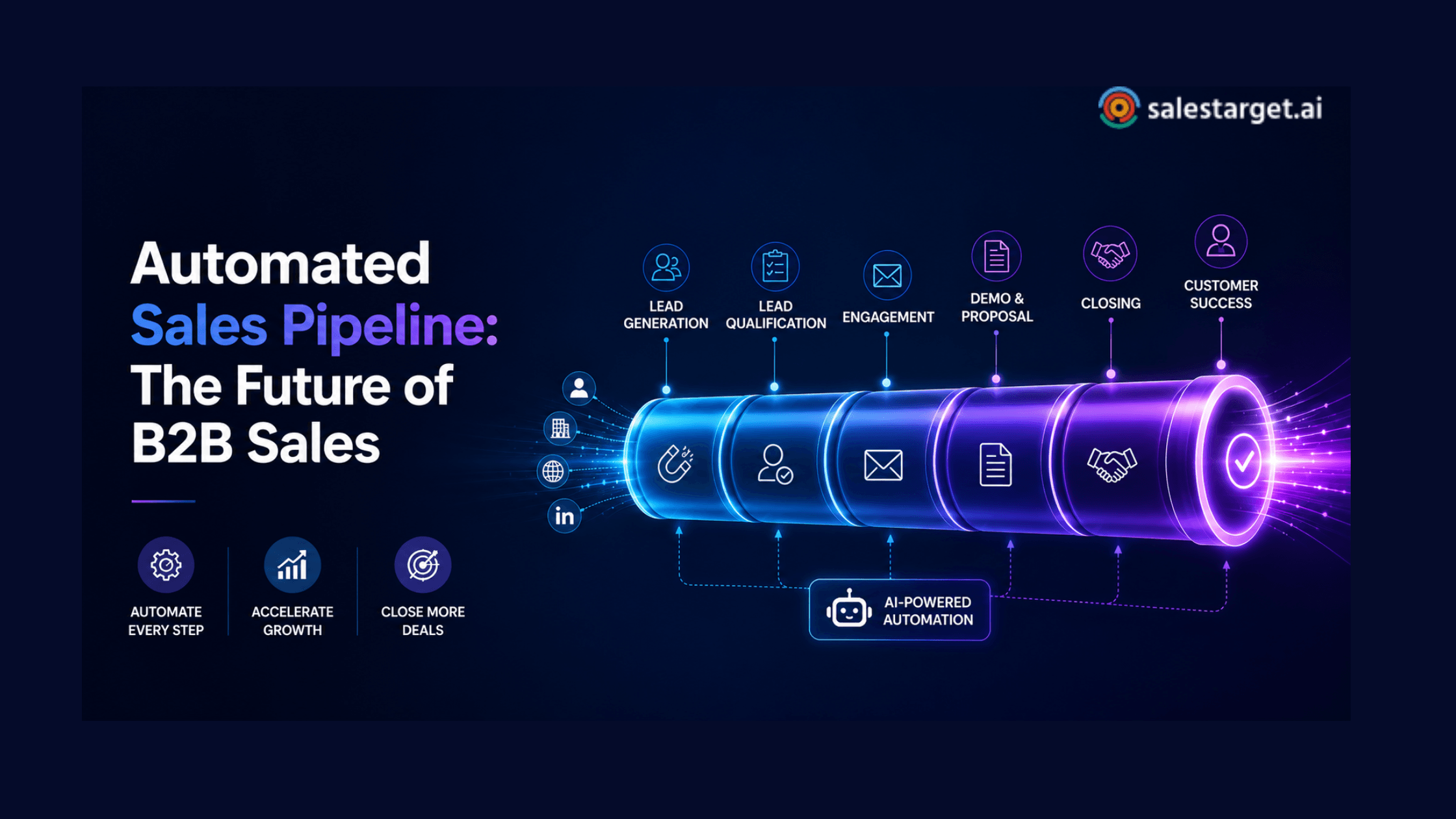
A complete B2B sales automation platform must support your representatives from initial search to final close. Look for these five core capabilities:
Lead prospecting and enrichment capabilities
The platform must include a built-in professional database with detailed filters. Your representatives should be able to search for buyers based on location, department, funding rounds, and hiring signals. The enrichment step must unlock verified business emails, personal emails, and direct phone numbers.
Email and LinkedIn outreach automation
Outbound campaigns work best when you combine channels. Look for sequences that coordinate cold emails with LinkedIn actions like profile visits, connection requests, and follow-up messages. The system should support conditional steps that branch based on buyer actions.
Built-in CRM and activity logging
Every call, email, and social message must be logged automatically on a shared timeline. Your representatives should not have to type call summaries manually. Look for a lightweight CRM that tracks deal stages and creates follow-up tasks when buyers reply.
Inbox deliverability and warm-up functionality
To keep your emails out of the spam folder, the platform must verify email addresses before sending. It must support automated inbox warm-up, intelligent rotation across multiple domains, and deliverability checks like SPF, DKIM, and DMARC.
Reporting and pipeline visibility
Your sales leaders need clear dashboards to monitor outbound health. The reporting module must show positive reply rates, meeting booked rates, and deal velocity. This helps you see which campaigns drive revenue without pulling manual reports.
Evaluating Integration and Deployment Options
Selecting a platform requires looking at how it fits into your daily operations. A tool that takes weeks to set up will stall your sales momentum.
Native integrations with tools your team uses
Make sure the platform connects directly with your communication and scheduling tools. Look for native sync with Google Workspace, Microsoft Outlook, Slack, and calendars like Calendly. This ensures meetings booked by your outbound sequences appear on representative calendars automatically.
Time to first outreach after signup
Startups cannot afford long implementation cycles. Enterprise platforms like Salesforce commonly require months of setup and custom coding. A modern sales platform should allow your team to sign up, verify their domain, import their list, and send their first campaign in under twenty-four hours.
Data security and compliance considerations
Data safety is critical when running outbound prospecting. Make sure the platform complies with regulations like GDPR and CCPA. The database must use verified sources, and the system should protect your workspace data from being shared publicly.
How to Match a Sales Platform to Your Use Case?
Different revenue teams require different workflows. You must align your software choice with your team's specific goals.
For SDR and BDR teams running high-volume outreach
High-volume teams require strong deliverability protection. They need automated email validation, domain rotation, and built-in LinkedIn safety limits. The platform must manage these safety boundaries in the background to protect sender reputation.
For founders and small revenue teams managing everything themselves
Founders running sales do not have time to manage complex workflows. They need an all-in-one system that combines database search, email sequences, and deal tracking in one screen. A built-in virtual teammate can help them generate sequences and manage follow-ups.
For agencies and consultants running outbound for multiple clients
Agencies need to manage multiple workspaces from a single dashboard. The platform must allow easy switching between client domains, separate billing, and unified reporting to show campaign performance to clients.
For sales leaders looking to scale and standardize prospecting
Sales leaders need template libraries and playbooks. The platform must allow managers to share high-performing sequences across the team, set activity guidelines, and track representative performance from a shared pipeline.
Common Pitfalls When Selecting a B2B Sales Platform
Making the wrong software choice can waste months of rep productivity. Avoid these three common selection mistakes:
Picking tools based on feature count, not workflows
A tool with fifty features that does not fit your daily workflow is useless. Representatives will abandon software that is difficult to use, returning to manual spreadsheets. Focus on how quickly a rep can execute a standard prospecting task.
Underestimating the importance of data quality
Sending personalized emails to dead addresses will ruin your domain authority. If your platform has a poor verification system, your emails will bounce, landing your company domains on blacklists. Never skip real-time data verification.
Choosing platforms your team won't actually use
If your sales software is too complex, representatives will ignore it. Choose a platform with an intuitive user interface and automated activity tracking so reps spend less time logging tasks and more time speaking with prospects.
Why Choose SalesTarget.ai?
SalesTarget.ai is built for outbound teams who want to stop stitching point tools together. Instead of paying for separate database subscriptions, validation tools, email warm-ups, and lightweight CRMs, you get everything inside one workspace on a single bill.
This unified system solves the friction of multi-channel outreach. By coordinating email, LinkedIn, and phone outreach, SalesTarget.ai prevents sequence collision and ensures your team acts as a single, organized unit.
All-in-one platform: lead data, outreach, validation, and CRM
SalesTarget.ai replaces your fragmented stack. You can find target buyers in our database, verify their emails, launch multichannel sequences, and close deals in the built-in CRM without exporting files. This all-in-one design cuts subscription costs and keeps your sales data clean.
840M+ verified profiles with 99% accuracy
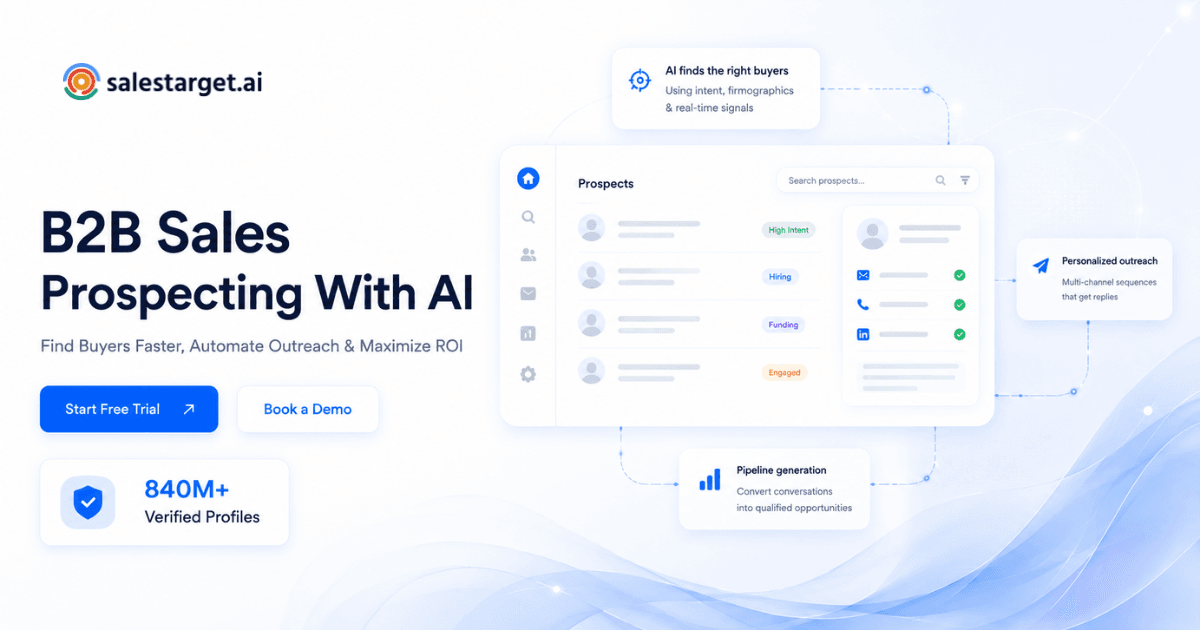
Our Lead Explorer module gives your team access to 840 million professional profiles and 146 million business entities. You can target prospects using plain English searches or stack business filters like intent signals from Bombora. We verify every contact at the exact second you enrich the lead.
AI personalization that runs across email and LinkedIn
Improve your response rates with our personalized messaging engine. The platform automatically adjusts your outreach templates based on the prospect's industry, company size, and job role. Use our LinkedIn Outreach module to send personalized connection requests and messages with safe delays.
Built-in AI Copilot and call notes automation
The SalesTarget.ai AI Copilot helps your representatives write copy, build sequences, and query CRM deals using plain language. In addition, our built-in dialer takes notes on calls automatically, saving them to the lead timeline so your reps focus on the conversation.
Getting Your Team Started on the Right B2B Sales Platform
Building a successful outbound sales engine requires the right software foundation. Continuing to stitch point tools together will only waste your budget and drag down representative productivity.
SalesTarget.ai provides the complete, unified workspace your team needs to find buyers, run personalized multichannel campaigns, and manage deals. This eliminates integration headaches, protects your domain deliverability, and helps your reps book meetings consistently.
Stop wasting time on manual data entry, Sign up for SalesTarget.ai.