TL;DR
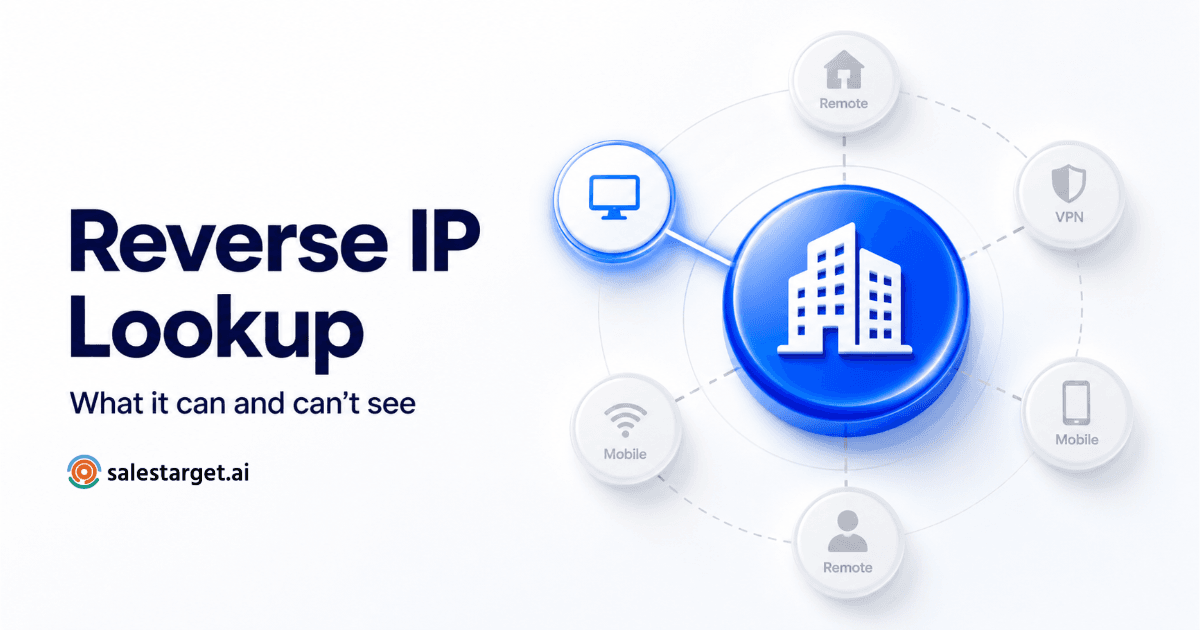
- Reverse IP lookup matches a website visitor's IP address to a corporate IP range to identify the company — not the individual — visiting your site.
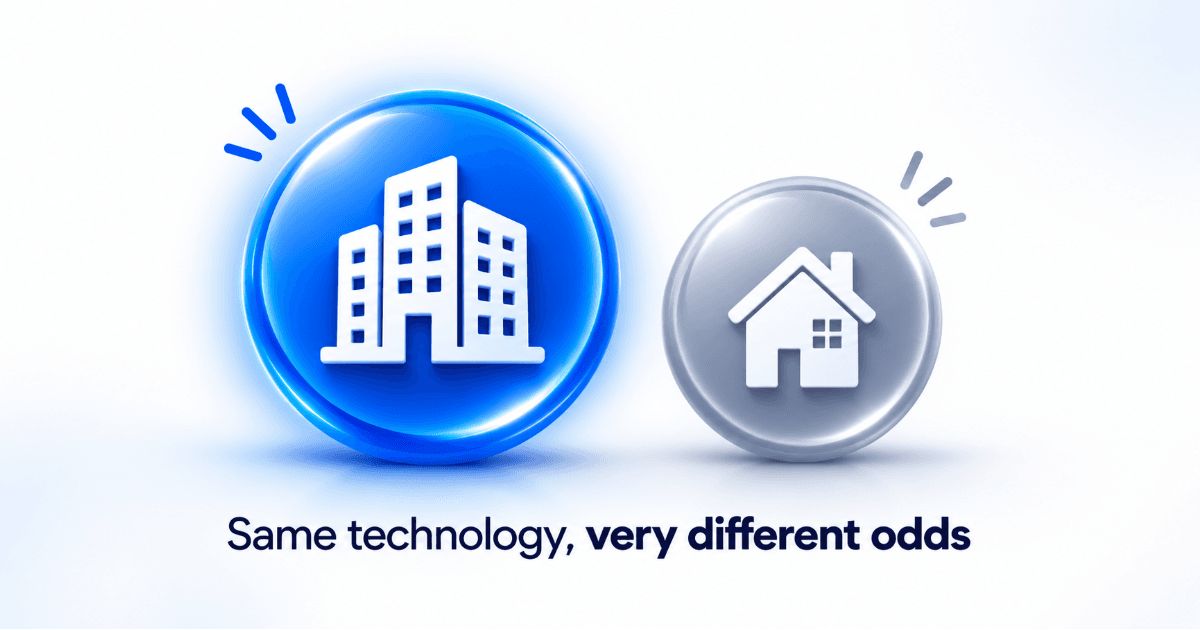
- Corporate office traffic resolves at 85-95% accuracy, but remote workers on home ISPs resolve at only 10-30% — and remote work has made that gap far more consequential.
- Company-level match rates overall have fallen to roughly 30-60% of B2B traffic, down from over 80% a decade ago, as remote work and VPN adoption have grown.
- It can tell you a company visited — never who, never their role, never whether they're a decision-maker.
A vendor's dashboard tells you "Acme Corp visited your pricing page three times this week." It sounds like magic — until you ask how it actually works, and realize the technology behind that claim was built for an office-based internet that mostly doesn't exist anymore. Reverse IP lookup is real, it does work in specific conditions, and it also misses more traffic than most vendor pitches admit.
What Reverse IP Lookup Actually Does
Reverse IP lookup identifies the company behind a website visit by matching the visitor's IP address against a database of IP ranges registered to specific companies. It's the mirror image of a normal DNS lookup: instead of turning a domain name into an IP address, it starts with an IP address and works backward to the organization that owns that range.
The key thing to understand upfront: this is a company-level signal, not a person-level one. Reverse IP lookup tells you "someone from this company was on your site." It doesn't tell you who, what role they hold, or whether they're anywhere near a buying decision — identifying the individual requires a separate data point entirely, like a cookie from an earlier form submission or a login.
Why It Works Well for Enterprise Office Visitors
Reverse IP lookup works because many companies — especially larger, established enterprises — own dedicated blocks of IP addresses registered in their own name. When an employee browses from the corporate office network, their traffic genuinely originates from an IP range that's publicly attributable to their employer. Corporate office traffic resolves at roughly 85-95% accuracy under these conditions, which is why the technology was genuinely reliable for years — most B2B web traffic used to come from exactly this kind of network.
Why It Fails for Remote Workers, VPNs, and Small Companies
The assumption underneath reverse IP lookup — that B2B traffic mostly comes from identifiable corporate networks — has been steadily undermined since 2020, and the numbers show it clearly.
| Traffic type | Why it fails to resolve | Typical match rate |
|---|---|---|
| Corporate office network | Dedicated IP block registered to the company | 85-95% |
| Remote worker on home ISP | Residential IP is shared and mapped to the ISP, not the employer | 10-30% |
| VPN traffic | Resolves to the VPN provider's IP, not the actual employer | Frequently misattributed entirely |
| Mobile / carrier networks | Carrier-grade NAT pools shared IPs across thousands of users at once | Low, often unresolved |
| Small companies without dedicated IP ranges | Traffic looks identical to any other residential or shared-ISP visitor | Low to moderate |
There's also a data-freshness problem layered on top of the connection-type problem: roughly 7-10% of IP address ranges change organizational ownership every month due to acquisitions, restructurings, and reallocations, which means even a database that was accurate last quarter is quietly going stale in the background.
Realistic Accuracy Expectations
Put the failure modes together and the honest overall picture is this: company-level reverse IP identification now resolves roughly 30-60% of B2B web traffic, down from over 80% a decade ago, before remote work and VPN adoption reshaped how people actually connect to the internet. Some analyses citing Gartner's research on hybrid work trends put identifiable corporate-IP traffic below 20% for many B2B sites specifically.
That's not a reason to dismiss the technology — knowing that employees from a target account browsed your site has genuine value for account-based prioritization, even without a name attached. But it is a reason to be skeptical of any vendor implying their tool identifies "who's on your website" with confidence across the board. The honest framing: reverse IP lookup is a real, useful, but partial signal — necessary as a foundation layer for many visitor-identification stacks, not sufficient on its own.
Mistakes Teams Make With Visitor Identification Claims
Treating a company match as a decision-maker signal
Knowing "someone from Acme Corp" visited your pricing page says nothing about who that person is or whether they have budget authority. Reverse IP lookup identifies the company, never the individual, without a separate data point.
Assuming missed visits mean no interest
A remote employee researching your product from a home office is functionally invisible to reverse IP lookup. The absence of a match is often a technical blind spot, not evidence that nobody from that account is looking.
Relying on it as the sole signal for outreach timing
Given the resolution gaps above, using reverse IP hits alone to decide who and when to contact means systematically missing a large share of genuinely interested accounts who simply weren't on a corporate network when they visited.
How SalesTarget Approaches In-Market Detection Differently
Worth being direct here: SalesTarget doesn't do reverse IP lookup or website visitor identification at all — there's no mechanism in the platform that de-anonymizes your own site's traffic by matching visitor IPs to companies. That's a different technology category from what Real-Time Signal Discovery actually does.
Instead of trying to catch anonymous visitors on your own website, Real-Time Signal Discovery uses Intent Topics — third-party intent data tracking which companies are actively researching relevant topics across the broader web, not just your site — combined with confirmed business events like funding rounds, hiring spikes, and leadership changes. It's a fundamentally different mechanism than IP matching, and it sidesteps the remote-work and VPN accuracy problems described above entirely, because it isn't trying to resolve an individual visit back to a company in the first place — it's surfacing companies already showing broader in-market behavior, regardless of what network any single employee happened to be browsing from.
If your team is specifically evaluating reverse IP or website visitor identification tools, that's a genuinely different buying decision than signal-based account discovery — worth treating as two separate tools solving two different problems, rather than assuming one covers the other.
Treat It as One Signal, Not a Silver Bullet
Reverse IP lookup isn't broken technology — it's a technology built for a world where most B2B browsing happened from an office network, applied to a world where that's no longer a safe assumption. Understand what it can and can't see, and you'll avoid both the trap of over-trusting a "we know who's on your site" pitch and the opposite trap of assuming an unidentified visit means no interest at all.
Find in-market accounts without guessing.
Surface companies actively researching your category with Intent Topics and business event signals.
✓ 50 credits ✓ 7-day trial ✓ No credit card required