TL;DR
- Agencies running LinkedIn outreach for clients face a problem solo sellers don't: multiple accounts, multiple voices, one shared risk of getting flagged.
- Winning new clients on LinkedIn starts with separating campaigns cleanly — never running one undifferentiated outreach motion across every account you manage.
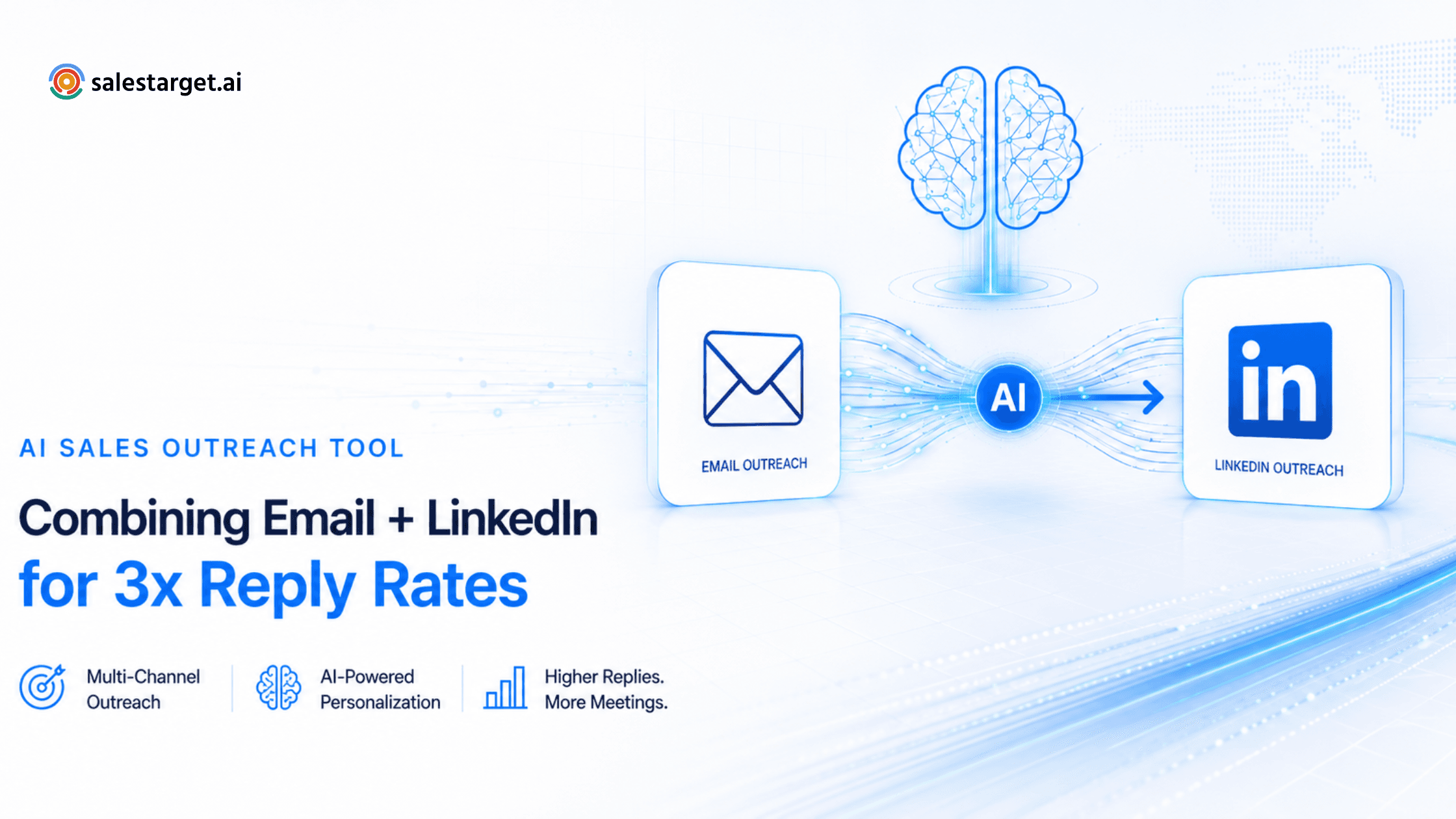
- Pairing LinkedIn with email in a multichannel sequence consistently beats single-channel outreach for reply rates.
- The agencies that retain clients longest are the ones who can show account-level proof — not just "we sent messages."
Every agency pitch deck says the same thing: "we'll generate leads on LinkedIn." Most can't back it up past month two — because running outreach for one client is a campaign, but running it for ten clients at once is an operation. Get the operation wrong, and you don't just lose a retainer. You risk every account you manage.
Why LinkedIn Outreach for Agencies Is a Different Game
A solo seller running LinkedIn outreach has one profile, one product, one message to refine. An agency running outreach on behalf of clients is managing several of all three at once — different ICPs, different value props, different LinkedIn accounts, often logged in from the same team and the same shared tools.
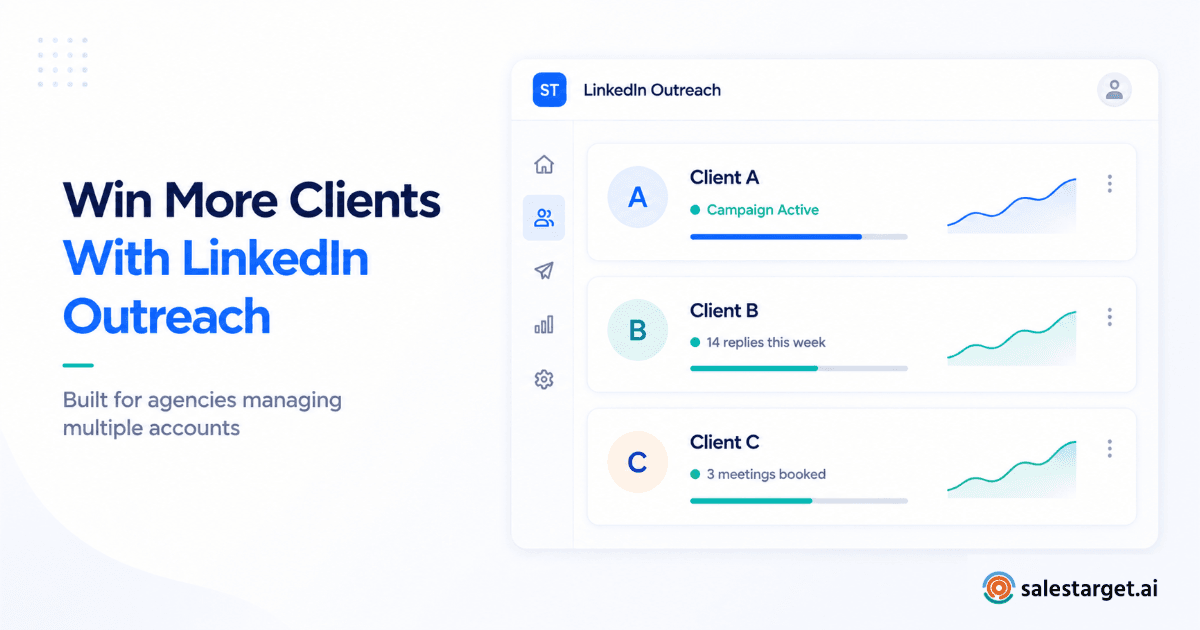
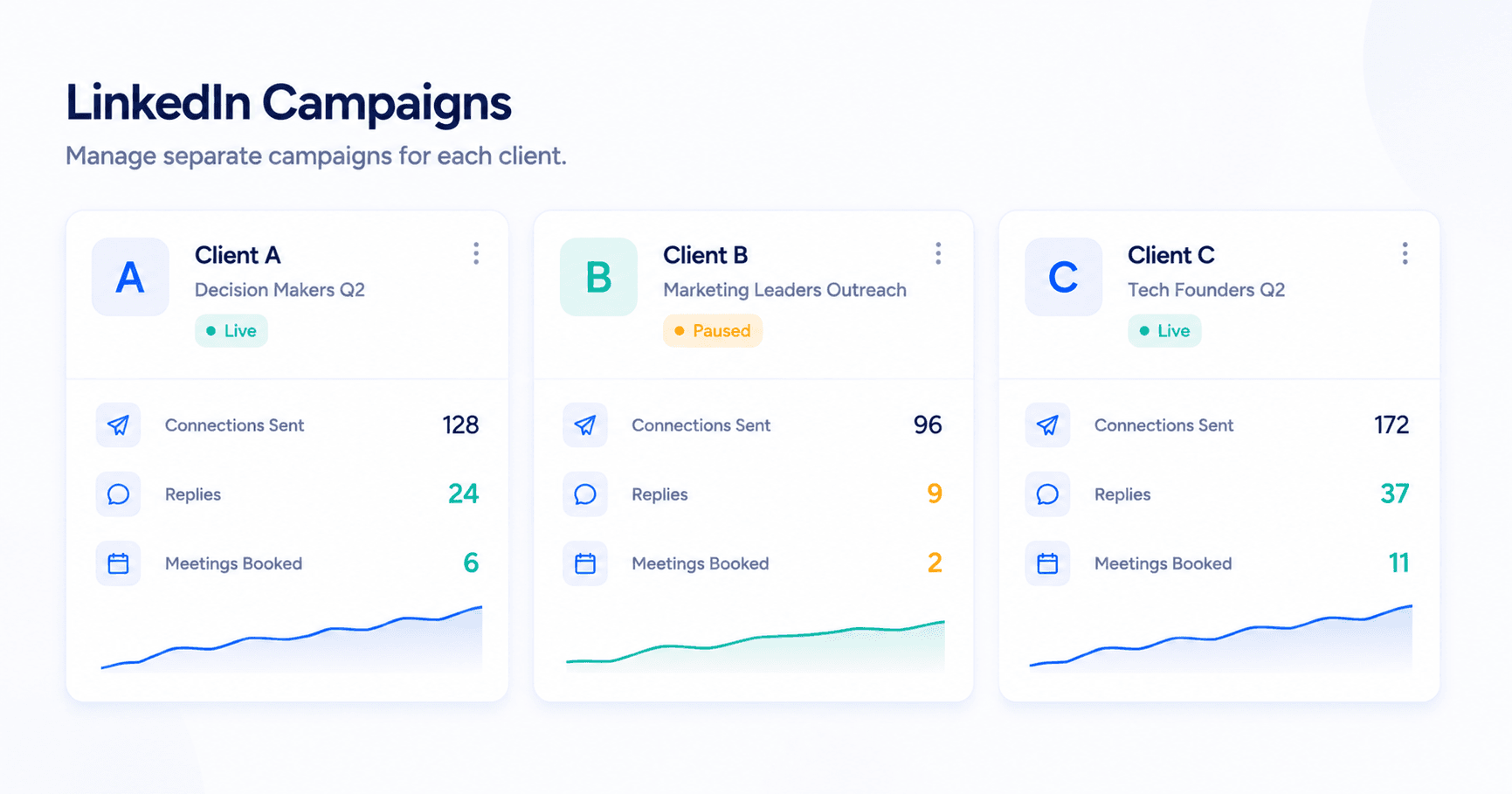
That difference changes everything about how outreach should be built. A generic LinkedIn lead generation tool built for individual sellers assumes one campaign, one inbox, one set of safety limits. Agencies need campaign-level separation, account-level safety, and reporting that proves results per client — not a shared dashboard where Client A's metrics get lost in Client B's noise.
Get this structure right early, and scaling from 3 client accounts to 15 is a process question. Get it wrong, and every new client you onboard adds risk to the ones you already have.
Solo Seller vs. Agency: What Actually Changes
| Factor | Solo seller | Agency managing clients |
|---|---|---|
| Number of campaigns | 1 active at a time | Multiple, running in parallel per client |
| Messaging voice | One consistent voice | Distinct voice and offer per client account |
| Account safety risk | Isolated to one profile | A flag on one client account can jeopardize the agency's reputation across all of them |
| Reporting needs | Personal tracking, low stakes | Client-facing proof tied directly to retainer renewal |
None of this means agencies need a more complicated process. It means they need a more structured one — built around separation, safety, and reporting from day one, not bolted on after the first client complains.
The Agency LinkedIn Outreach Playbook
| Step | What it covers |
|---|---|
| 1. Separate the campaign, not just the targeting | Each client gets its own campaign container — its own sequence, sending limits, and reporting, even if run from the same workspace. |
| 2. Build the ICP and message per client | Borrow nothing from a generic template — define the client's actual buyer and write outreach in their offer's language. |
| 3. Layer in email as a second channel | Sequence LinkedIn touches alongside email so prospects who miss one channel still get reached on another. |
| 4. Keep sending limits conservative per account | Stay well under platform thresholds on every managed profile — one restriction can stall an entire client relationship. |
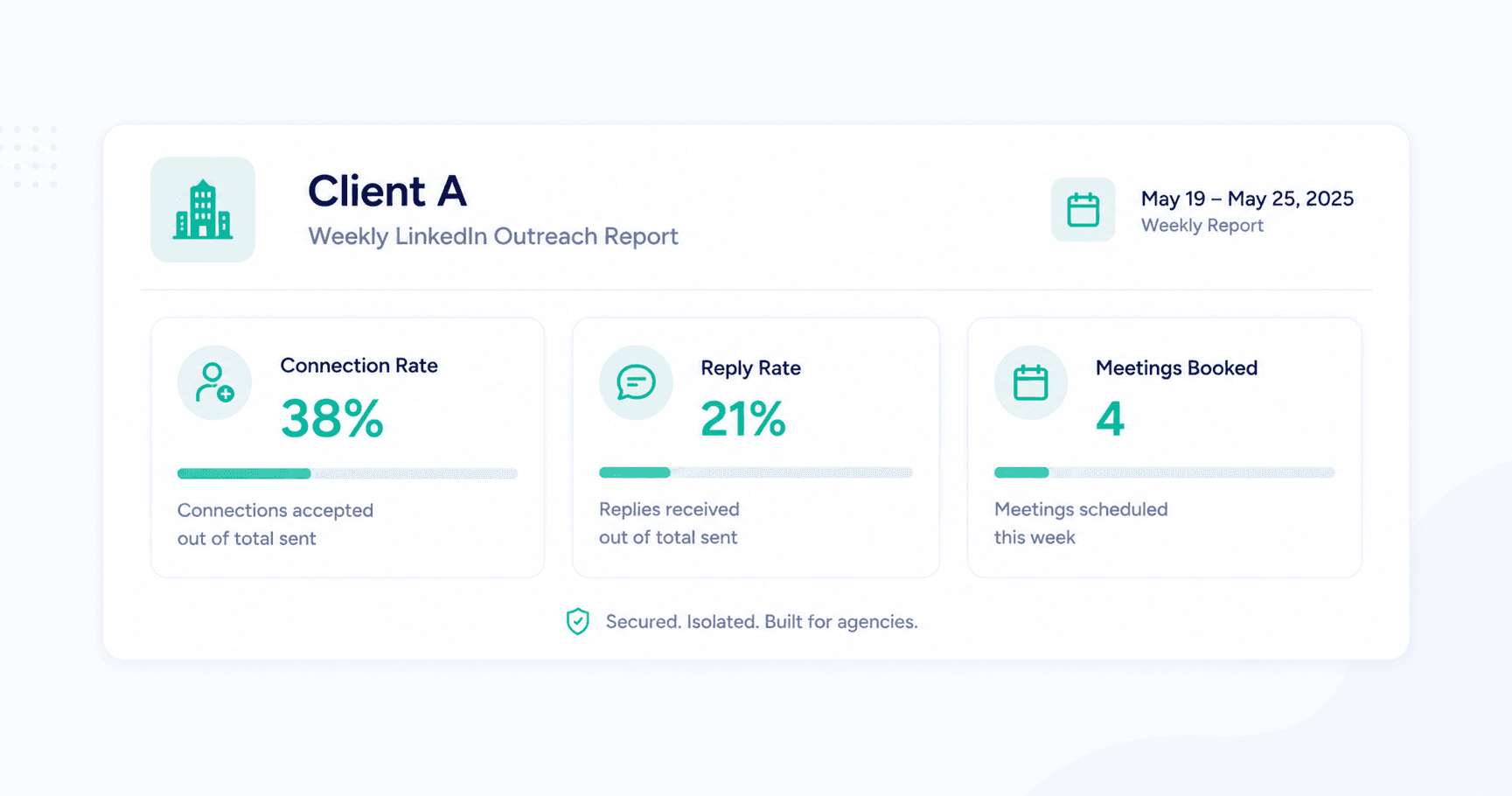
| 5. Report at the account level, weekly | Show connection rate, reply rate, and meetings booked per client — not a blended number across your whole book of business. |
Why Multichannel Outreach Wins More Client Deals
LinkedIn alone has real limits for agency-scale outreach — connection request caps, response-rate ceilings, and the reality that not every decision-maker checks their LinkedIn inbox daily. Pairing it with email closes that gap. A prospect who ignores a connection request might open and reply to an email the same week, and vice versa.
This is also the easiest way for an agency to differentiate its pitch. Multichannel outreach that sequences LinkedIn and email touches as one coordinated campaign — rather than two disconnected efforts run by two different tools — consistently produces higher reply rates than either channel alone, because the prospect sees a consistent message twice instead of one easily-missed touch.
It's also a stronger story to tell a prospective client during the pitch: "we don't just send LinkedIn messages — we run a coordinated sequence across the two channels your buyers actually use."
Protecting Every Client Account You Manage
The single biggest operational risk for an agency isn't a bad message — it's a restricted account. Push connection volume too aggressively on one client's profile, and you don't just lose that client's campaign. You've put the agency's broader reputation and every other managed account under scrutiny.
The fix is structural, not behavioral: build sending limits, warm-up periods, and human-like pacing into the automation itself, so no single team member has to remember to "go easy" on a new account. LinkedIn safety and compliance controls built into the campaign — not left to manual discipline — are what let agencies scale to dozens of managed accounts without one bad week torching client trust.
Proving ROI: What Actually Keeps a Client Renewing
Clients don't renew agency retainers because outreach is "running." They renew because they can see, in plain numbers, that it's working. A report worth sending shows connection acceptance rate, reply rate, and — most importantly — meetings actually booked from the campaign, broken out per client, every week.
Vague updates like "campaign is live, engagement looks good" don't survive a renewal conversation. Specific, consistent, account-level numbers do. Automating that reporting — pulling it directly from the campaign rather than compiling it manually every Friday — is also what lets an account manager handle six clients instead of two.
For agencies building their pitch around LinkedIn results, this reporting layer is worth building first, not last. Building a campaign that can't prove its own results is the most common reason agency clients churn after one quarter.
Setting Up LinkedIn Outreach Automation the Right Way
Automation is what makes managing multiple client accounts possible at all — but only when it's built around campaign separation and pacing controls, not raw send volume. The goal isn't sending more messages faster. It's running a consistent, personalized sequence across every client account without a team member babysitting each one manually.
SalesTarget's LinkedIn outreach automation handles sequencing, pacing, and personalization at scale, so agencies can stand up a new client campaign in hours instead of days — without compromising the safety limits that protect every other account in the book.
Mistakes to Avoid
Running every client off the same generic template
Mistake
A message that worked for one client's ICP rarely works for another's. Copy-pasting templates across accounts is the fastest way to tank reply rates across your whole book.
Pushing volume to hit a vanity metric
Mistake
Sending requests to impress a client with a big number risks a restriction on their account — and a restriction is far harder to explain than a slower ramp-up.
Reporting blended numbers instead of per-client results
Mistake
A client doesn't care how your whole portfolio performed — they care about their own numbers. Always report at the account level.
Run LinkedIn outreach for every client, from one platform.
Separate campaigns, built-in safety limits, and reporting that proves results per account.
✓ 50 credits ✓ 7-day trial ✓ No credit card required