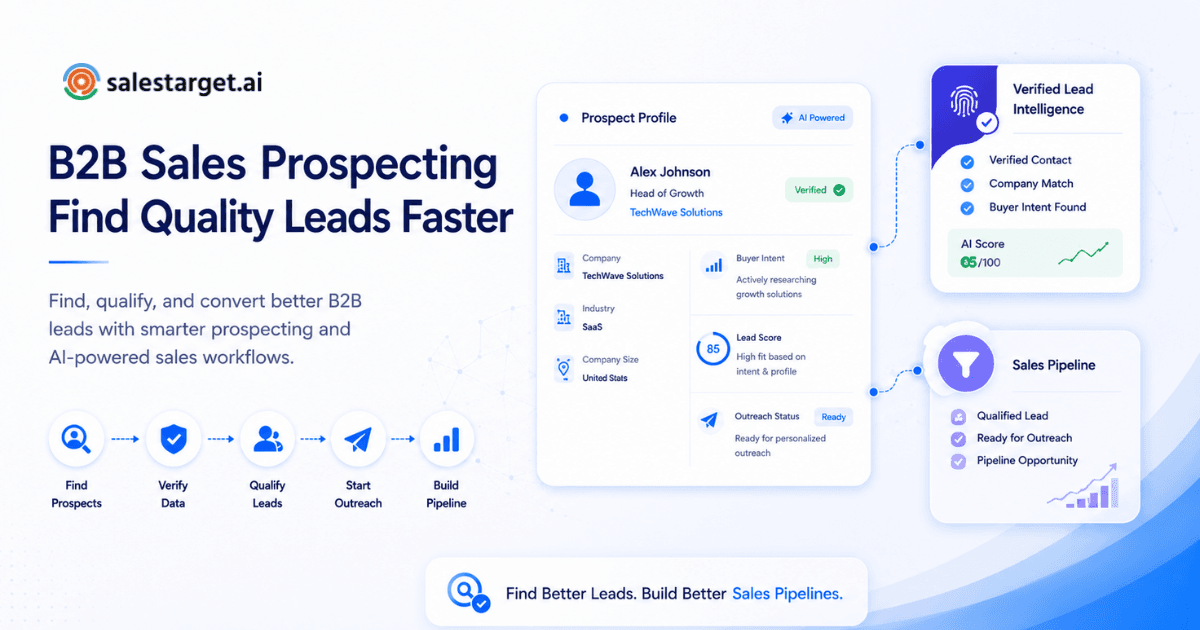
Your reps spend half their day hunting for the right contact and the other half watching cold emails sit unopened. Lists go stale in months. A rep who should be on calls is instead copying names off LinkedIn into a spreadsheet, one tab open, then closing it to check a bounced email. That's not a sales process. That's a leak in the pipeline before the pipeline even starts.
B2B sales prospecting is the process of finding the right companies and people to sell to, then reaching out before they've raised a hand. It covers list building, qualifying, and the first outreach touch across email, LinkedIn, or phone. Done well, it fills the top of the funnel with leads that match a real buyer profile instead of names pulled at random. Done badly, reps burn hours chasing contacts who were never going to buy.
What Is B2B Sales Prospecting and Why Does It Matter for Revenue Teams?
B2B sales prospecting is the work of identifying potential buyers, gathering their contact details, and starting a conversation before they enter a buying cycle on their own. It sits upstream of qualification and closing: no prospecting, no pipeline.
It matters for revenue teams for one plain reason: most B2B revenue still starts with someone reaching out first. HubSpot's research found that 42% of sales reps name prospecting as the hardest part of the job, ahead of closing or qualifying. Teams that treat prospecting as a system, not a guessing game, fill pipeline faster and waste fewer reps hours on dead contacts. A platform like Salestarget.ai exists for exactly that reason: turn the search-and-verify grind into a workflow a rep finishes in minutes, not a half-day project.
Why Do Sales Teams Struggle to Find and Convert the Right B2B Leads?
Most teams struggle because their data is wrong, their targeting is loose, or their outreach looks like every other message in the inbox. Fix the data and the targeting, and conversion follows.
Three patterns show up over and over:
- Contact data goes stale fast. People change jobs, companies merge, phone numbers get reassigned. A list built six months ago is already leaking accuracy.
- Targeting is too broad. "VP of Sales at SaaS companies" isn't a profile. Without filters on company size, tech stack, hiring activity, or recent funding, reps spray messages at people who were never going to respond.
- Outreach reads like a template. Gartner's 2026 buyer survey found that 67% of buyers now prefer a rep-free buying experience, which means a generic pitch gets deleted before the second sentence.
A fourth issue rarely gets named: reps often don't know a lead went cold until weeks later, because no one is tracking intent signals between the first touch and the follow-up. By the time someone notices the prospect already bought from a competitor, the deal is gone. Lead Explorer closes that gap by surfacing buying signals (funding rounds, hiring spikes, leadership changes) on a 30 to 90 day lookback, so reps see movement while it's still actionable.
How to Build a B2B Sales Prospecting Process That Converts?
A prospecting process that converts has four parts in this order: a defined ICP, a clean and enriched list, a multi-channel sequence, and a measurement loop that feeds learnings back into the targeting.
Skip any one of these and the process breaks somewhere downstream. Build the ICP without checking it against closed-won deals, and the list looks right but converts poorly. Build the list without verifying emails, and the sequence bounces before it ever gets read. Run the sequence without tracking reply quality, and the team keeps repeating the same mistakes next quarter.
This is where most "prospecting guides" stop at theory. The practical fix is to run all four stages in one workspace instead of four disconnected tools: define filters, pull the list, push straight into a sequence, then watch replies and signals land in one CRM view without a CSV export anywhere in the chain.
What Are the Best B2B Sales Prospecting Strategies for Outbound Growth?
The strategies that move pipeline in 2026 share one trait: they narrow the target before they widen the outreach. Precision beats volume now that inboxes are louder and spam filters are sharper.
Define Your Ideal Customer Profile (ICP) for Targeted Outreach
An ICP built from assumptions ages badly. Start with your successful sales outcomes and identify the common industry segments, organizational sizes, tech environments, and buying triggers shared across closed deals. Lead Explorer's ICP Builder lets a team stack Business and People filters (seniority, department, revenue, location, Intent Topics) against 146M+ business entities, so the profile reflects who buys, not who looks good on paper.
Build and Enrich High-Quality Prospect Lists
A list is only as good as its last verification date. Enrichment at the point of search beats enrichment after the fact, because a contact pulled and verified today is far more likely to be accurate than one scraped six months ago and never rechecked. Salestarget.ai enriches and verifies in the same click across 840M+ professional profiles, so the list a rep exports is current the moment it lands in a sequence.
Leverage Multi-Channel Outreach (Email, LinkedIn, Phone)
McKinsey's research shows B2B buyers now use up to 10 distinct channels during a purchase, and inside reps using multiple channels cover four times the prospects at half the cost of outside reps. A sequence that only sends email is competing against buyers who already expect to be reached on LinkedIn too. Email Outreach and LinkedIn Outreach run in one coordinated flow inside Salestarget.ai, so context from a LinkedIn reply carries straight into the next email touch instead of starting over.
Personalize Cold Emails at Scale for Higher Response Rates
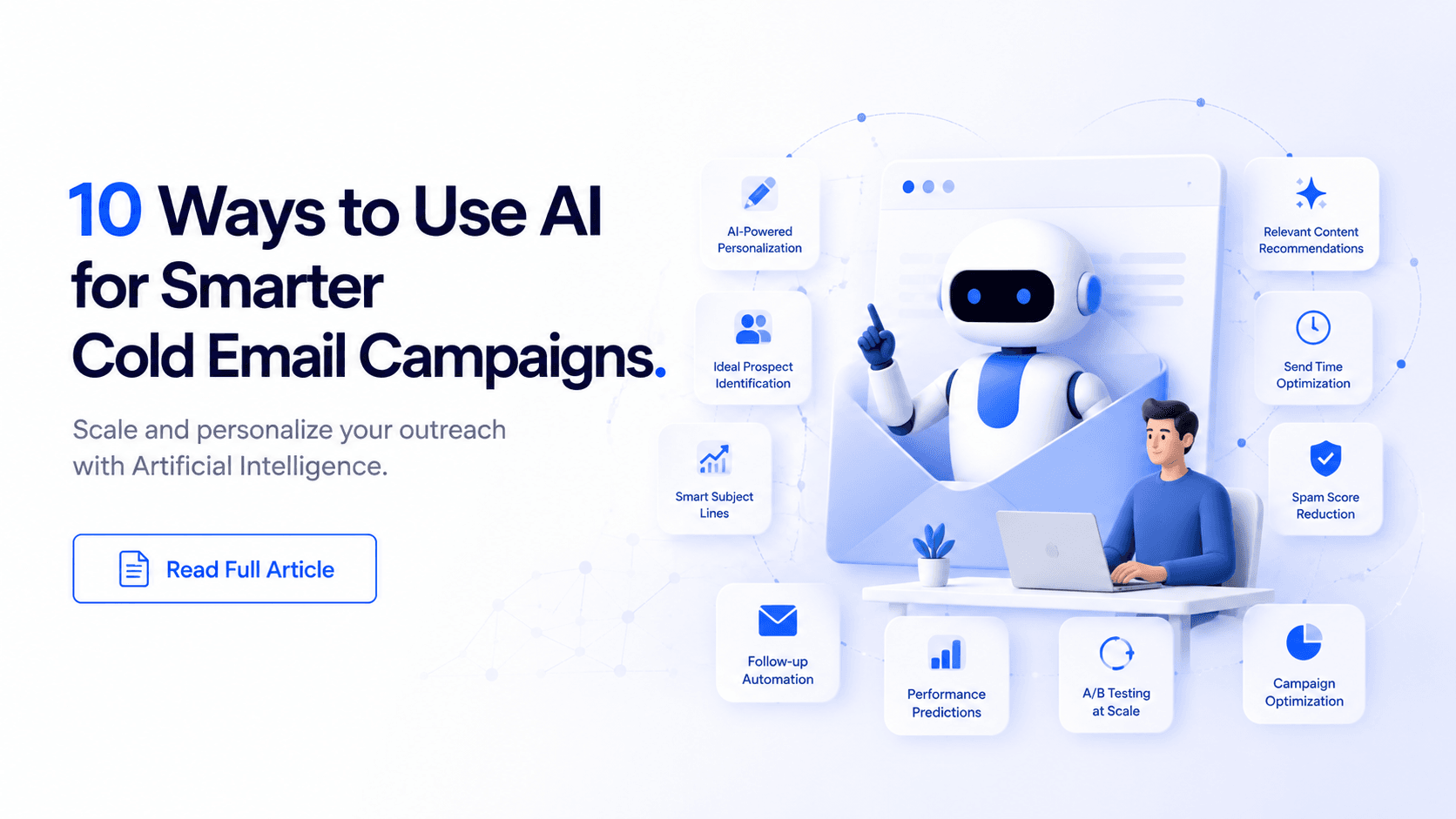
Personalization that scales isn't swapping in a first name. It's referencing a real trigger: a funding round, a new hire in the buyer's department, a tool they just adopted. The AI Content Generator and Spintax Generator build sequence variations around those signals automatically, so a campaign of 500 sends doesn't read like 500 copies of the same email.
Use Intent Data to Prioritize High-Conversion Leads
Not every name on a list is ready to buy this quarter. Intent data tells a rep which ones are showing buying behavior right now: researching a category, visiting comparison pages, or hiring for a role that signals budget. Salestarget.ai tracks 4,000+ intent and buyer signals through Bombora Intent Topics, scoring leads so reps work the warmest names first instead of dialing down a list in alphabetical order.
How Does a B2B Database Provider Improve Lead Generation?
A good B2B database provider shortens the distance between "who should we sell to" and "who can we call today." It replaces hours of manual list building with filtered, verified data ready to load into outreach.
Access to Verified and Up-to-Date Contact Data
Bad data costs more than a wasted email. Bounced sends damage domain reputation and drag down deliverability for every campaign that follows. Salestarget.ai keeps contact accuracy near 99% verified, because enrichment happens at the moment a lead is found rather than relying on data scraped at some earlier point and never refreshed.
Improved Targeting Through Advanced Segmentation Filters
Stacking filters (industry, seniority, department, revenue, tech stack) turns a database of hundreds of millions of profiles into a list a rep can actually work in an afternoon. Lead Explorer supports search in plain English or stacked filters across 50+ data sources, so a niche segment ("RevOps leads at Series B SaaS companies using HubSpot") takes seconds to build, not a half-day of manual research.
Faster Prospecting with Ready-to-Use Lead Lists
Time spent building a list is time not spent talking to a prospect. A database provider that pushes enriched leads straight into a sequence or CRM removes the CSV export, the import, the field mapping, and the inevitable cleanup that comes with all three.
Higher Conversion Rates with Accurate Decision-Maker Data
Reaching the wrong title at the right company still wastes the touch. Verified decision-maker data (role, seniority, department) means a rep's first message lands with someone who can actually say yes, instead of getting forwarded three times or ignored.
Integration with CRM and Sales Automation Tools
A database that lives apart from the CRM creates a second system reps have to update by hand. Salestarget.ai's built-in CRM means campaign leads land automatically, no import step, no duplicate records to reconcile later.
How Can AI Tools Improve B2B Sales Prospecting and Lead Conversion?
AI tools cut the manual research and writing time out of prospecting, freeing reps for the parts of the job that still need a human: judgment calls, relationship building, and closing conversations.
AI-Powered Lead Scoring for Better Prospect Prioritization
Scoring leads by hand, gut-feel style, means two reps rank the same list two different ways. Intent-based scoring, built on real signals instead of opinion, gives the whole team one shared sense of which leads to call first.
Automated Prospect Research and Data Enrichment
Pulling a contact's company size, recent funding, and tech stack used to mean five browser tabs and ten minutes per lead. One-click enrichment inside Lead Explorer collapses that into seconds, unlocking verified email, personal email, phone, and mobile in the same motion as the search.
Personalized Outreach Using AI-Generated Messaging
Most "AI personalization" on the market today is a template with merge fields, not real relevance. The difference shows in reply rates: messages built around a specific trigger event outperform generic blasts by a wide margin. Salestarget.ai's AI Content Generator writes around the signal, not just the name and company.
Predictive Analytics to Identify High-Intent Buyers
Buying signals (a leadership change, a hiring spike, a funding announcement) often show up weeks before a prospect ever fills out a form. Predictive scoring built on those signals lets reps reach out while the window is open, rather than after a competitor already closed the deal.
AI-Driven Sales Automation for Faster Follow-Ups
A reply that sits in an inbox for two days is a reply that's already cooling off. The Unibox inside Email Outreach sorts replies by intent (Interested, Follow-Up, Not a Fit) and assigns an owner the moment a reply lands, so the gap between "they replied" and "someone followed up" shrinks from days to hours. Want an example of how this strategy plays out on LinkedIn? This guide to LinkedIn outreach automation walks through the sequencing logic in more depth.
How to Improve Lead Conversion Strategies Across the Sales Funnel?
Conversion improves when prospecting activity feeds directly into the rest of the funnel instead of stopping at the first reply. Your first touchpoint should pave the way for the next several interactions, rather than serve as a box-checking exercise.
Connect prospecting activities with sales funnel optimization
A lead that replies to a cold email still needs a path through qualification, demo, and proposal. When prospecting and CRM data live apart, that path gets rebuilt by hand for every single lead. A connected workflow means the moment a lead engages, their full enrichment data (company, role, signals) is already sitting in the deal record.
Create follow-up systems that move leads closer to buying decisions
Most deals don't close on the first conversation. They close because someone followed up at the right moment with the right context. Tasks created automatically when a lead replies or a meeting wraps keep that follow-up from depending on a rep's memory at the end of a long day. The built-in AI dialer takes call notes automatically too, so context from a phone conversation doesn't get lost between the call and the next touch.
Measure prospect quality, reply rates, meetings, and revenue impact
Sales qualified leads (SQLs) and marketing qualified leads (MQLs) only mean something if a team tracks what happens after the handoff: how many SQLs turn into meetings, how many meetings turn into revenue. A reporting view that shows email stats, open deals, and pending tasks side by side turns that tracking into a five-minute check instead of a quarterly spreadsheet project. Teams running this loop inside SalesTarget.ai see 2.4X more meetings booked from the same lead volume, simply because fewer leads fall through the cracks between first touch and follow-up.
Why Choose SalesTarget.ai for B2B Sales Prospecting?
SalesTarget.ai is built for teams who are tired of paying for a data provider, a cold email tool, a LinkedIn automation tool, and a CRM separately, then manually keeping all four in sync.
Replace multiple sales tools with one AI sales platform for lead generation and outreach
Apollo gives data and engagement but still needs a separate deliverability and CRM stack bolted on. Instantly, Smartlead, and Lemlist handle cold email well but have no native B2B database and no real CRM underneath. SalesTarget.ai keeps the find-enrich-reach-close loop on one bill and one login, positioned as a direct alternative to Apollo, Instantly, and Woodpecker.
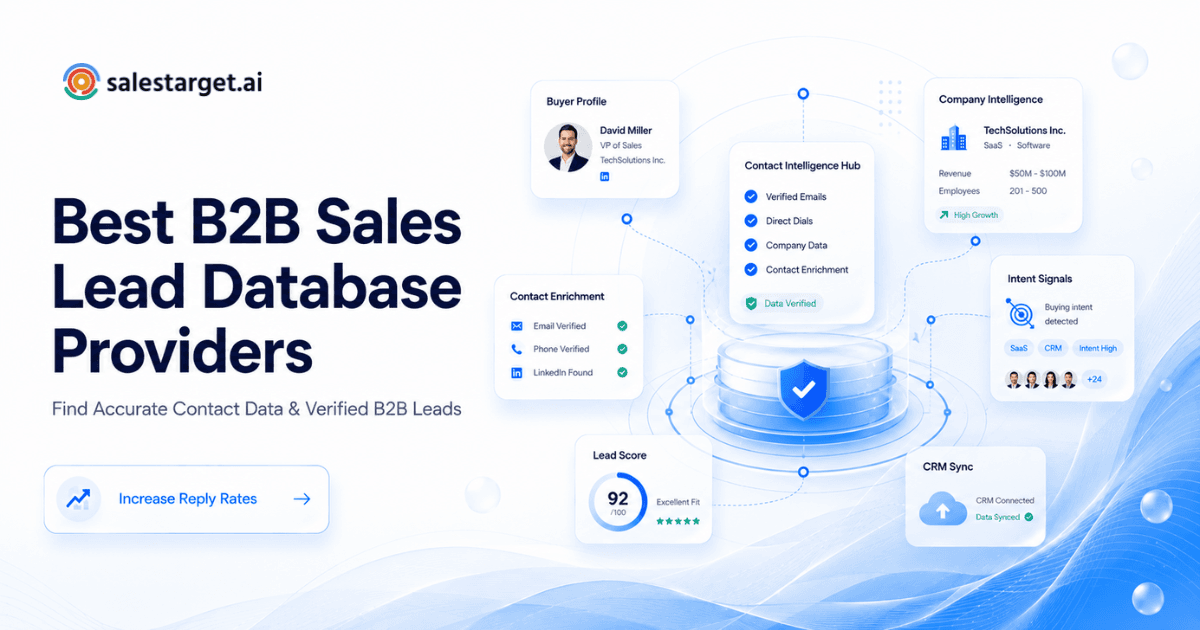
Access verified B2B profiles, intent signals, email validation, and CRM workflows in one place
840M+ verified professional profiles, 146M+ business entities, 4,000+ intent signals, and a Lead/Email Validator that checks MX, SMTP, and disposable-email risk before a single send goes out. That combination is what keeps 90% of emails validated before sending, protecting domain reputation campaign after campaign.
Help sales teams save time with automated prospecting and AI-assisted sales tasks
The AI Copilot sits inside the platform, free to use: ask it to find leads, build a sequence, or check which campaigns are driving revenue, all in plain language. Teams report around 6 hours saved per rep, per week, time that goes back into calls and conversations instead of admin. For teams running heavy LinkedIn motion alongside email, this step-by-step LinkedIn outreach automation guide shows how the two channels work together inside one sequence.
Final Checklist for Building a Better B2B Sales Prospecting Strategy
Before the next outbound push goes live, run through this:
- ICP built from closed-won data, not assumptions
- Prospect list enriched and verified within the last search, not the last quarter
- Outreach running across at least two channels (email plus LinkedIn or phone)
- Messaging built around a real signal (funding, hiring, leadership change), not just name and title
- Replies routed to an owner automatically, with follow-up tasks created on response
- Reply rate, meeting rate, and revenue impact tracked in one dashboard, not three spreadsheets
If the pain point at the top of this guide sounds familiar (bad data, low replies, reps buried in manual research), the fix isn't another point tool bolted onto an already crowded stack. It's one workspace that finds the right lead, verifies the contact, reaches them across channels, and tracks the whole deal without a single CSV in between. That's the gap SalesTarget.ai was built to close. Start exploring SalesTarget.ai and see what a connected prospecting workflow looks like for your own pipeline.