TL;DR
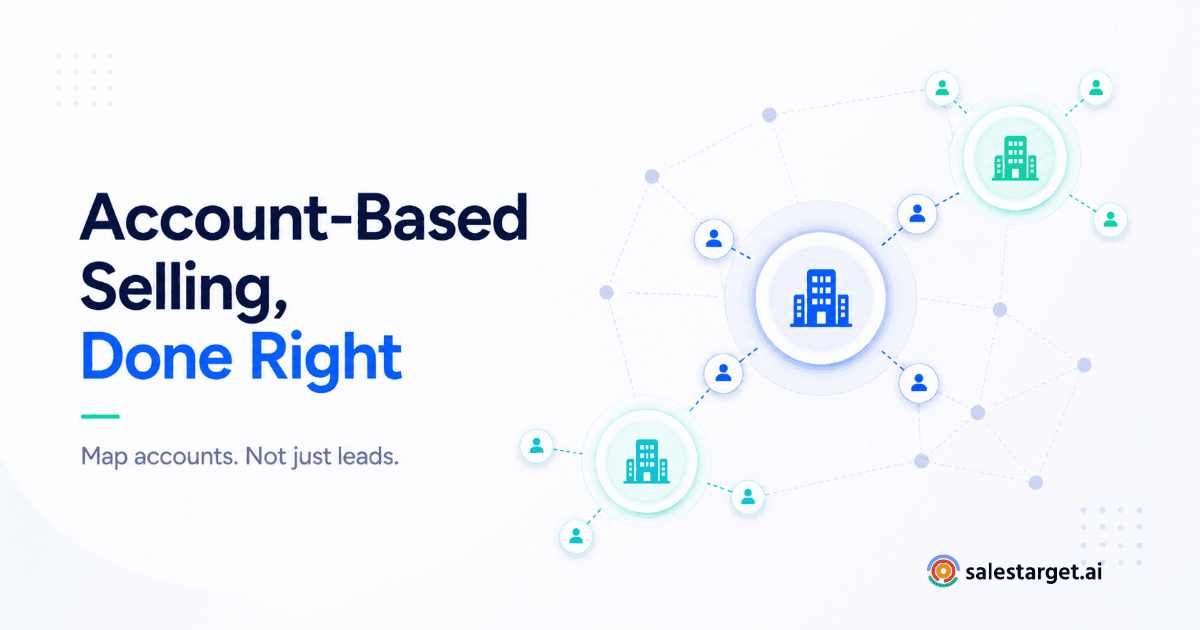
- Account-based selling (ABS) targets whole accounts, not individual leads — one coordinated motion across every stakeholder.
- ABM and ABS aren't interchangeable: ABM is marketing-led demand gen, ABS is sales-led execution.
- The ABS workflow has four steps: build the target account list → map contacts → run multichannel outreach → track at the account level.
- You don't need a spreadsheet stack to run this — Lead Explorer and CRM handle the full motion in one place.
Most reps still treat outbound like a numbers game — more leads, more sends, more noise. Account-based selling flips that script: fewer targets, deeper research, and a coordinated push across every stakeholder in the account you actually want to close.
What Is Account-Based Selling?
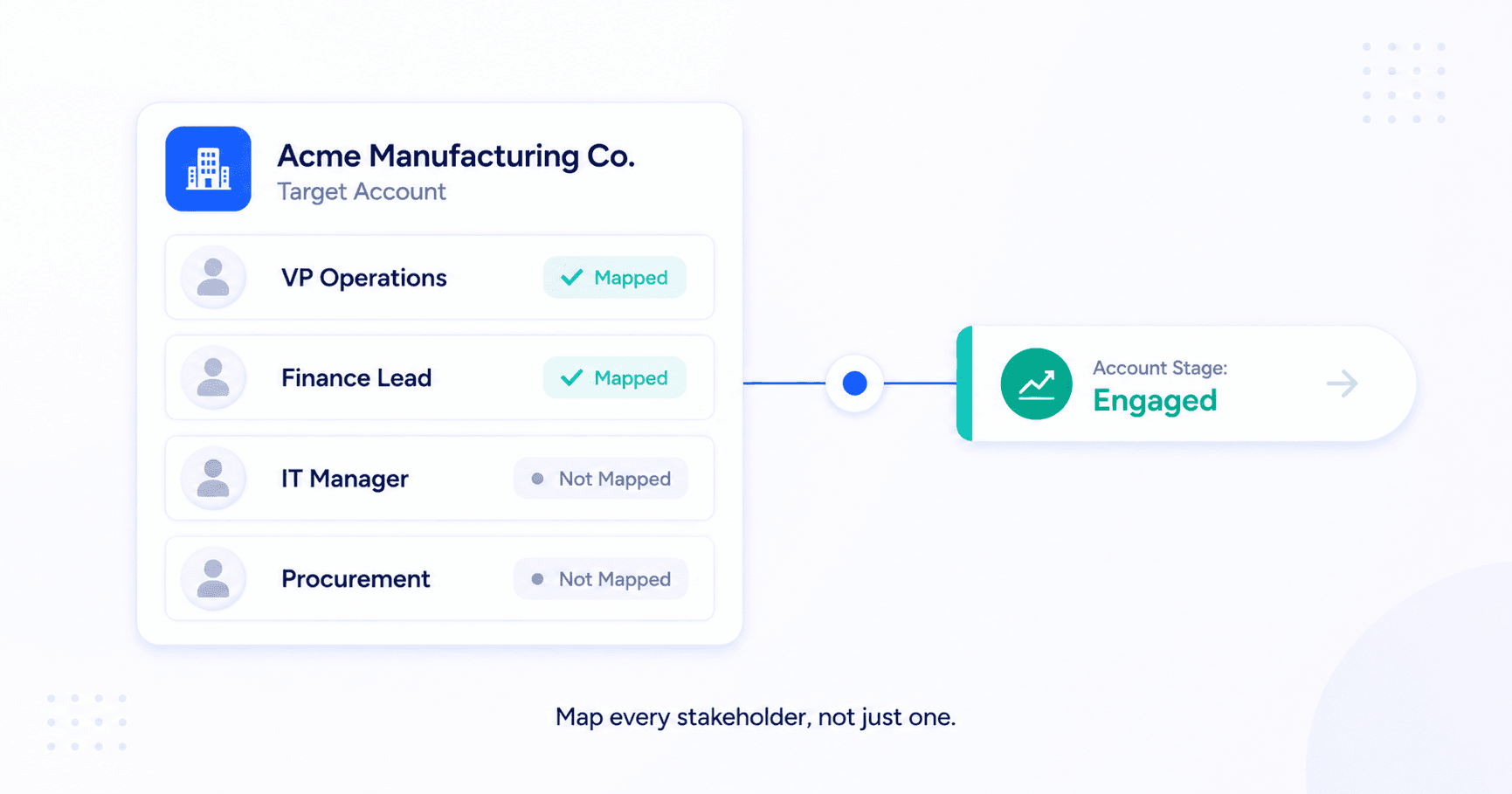
Account-based selling treats the account — not the individual lead — as the unit of conversion. Instead of working a list of names one by one, you pick a defined set of companies that match your ideal customer profile, map out who inside each one actually influences the buying decision, and run outreach designed to engage all of them in a coordinated way.
This matters more than it used to. Research from Gartner on B2B buying journeys shows deals increasingly move through buying committees with multiple stakeholders spread across departments, not a single decision-maker. Pitching one contact and hoping they sell it internally for you is a losing bet when five other people in that account never hear from you at all.
ABS is how sales teams respond to that shift — by selling to the whole room, not one seat in it.
ABM vs ABS: What's the Same, What's Different
Account-based marketing (ABM) and account-based selling (ABS) get used interchangeably, but they live on different sides of the funnel. ABM builds awareness and demand inside target accounts before a rep ever reaches out. ABS is what happens once sales picks up that account and has to actually engage the people in it.
| Dimension | ABM | ABS |
|---|---|---|
| Owned by | Marketing | Sales |
| Goal | Build awareness and intent at the account level | Convert mapped contacts into a closed deal |
| Primary motion | Targeted ads, content, events | Personalized email and LinkedIn outreach |
| Tracked by | Account engagement scores | Pipeline stage, replies, meetings booked |
The two work best together, but this guide is about the sales side: what to actually do once you've got a target account and need to turn it into pipeline.
The 4-Step ABS Workflow
| Step | What happens |
|---|---|
| 1. Build the target account list | Filter companies against your ICP — industry, size, tech stack, growth signals. |
| 2. Map contacts within each account | Identify every stakeholder who touches the decision — not just the one obvious title. |
| 3. Run personalized multichannel outreach | Sequence email and LinkedIn touches per contact, timed so the account hears a consistent message. |
| 4. Track at the account level | Watch engagement and pipeline stage as one account record, not scattered individual threads. |
How to Build Your Target Account List
Start with your ideal customer profile — the firmographic and behavioral traits of accounts that actually close and stay. From there, filter down to a list small enough to actually personalize for, not a few thousand companies you'll never touch with real attention.
SalesTarget's advanced targeting filters let you narrow accounts by industry, headcount, tech stack, and intent signals at once, so your list reflects accounts that are actually a fit — not just ones that look good on paper.
Running ABS Sequences Across Email and LinkedIn
Once contacts are mapped, the outreach itself needs to feel coordinated, not coincidental. If three people at the same account get three unrelated cold emails in the same week, it reads as spam, not strategy. The fix is sequencing touches across channels with shared context — the same problem framing, staggered timing, and a clear sense of who's hearing what.
This is exactly what multichannel outreach is built for — running email and LinkedIn touches as one sequence per contact, so every person in the account gets a consistent story instead of disconnected pings.
Tracking Engagement at the Account Level
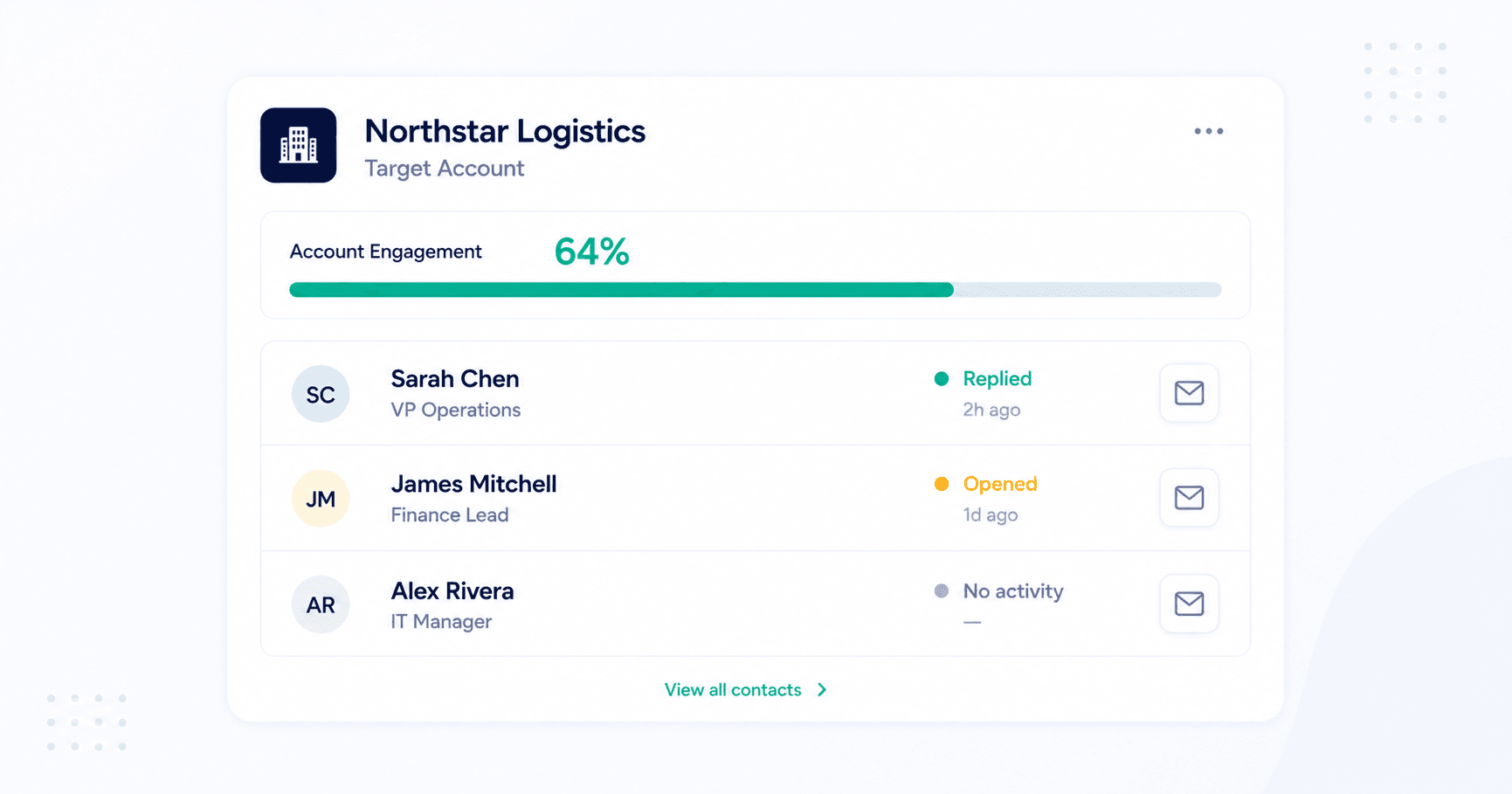
Individual reply rates don't tell you much in ABS — one cold contact and one warm champion can both show up as "no reply yet" on paper. What matters is account-level momentum: how many mapped contacts have engaged, which ones replied, and whether the deal is actually moving.
Inside the CRM, account records roll up activity from every mapped contact so you can see the whole picture — not five disconnected threads you have to piece together manually.
Mistakes to Avoid
Treating ABS like a bigger lead list
Mistake
Adding more accounts without mapping contacts inside each one defeats the point — you're back to spray-and-pray, just with company names instead of personal ones.
Outreach without contact mapping
Mistake
Emailing whoever's title sounds right misses the actual influencers — finance, IT, and end-users often weigh in long before the named decision-maker does.
Judging success by individual replies
Mistake
One quiet contact doesn't mean a dead account. Track engagement across the whole mapped group before writing the account off.
Run account-based selling without the spreadsheets.
Build target lists, map contacts, and track every account in one platform.
✓ 50 credits ✓ 7-day trial ✓ No credit card required