Your reps build lists in one tool, verify emails in another, load sequences elsewhere, then copy replies into a CRM. The first follow-up is due before the records are ready.
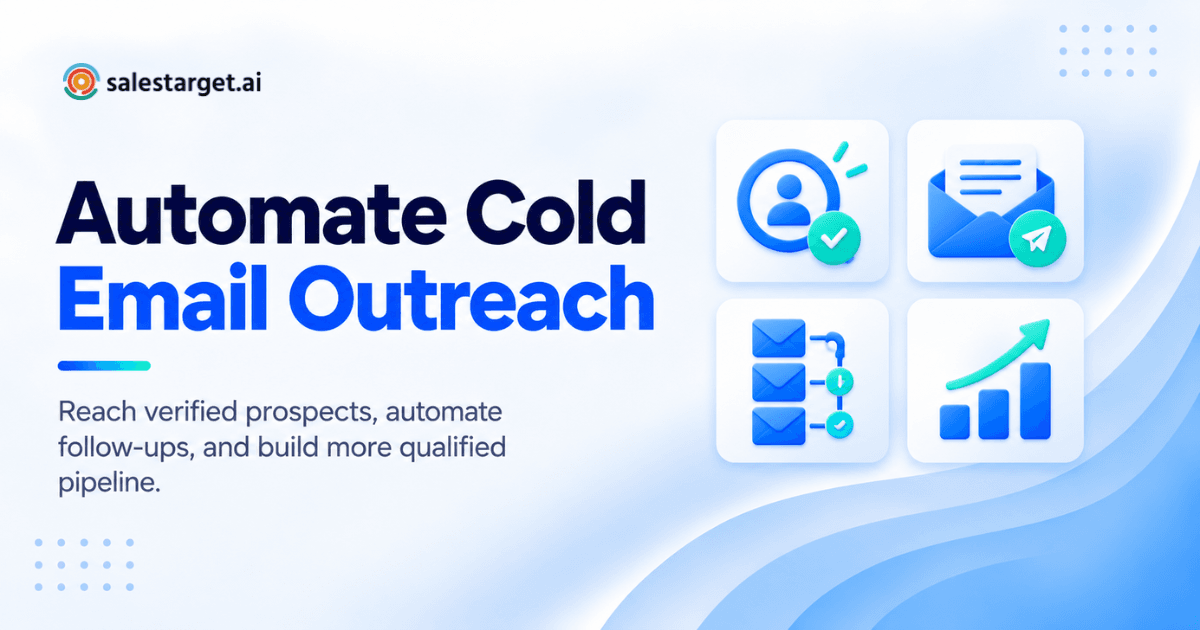
Cold email automation personalizes, schedules, and sends multi-step emails to selected prospects. It applies timing and stop rules, routes replies, and logs activity. Reps own the audience, offer, and message. Software handles repeatable execution at scale.
Manual Cold Email Creates a Scaling Problem for B2B Sales Teams
Manual outreach breaks through accumulated friction. Missed rows become missed follow-ups, old addresses bounce, and isolated replies never reach the account owner.
Adding reps creates more spreadsheets, handoffs, and reporting gaps. Automation gives revenue teams one repeatable system, so volume can rise without losing control of timing or buyer context.
Cold Email Automation Explained
Cold email automation connects prospect data, message creation, sequence timing, inbox activity, and sales records. Good automation removes repetitive work without removing human judgment.
Core Tasks Managed by Cold Email Automation Software
The software validates addresses, segments contacts, personalizes copy, schedules sends, rotates inboxes, triggers follow-ups, classifies replies, and updates CRM records. A rep steps in when a buyer needs a human response.
The Difference Between Manual Outreach and Automated Cold Email Outreach
Manual outreach depends on each rep remembering every task. Automation applies shared rules to every contact and reacts to replies, delivery failures, timing, and account status.
The Connection Between Lead Data, Email Sequences, Replies, and CRM Records
Automation works best when these parts share one record. The address feeds the sequence, messages land on the contact timeline, and replies change the next action. Disconnected tools create delayed handoffs.
The Cold Email Automation Workflow From Lead Selection to Sales Handoff
A sound workflow moves through seven stages. Each stage protects the next one. Weak targeting hurts copy, weak verification hurts deliverability, and weak reply routing wastes buyer interest.
Prospect Selection and Lead Segmentation
Start with accounts that fit the offer, then select the right roles. Segment by industry, seniority, company size, technology, or buyer signal. This guide to B2B prospecting tools covers the data layer.
Contact Enrichment and Email Verification
Enrichment adds current business emails, phone numbers, company facts, and signals. Verification checks whether an address can receive mail. Running both before sequencing keeps bad records from entering the campaign.
Personalized Cold Email Creation
Useful personalization explains why the message fits the buyer. Funding, hiring, leadership, or technology signals can support that link. A first name inside generic copy adds little.
Automated Email Sequences and Sending Schedules
The system schedules each touch within approved working hours. Timezone-aware pacing avoids awkward delivery times, and inbox rotation spreads activity across connected sender accounts.
Email Follow-Up Automation and Conditional Steps
Each follow-up needs a fresh reason to respond. Conditional rules can change the path after a click, LinkedIn action, reply, or no response.
Reply Detection and Sequence Stop Rules
A reply should stop pending emails at once. Rules can separate interest, objections, referrals, absences, and opt-outs. For out-of-office replies, resume after the return date.
CRM Integration and Sales Rep Handoffs
Qualified replies should create an owner, task, and visible timeline. Account-level suppression can stop outreach to colleagues after a company-wide objection.
The Business Value of Cold Email Automation for Sales Teams
The goal is more relevant conversations from the same team, backed by cleaner data and tighter follow-up.
More Qualified Prospects Reached Per Rep
Automation gives reps more time for research, replies, calls, and meetings. The team can cover more qualified accounts with the same headcount.
Consistent Follow-Up Across B2B Email Outreach Campaigns
Shared sequence rules keep follow-up quality steady across reps and client accounts. Managers can inspect timing, copy, and exit rules in one place instead of auditing personal calendars and spreadsheets.
Less Manual Work for SDRs and Sales Leaders
Salesforce reports that nine in ten sales teams use AI agents or expect to within two years. The practical value is simple: machines handle repeatable steps, and sellers spend more time on buyer conversations.
Faster Testing Across Offers, Segments, and Messages
Change one variable per test, such as the audience, offer, subject line, or call to action. Multiple changes hide the cause of a result.
Campaign Reporting Linked to Replies, Meetings, and Pipeline
Send counts show activity, not sales value. Track positive reply rate, qualified meetings, opportunities, and revenue by segment. This tells leaders which audience and message deserve more capacity.
Building an Automated Cold Email Campaign
A strong campaign starts narrow. One audience, one problem, one offer, and one measurable outcome produce cleaner learning than a large mixed list.
Set the Campaign Goal and Ideal Customer Profile
Choose the result before writing: replies, meetings, referrals, or reactivation. Define the accounts and roles that can act on the offer. Exclude poor fits early.
Build a Focused List of Verified Prospects
Favor fit over raw list size. Use current company and role data, remove duplicates, and verify addresses near send time. Old exports lose accuracy after job changes.
Segment Contacts by Role, Account, and Buying Signal
A founder, RevOps lead, and SDR manager care about different outcomes. Segment by role and use funding, hiring, or leadership signals to shape priority.
Write the First Email and Follow-Up Messages
Focus the first email on one problem and one next step. Give each follow-up a separate purpose. Plain language beats polished copy that says little.
Set Sending Windows, Daily Limits, and Exit Rules
Match sends to the prospect's timezone and mailbox history. Set limits per inbox and exits for replies, bounces, opt-outs, meetings, or disqualification.
Launch a Small Test Campaign
Start with a controlled segment. Check rendering, sender identity, reply routing, and CRM logging. Teams can build this flow in SalesTarget.ai Email Outreach and manage replies through Unibox.
Review Replies, Bounces, Meetings, and Pipeline Results
Read actual replies, not dashboards alone. Objections expose positioning gaps, referrals expose role errors, bounces expose data problems, and poor-fit meetings expose targeting gaps.
Creating Automated Follow-Ups That Still Feel Personal
Personal follow-up comes from relevance and timing. Automation should carry context forward without pretending every action is hand-written.
Give Every Follow-Up a New Reason to Reply
Add one useful idea per message: a result, use case, new trigger, or smaller request. A chain of "checking in" messages adds no value.
Use Contact and Account Data in Each Message
Use data that supports the offer, such as role, industry, team size, and public business events. Avoid personal facts with no link to the business problem.
Change Follow-Up Timing Based on Prospect Actions
High-intent actions can shorten the next step. Silence may call for more space. Privacy features and security scanners make opens too noisy for timing decisions.
Pause Automation After Replies or Account Changes
Positive replies, objections, opt-outs, job changes, and meetings need immediate stops. Pause out-of-office contacts until their stated return date.
Send Qualified Replies to a Sales Rep With Full Context
Pass the full thread, source segment, account data, channel activity, and next task. Buyers should never need to repeat information already captured.
Protecting Email Deliverability During Campaign Automation
Deliverability is part of campaign design. Good copy cannot recover messages that never reach the inbox.
SPF, DKIM, and DMARC Setup
Authentication proves which systems may send for your domain. Google's Gmail sender guidelines require SPF or DKIM for all senders. Bulk senders above 5,000 daily Gmail messages need SPF, DKIM, and DMARC.
Domain Warm-Up and Gradual Sending Limits
New or quiet mailboxes need a stable history before campaign volume rises. Increase sends in small steps, keep daily patterns steady, and avoid sudden spikes. Warm-up cannot rescue weak targeting or unwanted mail.
MX and SMTP Checks for Email Validation
MX checks confirm that a domain accepts email. SMTP checks test mailbox status without sending the campaign. Running prospects through the SalesTarget.ai Email Validator before launch removes many preventable bounces.
Risky, Invalid, and Catch-All Email Management
Invalid addresses should never enter a sequence. Catch-all results are less certain: the server accepts mail for any address, so mailbox existence stays unknown. Place risky records in a separate low-volume test, not the main campaign.
Bounce Rate, Sender Reputation, and Inbox Placement Tracking
Watch hard bounces, deferrals, spam complaints, and domain reputation by mailbox. Google tells senders to keep spam rates below 0.3 percent. A sudden change calls for a pause and diagnosis, not a larger send batch.
Unsubscribe Requests and Suppression Lists
Opt-outs must stop future messages across every campaign and sender. The FTC's CAN-SPAM guidance states that the law covers B2B commercial email and requires accurate sender details, honest subjects, a postal address, and an opt-out method. Local laws may set different duties.
Choosing the Best Cold Email Automation Software for B2B Teams
The best cold email automation software connects the full job. Review what happens before the send, after the reply, and at the sales handoff.
Built-In Lead Data and Contact Enrichment
Native lead data cuts CSV work and keeps targeting close to campaign creation. Look for filters that match your ICP, current contact details, verification, and buyer signals that can guide timing.
Email Personalization and Automated Sequence Controls
The platform should support reusable fields, AI-assisted drafts, copy variations, conditional steps, and clear stop rules. Reps need control over the final message. Automation should speed judgment, not replace it.
Mailbox Management and Domain Warm-Up
Review connected inbox limits, sender rotation, warm-up, authentication checks, and mailbox-level reporting. A campaign view that hides sender health leaves the team blind to early delivery problems.
LinkedIn and Email Outreach in One Flow
Multichannel outreach works best from one shared sequence. A LinkedIn reply should stop the next email, and an email response should stop the next LinkedIn action. Separate tools can miss this cross-channel state.
Centralized Reply Management and CRM Integration
A unified inbox should classify replies, assign owners, and show every thread. CRM integration should log activity, create tasks, and update deal records without manual imports.
Campaign Analytics Linked to Sales Results
Choose reporting that connects campaigns to positive replies, meetings, opportunities, and revenue. Mailbox health and bounce data belong beside sales outcomes, so the team can spot whether the problem is delivery, targeting, or offer quality.
Total Cost Across Contacts, Mailboxes, Data, and Add-Ons
Count every tool needed to run the workflow: data, enrichment, verification, sending, warm-up, LinkedIn activity, reply management, CRM, and calling. A low entry plan can hide a much larger stack.
Why Choose SalesTarget.ai
SalesTarget.ai joins prospecting, verification, multichannel outreach, reply handling, and deal management in one workspace. Teams can move from buyer signal to booked meeting without passing CSV files between point tools.
Search 840M+ Verified Profiles and 4,000+ Intent Signals With Lead Explorer
According to SalesTarget.ai, Lead Explorer covers 840M+ verified professional profiles, 146M+ business entities, and 4,000+ intent signals. Teams can search with AI or combine company and people filters.
Enrich and Verify Prospect Data in One Click
One-click enrichment reveals business contact data at the point of selection. Verification happens close to campaign launch, which reduces the gap between finding a lead and checking whether the address remains usable.
Run Email and LinkedIn Sequences in One Connected Flow
SalesTarget.ai coordinates email with LinkedIn connection requests, messages, follow-ups, and engagement steps. Conditional paths react to replies or no response, and context carries across both channels.
Protect Deliverability With Validation, Warm-Up, and Sending Checks
The platform combines MX and SMTP validation, disposable-email detection, risk scoring, inbox warm-up, rotation, and SPF, DKIM, and DMARC checks. These controls sit inside campaign execution rather than in a separate tool.
Manage Replies in Unibox and Deals in the Built-In CRM
Unibox collects replies, sorts them by intent, and assigns owners. The built-in CRM logs campaign activity, creates follow-up tasks, and keeps leads, deals, meetings, and pending work visible to the team.
Capture Call Notes With the Built-In AI Dialer
The AI dialer supports click-to-call from the lead record. Calls are logged, conversation notes are captured, and the notes return to the contact timeline. Reps keep context without writing a second record by hand.
Plan Prospect Lists and Campaigns With the Free AI Copilot
The AI Copilot can find leads, draft personalized sequences, query deals and tasks in plain language, and flag deals that need attention. Strategy stays with the seller; the Copilot handles repeatable setup and analysis.
Cold Email Automation Mistakes That Reduce Campaign Results
Automation magnifies both good and bad decisions. A weak list or unsafe sending pattern reaches more inboxes faster, which means it can damage results faster too.
Increasing Send Volume Before Domain Warm-Up
Sudden volume from a new mailbox looks abnormal. Build a steady sending history, monitor errors, and raise limits in stages. Pause when deferrals or complaints rise.
Using Unverified or Risky Email Addresses
Every invalid address consumes capacity and adds bounce risk. Verify close to send time. Isolate catch-all records from confirmed mailboxes so uncertain data does not distort the main campaign.
Sending the Same Message to Every Prospect Segment
Generic copy hides weak targeting. Split segments by role, account type, or trigger, then match the pain and call to action to that group.
Repeating the Same Point Across Every Follow-Up
Repetition does not create urgency. Each follow-up should add information, answer a likely objection, or offer a smaller next step.
Ignoring Time Zones and Daily Sending Limits
Poor timing lowers the chance of a real conversation. It can create unnatural volume patterns too. Set working hours by recipient timezone and limits by mailbox age and health.
Continuing Sequences After a Prospect Replies
This mistake makes automation feel careless. Apply stop rules across email and LinkedIn, and use account-level controls for opt-outs, disqualification, or active opportunities.
Measuring Success Through Open Rates Alone
Open tracking is noisy. Privacy systems, previews, and security scanners can create false events. Judge campaigns through positive replies, qualified meetings, opportunities, and revenue.
Building a Connected Cold Email Workflow With SalesTarget.ai
Cold email automation works when it removes admin work without lowering relevance or sender discipline. The real gain is not sending more messages. It is moving the right prospect from verified data to a timely sequence, a handled reply, and a visible deal without losing context.
SalesTarget.ai puts that workflow in one platform: find and verify buyers, coordinate email and LinkedIn outreach, protect sending health, manage replies, and continue the conversation inside the CRM. If manual handoffs are slowing your team or hiding good replies, start building your connected outbound workflow with SalesTarget.ai.