You know the feeling. It's the last week of the quarter, your manager asks for a pipeline update, and three different people give three different numbers. One rep has deals logged in a spreadsheet. Another is tracking things in their inbox. A third just says "it's going well." That's not a sales process — that's a guessing game. And it's costing you revenue.
This is exactly the problem deal tracking software was built to solve.
What is deal tracking software?
Deal tracking software is a system that gives sales teams a centralized, real-time view of every active opportunity in their pipeline. Instead of relying on memory, scattered notes, or outdated spreadsheets, every deal lives in one place — with its stage, owner, activity history, and next step clearly defined.
Good deal management tools go beyond simple storage. They log emails automatically, track when leads engage, surface deals that are going cold, and remind reps when it's time to follow up. In short: they keep nothing from slipping through the cracks.
For modern B2B sales teams — SDRs, account executives, and founders who carry a bag — this kind of visibility isn't a nice-to-have. It's the difference between a predictable revenue engine and a chaotic sprint every month-end.
Why traditional CRMs let sales teams down
Here's the uncomfortable truth: most CRMs were designed for data entry, not deal-closing. They ask reps to manually log every call, update every field, and move every deal card — which sounds reasonable until you realize that the average SDR is already managing 30–50 active conversations at once.
The four biggest pain points:
| Issue | Problem |
|---|---|
| Manual data entry | Reps spend hours updating fields instead of selling. Time on admin is time off the phone. |
| Zero visibility | Managers can't see true pipeline status without chasing everyone for a status update. |
| Missed follow-ups | Interested leads go cold because nobody remembered to reply — or forgot which stage they were in. |
| Bad forecasting | Revenue predictions are pure guesswork when the data feeding them is a week out of date. |
The result? Deals that should close don't. Reps burn out on admin. And leadership makes decisions based on stale data. This is the gap that modern sales pipeline tracking tools are designed to fill.
Key features of modern deal tracking software
Not all deal management tools are built equal. Here's what separates truly effective platforms from glorified spreadsheets:
- Automatic activity logging — Every email sent, reply received, and meeting booked gets captured without the rep lifting a finger.
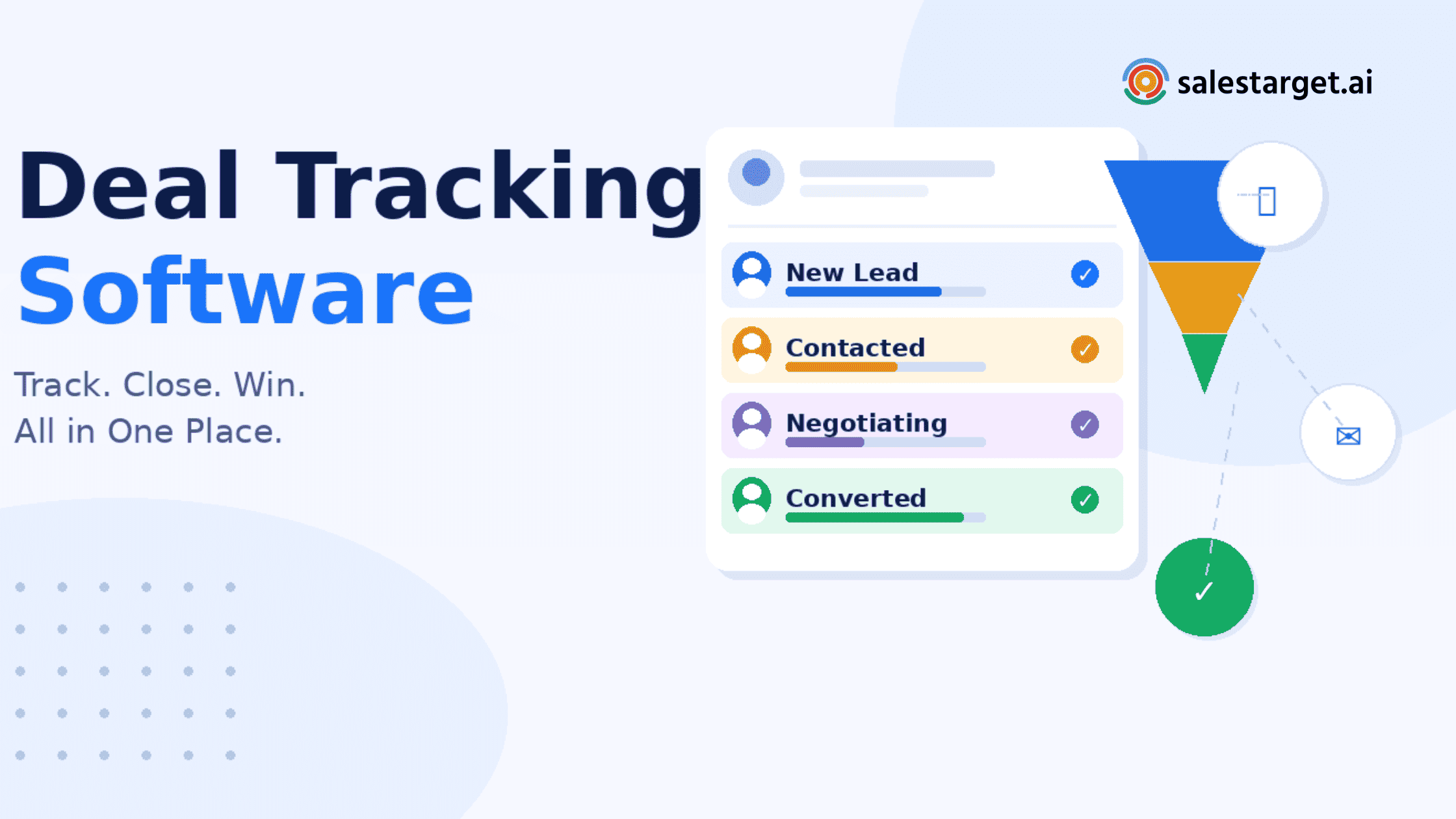
- Visual pipeline stages — From Lead → Qualified → Proposal → Closed Won, reps and managers see the same picture at all times.
- Smart follow-up reminders — The system nudges reps when a deal hasn't moved, or when a high-value lead just opened your email for the third time.
- Deal health indicators — At-a-glance signals showing which deals are on track, which are stalling, and which need immediate attention.
- Forecasting & analytics — Real pipeline data feeds into revenue projections that managers can actually trust.
- Team-wide visibility — Everyone sees the same live pipeline — no more "check my spreadsheet" conversations.
How AI is reshaping deal tracking
The next evolution of deal tracking software isn't just about organizing data — it's about making that data work for you. Intelligent CRM platforms are starting to do things that rule-based systems simply can't.
Instead of manually scoring leads, AI can analyze engagement patterns — reply rates, email opens, meeting attendance — and surface which deals are most likely to close this week. Instead of reps guessing the right follow-up timing, automation handles it based on how each lead actually behaves. And instead of end-of-quarter panic, managers get a rolling, live view of where each deal stands.
This is what separates a modern intelligent CRM software from the legacy systems most teams are stuck with. It's not about adding more features — it's about removing friction from every step of the sales process.
How SalesTarget, Apollo, Lemlist, and Instantly compare
The outbound sales space has strong players, each with a different primary focus. Understanding where each shines helps teams build the right stack — or find one platform that does it all.
| Tool | Primary Focus | Best For |
|---|---|---|
| Apollo.io | Lead Intelligence | Exceptional contact database and prospecting filters. Best for building targeted lead lists at scale. CRM functionality is secondary to its data layer. |
| Lemlist | Email Personalization | A go-to for highly personalized cold email sequences with dynamic images and video. Strong on outreach creativity; lighter on pipeline management. |
| Instantly.ai | Cold Email Volume | Built for high-volume cold outreach with excellent deliverability tools. Focused on sending campaigns rather than managing deals post-reply. |
| SalesTarget CRM | All-in-One Pipeline | Combines outbound campaigns with a live deal pipeline — so when a lead replies, the deal is created automatically. No handoff between tools needed. |
The key differentiator is continuity. Tools like Apollo, Lemlist, and Instantly excel at the top of the funnel. But once a lead replies and enters the sales conversation, most teams still need a separate system to track what happens next. That's the gap a purpose-built sales automation platform closes.
Meet SalesTarget CRM: deal tracking built for outbound teams
SalesTarget CRM was designed from the ground up for teams running outbound campaigns — not enterprise sales orgs with dedicated CRM admins. When a lead replies to one of your sequences, a deal is created automatically. When a meeting is booked, it syncs. When a follow-up is due, your rep gets reminded without anyone setting it manually.
The pipeline is always live. The activity timeline is always current. And your entire team — whether it's two people or twenty — is looking at the same data in real time.
- Campaign replies flow into the CRM pipeline automatically — no imports, no manual work
- Email activity is logged to each lead's timeline the moment it happens
- Follow-up tasks are created automatically when a lead replies or a meeting ends
- Managers see team performance and deal health live — without asking for status updates
- Integrates with Google Calendar, Calendly, Slack, Zapier, HubSpot, and Salesforce
Results customers report:
| 3.2× Faster deal cycles | 91% Follow-up completion rate | 6 hrs Saved per rep / week | 2.4× More meetings, same leads |
The bottom line
If your team is still tracking deals in spreadsheets, scattered inboxes, or a CRM that nobody actually updates — you're not just disorganized. You're losing deals that should be closing. The right deal tracking software doesn't just give you visibility; it keeps your pipeline moving, your reps focused, and your forecasts grounded in reality.
Modern sales teams don't have time for tools that create more work. They need a sales automation platform that thinks with them — and does the admin work for them.
Ready to see what your pipeline actually looks like?
Try SalesTarget CRM free — no credit card, no setup calls, no enterprise contracts. Just a smarter way to track and close deals.