The Sales Target Problem No One Talks About
Your sales team is hustling — calls logged, demos booked, proposals sent. But when the monthly review rolls around, nobody really knows where they stand against their targets. The pipeline data is stale. The spreadsheets don't match the CRM. And your managers are spending hours every week just trying to piece together a picture of reality.
This isn't a people problem. It's a systems problem.
According to Salesforce's State of Sales report, sales reps spend only 28% of their week actually selling — the rest goes to administrative tasks, manual data entry, and chasing updates. For sales managers, the situation is even worse: they spend enormous energy simply tracking whether their teams are on pace to hit quota.
The solution isn't more meetings or more spreadsheets. It's a CRM that automatically tracks your sales targets — one that updates in real time, surfaces insights proactively, and tells you exactly where every deal stands relative to your goals.
That's precisely what SalesTarget.ai's AI-powered CRM was built to do.
Why Traditional CRMs Fail at Tracking Sales Targets
Most CRMs were designed around one idea: record what happened. They're great databases. But databases don't tell you whether you're going to miss quota on Friday.
Here's where conventional CRM tools consistently fall short:
- Manual data entry dependency: Traditional CRMs only know what sales reps tell them. If a rep forgets to log a call or update a deal stage, the data is instantly unreliable. Target tracking built on bad data produces bad forecasts.
- No goal-aware architecture: Most CRMs store deals and contacts — but they don't inherently understand what your targets are, or how each deal contributes toward hitting them. Target tracking is an afterthought, bolted on through reports the manager has to build manually.
- Lagging indicators only: Traditional CRMs are backward-looking. They tell you what closed last month, not what's likely to close this week. By the time you see you're off-track, it's often too late to course-correct.
- No automated alerting: If a deal goes cold or a rep is pacing below target, a traditional CRM won't tell you. You have to find it yourself — buried in a dashboard, if someone remembered to build one.
- Siloed from outreach tools: Most CRMs don't natively connect to your email sequences, call dialers, or lead sources. That means activity data stays fragmented, and target tracking stays incomplete.
If you're struggling with leads slipping through the cracks before they even reach your CRM, check out our guide on the best CRM to manage leads from multiple sources for a deeper look at how unified lead management changes the game.
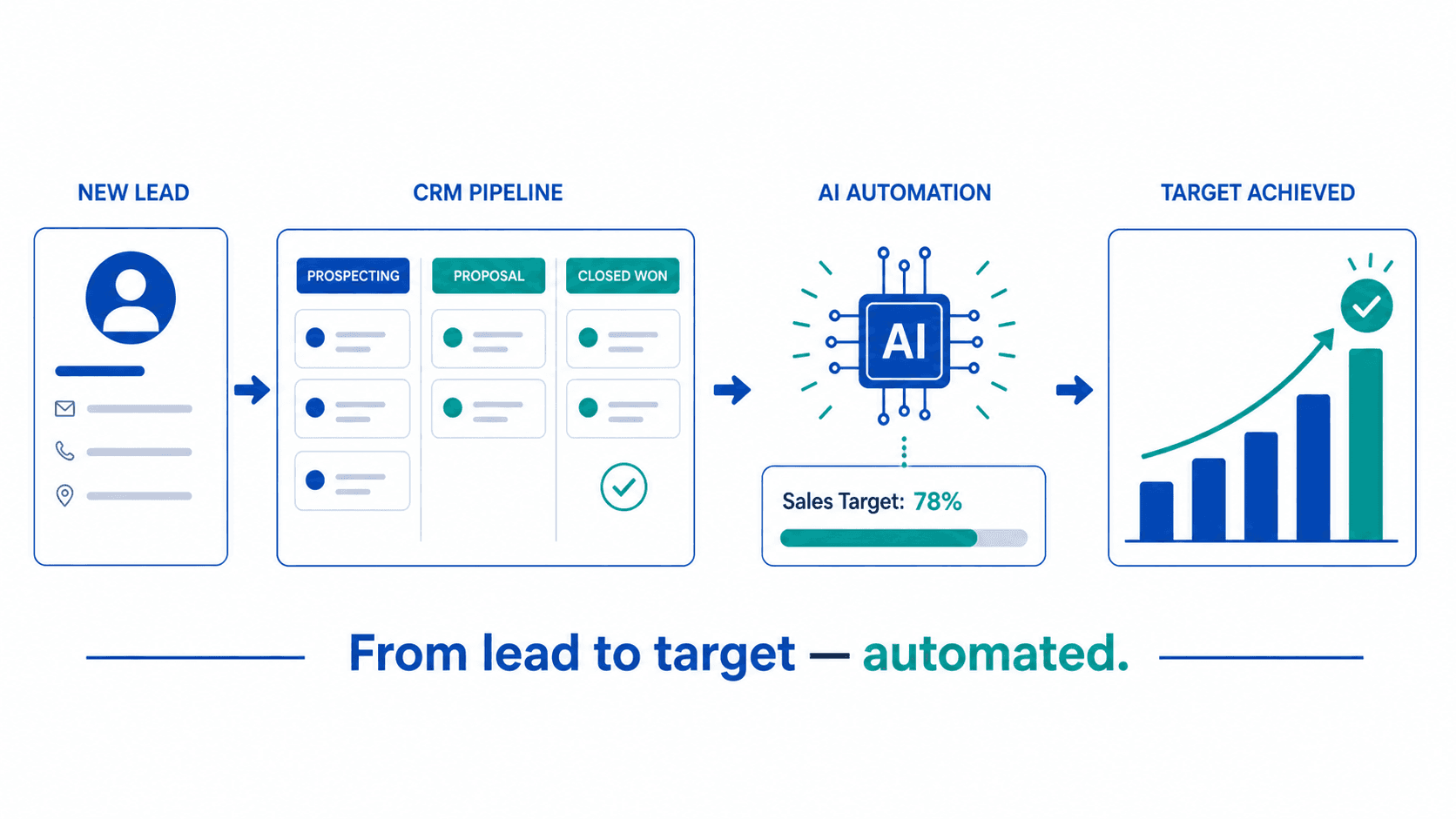
How an AI CRM Automatically Tracks and Improves Your Sales Targets
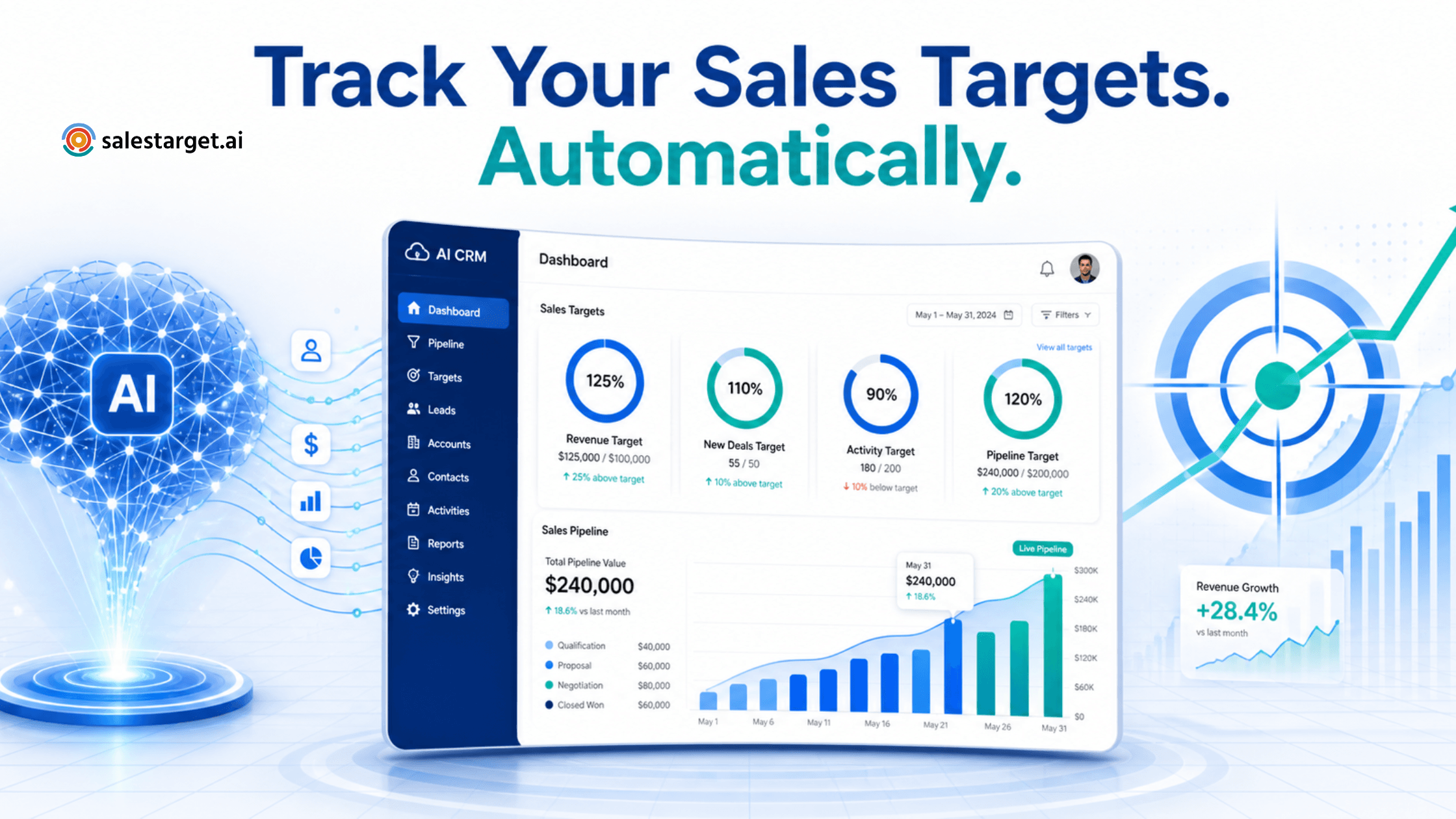
An AI CRM doesn't just store your pipeline — it actively monitors it against your targets and tells you what to do next. Here's how that works in practice with SalesTarget.ai:
1. Intelligent Goal Setting and Breakdown
Rather than setting a blanket quarterly revenue target and hoping for the best, SalesTarget.ai lets you define targets at every level — team, individual rep, product line, region, or time period. The AI then automatically calculates what needs to happen each week to stay on track, and adjusts dynamically as deals move through the pipeline.
2. Real-Time, Automated Pipeline Updates
SalesTarget.ai uses AI to log activities, detect deal movements, and update pipeline stages with minimal manual input from reps. Email opens, meeting completions, and proposal sends are captured and mapped to deal progress automatically — keeping your target tracking accurate without adding to your team's admin burden.
3. Predictive Target Alerts
The system monitors your pace against targets continuously. If a rep is trending below their monthly quota by mid-month, SalesTarget.ai surfaces a proactive alert — not a vanity metric dashboard that requires someone to look at it. Managers get actionable notifications that enable real-time coaching interventions.
4. AI-Powered Forecast Accuracy
Traditional CRM forecasts rely on deal stage and human judgment. SalesTarget.ai's AI model factors in engagement signals, deal velocity, historical close rates, and competitor context to generate probability-weighted forecasts. Your targets become genuinely trackable against a realistic revenue projection.
5. Unified Lead-to-Close Visibility
Because SalesTarget.ai functions as a complete lead tracking CRM, every lead from every source — inbound forms, LinkedIn, cold outreach, referrals — is captured and attributed. You see how leads become opportunities, how opportunities become deals, and exactly how deals stack up against your current targets.
Key Insight: Automated Sales Tracking
Sales teams using automated tracking software report up to 30% improvement in forecast accuracy and a significant reduction in time spent on pipeline reviews. When your CRM updates itself, your managers lead — they don't just report.
Competitor Comparison
Apollo.io
Apollo is a powerful prospecting and engagement platform with a massive contact database and solid sequencing features. It excels at top-of-funnel outreach and lead discovery. However, Apollo is not a CRM in the true sense — it lacks goal-based dashboards, automated sales target tracking, and the pipeline management depth that growing sales teams need. It's a great tool for filling your funnel, but you'll need additional infrastructure to manage and track what happens after the first touch.
Lemlist
Lemlist built its reputation on personalized cold email outreach with dynamic images and video. For creative outbound campaigns, it's genuinely strong. But Lemlist is purpose-built for email sequences, not CRM functionality. There's no sales target tracking, no AI pipeline automation, and no native goal management. Teams using Lemlist typically need a separate CRM to manage the rest of the sales process.
Instantly.ai
Instantly has become popular for high-volume cold email infrastructure — particularly for agencies managing multiple client domains and sequences. It handles deliverability well and scales outreach efficiently. But like Lemlist, it's not a CRM. There's no deal tracking, no target management, no pipeline automation. It's outreach-only, which means it solves a narrow slice of the sales execution challenge.
SalesTarget.ai
SalesTarget.ai is built from the ground up around one idea: sales teams need to hit their numbers, and their tools should make that measurably easier. The platform combines a full-featured AI-powered CRM with automated sales target tracking, pipeline automation, and AI-driven performance coaching. It's not just another outreach tool — it's the operational layer that ties your entire revenue process together, from first lead contact to closed deal to target attainment reporting.
5 Actionable Ways to Use an AI CRM to Exceed Your Sales Targets
- Set cascading targets: Define revenue goals at the company, team, and rep level. A CRM that tracks sales targets at every layer gives managers real visibility and gives reps personal ownership of their numbers.
- Automate activity logging: Configure your CRM to capture emails, calls, and meetings automatically. Reduce manual entry and ensure your pipeline data is always current and trustworthy.
- Use predictive alerts proactively: Don't wait for end-of-month reviews to find out you're behind. Configure alerts for reps or deals falling below pace, and act on them mid-cycle when intervention is still valuable.
- Build a consistent lead source framework: Ensure every lead is tagged by source from the moment it enters your CRM. This enables target tracking by channel and reveals which sources are producing revenue — not just volume.
- Review AI forecasts weekly: Make AI-generated forecasts part of your weekly sales rhythm. Use them to adjust territory allocations, rep coaching priorities, and deal acceleration tactics in real time.