Your list has 400 contacts and 60 of them bounce. Your reps spend two hours a day copying names into a spreadsheet before they write a single line of outreach. Replies trickle in, half of them go unanswered: nobody logged the lead anywhere, and the pipeline number on Friday's call looks the same as it did last month.
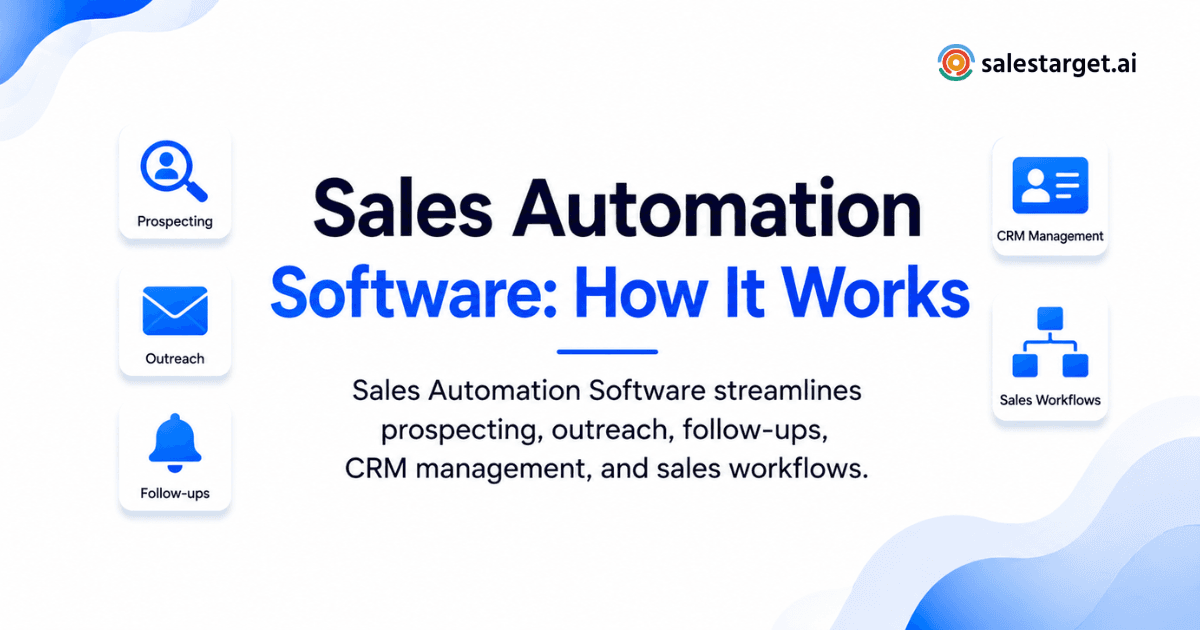
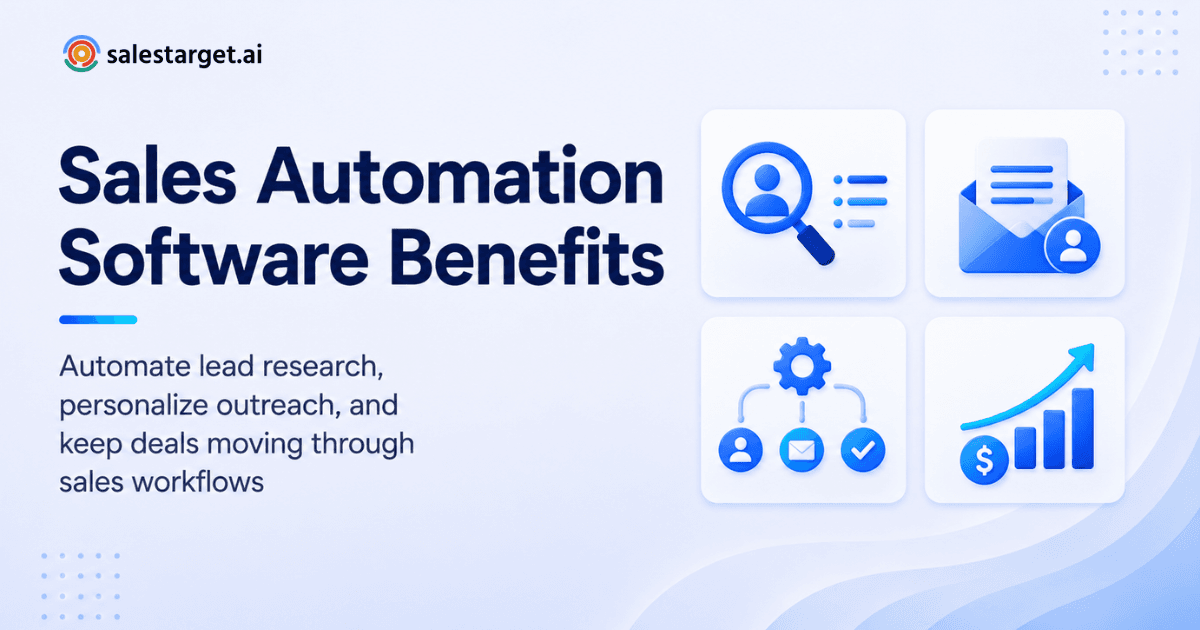
That is the daily grind AI sales tools exist to fix. In short: AI sales tools use machine learning and automation to find the right buyers faster, personalize outreach at scale, cut the manual research and data entry that eats a rep's day, and keep every lead moving through a tracked pipeline instead of falling into a spreadsheet nobody opens again. Used together, they turn scattered prospecting work into one connected motion from first touch to closed deal.
AI Sales Tools for Prospecting, Outreach, and Pipeline Growth
Most teams buy prospecting, outreach, and CRM software separately, then spend weeks connecting them with Zapier and CSV exports. Every export is a chance for a lead to go stale or an enrichment field to break.
A platform such as SalesTarget.ai treats prospecting, outreach, deliverability, and pipeline tracking as one workflow instead of four separate purchases. A lead found in the morning can be enriched, sequenced, and sitting in a CRM stage by lunch, with no manual handoff between steps.
What AI Sales Tools Can Do for B2B Sales Teams
AI-powered lead discovery and prospecting
Search engines that let reps type a plain-English description of an ideal buyer, then match it against millions of profiles, replace hours of LinkedIn scrolling and manual list building.
Automated lead enrichment and qualification
Contact data gets verified and scored the moment a lead is found, so reps skip the step of checking whether an email or phone number is even current.
Personalized email and LinkedIn outreach
AI drafts sequences that adjust tone and content by role, industry, and company size, so a founder and a procurement manager at the same account get different messages built around what each of them cares about.
Automated follow-ups and sales workflows
Reminders, follow-up emails, and task creation fire on their own when a lead replies or a meeting wraps, so a busy week does not mean a forgotten prospect.
CRM updates and sales activity tracking
Calls, emails, and stage changes log automatically to a lead's timeline, cutting the ten minutes reps spend after every call typing up notes nobody reads twice.
How AI Sales Tools Improve B2B Prospecting
Finding relevant prospects faster
Filtering by industry, seniority, company size, revenue, and tech stack narrows a database of hundreds of millions down to a list a rep can act on in minutes, not a weekend of manual searching.
Improving lead data quality and enrichment
Verified emails, direct dials, and mobile numbers pulled at the point of enrichment beat static lists that were accurate the day someone scraped them and stale by the time a rep opens the file. This is the gap most sales lead software reviews skip: enrichment timing matters as much as data volume.
Identifying high-intent buyers
Buying signals such as funding rounds, hiring spikes, leadership changes, and topic-level intent data flag accounts actively researching a category, not accounts that simply match a firmographic filter.
Prioritizing leads for sales outreach
Scoring leads by intent and fit lets reps work a short list of accounts worth a phone call first, instead of working alphabetically down a spreadsheet.
How AI Sales Tools Improve Sales Outreach
Creating personalized cold email campaigns
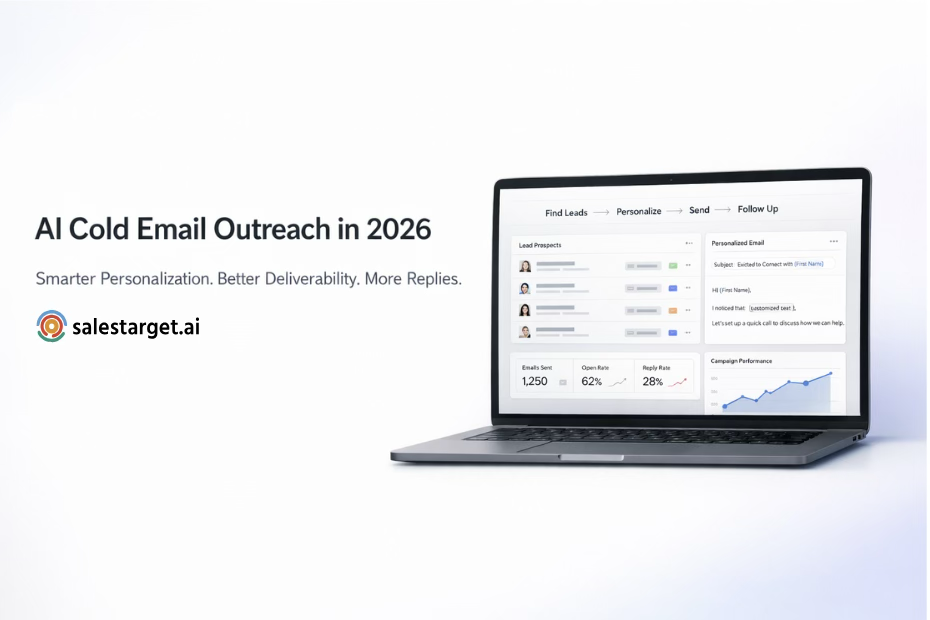
Multi-step sequences built from a plain description of the target audience, complete with pacing and follow-up timing, cut the setup work that used to take a rep half a day. Email Outreach inside SalesTarget.ai builds this structure automatically and adds AI-written copy variations so every prospect does not get the exact same paragraph.
Automating LinkedIn outreach and follow-ups
Connection requests, DMs, and follow-up sequences run on autopilot with built-in rate limits and warm-up logic, so an account does not get flagged for sending fifty connection requests in an hour. LinkedIn Outreach automation branches sequences based on whether a prospect replies, connects, or stays silent.
Managing multichannel sales outreach
Email and LinkedIn touches that share context (a reply on one channel pauses or adjusts the sequence on the other) stop a prospect from getting a cold email the same morning they replied on LinkedIn.
Maintaining consistent sales engagement at scale
Unlimited sending inboxes with automatic warm-up and SPF, DKIM, and DMARC checks keep sender reputation intact even as send volume grows, something a single Gmail inbox cannot handle past a few hundred emails a week.
How AI Sales Automation Improves Sales Team Productivity
Reducing repetitive sales tasks
List building, data entry, and note-taking are the three tasks reps name most as time sinks. Automating them gives back hours every week without asking a rep to work later.
Giving reps more time for conversations and closing
A rep who is not building lists or copying call notes into a CRM spends that time on calls and follow-ups, the work that actually moves a deal.
Automating sales workflow management
Task creation, lead routing, and stage updates that used to require a manager checking in now happen on their own when a trigger event (a reply, a booked meeting, a signed deal) fires.
Improving daily sales activity without increasing manual work
An AI Copilot that finds leads, drafts sequences, and flags at-risk deals on request lets a rep get more done in a day without adding another tool to check or another login to remember.
How AI Sales Tools Support Sales Pipeline Growth
Moving qualified prospects through the pipeline faster
Leads that arrive pre-enriched and pre-scored skip the manual qualification step that used to slow down the handoff from prospecting to active outreach.
Improving follow-up consistency
Automatic task creation when a lead replies or a meeting ends means fewer deals stall from a missed follow-up email.
Connecting prospecting activity with CRM data
When campaign leads land in a built-in CRM automatically, a sales leader can see which prospecting sources actually turn into pipeline instead of guessing from a spreadsheet that is two weeks out of date.
Tracking the activities that contribute to pipeline growth
A shared, live pipeline view showing open deals, meetings booked, and pending tasks gives a sales leader a real-time read on where deals sit, not a picture rebuilt from memory before Monday's forecast call.
Key Features to Look for in AI Sales Tools
B2B lead data and sales intelligence
A database with hundreds of millions of verified profiles and business entities, refreshed from multiple sources, matters more than raw contact count alone.
AI lead generation and prospect enrichment
Enrichment that happens in the same click as prospect discovery, not a separate tool bolted on afterward, keeps the workflow to one step instead of three.
Email and LinkedIn outreach automation
Sequence builders that handle both channels from a single workspace remove the need to run two disconnected tools with two separate reply inboxes.
Email validation and deliverability controls
An Email Validator with MX and SMTP checks, disposable-address detection, and risk scoring protects sender reputation before a bounce ever happens, not after a domain lands on a blacklist.
Sales productivity and workflow automation
Automatic task creation, reminders, and follow-up logic turn a to-do list a rep has to manage into a system that manages itself.
CRM and sales pipeline management
Lead management, a visual deal pipeline, task tracking, and reporting built into the same platform as prospecting and outreach remove the CSV import step most teams dread.
AI sales assistant capabilities
A conversational assistant that can pull leads, draft sequences, and answer questions about deals in plain language turns data buried in dashboards into an answer a rep gets in seconds.
How to Build an AI-Powered Sales Workflow
Step 1: Identify and define the ideal customer profile
Set the firmographic and behavioral traits (industry, size, role, signals) that describe a buyer worth pursuing, before opening any tool.
Step 2: Find and enrich the right prospects
Search a database against that profile and pull verified contact details in the same step, using filters like intent topics and recent business events to narrow the list further.
Step 3: Qualify and prioritize leads
Score leads by fit and intent, then rank the list so reps spend their first hour of the day on the accounts most likely to reply.
Step 4: Launch personalized email and LinkedIn sequences
Build multi-step, multichannel sequences with copy that adjusts by role and industry, and let automated pacing handle send timing.
Step 5: Track replies, meetings, and opportunities
Route replies by intent, log every touch to a lead timeline, and let booked meetings create the CRM stage change and follow-up task automatically.
Step 6: Improve the workflow using sales data
Review reply rates, deliverability, and pipeline velocity by campaign, then adjust targeting or messaging based on what the data actually shows, not on a hunch.
Why Choose SalesTarget.ai
Sales teams normally piece this workflow together from four or five separate subscriptions: a data provider, a cold email tool, a LinkedIn automation tool, a validator, and a CRM. SalesTarget.ai runs the whole motion from one workspace and one login.
Find and enrich B2B leads with Lead Explorer
Lead Explorer searches over 840 million professional profiles and 146 million business entities, with enrichment and verified contact data unlocked in one click and buying signals pulled from a 30 to 90 day lookback window.
Run email and LinkedIn outreach from one platform
Sequences built for both channels share context, so a reply on LinkedIn adjusts what happens next in email, and a rep sees the full conversation history in one place instead of two.
Improve deliverability with Email Validator
Real-time and bulk verification checks every address before a send, part of why SalesTarget.ai reports 90% of emails validated before they go out.
Manage prospects and deals in the built-in CRM
Leads from every campaign land in the CRM automatically, calls get logged with AI-generated notes from the built-in dialer, and teams using it report deal cycles closing 3.2 times faster.
Speed up sales work with AI Copilot
Copilot finds leads, writes sequences, tracks which campaigns drive revenue, and answers questions about deals and tasks in plain language, free inside the platform. Start a free trial to see the full workflow on an actual account list instead of a demo dataset.
Common AI Sales Tool Mistakes B2B Teams Should Avoid
Automating outreach without improving lead quality
Sending faster to a bad list just produces bounces and spam complaints faster. Fix the data before scaling the send volume.
Relying on generic AI-generated messages
A sequence that reads the same for every prospect gets ignored the same way a template does. Personalization by role and signal, not just a merged first name, is what earns a reply.
Ignoring email deliverability and validation
A single wave of bounces can push a domain onto a blacklist for weeks. Validation before send costs a few seconds; recovering sender reputation costs months.
Using disconnected tools across the sales workflow
Every handoff between a data tool, an outreach tool, and a CRM is a place where a lead gets lost or a field goes out of sync. Fewer tools, fewer gaps.
Measuring activity instead of qualified pipeline
Emails sent and calls dialed look good on a dashboard but say nothing about revenue. Track meetings booked and deals opened, not raw activity counts.
Measuring the Impact of AI Sales Tools
Prospecting efficiency and lead volume
Track how many qualified leads a rep can build in an hour compared with manual research, and how much of that list turns out to have working contact details.
Outreach engagement and reply rates
Open rates matter less than reply rates and, further down the funnel, positive reply rates. A campaign with a high open rate and a flat reply rate points to a messaging problem more than a deliverability one.
Sales productivity and time saved
Teams using SalesTarget.ai report saving close to six hours per rep each week, time that used to go into manual list building and note-taking.
Qualified meetings and opportunities
Meetings booked from a given list or campaign is a better measure of quality than raw lead count. SalesTarget.ai users report 2.4 times more meetings from the same lead volume once enrichment and scoring are in place.
Pipeline velocity and revenue contribution
How fast a deal moves from first contact to close, and which prospecting source it came from, tells a leader where to spend the next quarter's budget.
Connecting prospecting, outreach, productivity, and pipeline growth
None of these four metrics means much read alone. A high reply rate from a tiny, low-fit list is not a win, and a large list with no replies is not either. The real read comes from tracking all four together, from first search to closed deal, inside one system.
According to McKinsey's research on generative AI in sales, organizations that connect AI across the full sales process see meaningfully larger gains than those that automate a single step in isolation. Gartner has made a similar point about revenue technology stacks: consolidation tends to outperform a patchwork of point solutions once teams account for the time lost to manual handoffs.
Choosing an AI sales platform that fits the complete workflow
The right platform question is not "does it have AI." Most tools do now. The better question is whether prospecting, outreach, validation, and pipeline tracking live in one system, or whether a team is still exporting CSVs between four logins.
Conclusion: Building a More Efficient B2B Sales Process With AI Sales Tools
Bad lead data, low reply rates, and a pipeline nobody can see all trace back to the same root problem: too many disconnected tools and too much manual work stitching them together. AI sales tools fix the individual steps. A connected AI sales platform fixes the whole process.
SalesTarget.ai combines verified lead data, multichannel outreach, deliverability protection, a built-in CRM, and an AI Copilot in one workspace, so a lead found this morning can be sequenced, tracked, and moved toward a closed deal without a single CSV export in between. See how it works on your own account list before adding another disconnected tool to next quarter's stack.