AI Outreach Trends for 2026: How Cold Email, Personalization & Deliverability Are Changing
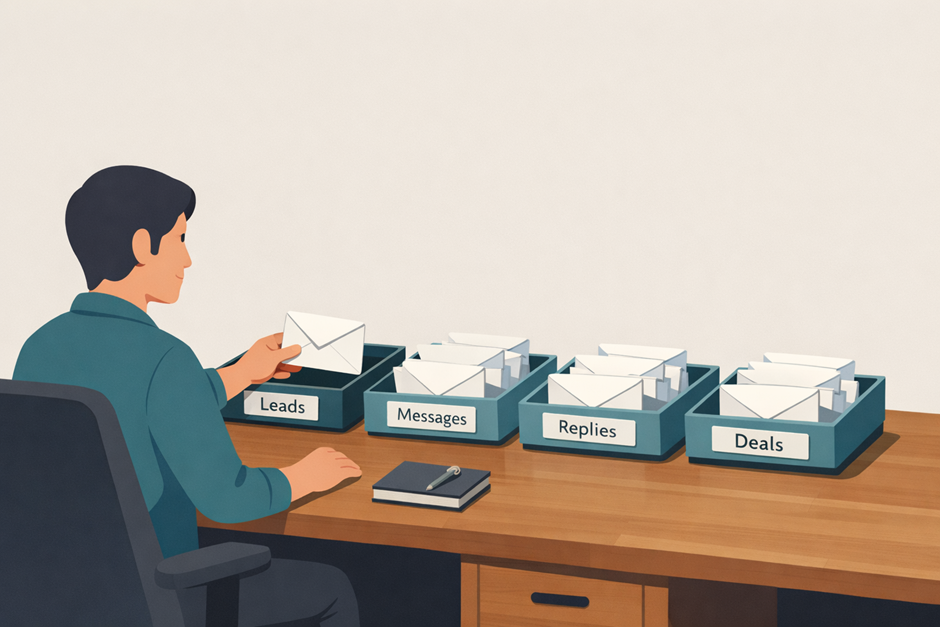
Cold Email Is Being Rebuilt, Not Replaced
For the last decade, cold email has been one of the most reliable outbound channels for B2B growth. Every time inbox rules changed or spam filters improved, the same question came up:
“Is cold email dead?”
In 2026, the answer is still the same — cold email outreach is not dying, it is evolving.
What is dying is the old way of doing it: sending thousands of emails from one inbox, using the same template for every lead, ignoringsender reputation, and treating deliverability as an afterthought.
Modern buyers are more selective. Email providers are more aggressive. And competition inside the inbox is higher than ever. That is exactly why cold email outreach is being rebuilt around three core pillars: AI email automation, AI-powered personalization, and deliverability-first systems.
Cold email is no longer about volume.
It is about relevance and safety.
Instead of thinking:
“Send as many emails as possible,”
The new rule is:
“Send the right email to the right person, from the right inbox, at the right time.”
This shift has been driven by the rise of AI cold email outreach tools, AI content generators, AI outreach automation, advanced deliverability tools, and unified inbox platforms.
Micro example:
A team sending 500 emails per day from one inbox is now more likely to get filtered.
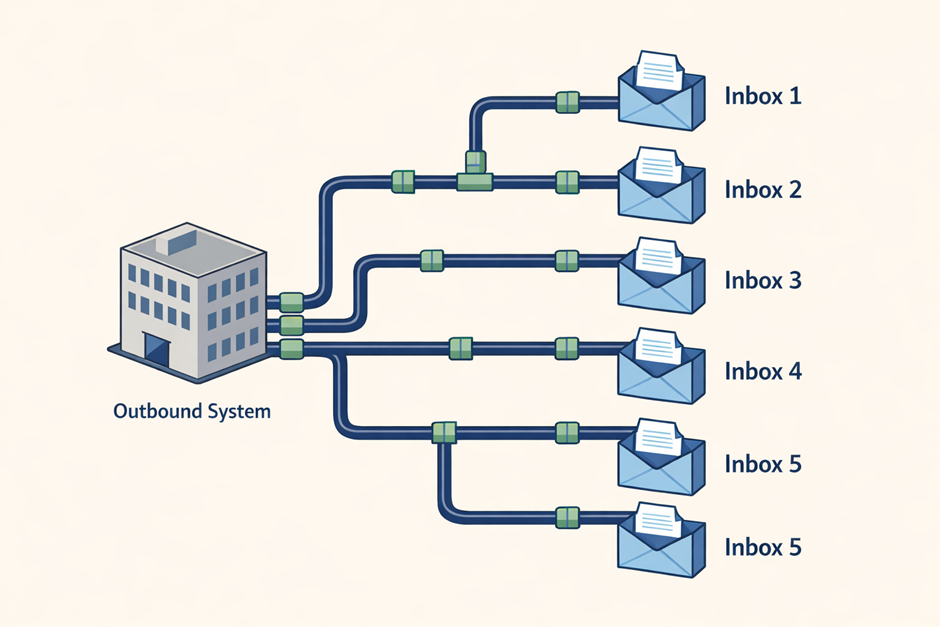
The same team sending 100 emails each from five warmed-up inboxes with personalized copy will see better inbox placement and higher reply rates.
What used to require a team of SDRs, copywriters, and deliverability specialists can now be handled by a single outbound system powered by AI email automation.
In 2026, cold email outreach looks less like marketing and more like infrastructure. It is designed to:
- Protect sender reputation
- Personalize messages at scale
- Automate follow-ups
- Optimize sending behavior
- Turn conversations into predictable pipeline
This blog explores how AI outreach trends are reshaping cold email, why personalization is now a deliverability factor, and how modern cold email platforms are adapting to this new reality.
If your outbound strategy still looks like it did in 2022, this shift will feel uncomfortable. But if you adapt to it, cold email will remain one of the highest ROI channels in your sales stack.
What Is Cold Email Outreach in 2026?
Cold email outreach is the practice of sending emails to prospects who have not previously interacted with your business, with the goal of starting a conversation, booking meetings, or generating leads.
That definition still applies in 2026 — but how cold email outreach is executed has completely changed.
In the past, cold email meant manually researching leads, writing one-off emails, and sending follow-ups on fixed schedules. Today, cold email outreach is a fully automated outbound system powered by AI email automation, AI outreach automation, and deliverability-first infrastructure.
Modern cold email outreach includes:
- Prospect targeting and segmentation
- AI-generated email content
- Multi-step follow-up sequences
- Inbox rotation and domain protection
- Reply management and pipeline tracking
Instead of asking,
“How many emails can we send?”
Teams now ask,
“How many real conversations can we safely start?”
This shift happened because email providers now evaluate:
- Sender reputation
- Engagement signals
- Sending patterns
- Domain history
- Reply rates and spam signals
Which means cold email is no longer just a messaging tactic. It is a long-term outbound channel that must be managed like SEO or paid advertising.
The best cold email platforms in 2026 are designed to:
- Protect sender reputation
- Personalize emails at scale
- Automate follow-ups intelligently
- Optimize sending behavior
- Convert replies into opportunities
Micro example:
Earlier, a rep might send 200 manual emails from one inbox.
Now, the same outreach is done through 4–5 inboxes with automated follow-ups and personalized copy — resulting in more replies and fewer spam issues.
Cold email outreach has evolved from a manual sales task into an AI-powered sales engine. It now combines email outreach tools, AI sequences, unified inboxes, and deliverability tools into one connected system.
In this new model, success is no longer defined by volume. It is defined by relevance, safety, and consistency.
Cold email still works in 2026 — but only when it is built as a system, not run as a shortcut.
Why AI Email Automation Is Now the Core of Outreach
Cold email outreach used to be a manual process. Sales teams researched leads by hand, copied templates, scheduled follow-ups, and tracked replies in spreadsheets or basic CRMs.
That model worked when inbox rules were looser and competition was lower. In 2026, that approach simply does not scale.
This is why AI email automation has become the core of modern outreach. AI email automation replaces manual effort with intelligent systems that can:
- Segment prospects based on role, industry, and behavior
- Generate email copy dynamically
- Run multi-step follow-up sequences
- Optimize sending times
- Learn from campaign performance
Instead of building one static sequence and hoping it works, teams now use AI-powered outbound email automation that adapts in real time.
For example, modern AI outreach automation can:
- Rewrite subject lines when open rates drop
- Adjust message length based on engagement
- Change CTAs when replies slow down
- Pause or slow sending when spam risk increases
- Shift focus toward high-performing segments
This turns cold email from a fixed campaign into a living system.
The biggest advantage of AI email automation is consistency. It ensures every prospect:
- Gets a personalized message
- Receives timely follow-ups
- Is contacted using safe sending limits
- Is tracked properly
At scale, this creates something manual teams cannot achieve: predictable outbound performance.
AI cold email outreach tools now combine:
- Email generation
- Sequencing
- Timing optimization
- Deliverability protection
Into a single workflow.
Micro example:
A team using static templates may need weekly rewrites.
A team using AI automation sees subject lines and CTAs evolve automatically based on replies.
In 2026, outreach is no longer about who can send the most emails. It is about who can automate intelligently while protecting their sender reputation and inbox placement.
AI email automation is not just a productivity tool anymore. It is the foundation of modern cold email outreach.
How AI Email Personalization Has Changed Outreach
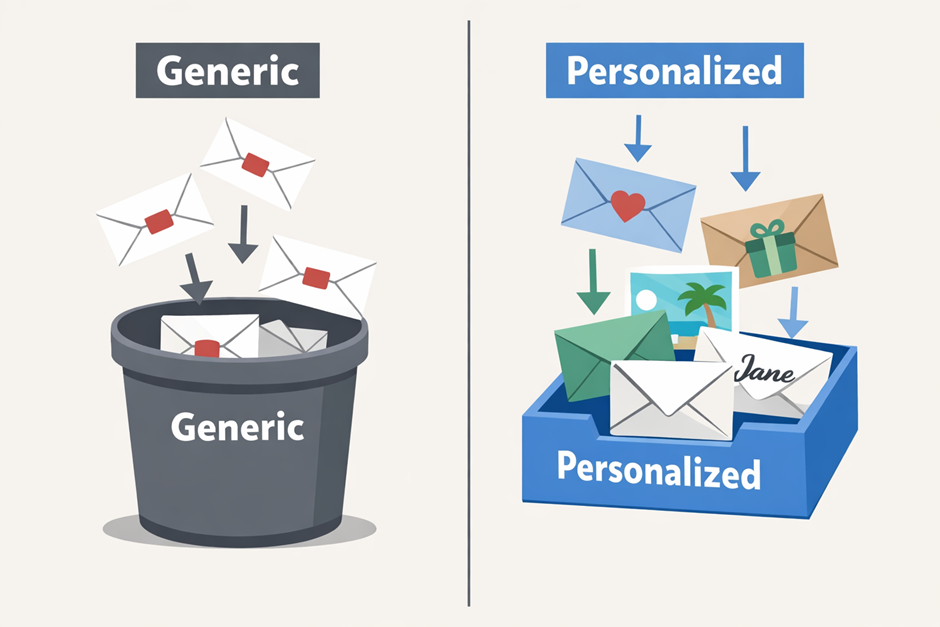
Personalization used to mean inserting a first name or company name into a generic email template. In 2026, that approach no longer works. Buyers expect relevance, and email providers measure engagement as a signal of quality. This has made AI email personalization one of the most important factors in successful cold email outreach.
AI-powered personalization goes far beyond surface-level details. It uses data such as job role, company size, industry, recent activity, and business context to shape the message itself. Instead of sending the same pitch to everyone, AI outreach tools generate messages that match the prospect's situation.
For example, instead of writing:
"I came across your company and wanted to connect,"
AI-generated personalization can produce:
"I noticed your SaaS team is expanding its sales function — are you exploring outbound tools this quarter?"
This difference is not just about copy quality. It directly affects deliverability. When recipients open, read, and reply, inbox providers see positive engagement signals. When they ignore or mark messages as spam, sender reputation drops.
That is why cold email personalization in 2026 is:
- Context-driven
- Dynamic
- Scalable
- Closely tied to engagement metrics
Modern AI content generators and AI email generators now:
- Write custom opening lines
- Adjust tone by industry
- Shorten or lengthen messages based on role
- Change CTAs based on past performance
- Avoid patterns that trigger spam filters
Micro example:
A generic agency pitch sent to 200 founders may get ignored.
A personalized message referencing the founder's hiring role or growth stage gets replies — even at lower volume.
Personalization has shifted from a nice-to-have feature to a deliverability requirement.
Cold email outreach now depends on how well messages:
- Match the recipient's intent
- Feel human rather than automated
- Create relevance without sounding promotional
AI makes this possible at scale. Instead of choosing between quality and quantity, outreach teams can now deliver both.
In 2026, the most successful campaigns are not the loudest. They are the most relevant.
Deliverability Is Now the Real Battlefield
Most cold email campaigns fail before the email is ever opened. The real challenge in 2026 is no longer writing the email — it is getting the email into the inbox. This is why cold email deliverability has become the most critical factor in outbound success.
Deliverability determines whether your email lands in:
- The primary inbox
- The promotions tab
- Or the spam folder
Modern inbox providers use machine learning models to evaluate not just content, but behavior. They analyze how emails are sent, how recipients interact with them, and how domains behave over time. This means you cannot rely on tricks or shortcuts anymore. You must build deliverability into your system.
Key factors that affect deliverability include:
- Sender reputation
- Domain history
- Inbox warm-up behavior
- Engagement rates
- Spam complaint signals
In the past, deliverability was treated as a technical setup task. In 2026, it is a strategic function. The best cold email platforms now integrate email deliverability tools directly into their outreach workflow.
Modern deliverability tools are designed to:
- Monitor spam risk
- Control sending speed
- Rotate inboxes safely
- Pause campaigns when risk increases
- Protect domains from being flagged
This makes deliverability an active process instead of a one-time configuration.
Micro example:
Two teams send similar emails.
One sends 400 emails/day from one inbox and gets spammed.
The other rotates 4 inboxes at 100 emails/day with warm-up and monitoring — and stays in the inbox.
Cold email outreach now depends on maintaining trust with inbox providers. Every email sent contributes to a long-term reputation score for your sending domains. Poor engagement lowers that score. Strong engagement raises it.
This is why relevance, personalization, and automation all connect back to deliverability. When emails are targeted and useful, people reply. When people reply, inbox providers reward the sender.
In 2026, winning outbound teams are not the ones sending the most emails. They are the ones who can consistently reach the inbox.
Deliverability is no longer a backend concern. It is the front line of cold email success.
Sender Reputation: The New Outbound Currency
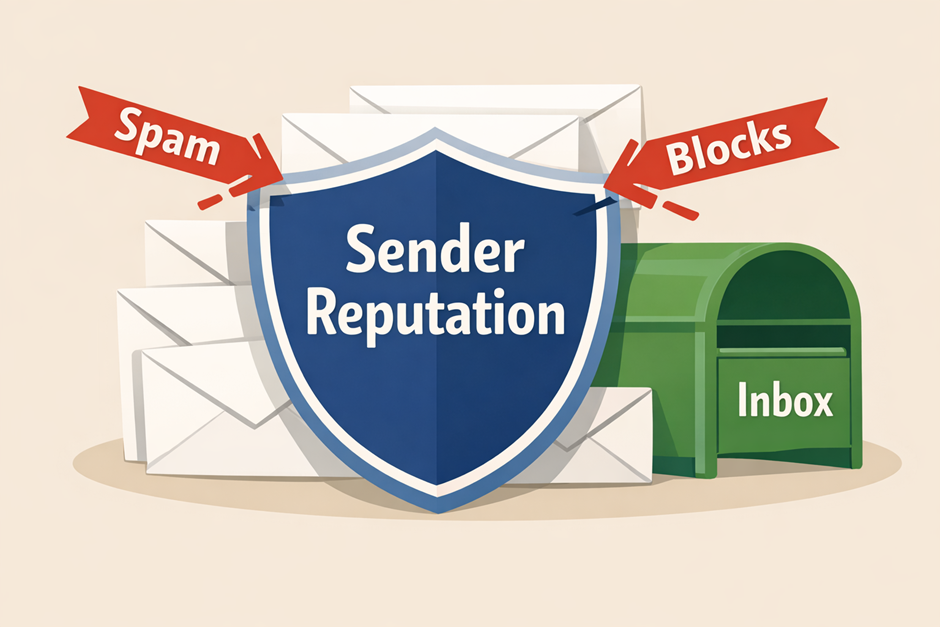
In 2026, sender reputation is no longer a background metric. It is one of the most valuable assets in your outbound strategy. Every email you send contributes to a trust score that inbox providers use to decide whether your messages deserve to reach real inboxes or be filtered out.
Sender reputation is influenced by:
- How often you send emails
- How many recipients open them
- Whether people reply
- How many mark your messages as spam
- How frequently emails bounce
This makes sender reputation similar to a credit score. When it is high, your emails reach the inbox more consistently. When it drops, even well-written messages struggle to get delivered.
In earlier years, teams focused mainly on copy and lead lists. Today, protecting sender reputation is just as important as targeting the right prospects. A single aggressive campaign can damage a domain for weeks or months.
Modern cold email platforms are now built with sender reputation protection at their core. They actively monitor sending behavior and adjust volume to prevent risky patterns. Instead of letting teams burn domains unknowingly, these systems use data to guide safer outreach.
AI-powered deliverability tools now help teams:
- Gradually increase sending volume
- Detect early warning signs of spam filtering
- Pause or slow campaigns automatically
- Rotate inboxes before limits are reached
- Keep long-term reputation stable
Micro example:
A team sending 300 cold emails per day from a brand-new domain may lose inbox placement in a week.
The same team ramping up slowly with controlled volume and clean data can maintain stable deliverability for months.
The long-term impact is significant. Teams that protect sender reputation can:
- Maintain consistent inbox placement
- Avoid constant domain replacements
- Scale outreach safely
- Build predictable pipelines
In 2026, sender reputation is no longer just a technical concern. It is a business resource that directly affects revenue.
Cold email outreach works best when it is built on trust — not just with prospects, but with the inbox providers that decide where your messages land.
Protecting sender reputation is not about being cautious. It is about building an outbound system that lasts.
Inbox Warm-Up & Email Warm-Up Software in 2026
Inbox warm-up has moved from a "nice-to-have" tactic to a requirement for any serious cold email outreach strategy. In 2026, sending cold emails from a brand-new or inactive inbox without warming it up is one of the fastest ways to damage sender reputation.
Inbox warm-up is the process of gradually increasing email activity on a new or idle inbox so that email providers learn to trust it. Instead of suddenly sending dozens of cold emails, warm-up systems simulate natural human behavior by sending and receiving emails over time.
Modern email warm-up software automates this process. It sends small volumes of messages, receives replies, and slowly builds positive engagement signals. This helps inbox providers recognize the domain as legitimate rather than risky.
Inbox warm-up in 2026 focuses on:
- Gradual volume increase
- Consistent sending patterns
- Positive engagement signals
- Low bounce rates
- Stable domain behavior
Without proper warm-up, even well-written emails are likely to land in spam. With warm-up, inboxes gain the trust needed to handle real outreach safely.
AI-powered deliverability tools now manage warm-up automatically by:
- Adjusting daily send limits
- Balancing warm-up traffic with live campaigns
- Detecting risky behavior patterns
- Protecting domains from sudden spikes
- Keeping inbox health stable
Micro example:
A new domain that jumps straight to 150 cold emails per day is likely to get filtered.
The same domain ramping from 10 → 30 → 60 emails over time builds trust and stays in the inbox.
Warm-up is no longer a one-time setup. It is a continuous process. Inboxes that stop sending for long periods and then restart aggressively can lose trust again. This is why modern cold email platforms treat warm-up as an ongoing system rather than a launch step.
In 2026, inbox warm-up is not about tricking spam filters. It is about demonstrating consistent, natural behavior over time.
Cold email outreach works best when inboxes behave like real users — not machines. Email warm-up software ensures that every inbox earns the right to reach the inbox before it tries to start conversations.
Inbox Rotation & Domain Protection Strategy
In 2026, sending all cold emails from a single inbox or domain is no longer a safe strategy. Inbox providers closely monitor sending patterns, and when volume spikes or engagement drops, domains are quickly flagged. This is why inbox rotation and domain protection have become standard practice in modern cold email outreach.
Inbox rotation is the process of distributing email volume across multiple inboxes instead of relying on just one. Each inbox sends a limited number of emails per day, which keeps sending behavior within natural human limits. This reduces the risk of triggering spam filters and helps preserve long-term sender reputation.
Domain protection focuses on safeguarding the primary business domain from outreach risk. Instead of sending cold emails directly from the main website domain, outreach teams use separate, dedicated domains that are warmed up and monitored. This creates a buffer between outbound activity and the core brand domain.
Modern cold email platforms now manage inbox rotation automatically by:
- Distributing sends across multiple inboxes
- Keeping daily volume within safe limits
- Pausing inboxes when engagement drops
- Reassigning leads to healthier inboxes
- Preventing sudden sending spikes
This turns domain management into a controlled system instead of guesswork.
Micro example:
A team sending 400 emails per day from one inbox is likely to hit spam filters.
The same team using 4 inboxes sending 100 emails each can scale safely while maintaining inbox placement.
Inbox rotation also makes scaling predictable. Instead of increasing volume on a single inbox, teams add more warmed-up inboxes and let automation handle distribution. This allows outreach to grow without burning domains.
In 2026, domain protection is no longer about avoiding punishment. It is about building stability.
Cold email outreach works best when no single inbox carries too much risk. By rotating inboxes and protecting domains, teams create an outreach infrastructure that can run continuously without sacrificing deliverability.
Inbox rotation and domain protection are no longer advanced tactics. They are the foundation of safe, scalable cold email outreach.
AI Sequences vs Static Drip Campaigns
Traditional cold email campaigns relied on static drip sequences. A typical flow looked like this: send Email 1, wait three days, send Email 2, wait three more days, then send a final follow-up. Every prospect received the same timing and the same message, regardless of how they behaved.
In 2026, this model has been replaced by AI sequences.
AI sequences adapt in real time based on prospect behavior. Instead of following a fixed script, AI outreach automation adjusts content, timing, and strategy based on engagement data.
For example, AI sequences can:
- Change subject lines when open rates drop
- Rewrite follow-ups when replies are low
- Adjust message length for different roles
- Switch CTAs when a sequence stalls
- Stop sending when buying intent is detected
This creates a smarter and more human-like outreach experience. Prospects no longer feel like they are part of a rigid automation flow. Messages feel responsive and relevant to what they actually do.
Static drip campaigns assume every lead behaves the same way. AI sequences assume every lead behaves differently.
That difference has a direct impact on both reply rates and deliverability.
AI-driven sequencing also improves safety. When engagement drops, AI can slow down sending automatically. When engagement improves, it can carefully increase volume. This protects sender reputation while still allowing campaigns to scale.
Micro example:
A static sequence sends the same follow-up after 3 days to everyone.
An AI sequence waits longer for engaged leads and rewrites the follow-up for leads who did not open the first email.
Modern cold email software now uses AI sequences to:
- Optimize follow-up spacing
- Test different messaging angles
- Learn which industries respond best
- Adapt tone based on replies
- Improve performance over time
In 2026, cold email outreach is no longer about writing the perfect five-step sequence. It is about building a system that can learn, adapt, and improve continuously.
AI sequences turn cold email from a fixed process into a dynamic conversation engine. They make outreach feel less automated and more intentional — without sacrificing scale.
Unified Inbox & Reply Management Evolution
As cold email outreach becomes more automated and more distributed across multiple inboxes, managing replies has become a challenge of its own. In the past, sales teams checked individual Gmail or Outlook accounts and replied manually. In 2026, this approach no longer works at scale.
This is where theunified inbox has become essential.
A unified inbox brings all replies from multiple inboxes and domains into a single interface. Instead of logging into five or ten different email accounts, teams manage every conversation from one dashboard. This turns cold email outreach into a real sales workflow instead of a scattered communication task.
Modern unified inbox systems support:
- Centralized reply management
- Full conversation history
- Team assignment and routing
- Follow-up automation
- Status labeling and categorization
This allows teams to respond faster and with better context. It also prevents duplicate replies and missed opportunities, which often happen when inboxes are managed separately.
Reply management in 2026 is no longer just about answering emails. It is about identifying intent and triggering the right action. AI-powered reply management tools can now:
- Detect positive, neutral, or negative intent
- Suggest reply drafts
- Pause sequences when someone responds
- Trigger follow-ups automatically
- Move qualified replies into CRM pipelines
Micro example:
Without a unified inbox, two reps may reply to the same prospect from different inboxes.
With a unified inbox, the conversation is owned by one rep and tracked as a deal.
Cold email outreach is no longer only about sending messages. It is about managing conversations at scale.
Without a unified inbox, automation creates chaos. With it, automation creates structure.
In 2026, the most effective sales outreach tools are not just sending platforms. They are conversation management systems.
A strong unified inbox ensures that every reply turns into an opportunity instead of getting lost across disconnected inboxes.
What the Best Cold Outreach Emails Have in Common
In 2026, high-performing cold outreach emails look very different from traditional sales emails. They are shorter, clearer, and far more focused on relevance than persuasion. While industries and offers vary, the best cold emails consistently share a few core traits.
First, they are brief and easy to read. Most successful cold emails are between three and six short lines. They respect the reader's time and avoid long explanations or feature lists. Instead of trying to sell in the first message, they aim to start a conversation.
Second, they begin with context, not a pitch. The strongest emails open with a line that shows awareness of the recipient's role, company, or current situation. This might reference a hiring trend, a growth stage, or a common challenge in their industry. This signals relevance and lowers the chance of being ignored.
Third, they focus on one clear problem and one clear outcome. Rather than listing every feature, effective cold emails highlight a single pain point and a simple improvement. This keeps the message easy to understand and mentally process.
Fourth, they use a low-pressure call to action. Instead of asking for a demo immediately, top-performing emails ask whether the topic is relevant or worth a quick chat. This reduces resistance and increases reply rates.
Finally, the best cold outreach emails soundhuman. They avoid marketing language, buzzwords, and exaggerated claims. Their tone is conversational and direct.
Micro example:
"Are you the right person to speak with about outbound?"
will usually get more replies than
"Book a 30-minute demo to transform your sales pipeline."
AI email generators in 2026 are trained to follow these patterns. They optimize for:
- Short message length
- Role-specific language
- Simple CTAs
- Low spam risk
- Natural phrasing
The goal of modern cold email is not to close a deal in one message. It is to earn a reply.
When emails feel relevant, respectful, and human, they perform better with both recipients and inbox providers. That is why the best cold outreach emails succeed not by being louder, but by being more precise.
Benefits of Using AI for Email Automation
The biggest shift in outbound strategy over the last few years has been the move from manual workflows to AI-driven systems. In 2026, using AI for email automation is no longer about convenience. It is about performance, safety, and scalability.
One of the main benefits of AI email automation is speed without sacrificing quality. Campaigns that once took days to prepare can now be launched in hours. AI can generate email copy, segment prospects, and structure sequences automatically, allowing teams to focus on strategy instead of repetitive tasks.
Another major advantage is consistency. AI ensures that every prospect receives a message that follows best practices for tone, length, and structure. This reduces human error and prevents poorly written or risky emails from harming sender reputation.
AI-driven systems also improve deliverability and sender safety. By monitoring engagement and sending behavior, AI outreach tools can slow down campaigns when risk increases and scale them when performance is strong. This creates a balance between growth and protection that manual systems struggle to maintain.
Personalization at scale is another key benefit. AI can customize messaging based on role, industry, or company context without requiring individual research for each lead. This makes relevance achievable even in large campaigns.
From a business perspective, AI email automation helps teams:
- Reduce campaign setup time
- Increase reply rates
- Maintain stable inbox placement
- Lower outbound costs
- Build predictable pipelines
Micro example:
A team manually building campaigns might take two days to prepare copy and sequences.
With AI automation, the same campaign can be launched in a few hours with better personalization and safer sending logic.
AI outreach software also generates valuable insights. It can identify which industries respond best, which subject lines perform strongest, and which CTAs lead to real conversations. Over time, this creates a feedback loop where every campaign becomes smarter than the last.
In 2026, the benefit of AI in cold email is not just automation. It is optimization.
Teams that use AI effectively are not sending more emails. They are sending better emails, more safely, and with greater consistency.
The Future of Cold Email Platforms
Cold email platforms in 2026 look very different from the tools that existed just a few years ago. Early tools focused mainly on sending volume and basic sequencing. Modern platforms are evolving into complete outbound systems that combine automation, intelligence, and infrastructure in one place.
The future of cold email platforms is built around AI-first design. Instead of asking users to manually configure every detail, these platforms guide strategy using data. They help decide who to target, what to say, when to send, and how fast to scale — all while protecting sender reputation.
Next-generation cold email platforms are designed to include:
- Built-in AI email automation
- Native AI sequences that adapt to engagement
- AI-powered personalization engines
- Integrated deliverability tools
- Automatic inbox warm-up and rotation
- Unified inbox and reply management
- CRM and pipeline visibility
Rather than acting as simple email blasters, these platforms function as sales outreach systems that manage the entire outbound journey.
Another major shift is the focus on safety. The best platforms no longer encourage aggressive sending. Instead, they optimize for inbox placement, reputation stability, and long-term performance. Volume is controlled by rules and data, not guesswork.
Micro example:
Earlier tools let users send 1,000 emails in a day.
Future platforms limit volume automatically based on inbox health and engagement.
Cold email software is also becoming more collaborative. Teams can manage campaigns together, share reply handling, and track performance across multiple inboxes from a single interface. This turns outbound into a repeatable business process instead of a personal task.
In the future, cold email platforms will not compete on how many emails they can send. They will compete on how well they can:
- Protect domains
- Personalize at scale
- Adapt sequences
- Convert replies into revenue
Cold email outreach is becoming infrastructure, not just a tactic. The platforms that succeed will be the ones that treat it that way.
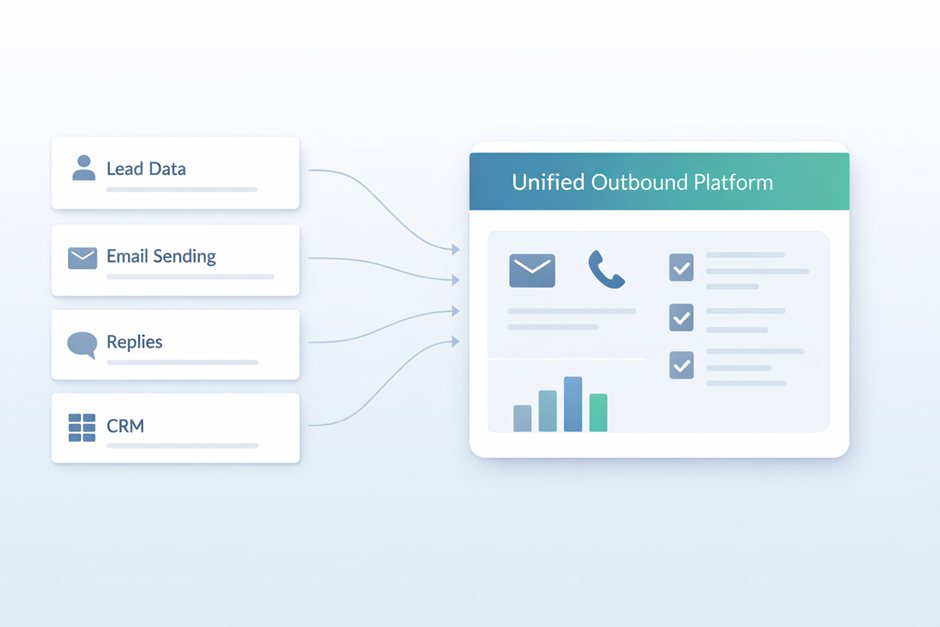
Where SalesTarget.ai Fits in the 2026 Outreach Stack
As cold email outreach becomes more complex, most teams struggle with fragmented tools. One platform for leads, another for sending, another for warm-up, another for replies, and another for CRM. This creates operational gaps, data loss, and inconsistent performance.
In 2026, winning outbound teams use connected systems, not disconnected tools.
SalesTarget.ai fits naturally into this new outreach model because it is built around the same trends shaping modern cold email:
- AI email automation
- AI-powered personalization
- Deliverability-first sending
- Inbox warm-up and rotation
- Unified inbox and reply management
- Built-in CRM for pipeline visibility
Instead of forcing teams to stitch together multiple tools, SalesTarget.ai provides a single outbound environment where prospecting, messaging, sending, and reply handling happen inside one workflow.
From a strategy perspective, this aligns with how cold email works today. Outreach is no longer just about sending emails. It is about managing reputation, maintaining consistency, and turning conversations into revenue.
SalesTarget.ai supports this by helping teams:
- Personalize messages at scale using AI
- Protect sender reputation through controlled sending behavior
- Automate follow-ups with adaptive sequences
- Centralize replies in a unified inbox
- Track deals directly inside the platform
Micro example:
Instead of exporting leads, uploading them into another tool, then syncing replies to a CRM, teams can run the entire outbound cycle inside one system.
In 2026, the most effective outreach stacks are the ones that reduce complexity while increasing control. SalesTarget.ai fits this model by acting as both a cold email platform and a sales outreach system.
Rather than focusing on volume, it focuses on sustainability. Rather than encouraging shortcuts, it supports best practices.
This makes SalesTarget.ai a natural fit for teams that want to build outbound systems that scale safely and perform consistently in the evolving world of AI-driven cold email outreach.
Final Thoughts: Cold Email in 2026 and Beyond
Cold email is not disappearing. It is maturing.
What worked a few years ago no longer works today, and what works today will continue to evolve. In 2026, cold email outreach is no longer about finding clever templates or pushing higher volumes. It is about building systems that combine relevance, automation, and trust.
The biggest shift is in mindset. Cold email is no longer a quick growth hack. It is now a long- term channel that must be managed carefully, like paid advertising or SEO. Sender reputation, inbox health, and engagement signals now matter just as much as copywriting and lead lists.
AI has accelerated this change. With AI email automation, teams can move faster without sacrificing quality. With AI-powered personalization, messages can feel relevant at scale. With deliverability tools, inbox placement can be protected instead of guessed at.
Micro example:
A team chasing volume may see short-term replies but burn its domains within weeks.
A team building a deliverability-first system can run outbound for months with stable performance.
The teams that will succeed in 2026 are not the ones sending the most emails. They are the ones who:
- Respect inbox rules
- Protect sender reputation
- Personalize intelligently
- Automate safely
- Treat outbound as infrastructure
Cold email outreach is becoming more disciplined, not more aggressive. That is good for buyers, and it is good for businesses that want consistent pipeline instead of short-lived spikes.
Looking ahead, the future of cold email belongs to systems that can adapt automatically, learn from performance, and maintain trust with inbox providers. Volume will matter less. Precision will matter more.
Cold email in 2026 is not about shouting louder. It is about speaking smarter — to the right people, from the right place, at the right time.
And for teams willing to evolve, it will remain one of the most powerful channels in the outbound stack.
FAQs
References
- McKinsey & Company – The economic potential of generative AI
https://www.mckinsey.com/capabilities/mckinsey-digital/our-insights/the-economic-potential-of-generative-ai-the-next-productivity-frontier - Google – How spam filters work
https://support.google.com/mail/answer/81126 - Google Postmaster Tools – Understand sender reputation & email delivery
https://support.google.com/mail/answer/9981691 - Microsoft – Anti-spam protection in Microsoft 365
https://learn.microsoft.com/en-us/microsoft-365/security/office-365-security/anti-spam-protection