How B2B Outreach Is Evolving in 2026: Email, AI & Automation
Introduction: Outreach Isn't Dead, It's Just More Selective
Every few years, the same claim comes back: "Cold outreach is dead."
And yet, B2B teams are still booking meetings, closing deals, and building predictable pipelines using email and outbound motion.
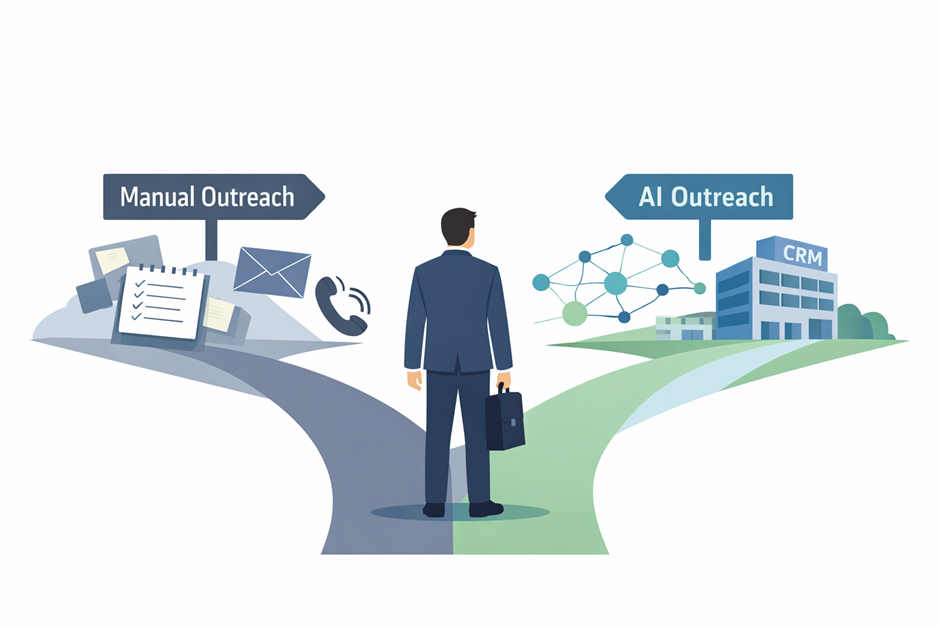
What has changed by 2026 is not whether outreach works, but how it works.
Buyers today are more informed, more protected by filters, and more resistant to generic messages than ever before. They receive dozens of sales emails every week, and most of them look the same. The ones that succeed are no longer the loudest or the most automated. They are the most relevant, the most timely, and the most human.
B2B outreach in 2026 is no longer about volume. It is about precision.
- Email is still the backbone of outbound.
- AI has become the brain.
- Automation is now the muscle that executes strategy at scale.
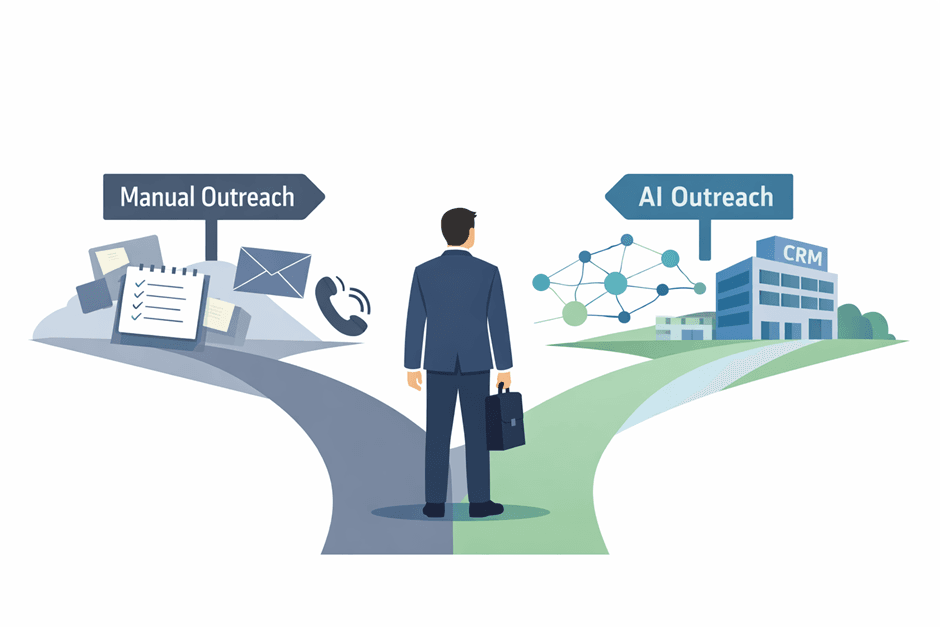
This evolution is forcing sales and growth teams to rethink how they approach cold outreach from the ground up.
Outreach Has Become a System, Not a Channel
In earlier years, outreach was treated as a single channel. A company would choose an email tool, upload a list, and start sending. LinkedIn would be handled separately, CRM would live somewhere else, and results were measured mostly in open rates and replies.
That model is fading.
In 2026, outreach works more like a connected system. Signals come from multiple places: website visits, LinkedIn activity, job changes, company growth, and even content engagement. Instead of reacting blindly, modern outreach workflows use those signals to decide who to message, when to message them, and what to say.
A prospect might first encounter a brand through content or social presence. They may visit a landing page or check pricing. Only after that does an email land in their inbox. When that happens, the message does not feel random. It feels contextual.
This shift is important because buyers now expect sellers to have some level of awareness. A cold email that ignores everything about the company or role feels careless. A message that reflects even a small insight feels intentional.
Outreach is no longer a channel you "run."
It is a system you design.
Why Cold Email Still Anchors B2B Outreach
Despite the rise of messaging platforms and social selling, email continues to hold a unique position in B2B outreach. It is the one channel that companies can fully control. You own the data, the timing, the message, and the follow-up.
What has changed is the way email is used.
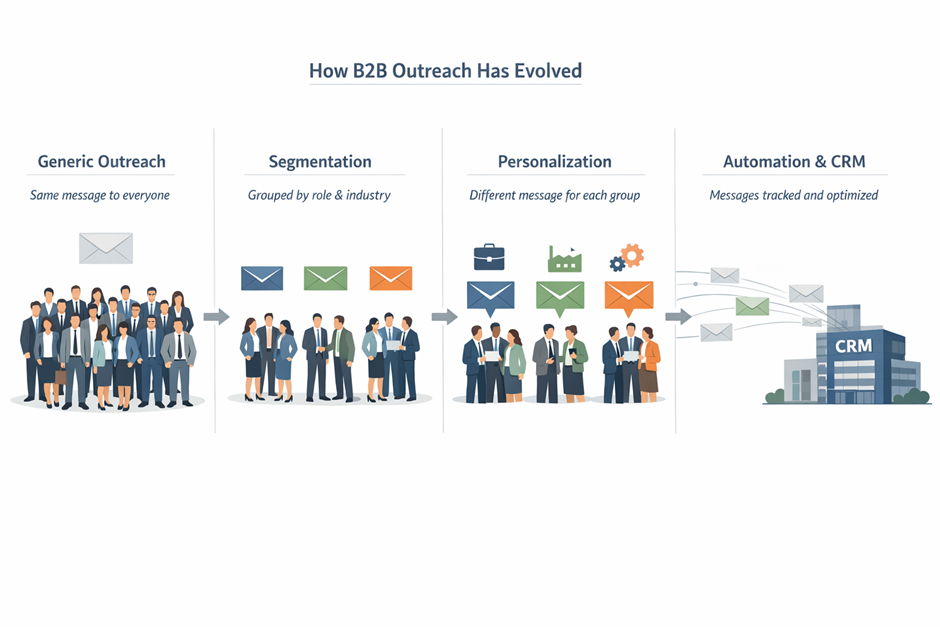
In 2026, cold email outreach is no longer about sending thousands of identical messages and hoping for a small percentage to respond. Instead, it has become a precision tool. Lists are smaller, segments are tighter, and messages are more specific.
A sales leader today is far more likely to ask, "Are we targeting the right accounts?" than "Can we send more emails?"
This change is driven by two forces, which is why teams now pay close attention to volume and discipline, as explained in Cold Email Volume Limits: How Many Emails Should You Send Per Day?
First, inboxes are more protected than ever. Spam filters and engagement-based algorithms reward relevance and punish careless sending. Second, buyers are better at spotting automation. If an email feels mass-produced, it is ignored immediately.
Modern cold email works because it looks and reads like something written for a person, not a database.
The channel itself has not lost power. What has lost power is the old way of using it.
AI Is No Longer Just Writing Emails, It Is Running Strategy
When AI first entered outreach, it was mostly used for copywriting. Marketers asked it to generate subject lines or rewrite templates. That was useful, but limited.
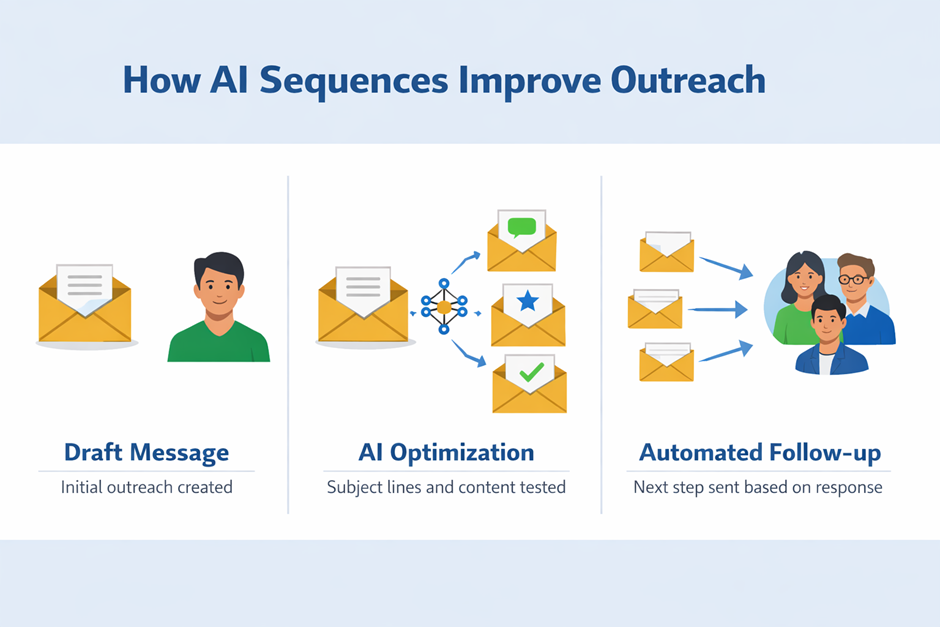
By 2026, AI has moved much deeper into the outreach process. It now helps decide how sequences are structured, which variations perform best, and when follow-ups should change direction.
Instead of building one static sequence and hoping it works, teams now rely on AI-powered cold email outreach that adapts subject lines, messaging, and follow-ups automatically. If a subject line underperforms, the system adapts. If a certain angle works better for founders than for sales managers, the content shifts automatically.
This is where AI email automation becomes more than just a time-saver. It becomes a learning layer. Outreach is no longer a fixed campaign. It is an ongoing experiment that improves as data flows in.
The biggest difference this creates is speed. What used to take weeks of manual A/B testing can now happen continuously in the background. Teams spend less time tweaking templates and more time thinking about positioning, markets, and messaging strategy, which is exactly why many teams focus on How to Increase Your Email Conversion Rates with AI instead of just sending more emails.
AI does not replace sales thinking.
It accelerates it.
Personalization Has Moved From Token to Context
For years, personalization meant adding a first name or company name into an email. That trick stopped working a long time ago.
In 2026, personalization is about context, not tokens.
Modern personalization takes into account role, industry, company stage, and even business signals such as hiring or funding, which is why AI-powered lead discovery has become critical for targeting the right prospects.
AI email personalization makes this practical at scale. Instead of writing hundreds of different templates manually, teams can create logic-based messaging that adapts tone and focus based on who is receiving it.
This shift has changed the role of outreach copy. Emails are less promotional and more diagnostic. Instead of telling prospects what a product does, they start by acknowledging a likely challenge or situation.
That is why many modern cold emails read more like questions than pitches. They feel closer to the beginning of a conversation than the end of a funnel.
Personalization is no longer about sounding polite.
It is about sounding informed.
Deliverability Is Now a Strategic Advantage
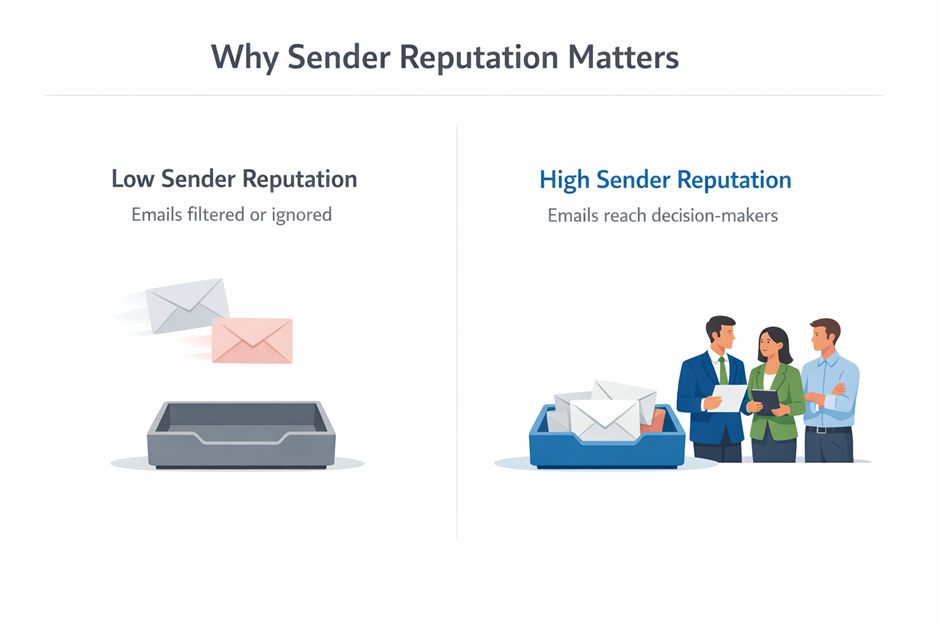
One of the quiet but critical changes in outreach is the growing importance of sender reputation. In the past, deliverability was treated as a technical concern handled by IT or ignored entirely. In 2026, it directly affects revenue.
If your domain is flagged, your campaigns do not fail slowly. They fail instantly.
Mailbox providers now judge senders based on engagement and complaint signals, as outlined in Google's email sender guidelines. This means outreach success depends not just on what you send, but how responsibly you send it.
Companies that win with cold outreach treat deliverability as part of their sales strategy, something we break down in Shared IP vs Dedicated IP for Cold Email and Domain Reputation Explained: How It Affects Cold Email Deliverability. They warm up inboxes, monitor reputation, rotate domains when needed, and validate leads before sending.
This changes how teams think about scale. Instead of asking, "How many emails can we send today?" the smarter question is, "How many emails can we send without damaging our reputation?"
In 2026, the teams that dominate outbound are not the most aggressive. They are the most disciplined.
LinkedIn Has Shifted From Pitch Channel to Signal Channel
There was a time when LinkedIn automation exploded. Connection requests and templated DMs flooded inboxes. That phase is fading.
By 2026, LinkedIn is no longer used primarily as a mass messaging platform. It is used as a research and validation layer. Sellers use it to understand roles, company direction, and activity before sending an email. They also use it to reinforce outreach, not replace it.
Instead of leading with a pitch, many teams now use LinkedIn as a secondary touch. An email might introduce a problem. A LinkedIn message might simply acknowledge it or reference the same idea in a softer way.
This coordinated approach feels less intrusive and more natural. Email starts the conversation. LinkedIn supports it.
The mistake many teams make is treating each channel as separate. The teams that perform best treat them as different views of the same conversation.
Outreach Technology Is Consolidating Into Systems
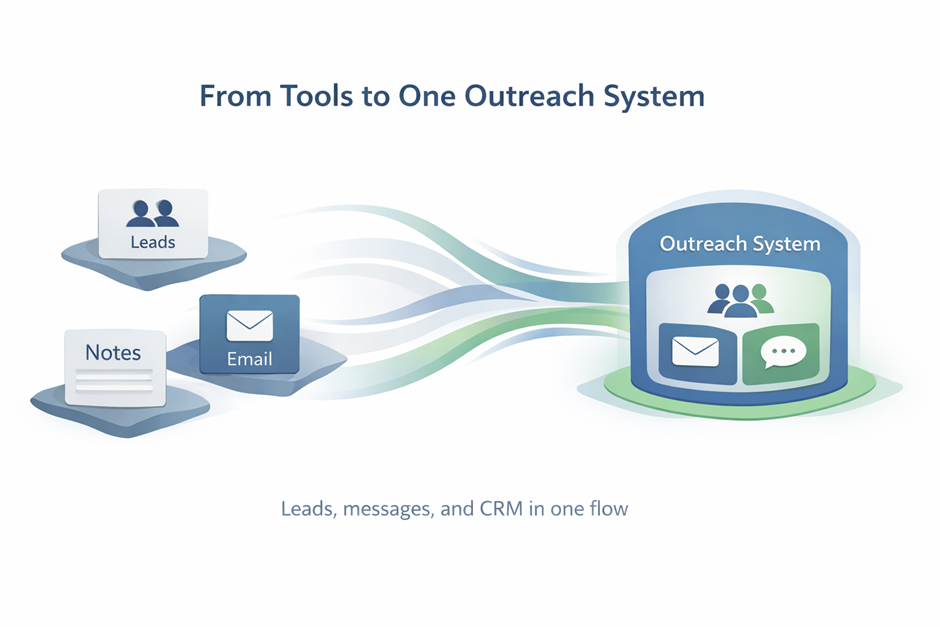
In the past, an outreach stack might include five or six different tools: one for leads, one for emails, one for warm-up, one for CRM, one for analytics. Each tool worked, but none of them learned from each other.
By 2026, this fragmentation is becoming a liability.
Modern teams want a single system where leads, messages, replies, and performance data are connected. This allows them to see what types of prospects respond, what messages convert, and where deals actually come from.
When outreach is disconnected from CRM, learning is slow. When everything lives in one flow, improvement becomes continuous.
This is why outreach platforms are evolving beyond "email tools." They are becoming sales operating systems, combining discovery, messaging, automation, and pipeline management in one place.
The value is not convenience.
It is feedback.
Where Most Teams Still Go Wrong
Even with better tools and smarter strategies, many companies will struggle with outreach in 2026 because they repeat the same mistakes in new ways.
Some will rely too heavily on automation without thinking about who they are targeting. Others will ignore deliverability until their domains are damaged. Many will continue to separate marketing and sales data, losing the chance to personalize effectively.
The most common mistake is treating outreach as an activity instead of a process. Sending emails feels productive, but learning from them is what actually builds growth.
The teams that succeed treat outreach like product development. They test, measure, adjust, and refine continuously.
How SalesTarget.ai Fits Into the 2026 Outreach Model
The direction of B2B outreach is clear. It requires verified data, intelligent sequencing, personalization, and visibility into results.
Instead of managing disconnected tools, teams need a flow that moves from prospect discovery to conversation management without friction.
SalesTarget.ai aligns with this evolution by combining lead discovery, AI-powered outreach, and CRM-level tracking into a single system. It supports the shift from volume-based selling to relevance-based selling.
Rather than helping teams send more emails, the goal is to help them send better ones to the right people, at the right time, with the right context.
That is what outreach looks like in 2026.
Conclusion: Outreach in 2026 Is About Earning Attention
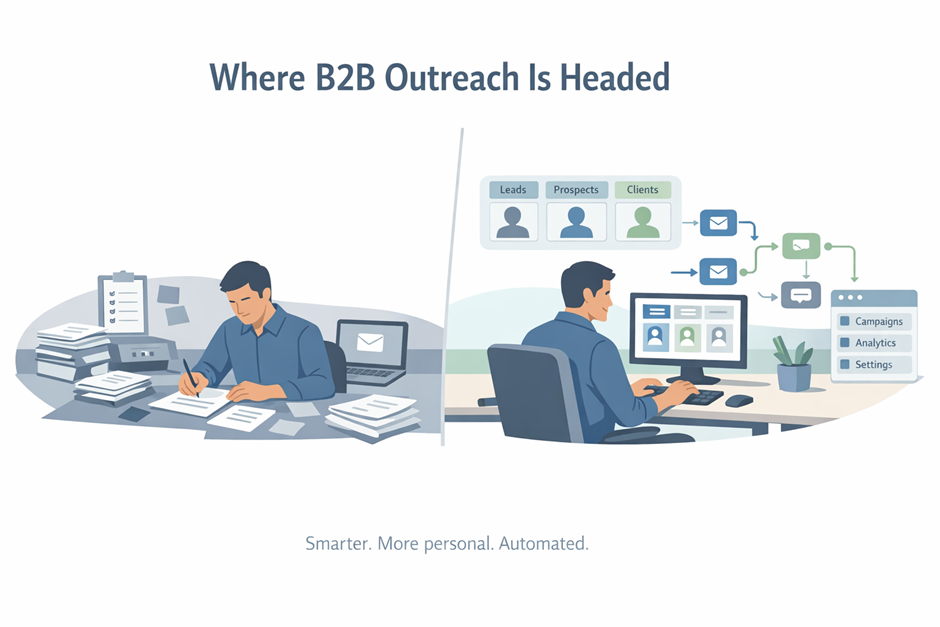
B2B outreach is not disappearing. It is becoming more selective, more intelligent, and more integrated into the way companies sell.
Email remains central, but it no longer works alone.
AI adds speed and learning.
Automation adds consistency.
The winning teams are not those who interrupt the most.
They are the ones who understand the most.
Outreach in 2026 is no longer about pushing messages.
It is about earning replies.